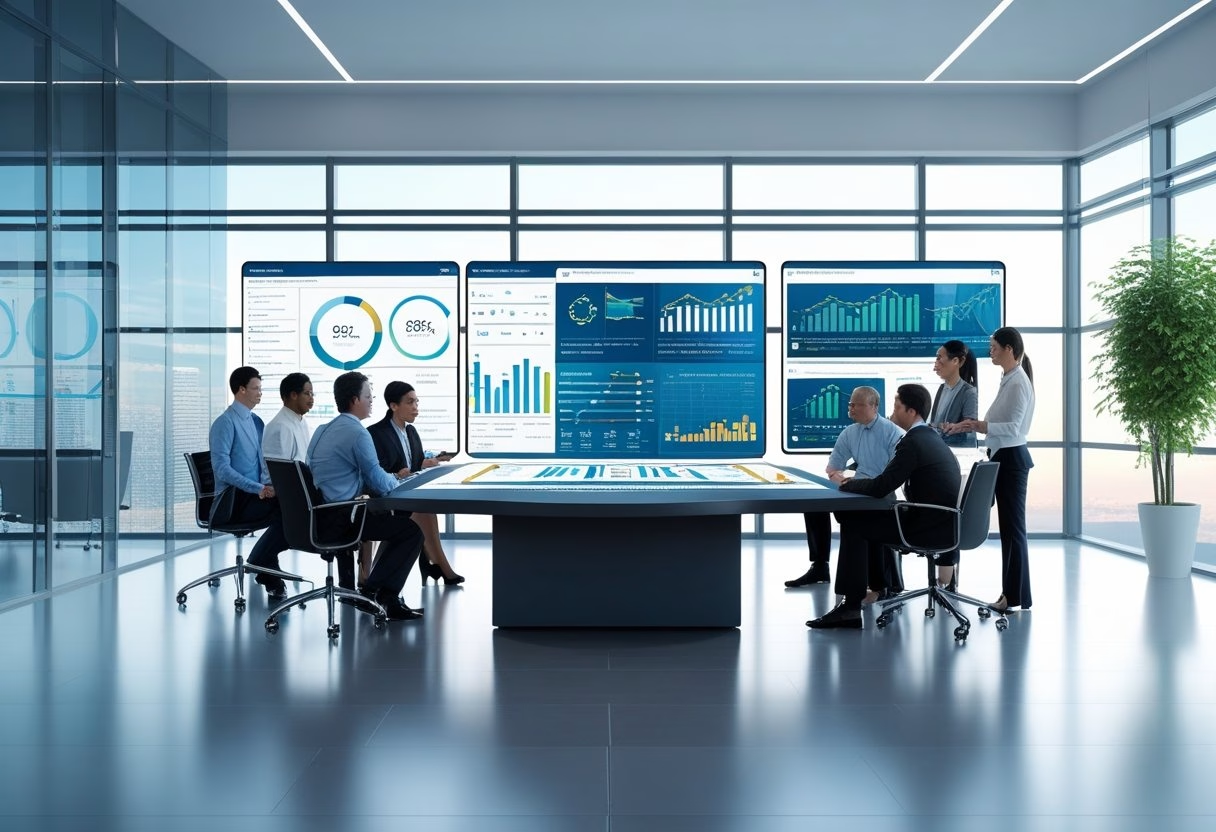
You walk into a meeting rooms and expect it to do more than display slides; it should drive action, surface decisions, and push work forward without delay. Modern teams demand rooms that capture clear audio, attribute speakers, summarize outcomes, and kick off follow-ups automatically—so meetings stop being a place where ideas stall and start being a place where work happens.
Bold moves to redesign spaces around intelligence, data, and simple workflows let organizations turn conversations into measurable outcomes. Upgrade rooms with reliable audio, speaker attribution, and AI-driven meeting agents to turn every gathering into a decision engine that saves time and produces results.
They will need to balance technology, analytics, and human habits to make the shift sustainable, not just flashy.
Key Takeaways
- Design spaces to produce clear, actionable outputs from every meeting.
- Invest in audio quality and attribution to enable reliable AI transcription and follow-up.
- Align tools with team habits so technology increases productivity without extra friction.
Transforming Meeting Rooms into Decision Engines
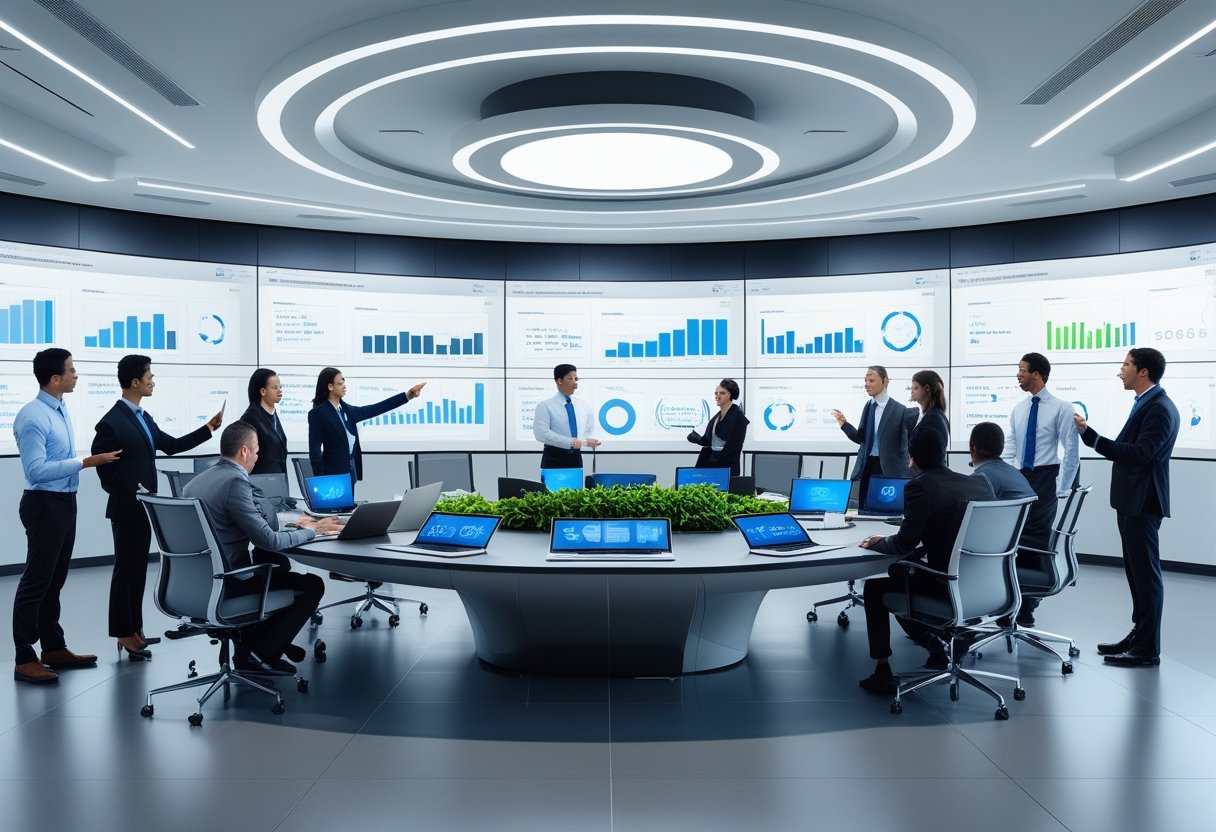
Meeting rooms must stop being passive boxes and become active systems that drive decisions, capture outcomes, and feed business workflows. This requires reliable audio capture, clear speaker attribution, automated notes, and tight links to calendars, task systems, and document stores.
From Passive Spaces to Active Business Infrastructure
Teams expect rooms to do more than host video. They expect rooms to log who said what, create time-stamped action items, and push tasks into systems like Microsoft 365 or project trackers automatically. That means installing multi-mic arrays, real-time speaker attribution, and firmware that prioritizes audio quality for machine transcription.
IT should treat each room as an endpoint in the enterprise data flow. Rooms need identity management, secure service accounts, and policy controls so meeting outputs become auditable business records. This shift converts collaborative spaces into nodes that generate structured, searchable outcomes.
Core Elements of Modern Collaboration Spaces
Modern collaboration spaces combine hardware, software, and process. Hardware: beamforming mics, wide field cameras, and local compute for low-latency processing. Software: meeting agents that transcribe, summarize, and convert decisions into tasks. Process: defined naming, tagging, and retention rules so outputs map to teams and projects.
Designers must also include wayfinding and signage to help users find the right room and confirm its capabilities. A simple UI outside the door can show room type, active services, and whether a meeting will produce AI summaries. That clarity improves user experience and adoption.
Integrating Digital and Physical Work Environments
Decision engines work only when physical and digital layers link. Calendar metadata must flow into the room so the meeting agent loads agendas, relevant docs, and participant roles automatically. Real-time overlays can surface data from CRM, dashboards, or shared drives during discussion.
Security and privacy controls must be embedded: per-meeting consent, selective transcription, and data routing to approved systems. When done right, hybrid work becomes seamless: remote and in-room participants see the same context, and decisions captured in the room trigger downstream workflows across the modern workplace.
Strategic Redesign: Technology, Analytics, and the Human Factor
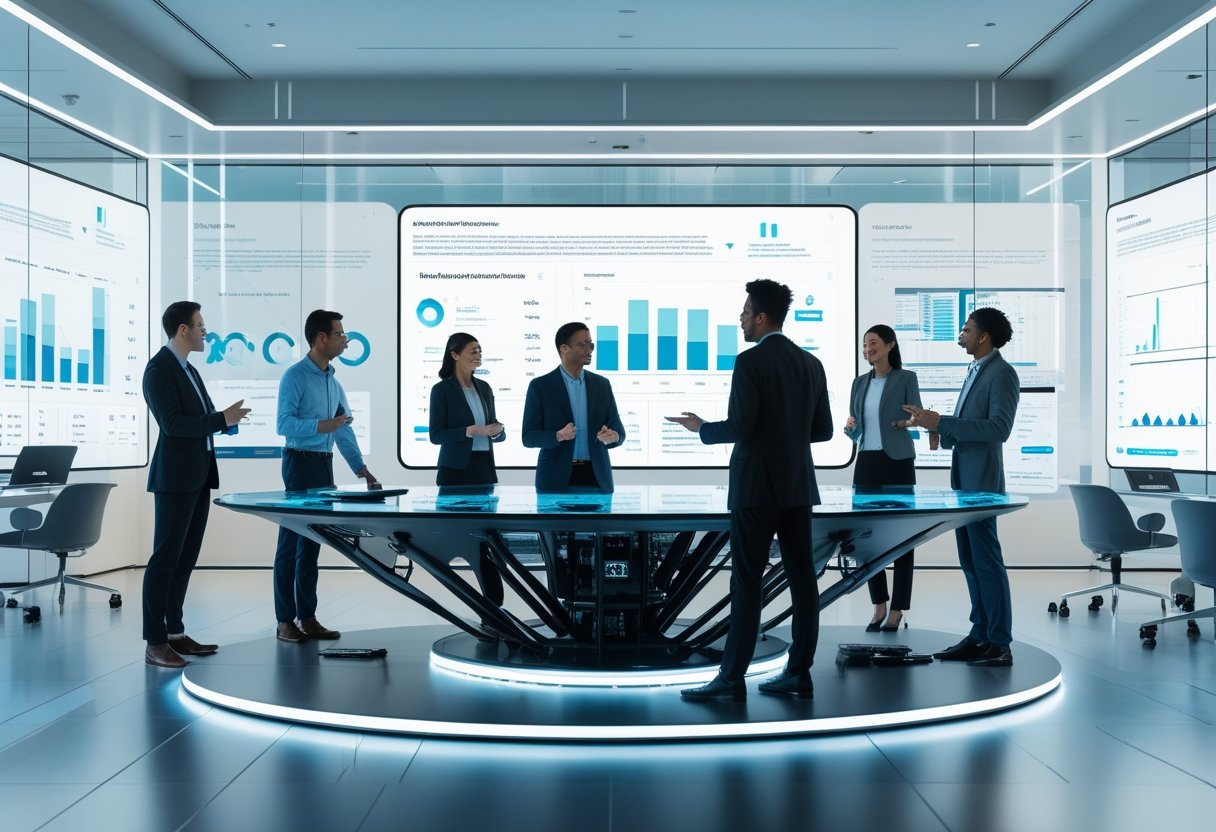
This section shows how deliberate tech choices, data-driven room management, and human-centered design turn meeting spaces into reliable decision hubs. It focuses on systems that support hybrid teams, measurable space improvements, and better information flow.
Technology Integration for Seamless Hybrid Meetings
They equip rooms with reliable audio, cameras, and content-sharing tools so remote and in-room participants join with equal capability. Install beamforming microphones and ceiling or table arrays to capture speech clearly; pair them with wide-angle pan-tilt-zoom cameras that auto-frame speakers. Use standards-based video conferencing endpoints and cloud-native services to reduce connection failures across vendors.
Digital whiteboards must save content directly to team drives and link to calendar invites. Integrate room-control panels with scheduling systems to prevent double-booking. Prioritize low-latency wired networks and dual-band Wi‑Fi for video traffic. Test interoperability regularly and document fallback steps for presenters to avoid meeting delays.
Designing for Productivity and Innovation
They optimize layout, acoustics, and sightlines so people focus on work, not the room. Use modular furniture and writable surfaces to support quick role changes: whiteboard brainstorming, focused huddle, or formal presentation. Design acoustic treatments—panels, ceiling baffles, and carpeting—to cut reverberation below 0.6 seconds for clear speech.
Arrange displays for equal visibility and place cameras at eye level to improve nonverbal cues. Provide local power, USB-C charging, and single-cable laptop connections. For larger conference centers, include breakout nooks with sound masking and smaller rooms for paired work to sustain creative flow and follow-up decisions.
Utilizing Analytics and Space Audits for Continuous Improvement
They run regular space audits and instrument rooms with usage sensors and meeting telemetry to identify waste and friction. Track metrics like occupancy rates, average meeting length, AV failure incidents, and percentage of hybrid versus in-person meetings. Combine calendar logs with sensor data to spot ghost meetings and underused rooms.
Use dashboards to prioritize fixes: upgrade rooms with high failure rates or retrofit frequently booked rooms lacking content-sharing tools. Run quarterly audits that include manual user feedback to confirm sensor findings. Tie analytics to procurement: buy standardized endpoints for rooms that show the most hybrid use to reduce support costs and improve reliability.
Enhancing Workplace Experience and Information Sharing
They make it easy to find, join, and capture decisions so information moves from meetings into daily work. Create a simple booking taxonomy and map room types to tasks (focus huddle, decision review, all-hands). Automate post-meeting artifacts: record meetings when appropriate, save whiteboard snapshots to project folders, and attach action items to calendar events.
Improve discoverability with room signage that shows available tech and capacity. Train staff on features like shared content streaming and how to push whiteboard snapshots to collaboration platforms. Offer a lightweight support playbook and fast-response help for critical decisions so teams trust meeting spaces to deliver outcomes.