
You stand at a crossroads where visuals shape stories and spaces. Choose projection when you want flexible, large-scale transformations that bend architecture into narrative, and choose LED when you need bright, high-resolution clarity that holds up in daylight and on-stage action. This choice affects cost, setup time, and how vividly the audience experiences your story.
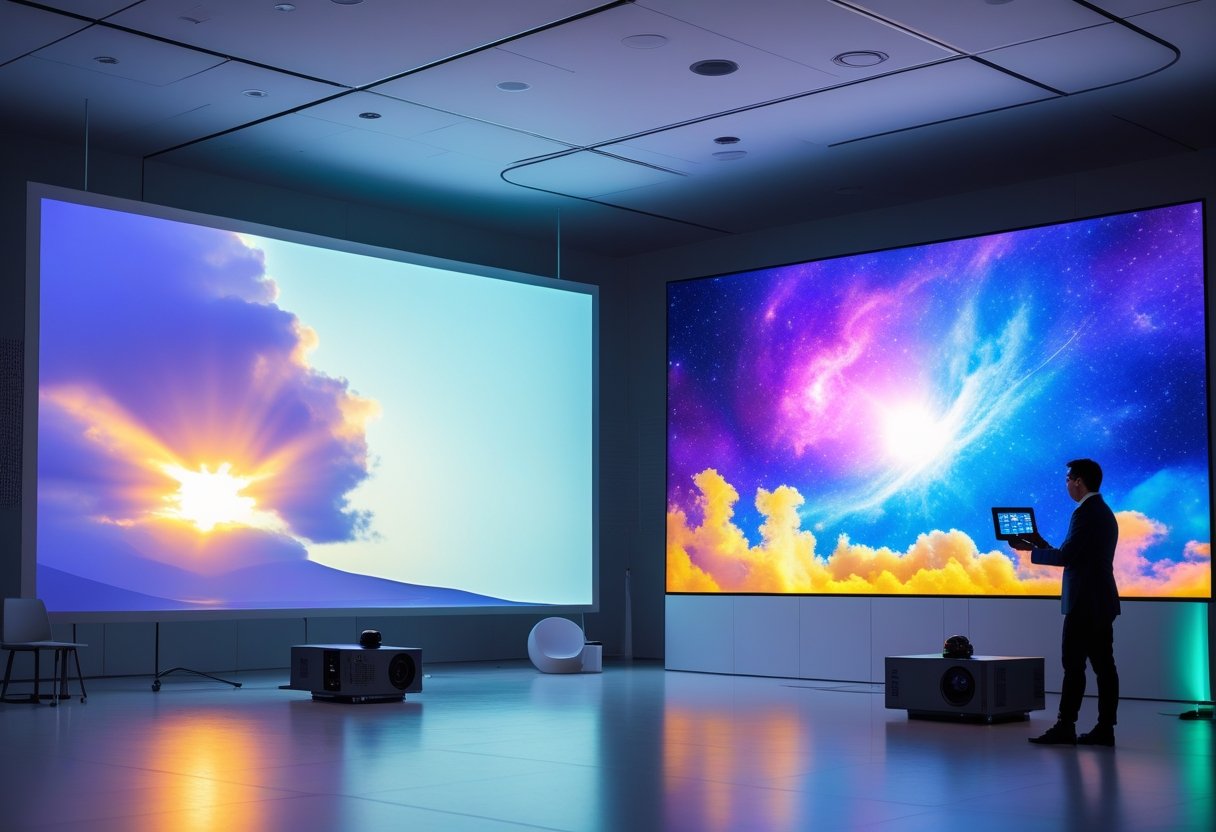
Think about scale and context: projection maps surfaces to create immersive moods in low light, while LED walls deliver consistent color and legible detail in bright or busy environments. Weigh creative goals against budget and logistics to pick the tool that makes the story feel cinematic where it matters most.
Key Takeaways
- Projection fits large, immersive transformations with lower surface cost.
- LED excels for daylight visibility and high-resolution content.
- Match the technology to budget, setting, and storytelling goals.
Projection vs LED: Cost, Flexibility, and Cinematic Impact
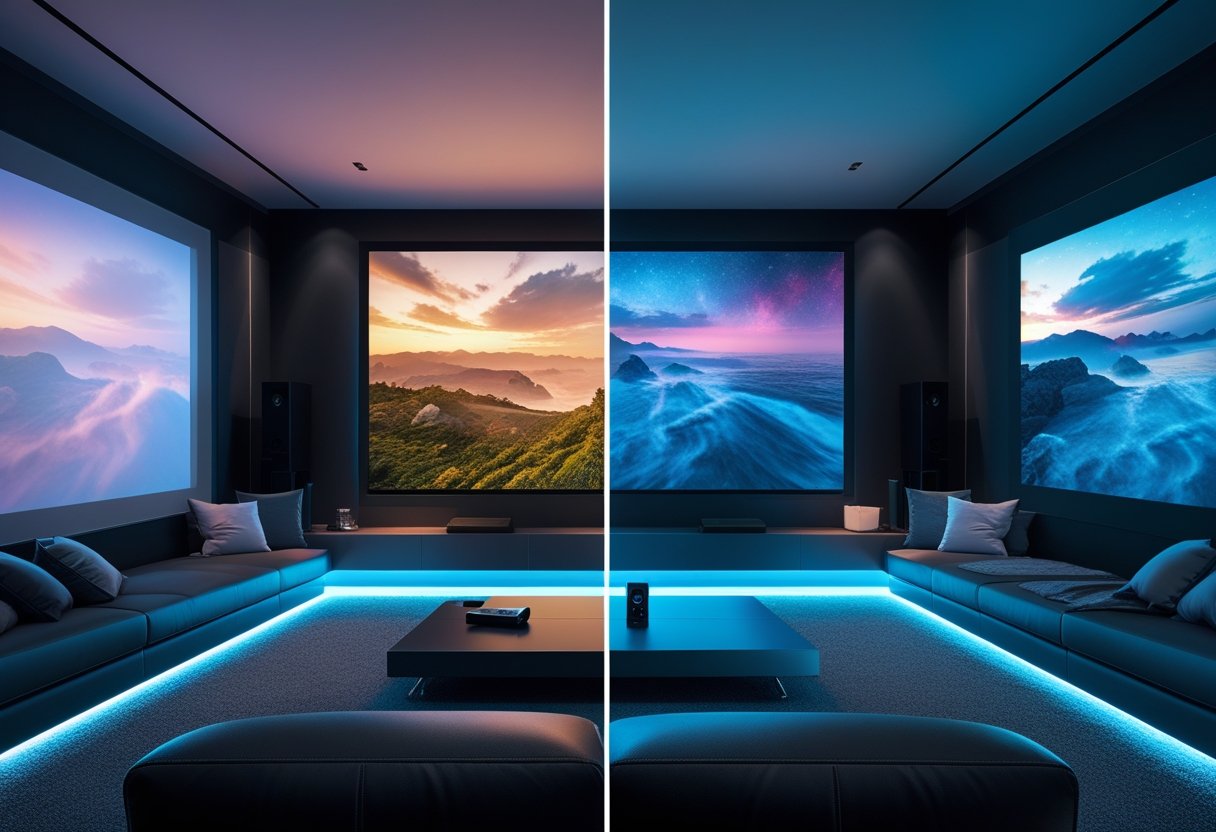
Projection and LED deliver different trade-offs in price, setup, and visual effect. One favors bright, repeatable clarity; the other favors surface transformation and large-scale immersion.
Cost Analysis and Budget Planning
They should compare upfront hardware and long-term costs. LED video walls require higher initial spend for LED panels, control processors, and rigging. For a 10 x 6 ft fine-pitch wall, budget for panels, frame, and media server. Projectors cost less per unit but need multiple high-lumen projectors for large or bright spaces. Projection mapping adds costs for lenses, mounts, and custom content mapping work.
Recurring costs differ. LED panels may need fewer replacements and lower day-to-day tuning, giving better ROI for multi-use or rental inventory. Projectors need lamp or laser maintenance, periodic recalibration, and sometimes more frequent replacement. Content and labor costs rise with projection mapping because each surface requires bespoke warping and testing.
They should include logistics costs. LED walls cut lighting control needs and reduce blackout expenses. Projection setups can raise venue prep time and require controlled lighting, which may add venue rental hours and crew labor.
Flexibility for Evolving Spaces
LED walls offer modularity. Technicians can add or remove LED panels to change size and aspect ratio quickly. Pixel pitch choices let designers match viewing distance to resolution needs. For touring or repeated installs, plug-and-play cabinets simplify staging.
Projection gives creative flexibility in form factor. It maps onto architecture, props, and irregular surfaces to change space without building new structures. It scales by adding projectors and adjusting throw distance and lensing. Projection mapping allows transforming ceilings, facades, and floors into moving canvases.
Each has venue constraints. LED walls need structural support, space for rear servicing, and load-rated rigging. Projection needs clear sight lines, controlled ambient light, and surface preparation for consistent color and contrast. They should choose based on whether the space will change often or require unique surface-driven experiences.
Cinematic Visual Quality and Impact
LED technology delivers high brightness, strong contrast, and consistent image quality. LED video walls maintain color fidelity in daylight, and fine pixel pitch yields crisp detail at close viewing distances. For live broadcast or stage backdrops, LED panels produce predictable blacks and steady luminance.
Projection can create cinematic scale and seamless transformations. High-end laser projectors now approach strong brightness and color accuracy, especially in darker settings. Projection mapping produces immersive scene changes by wrapping images around objects, giving directors spatial storytelling tools that LED screens cannot mimic.
Image quality depends on setup. For LED, resolution and pixel pitch define perceived sharpness. For projection, throw distance, lens quality, and surface texture determine clarity. Both require calibrated media servers and color management to match creative intent.
Durability and Maintenance Considerations
LED panels are robust and built for repeated assembly. They resist shock better than bulb-based projectors and allow hot-swap module replacement. Maintenance typically consists of firmware updates, occasional module replacement, and cleaning seams to retain uniformity.
Projectors need regular care. Laser models reduce lamp swaps but still need cooling and optical cleaning. Projection systems demand periodic alignment, lens checks, and surface maintenance for mapping accuracy. Ambient dust and temperature affect projector lifespan more than LED walls.
They should weigh downtime risk. LED walls offer faster recovery on-site by swapping cabinets. Projection setups can require longer recalibration after transportation or venue changes. Maintenance budgets should cover spare LED modules, projector service contracts, and qualified technicians for both technologies.
Choosing the Right Solution for Storytelling in Evolving Spaces
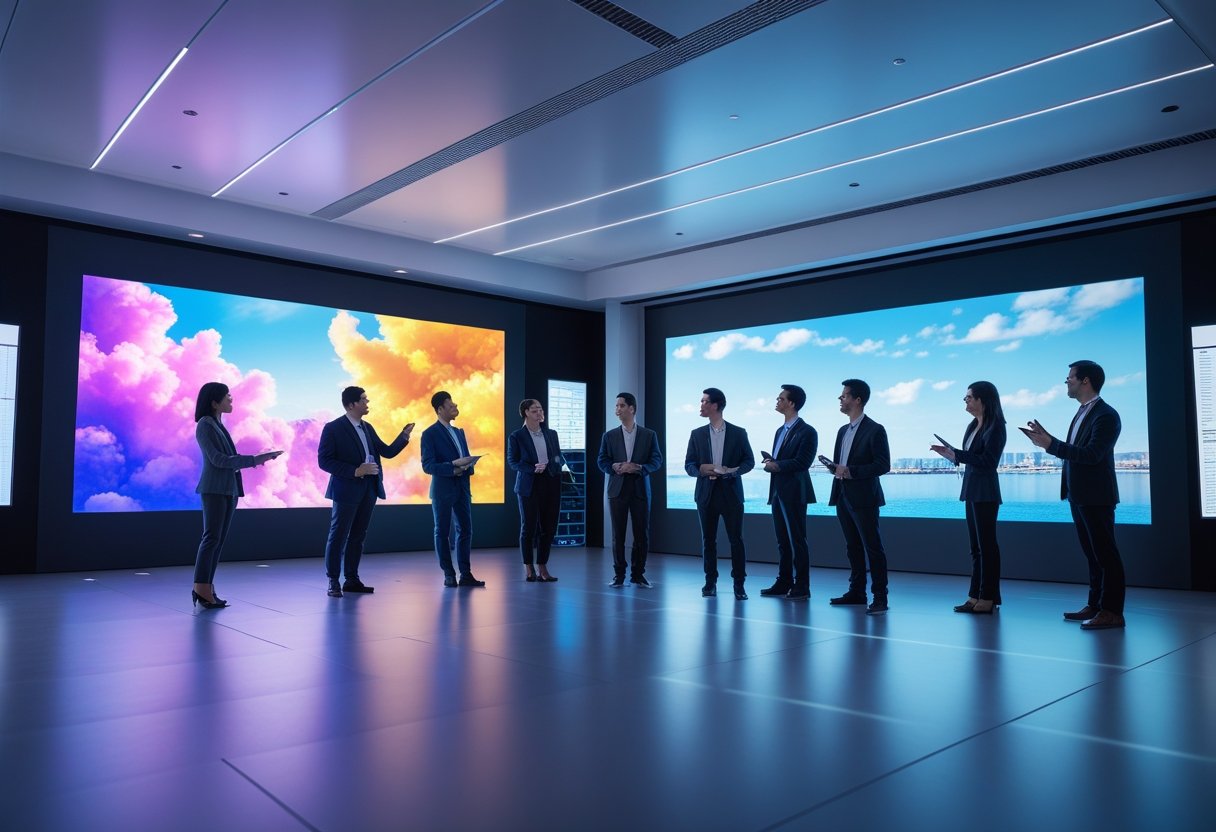
Decide with clear priorities: brightness needs, surface shape, audience flow, and running budget. Match those to technical demands like viewing angles, rigging limits, and the need for real-time visuals from a media server.
Audience Engagement and Immersive Experiences
Designers should pick tech that keeps guests focused and emotionally involved. LED walls deliver high-contrast visuals that remain visible in bright trade shows, product launches, and keynote stages. They work well for close-up content and precise scenic integration where text and fine detail matter.
Projection mapping excels when narrative depends on transforming architecture or props. It wraps visuals around irregular surfaces in museums, themed attractions, and dome environments. Projection also supports immersive art and ambient environments that change across time.
For live events and performances, consider latency and real-time control. Media servers and show control that feed both LED panels and projectors allow reactive visuals synced to sound, lighting, and pyrotechnics. Audience sightlines and viewing angles must guide placement to avoid dark spots or pixelation.
Venue and Spatial Design Considerations
Site constraints shape the choice quickly. Indoor venues with strong rigging and controlled light favor projection mapping onto complex shapes. Historic facades and immersive exhibitions often use projection to keep architecture intact while adding animated layers.
Bright, multifunctional venues and outdoor activations favor modular LED panels or large video walls. Miniaturisation of LED panels now permits tighter pixel pitch and curved builds, helping in themed entertainment queues and retail activations where durability and brightness matter.
Structural load, weight, and power affect feasibility. LEDs require sturdy mounts and more power distribution. Projection needs careful projector placement, throw distance, and blackout strategies. Coordinate scenic integration with architectural lighting and HVAC to avoid heat and glare issues.
Hybrid and Advanced Applications for Storytelling
Many projects use hybrid solutions to get the best of both systems. A crisp LED focal wall can present key information while surrounding surfaces use projection mapping to create contextual motion and atmosphere. This approach works for themed attractions, guest experiences, and immersive installations.
Advanced setups rely on synchronized media servers, pixel-mapping workflows, and timecode to blend live content across LEDs and projectors. Hybrid rigs support scalable solutions for trade shows, live performances, and product launches where both clarity and surface flexibility are needed.
Design teams should test color matching, edge blending, and viewing angles early. They should also factor maintenance, replacement of modular LED panels, and lamp or laser projector servicing into operational costs to keep storytelling consistent over long runs.