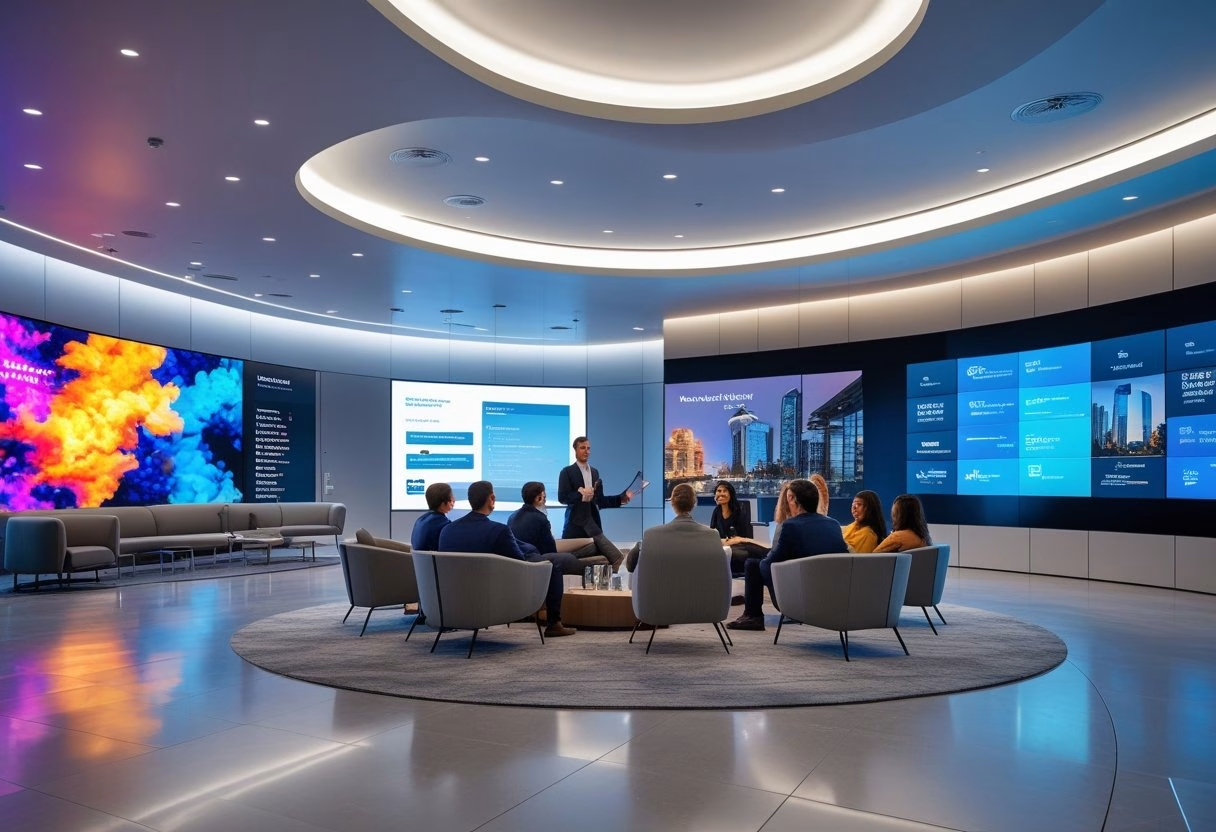
You step into a lobby, briefing center, or product theater and feel a message instead of just seeing one. AV design turns architecture into a storytelling, using light, sound, motion, and interactivity to make brand values immediate and memorable. When you place purposeful AV in these key spaces, you speed understanding, build trust, and make your brand easier to recall.
This article shows how to use AV in lobbies, briefing centers, and product theaters to shape perception and drive action. It explains what matters most—visual clarity, consistent narrative, and immersive interaction—and gives practical ideas you can apply to your own spaces to make every visit purposeful and persuasive.
Key Takeaways
- Use AV to communicate brand identity quickly and clearly.
- Design experiences that align visuals, sound, and interaction.
- Choose spaces that convert interest into meaningful engagement.
Core Principles of Brand Storytelling Through AV
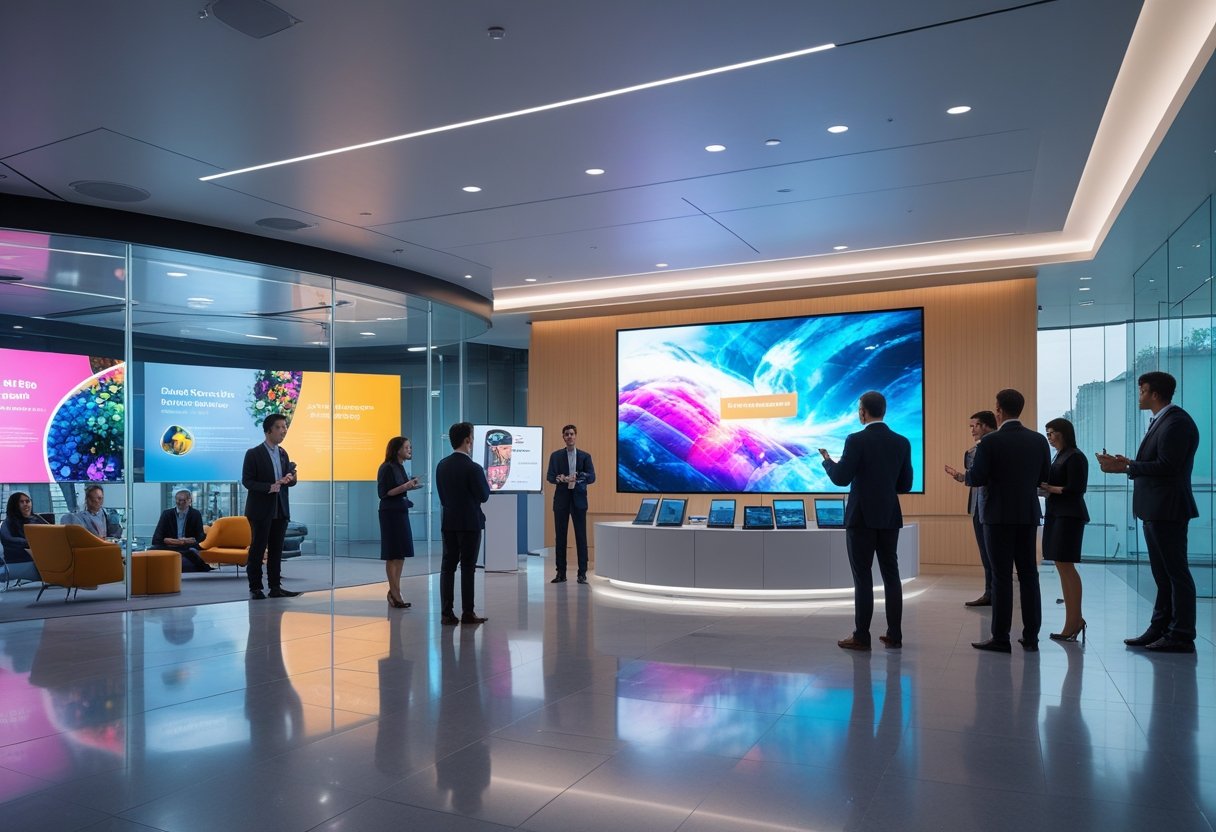
Brand storytelling should guide visitor movement, reveal brand values, and create moments that build loyalty. AV design must map content to space, emotion, and brand identity to deliver clear, repeatable experiences.
Defining Brand Narrative in Physical Spaces
They must translate the brand story into a physical sequence of moments. Start by mapping the visitor journey: entry, focal points, decision spots, and exit. Place key brand messages at high-attention zones like lobby sightlines, briefing-center demo stations, and product-theater stages.
Use consistent visual and verbal cues: logo treatment, color palette, typography, and short taglines. Tie those cues to measurable goals such as recall, demo requests, or sales leads. Ensure architecture supports storytelling—sightlines, acoustics, and lighting should guide attention to narrative beats.
Align every AV asset with brand positioning and values. Avoid generic stock content; use bespoke visuals and real customer stories to strengthen brand identity and consumer engagement.
Emotional Connection and Brand Experience
They must design AV to trigger specific emotions tied to brand values. Identify the desired feeling—trust, excitement, or comfort—and craft audio, pacing, and imagery to elicit it. For example, a briefing center aiming for trust uses calm lighting, slower cuts, and testimonial audio.
Use human voices and real-world footage to increase authenticity. Music and voiceover should match the emotional arc: tension at challenge points, resolution when the product solves a problem. Small tactile or scent cues in lobbies can reinforce the on-screen message and deepen emotional impact.
Measure emotional outcomes with simple metrics: dwell time, repeat visits, and qualitative feedback from guided tours. These link emotional connection to brand loyalty and long-term customer experience.
Multisensory Engagement with AV Technology
They must layer sight, sound, and motion to make stories immersive without overwhelming visitors. Combine high-quality displays with directional audio and subtle motion (kinetic walls, moving light) to focus attention. Use interactive touchpoints in product theaters so visitors can control pacing and explore features.
Optimize AV for clarity: readable on-screen text, consistent audio levels, and lighting that prevents glare. Integrate sensors and content scheduling so experiences change by time of day or audience size. That adaptability supports multipurpose spaces and keeps the brand experience fresh.
Balance novelty with purpose. Every multisensory element should reinforce the brand narrative and drive consumer engagement toward a clear action, like signing up for a demo or visiting a product table.
AV-Driven Immersive Environments: Lobbies, Briefing Centers, and Product Theaters
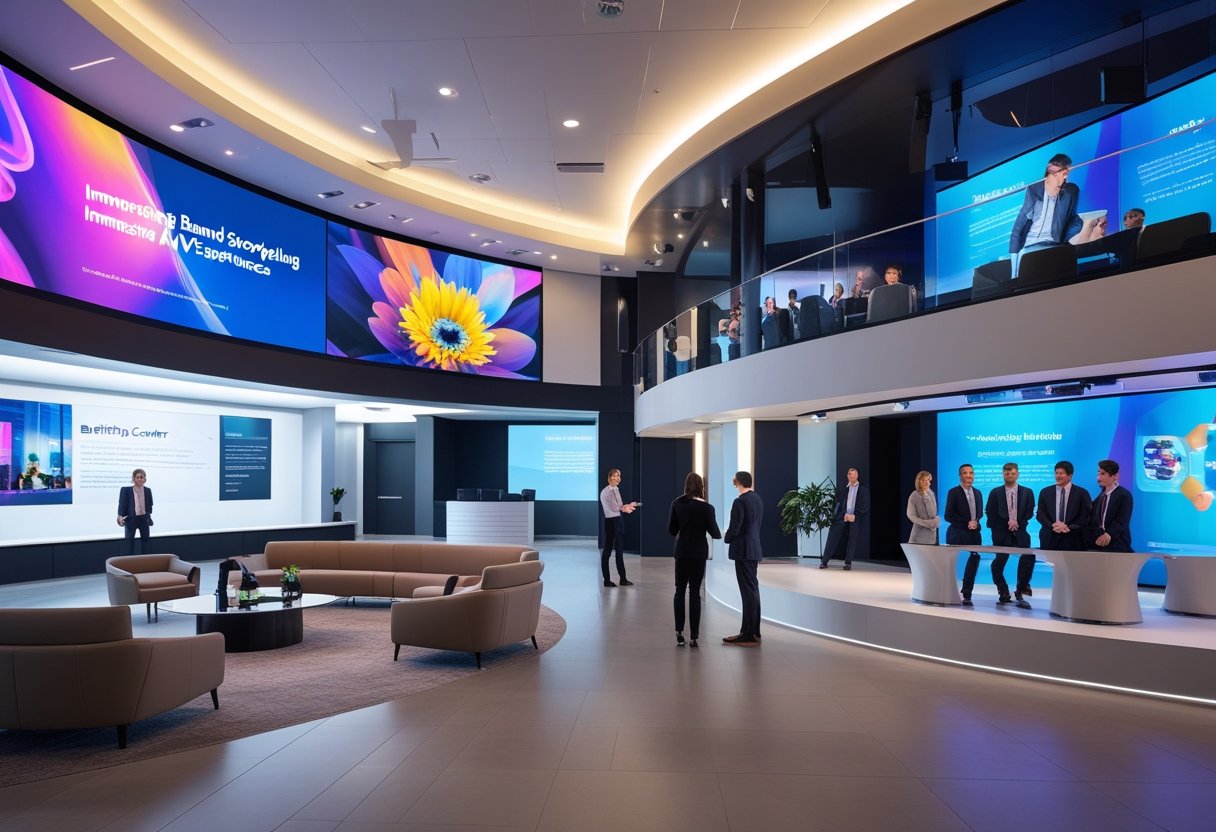
These spaces use visual and audio technology to shape first impressions, explain complex ideas, and showcase products in motion. They rely on integrated AV systems, adaptable room elements, and content that responds to visitors to deliver clear, memorable brand messages.
Interactive Displays and Digital Signage in Lobbies
Lobbies act as the brand’s open door. They pair large-format digital signage, touch-enabled kiosks, and smart mirrors to greet visitors with tailored content. Displays can show live building wayfinding, event schedules, or personalized welcome messages pulled from CRM systems.
Designers should specify energy-efficient displays and smart lighting systems that dim or color-shift with content to save power and match brand tones. Remote monitoring lets facilities staff check screen health and content playback without onsite visits.
Practical layout tools include retractable screens and movable walls that reconfigure the lobby for events or quiet waiting areas. Operators often combine static hardware with cloud-based content managers so teams update messaging centrally and push regional variations fast.
Immersive Storytelling in Briefing Centers
Briefing centers convert complex services into tangible experiences using immersive soundscapes, high-resolution projection, and architectural design integration. They use spatial audio and synchronized lighting cues to guide attention and create emotional context for technical demos.
Interactive elements—AR stations, interactive displays, and multi-touch tables—let visitors explore scenarios and data at their own pace. Multipurpose spaces use retractable screens and movable walls so one room supports a demo, a hands-on workshop, or a formal presentation.
Data-driven personalization improves engagement. Systems read visitor intent from registrations and present tailored sequences. Facilities integrate dynamic AV systems with building controls to adjust HVAC and lighting for comfort while keeping energy-efficient building goals in mind.
Product Theaters: Dynamic Brand Showcases
Product theaters stage products with timed lighting, projection mapping, and integrated sound to show features in real conditions. They combine demo pods, immersive projection, and live operator stations so staff switch between guided tours and self-led exploration.
Architectural design and AV technology merge to hide speakers, projectors, and cables for a seamless look. Movable staging and retractable screens let teams swap demos quickly between sessions and adapt theater size for audiences.
Operators use analytics from interactive displays and sensors to measure dwell time and interaction rates. This data feeds content loops and schedules, helping teams refine experiences and prove the theater’s impact on customer engagement.