
You will find new ways to link MLV Teknologi with global OEMs to shift from selling hardware bundles to delivering complete, integrated workplace ecosystems. They show how combining systems, software, and services can cut friction, improve uptime, and make teams work smarter across locations.
This shift lets companies replace one-off devices with platforms that unite tools, data, and workflows so operations run smoother and costs drop. They can use modular designs, cloud services, and better supplier collaboration to scale faster and stay competitive.
Key Takeaways
- Companies gain operational consistency by moving to platform-based workplace solutions.
- Integrated systems reduce downtime and simplify maintenance across sites.
- Cloud, modular hardware, and connected services enable faster scaling and innovation.
From Hardware Bundles to Integrated Workplace Ecosystems
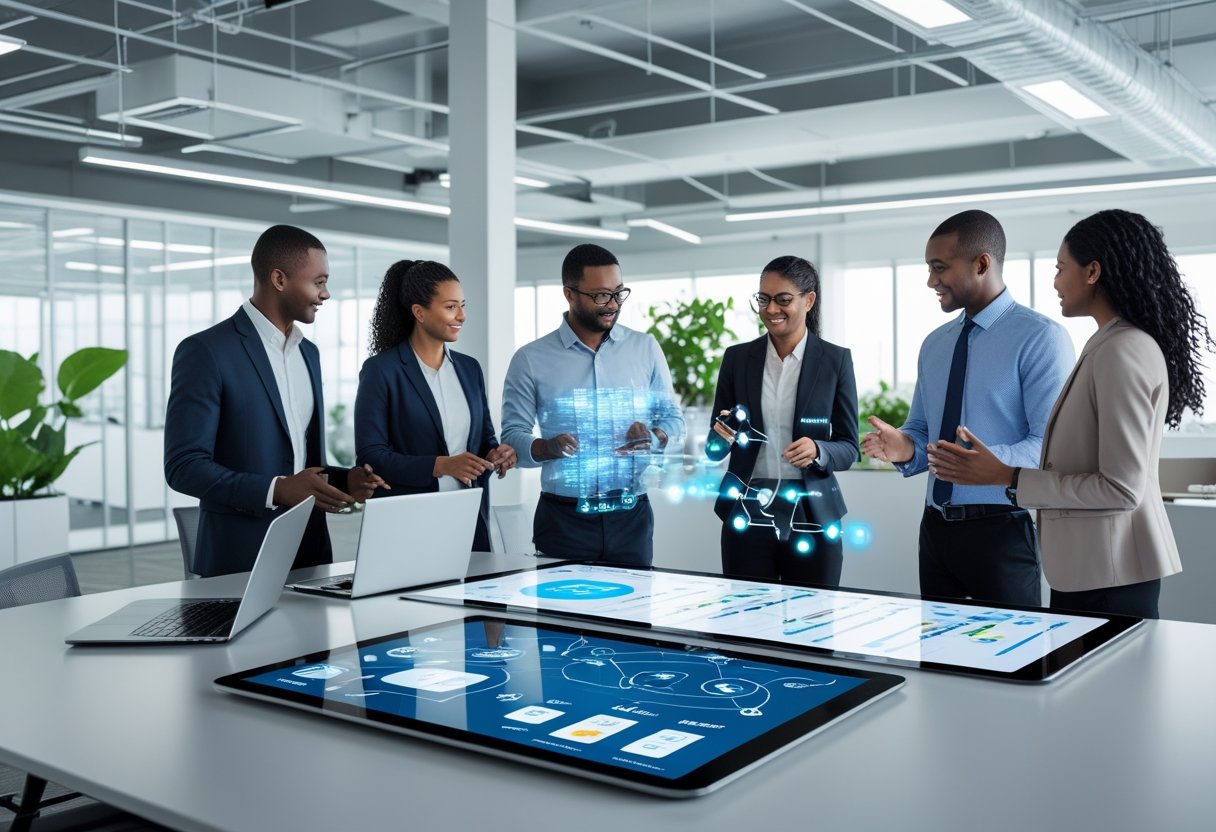
MLV Teknologi connects AV devices, room control, security, and displays into a single operational layer. The work focuses on integration, vendor partnerships, and services that turn stacked hardware into managed workplace functions.
MLV Teknologi’s System Integration Approach
MLV Teknologi acts as an AV system integrator that designs and builds complete installations. It teams with global OEMs and local partners to combine LED displays, video walls, conferencing gear, and control systems into one platform. Projects often include site surveys, room programming, cabling, and on-site commissioning.
They emphasize repeatable templates for meeting rooms, huddle spaces, and public areas. This lowers deployment time and reduces configuration errors. The company also offers training and aftercare so operations teams can manage devices and workflows without constant vendor intervention.
For customers, the benefit is predictable performance and a single vendor relationship for hardware, software, and services. MLV Teknologi lists its capabilities and projects on its site, which provides contact and location details for further inquiry (mlvteknologi.com).
The Shift Towards Smart Office Solutions
Organizations now demand systems that manage space, AV, and security together. Smart office solutions add sensors, room booking, and automated controls to traditional AV setups. This turns equipment bundles into services that schedule rooms, optimize energy use, and improve meeting experiences.
MLV Teknologi integrates Crestron or Extron control with displays from Planar and Samsung to enable centralized control and consistent user interfaces. Automation can pause AV sources, adjust lighting, or switch cameras based on meeting state. These workflows reduce meeting friction and support hybrid work patterns.
Decision makers value measurable outcomes: reduced idle rooms, faster meeting starts, and fewer helpdesk tickets. That makes investment in smart office systems easier to justify than buying isolated hardware items.
Role of Global OEMs in Ecosystem Transformation
Global OEMs like Extron, Crestron, Planar, and Samsung provide standardized, enterprise-grade components that system integrators use to build ecosystems. OEMs supply reliable hardware, developer APIs, and management tools that simplify large deployments and remote support.
They also offer certification, warranty, and software updates that protect long-term investments. MLV Teknologi partners with these OEMs to match product capabilities to client needs and to scale solutions across buildings. OEM collaboration helps with interoperability testing and creating design-and-build packages that speed procurement and installation.
Together, integrator and OEMs move clients from one-off hardware purchases to platforms that can be monitored, updated, and extended as workplace needs change. See reporting on MLV Teknologi’s OEM collaborations for examples of these partnerships in action (MLV Teknologi and Extron partnership).
Key Technologies Powering Modern Workplace Integration
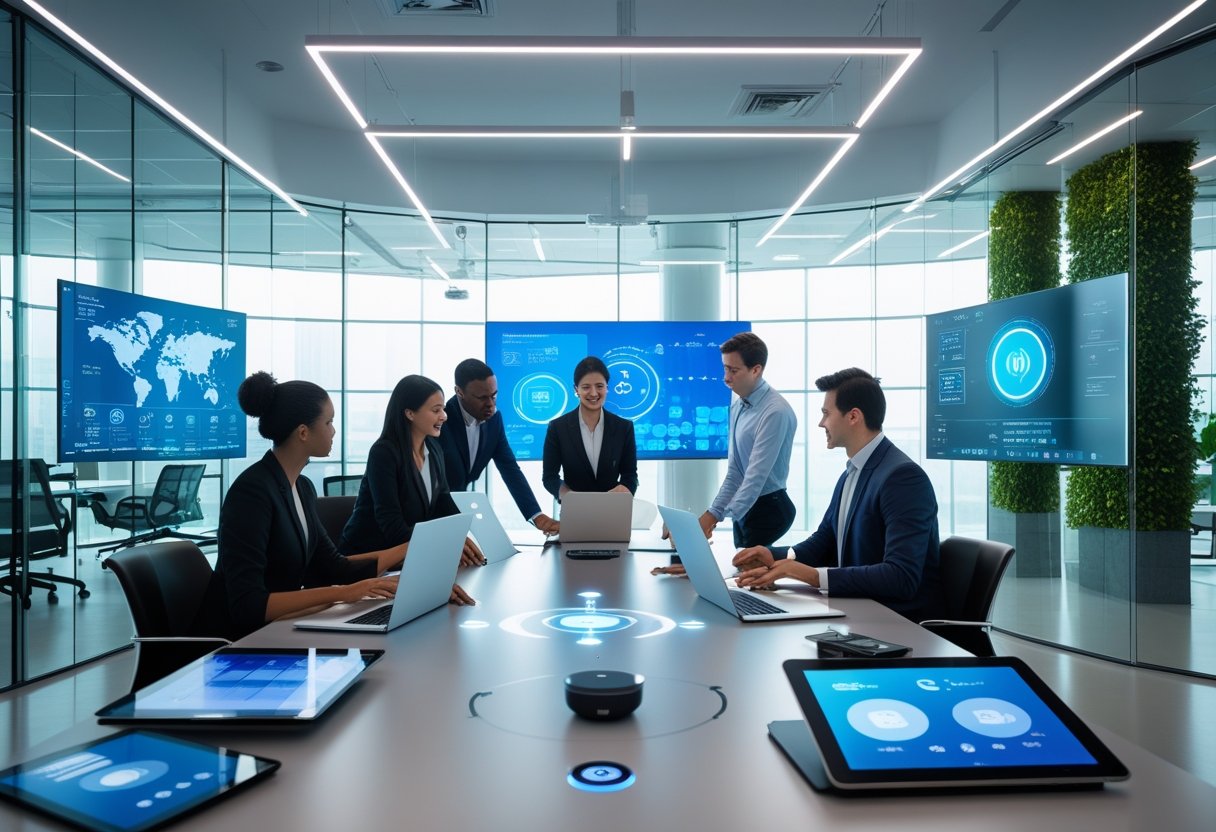
These technologies connect displays, audio, sensors, and control systems into a single operational layer. They enable predictable meeting experiences, centralized monitoring, and data-driven room and building management.
AV System Integration and Digital Signage
AV system integration ties displays, video walls, and sound systems to a central control plane. It links interactive flat panels, LED displays, and videotron screens with video matrixing and signal management to deliver seamless presentations and branded digital signage.
For large venues, distributed AV over IP reduces cabling and simplifies signal routing. Matrix switchers, encoders/decoders, and networked media players handle multi-source distribution while preserving resolution and low latency.
Sound design matters: quality loudspeakers, ceiling arrays, and microphone systems—such as omnidirectional mics and noise-cancellation processors—ensure intelligible speech in hybrid meetings. Control systems standardize room presets, volume, and input switching through touch panels or mobile apps.
Integrators must plan infrastructure: rack space, power, cable pathways, and service access. MLV Teknologi’s work shows how integrated AV supports both corporate communications and public-facing displays like lobby video walls and wayfinding signage (see integration example).
Smart Meeting and Command Center Solutions
Smart meeting solutions combine room booking, sensor data, conferencing devices, and automations to reduce friction. A meeting room can auto-select camera presets, set lighting scenes, and route the correct AV source when a booking starts. Interactive whiteboards and collaboration displays sync content to cloud services for immediate sharing and archival.
Command centers consolidate CCTV feeds, analytics, and building sensors for situational awareness. Video walls and control-room processors present prioritized alerts, while access control and visitor systems feed security workflows. Integrated CCTV plus video analytics enables event detection and faster incident response.
Resilient network design, redundant display controllers, and clear operator interfaces matter most. Service-level agreements and on-site support keep critical rooms and command centers available.
Collaboration, Productivity, and Operational Efficiency
Collaboration tech pairs conferencing hardware with software services to improve remote teamwork and meeting outcomes. High-quality cameras, beamforming microphones, and echo-canceling audio increase meeting usability. Peripherals and room kits standardize the user experience across sites and reduce setup time.
Operational efficiency grows from sensor-driven space management. Occupancy sensors, desk booking platforms, and room analytics feed utilization dashboards so facilities teams can reassign space and cut costs. IoT integrations—HVAC triggers, lighting control, and automated room sanitization—tie operational systems to room state.
AI and analytics add value: meeting transcription, participant presence detection, and noise-level monitoring help optimize policies and equipment placement. Post-installation support, spare-part planning, and maintenance contracts ensure long-term performance for enterprise-scale AV and smart office deployments.