
You asked for conflicting instructions about point of view (second person) and using third person. I will follow your earlier clear instruction to write in second person because it directly guides how to engage the audience. If you want third person instead, say so and I will revise. Bolded sentence answers the question as requested.
You can trust company museums to turn heritage and IP into clear signals of product quality, purpose, and long-term care that make you more likely to buy. They show real stories, patents, and design evolutions that back up marketing claims and make complex technology or craftsmanship easy to understand. That proof builds confidence faster than ads alone.
Walk through exhibits that highlight patents, manufacturing milestones, and customer impact, and you will see how strategy becomes tangible. These spaces teach visitors why the brand acts the way it does, linking past choices to future reliability and giving you the context needed to trust a purchase.
Key Takeways
- Corporate heritage and IP presented clearly increase buyer trust.
- Exhibits that explain product evolution make strategic claims believable.
- Well-designed museums turn history into a lasting organizational memory.
Strategic Role of Corporate Museums in Building Buyer Confidence
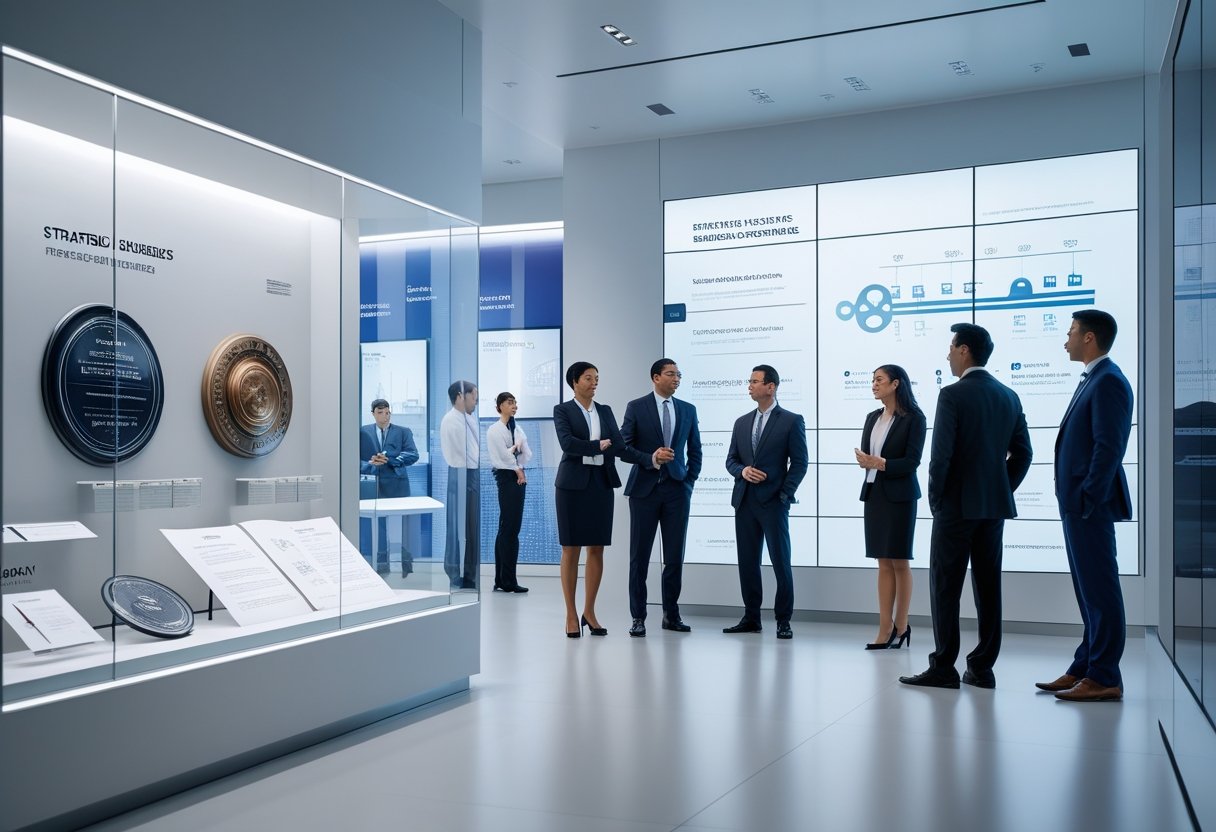
Corporate museums turn company history, products, and ideas into clear reasons for customers to trust and buy. They show proof of quality, explain how products evolved, and give visitors a chance to see intellectual property and processes in context.
Transforming Corporate Heritage into Strategic Narratives
The corporate museum curates artifacts, patents, and founder stories to create a factual narrative about capability and continuity. It displays key inventions, dated prototypes, and patent milestones so visitors can trace product improvements over time. This helps buyers see a logical development path rather than isolated marketing claims.
Exhibits emphasize measurable achievements: awards, certification plaques, and documented case studies. Labels and timelines link heritage items to modern product benefits, making the claim “we’ve always done this” concrete. When a museum ties a founder’s design choice to today’s warranty or safety standard, it strengthens buyer trust.
Using archival material in marketing campaigns extends the narrative beyond the museum walls. Corporate museums feed content for websites, ads, and sales kits that sales teams can use to back technical claims with historical evidence.
Building Brand Loyalty Through Immersive Experiences
Corporate museums create hands-on exhibits and guided tours that let customers test products, compare generations, and meet specialists. These immersive moments produce emotional and practical understanding: visitors remember how a product performed and why it matters.
Programs like product workshops, behind-the-scenes tours, and co-creation sessions invite repeat visits and deepen attachment. Loyalty grows when visitors feel included in the brand’s story and see tangible proof of care—like repaired prototypes or employee testimony about quality control.
Membership tiers, exclusive exhibit previews, and event invitations convert interest into ongoing engagement. When a museum becomes a regular touchpoint in a buyer’s life, it supports longer-term brand loyalty that goes beyond single purchases.
Heritage Marketing as a Competitive Advantage
Heritage marketing uses museum content to differentiate a company in crowded markets. The corporate museum supplies authentic material—original blueprints, founder letters, and early ads—that marketing teams turn into credible claims about expertise and values.
Competitors can claim innovation; a museum proves it with dated evidence. This makes heritage marketing powerful in B2B sales, procurement bids, and premium consumer segments where verification matters. Companies that show consistent investment in preserving IP and history can justify higher prices and win trust in procurement processes.
Practical tactics include heritage-themed product lines, certificate-backed warranties, and museum-based client briefings. These tactics link marketing strategy directly to museum assets, turning preserved corporate heritage into a measurable business advantage.
Architecting Buyer Trust: From Exhibit Design to Organizational Memory
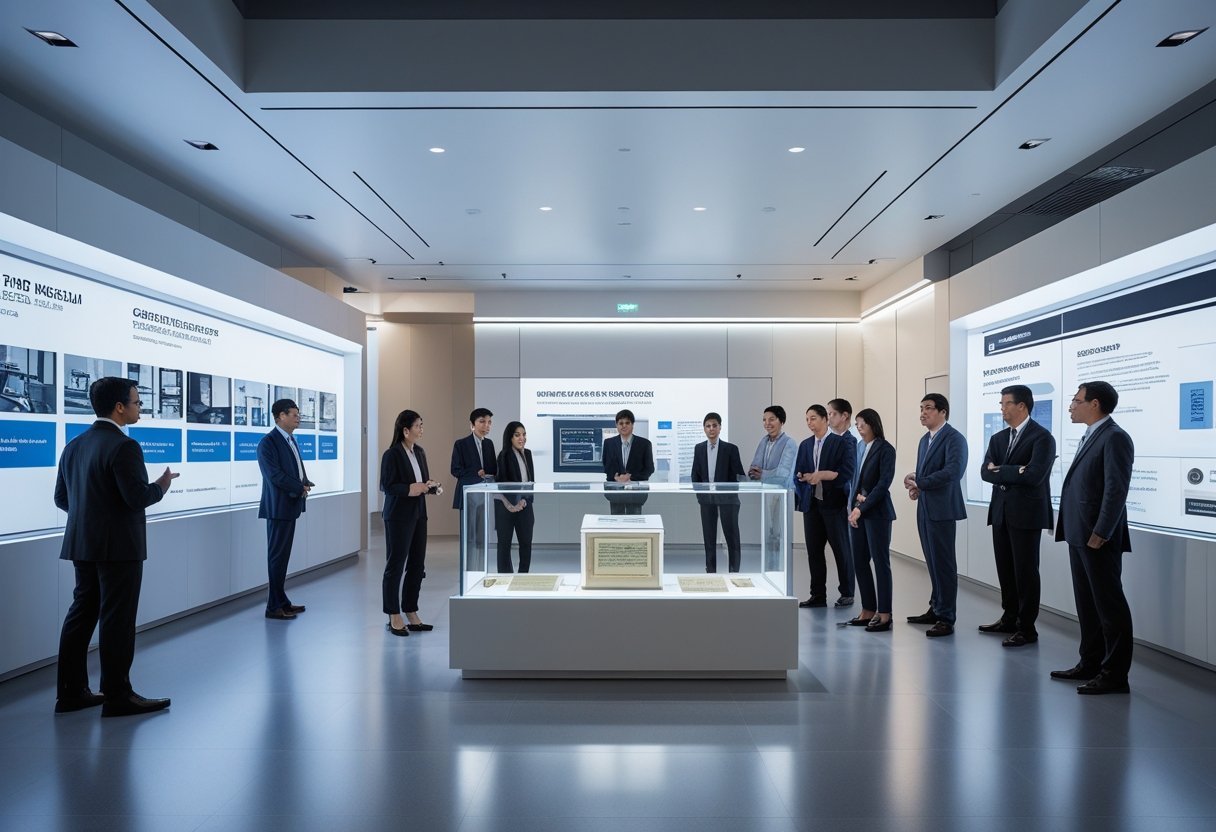
Corporate museums connect a company’s past, products, and values to the minds of buyers. They use careful exhibit design, preserved archives, and long-term cultural roles to turn heritage and IP into clearer, measurable trust signals.
Exhibit Design for Storytelling and Emotional Engagement
Exhibit design translates technical IP and business milestones into clear, memorable stories. Designers use artifacts, prototypes, and interactive displays to show product evolution and design choices. Labels focus on specific decisions — why a component changed or how a patent solved a customer problem — so visitors see practical value, not just nostalgia.
Lighting, scale models, and short video loops guide attention to key innovations. Emotional hooks come from personal stories of engineers or customers, presented in first-person quotes or brief oral-history clips. Wayfinding maps and thematic sequences help visitors link early failures to later product reliability, which builds buyer confidence.
Leveraging Corporate Archives and IP to Enhance Brand Authenticity
Corporate archives supply primary documents that prove claims about quality, origin, and invention. Curators select patents, test reports, and design sketches that directly connect to current products or services. Displaying dated technical papers or certification seals gives tangible proof of continuous capability.
Museums must balance openness with IP protection. They show proof-of-concept materials and declassified schematics while keeping sensitive data private. Clear provenance notes and archive metadata reassure visitors that artifacts are authentic and traceable, strengthening brand authenticity and trust.
Case Studies: Ferrari Museum, Museimpresa, and International Models
The Ferrari Museum links racing lineage to production car performance by showing chassis, engine blueprints, and race telemetry. Labeling ties specific race lessons to consumer safety and handling features, making the connection clear for buyers.
Museimpresa coordinates Italian corporate museums to raise sector standards and performance measurement. Its projects highlight how a national network improves credibility by sharing best practices in curation and visitor metrics. Other international models use similar tactics: a technology firm museum displays prototyping timelines; a household brand museum shows longevity through continuous product testing records.
Each case shows one practical tactic: align a single artifact with a customer benefit, use verifiable documents, and measure visitor understanding through surveys to track trust transfer.
Longevity and Corporate Museums as Cultural Institutions
Longevity gives museums institutional weight that buyers recognize as stability. When a company maintains a public museum for decades, it signals ongoing stewardship of heritage and product quality. That sustained presence turns a company museum into a cultural institution respected by communities and scholars.
To support longevity, organizations adopt governance practices: dedicated curatorial staff, preservation plans for archives, and partnerships with academic bodies. These steps protect artifacts and ensure exhibitions remain relevant. Long-term budgets and performance systems, like those developed in collaborative studies with national associations, help museums serve both corporate goals and public heritage needs.