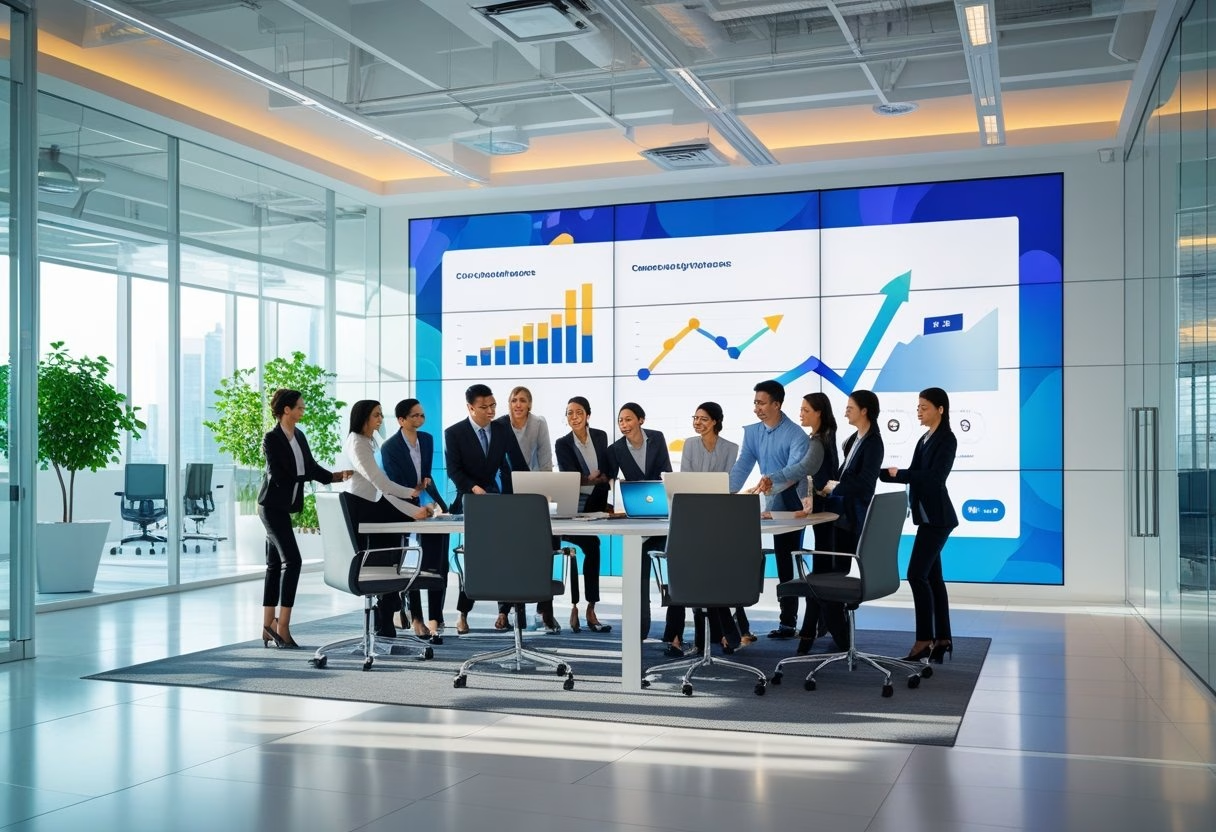
Many companies still treat office space as a fixed expense to cut or control. That view limits what the workplace can do. In a hybrid era, leaders must decide whether the office drains resources or drives value.
When a company aligns its office with its strategy, culture, and goals, it turns real estate from a cost center into a brand asset that strengthens performance and trust.
Research on workplace real estate as a competitive advantage shows that companies gain more when they connect space decisions to business outcomes.
An office now shapes how employees collaborate, how clients experience the brand, and how talent views the company.
Leaders who approach space with discipline, as outlined in the CFO’s guide to turning real estate into a strategic asset, treat it as part of growth strategy, not just overhead.
Key Takeaways
- Office space can support brand, culture, and business goals when leaders align it with strategy.
- Design, location, and experience shape how employees and clients view the company.
- Smart planning helps companies adapt to hybrid work and long-term change.
The Shift: Office as a Brand Asset, Not Just a Cost
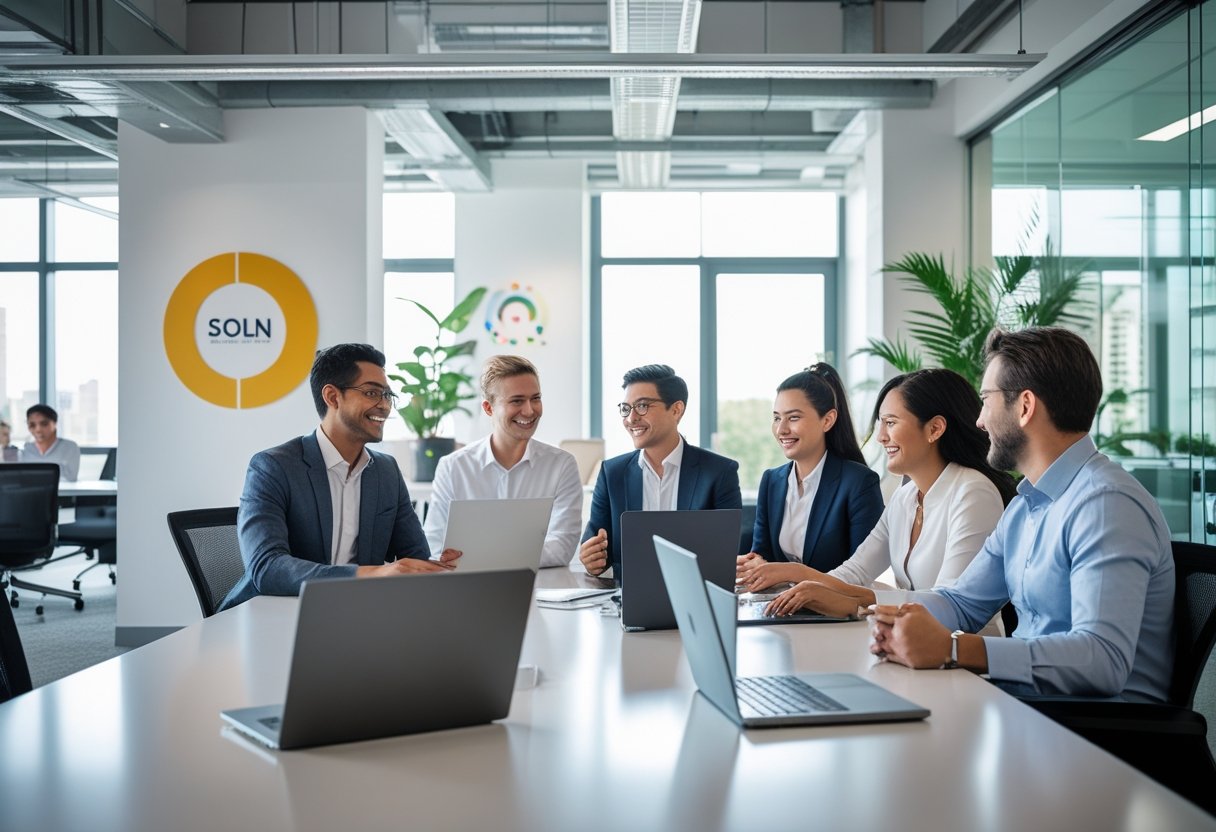
Companies now treat office real estate as part of brand strategy, not just an expense line.
Leaders connect workspace decisions to talent retention, employee engagement, and measurable business results.
Reframing Traditional Real Estate Perspectives
For years, many firms treated commercial real estate as a fixed cost to reduce.
They focused on lease rates, square footage, and short-term savings.
That view is changing.
Executives now see the office as a strategic asset that supports collaboration, culture, and performance, as explained in Office Space Is No Longer a Cost Center — It’s a Talent Strategy.
Instead of asking, “How do we cut space?” they ask, “How does this space support our goals?”
This shift affects:
- Site selection
- Layout and design
- Technology investment
- Access to transport and housing
Office real estate decisions now connect to workforce planning and brand positioning, not just occupancy costs.
The Business Case for Office Branding
Branding the workplace goes beyond adding logos to walls.
It shapes how employees and visitors experience the company every day.
A well-designed office can reflect values through layout, materials, and shared spaces, as discussed in How to transform your office into a powerful brand asset.
Open collaboration zones can signal transparency.
Private focus rooms can show respect for deep work.
Companies also align office design with corporate identity, which strengthens brand consistency across physical and digital touchpoints.
Clear wayfinding, branded meeting rooms, and consistent visual elements help reinforce identity, a trend noted in Workplace & Office Branding Trends (2026 Update).
When done with intent, office branding supports:
- Stronger employee engagement
- Clearer cultural signals
- More memorable client visits
It moves the office from background space to active brand platform.
Economic Impact on Talent and Productivity
Office strategy now links directly to talent retention and productivity.
Location, commute time, and workplace quality influence whether employees stay or leave.
Poorly located or outdated offices can weaken recruitment efforts.
In contrast, accessible locations with strong amenities reduce commute stress and support daily performance, as noted in Office Space Is No Longer a Cost Center — It’s a Talent Strategy.
Companies also balance hybrid work with structured in-office time.
They design spaces that encourage collaboration and knowledge sharing, which can be harder to manage remotely.
Key economic effects include:
- Lower turnover costs
- Improved team coordination
- Better client perception
- Stronger employer branding
Designing Offices for Branding and Experience
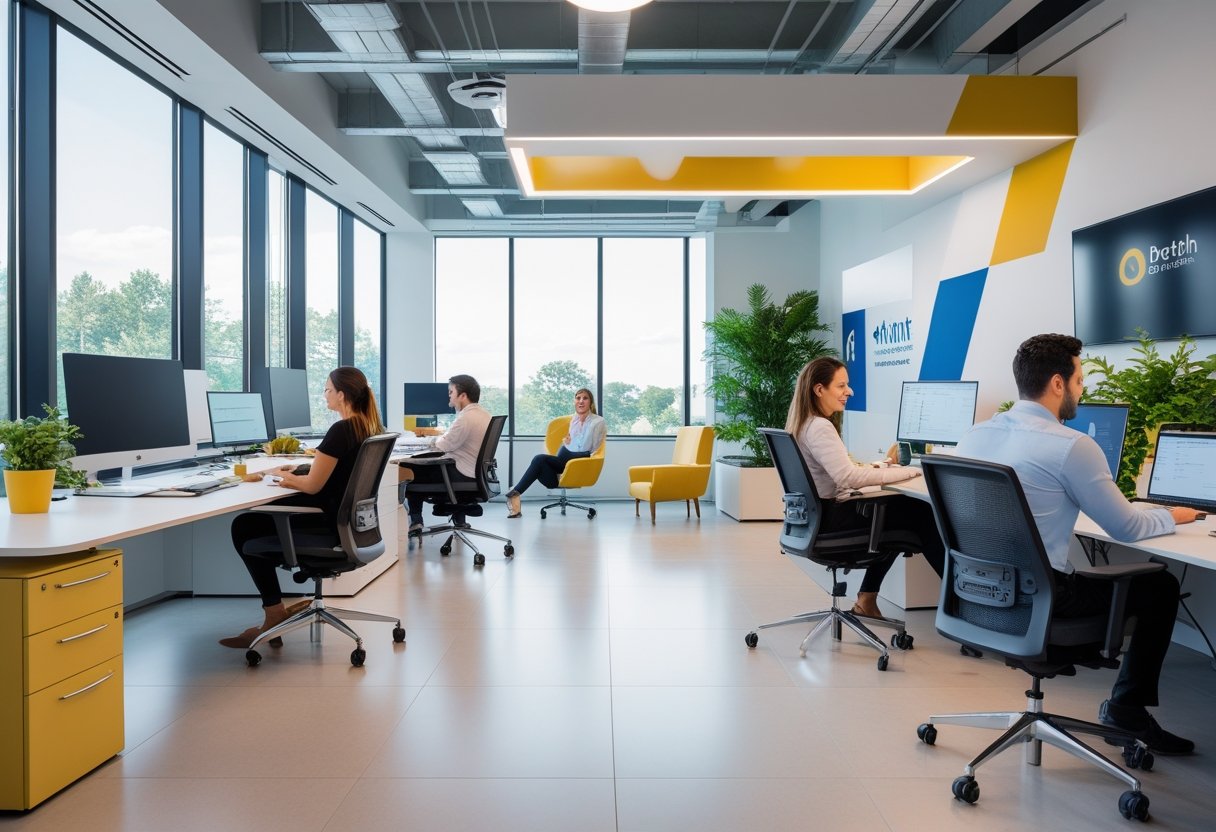
Strong office design turns space into a clear statement of values.
It shapes culture, supports employee well-being, enables collaboration, and uses smart systems to improve daily work.
Office Design as Cultural Expression
Office design communicates what a company stands for.
Layout, materials, and visual elements show priorities without a single word.
A firm that values transparency often uses glass walls and open sightlines.
A company focused on focus and deep work may include quiet zones and enclosed rooms.
These choices guide behavior every day.
Color, signage, and branded graphics also reinforce identity.
Many companies use principles from branded office design to align space with values and purpose.
Leaders should define three to five core traits—such as innovation, reliability, or teamwork—and reflect them in physical space.
Furniture style, meeting room names, and shared spaces must support those traits.
When design matches culture, employees see a clear and consistent message.
Clients experience the same message the moment they enter.
Employee Experience and Well-Being
Employee experience depends on how the space feels and functions.
Poor lighting, noise, and crowding reduce focus and morale.
Good office design supports employee well-being through practical steps:
- Ergonomic furniture that adjusts to different body types
- Smart lighting that adapts to daylight and task needs
- Acoustic panels to control noise
- Access to natural light and views
Smart lighting systems adjust brightness during the day.
This helps reduce eye strain and supports healthy sleep patterns.
Break areas, quiet rooms, and wellness spaces also matter.
Employees need places to reset during long workdays.
Designers often explore how office interior design improves brand identity while also supporting comfort and daily function.
When employees feel supported, they engage more fully with their work.
Integrating Collaboration and Community
Collaboration does not happen by chance.
Space must guide people to connect.
Open tables near team zones encourage quick discussions.
Enclosed meeting rooms support private talks.
Informal lounges allow cross-team interaction.
Office layout should reflect how teams actually work.
Some groups need daily stand-up areas.
Others need project rooms with writable walls and storage.
Research on experiential office design shows that shared spaces help shape how people interact with the brand and each other.
Design can support both structured meetings and casual conversations.
Community also grows through shared amenities.
Cafés, multipurpose rooms, and event spaces bring employees together beyond tasks.
Clear wayfinding and logical floor plans reduce confusion.
When people move easily through space, collaboration increases.
Smart Technologies and Space Optimization
Modern offices use data and automation to improve space use.
Smart systems track occupancy, lighting, and temperature in real time.
Space planning should match actual demand.
If meeting rooms sit empty most of the week, companies can resize or repurpose them.
If collaboration areas fill quickly, they may need expansion.
Key smart tools include:
| Technology | Purpose | Impact |
|---|---|---|
| Occupancy sensors | Track room usage | Reduce wasted space |
| Smart lighting | Adjust brightness automatically | Improve comfort and cut energy use |
| Booking systems | Reserve desks and rooms | Prevent conflicts |
| Climate controls | Regulate air and temperature | Support employee well-being |
Companies that follow a structured branded office planning guide often integrate technology early in the design process.
Smart tools should remain simple and reliable.
Technology must support work, not distract from it.
Strategic Location, Mixed-Use Spaces, and Ecosystems
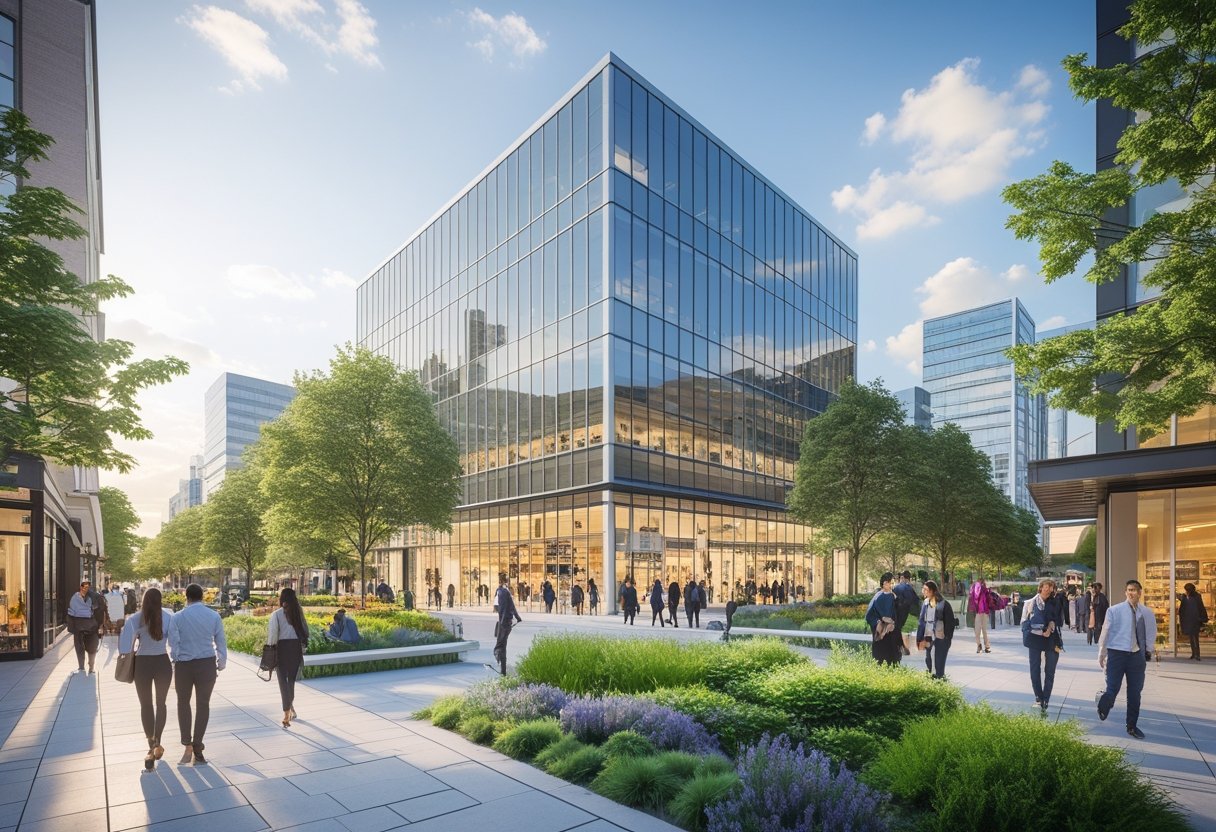
Office real estate shapes how customers, partners, and employees view a company.
The right mix of location, design, and community ties turns space into a visible brand asset rather than a fixed cost.
Mixed-Use Developments and Office Ecosystems
Mixed-use developments combine offices, housing, retail, and public space in one area.
This setup creates daily activity and steady foot traffic.
It also keeps employees close to services and transit.
Recent industry panels on reimagining mixed-use districts highlight five elements that support strong projects:
- Diversified anchors beyond office and retail
- Vibrant experiences with programmed events
- Creative partnerships with institutions
- Integrated communities
- Nature in design
When a company places its office in this type of ecosystem, it links its brand to activity and innovation.
An office near a university campus, health center, or sports venue gains built-in relevance.
Developers also track financial impact.
Research on mixed-use developments and urban revitalization shows these projects can raise rents and improve renewal rates when engagement is strong.
Location Choices for Brand Value
Location sends a clear message about a company’s priorities.
A downtown innovation district signals growth and access to talent.
A transit-linked hub shows a focus on convenience and sustainability.
Leaders now look beyond a single office tower.
They assess:
- Access to public transit
- Walkability and street activity
- Nearby cultural and civic anchors
- Quality of public space
Hybrid work has reduced daily office attendance.
This shift has pushed firms to rethink traditional office anchors, as seen in discussions about strategies for new developments in an ever-changing world.
Office real estate must offer more than desks.
It must place employees inside a district that supports meetings, events, and informal collaboration.
The address itself becomes part of the brand story.
Community Engagement through Real Estate
Community engagement now shapes project approval and brand trust.
Developers and tenants both benefit when they involve local residents early.
Strong engagement includes:
- Public meetings with real feedback
- Partnerships with local schools or nonprofits
- Open spaces that welcome the public
Urban research on the theory and praxis of mixed-use development notes the social effects of these projects.
Poor planning can raise costs for nearby communities.
Careful planning can improve access and daily life.
When a company supports public space, local hiring, or shared amenities, it shows commitment beyond profit.
That visible investment builds credibility.
Innovation, Sustainability, and Future-Proofing the Office
Companies now treat the office as a platform for innovation and measurable impact.
Leaders invest in smart technology, strong sustainability practices, and flexible layouts that support hybrid work without wasting space or energy.
Technology Integration: AI, Blockchain, and Robotics
Modern offices use AI to manage space, comfort, and safety in real time.
Smart systems track occupancy, adjust lighting, and control heating and cooling to reduce waste and improve employee comfort.
AI tools also analyze how teams use meeting rooms and shared desks.
Leaders use this data to redesign layouts and cut unused space.
Many firms apply insights from future-proof office design in 2025 to connect smart technology with daily operations.
Blockchain supports secure access control and contract management.
It creates clear records for leases, vendor payments, and sustainability reporting.
This improves trust and reduces disputes.
Robotics handles cleaning, delivery, and basic maintenance.
Robots move supplies, sanitize high-touch areas, and inspect equipment.
This frees staff to focus on higher-value work and keeps the building running with fewer disruptions.
Energy Efficiency and Sustainability Initiatives
Energy efficiency now shapes office design decisions.
Companies upgrade to LED lighting, install motion sensors, and use high-performance insulation to lower energy use.
They also adopt green materials and low-emission finishes.
Many follow guidance from sustainable office design trends in 2025 that highlight eco-friendly materials and energy-efficient systems.
Key initiatives often include:
- On-site solar panels or renewable energy contracts
- Smart meters to track real-time energy use
- Water-saving fixtures and recycling systems
- Indoor plants and natural light to support wellbeing
Some firms pursue green certifications such as LEED to improve building value and reduce operating costs.
As noted in discussions about balancing sustainability and style in office design, strong environmental performance can also strengthen brand image with clients and employees.
Adapting to Hybrid Work Models
Hybrid work requires offices that flex each day.
Leaders reduce fixed desks and increase shared spaces, quiet rooms, and collaboration zones.
They rely on booking apps and occupancy data to manage demand.
This prevents overcrowding on peak days and limits empty floors on slower days.
Effective layouts support both focus and teamwork.
Many strategies outlined in workplace strategy 2025 for future-ready offices stress the need for adaptable furniture, movable walls, and strong digital infrastructure.
Hybrid models also change lease and space planning decisions.
Companies may choose smaller central hubs supported by satellite spaces.
This approach reduces long-term costs while keeping a physical presence that reflects the brand.