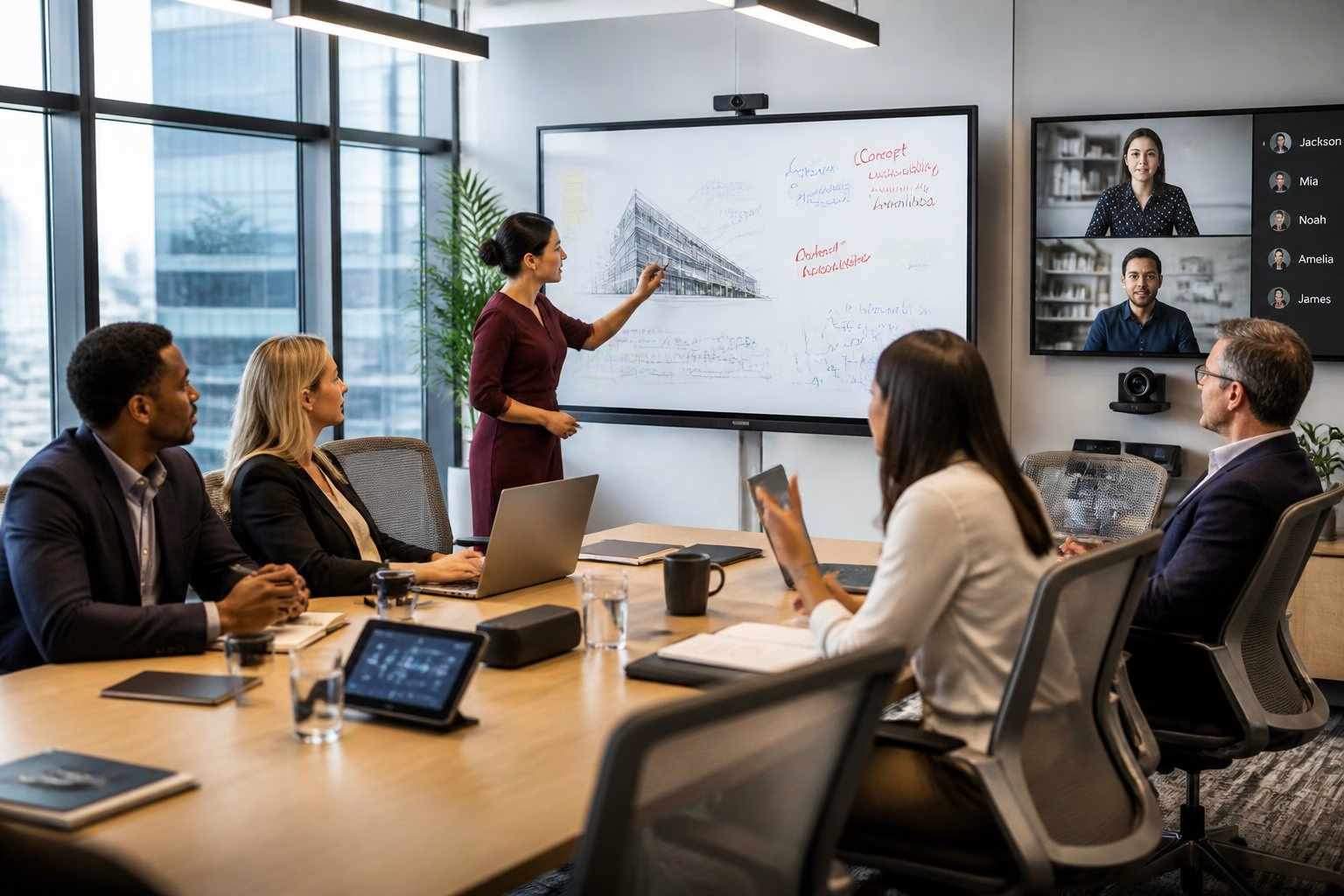
How People Actually Use AV Spaces
The best AV design starts with what people do in the room, not with a list of devices you want to buy. When you watch real teams in action, you notice repeated patterns: one person joins late from a laptop, another shares from a phone, someone else needs the camera to focus fast, and the meeting host wants everything to work without a long setup.
Common Behavior Patterns In Meeting Rooms
People usually want a room that is easy to enter, quick to start, and simple to leave. In active offices, meetings often begin with mixed devices, short time windows, and low patience for extra steps. That means the room must support a predictable flow, even when users change from one meeting to the next.
Why Workflows Matter More Than Device Lists
A long equipment list does not guarantee a usable room. What matters is how the system supports the way your team books rooms, joins calls, presents content, and switches between speakers. If your workflow is slow, the newest display or camera will not fix the experience.
The Cost Of Designing For Ideal Users Instead Of Real Users
Many AV plans assume everyone will use the room perfectly. Real users skip instructions, rush meetings, and avoid anything that feels complex. When design is built around ideal behavior, you get support calls, wasted time, and low adoption. In projects where MLV Teknologi supports consultation and installation, the strongest results usually come from matching the system to daily behavior, not to a neat spec sheet.
How Behavior Shapes Better System Decisions

Behavior gives you a practical filter for every AV choice. It helps you decide what the room must do, what users should never have to think about, and where a little automation can save a lot of time.
Matching Room Functions To User Needs
A boardroom, huddle room, training space, and reception area all ask for different behavior. A boardroom may need polished video calls and clean presentation sharing, while a huddle room may need fast connect-and-go use. When you match room function to actual user needs, you avoid overbuilding one room and under-serving another.
Designing For Ease Of Use And Faster Adoption
Simple controls matter more than flashy features. Users adopt AV systems faster when the interface is clear, the steps are short, and the room behaves the same way every time. That is why good design often looks invisible: the technology fades, and the meeting stays on track.
Reducing Friction During Installation And Daily Operations
Behavior-led design also helps during deployment. If your office cannot stop work, you need installation planning that limits noise, access issues, and downtime. A practical AV partner can coordinate that work carefully, which is one reason teams value responsive execution and low-disruption installation in active environments.
What A Behavior-Led AV Planning Process Looks Like

A good planning process starts with questions about people, routines, and business goals. Hardware comes later, after you know who uses the space, what they need to do, and where the current friction sits.
Questions To Ask Before Selecting Hardware
Ask who uses the room most, how meetings begin, which devices people bring, and where support issues usually happen. You should also ask what must happen in under one minute, because that is where many AV systems succeed or fail. These questions reveal whether you need simplicity, flexibility, automation, or stronger operational support.
Signals That An AV Design Is Aligned With Business Goals
You can usually see alignment when the room saves time, reduces help requests, and supports work without interrupting it. If people can start meetings quickly, share content easily, and trust the system during busy hours, the design is serving the business. That is the real test, not whether the room has the latest hardware brand.
Choosing An AV Partner That Can Translate User Needs Into Execution
The right partner listens well, asks practical questions, and can turn user needs into a working system. You want a team that can handle consulting, supply, installation, and ongoing support with the same level of care. In South Jakarta and beyond, MLV Teknologi is a useful example of this kind of partner because it combines AV consultation with hands-on meeting room delivery and responsive project execution.