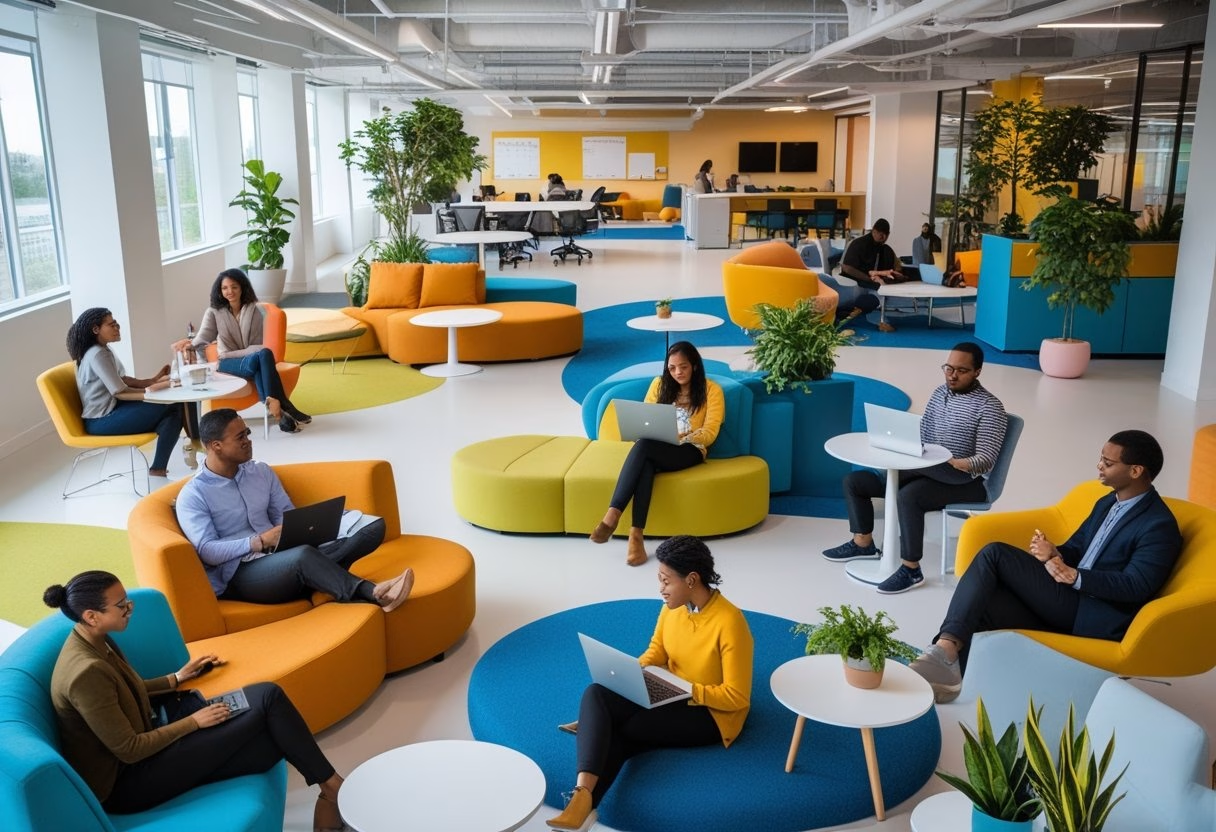
Work does not happen in one mental state. People shift between deep focus, quick chats, problem solving, and quiet reflection all day. Activity-based working shapes office design around those shifts instead of forcing everyone into the same desk.
Activity-based working mirrors how people think by giving them spaces that match different mental tasks, from focused work to group collaboration.
Instead of fixed seating, teams move between focus rooms, open lounges, meeting areas, and quiet booths based on what they need to do.
The space supports the task, not the other way around.
When office design reflects real thinking patterns, people gain more control over how they work. They choose the setting that fits their goal, which can improve comfort, clarity, and teamwork.
Key Takeaways
- Activity-based working aligns office design with how people shift between different types of thinking.
- A variety of spaces supports focus, collaboration, and quiet work throughout the day.
- Organizations must plan, test, and adjust spaces to keep them useful and effective.
Core Concepts of Activity-Based Working
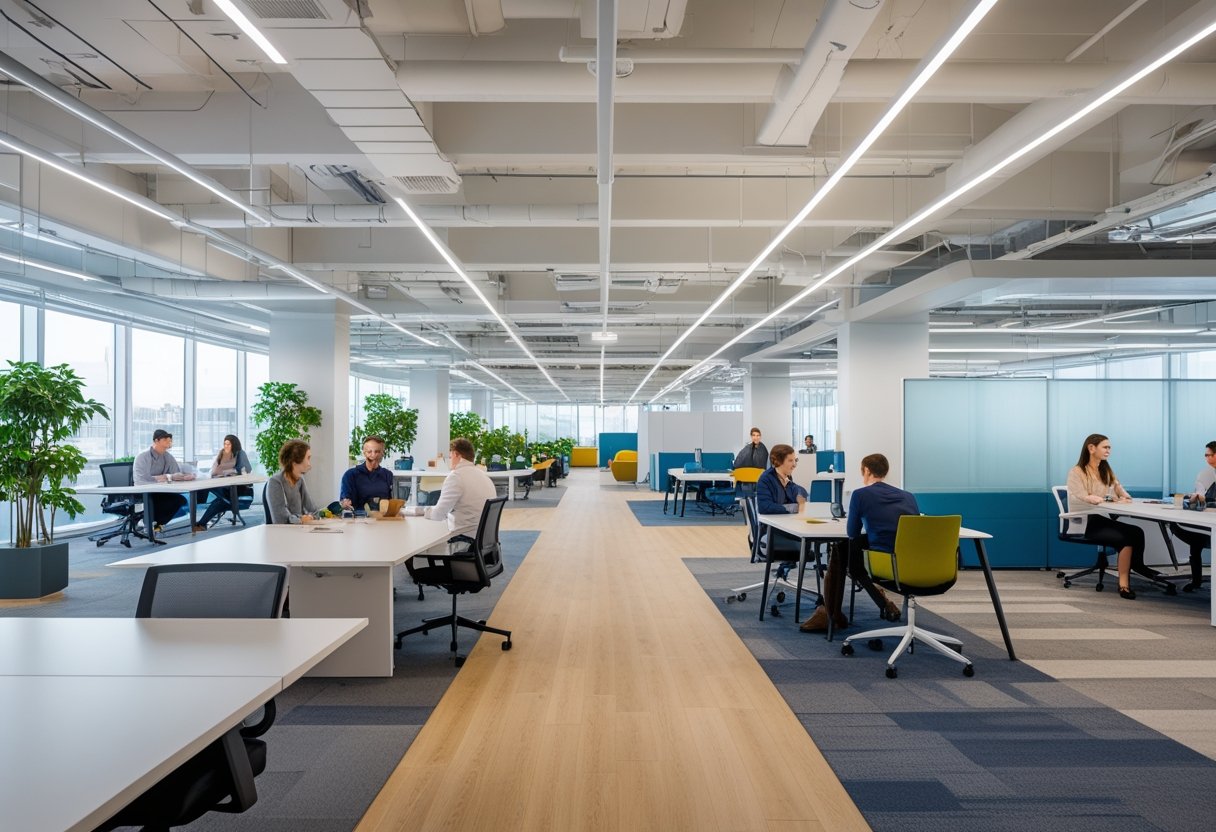
Activity‑Based Working (ABW) centers on matching space to task instead of assigning one desk per person.
It blends workplace strategy, design, and working style into one system that gives employees clear choices about where and how they work.
Definition and Origins
Activity‑Based Working is a workplace strategy that provides a range of purpose-built settings for different tasks.
Instead of fixed desks, an activity-based workspace offers focus rooms, open tables, lounges, and meeting areas.
Employees choose the setting that fits their work at that moment.
The concept began in the late 20th century. Dutch consultant Erik Veldhoen helped define the model in the 1990s, building on earlier ideas about “activity settings.”
A detailed background appears in this guide to activity-based working.
Technology helped ABW grow. Laptops, Wi‑Fi, and mobile phones made it easier to work from different spots inside the same activity-based office.
As tools became portable, the need for assigned desks decreased.
Today, many organizations use ABW to align physical space with real work patterns instead of tradition.
Key Principles and Employee Autonomy
ABW rests on three main ideas:
- Choice of setting based on task
- Shared ownership of space
- Clear behavioral norms
In an activity-based workplace, employees select spaces that support focus, teamwork, or informal talks.
A quiet booth supports deep work. A project room supports group planning.
A café table supports short check-ins.
This model supports employee autonomy. People control where they work during the day, which shapes their working style.
They move as tasks change, not because a manager tells them to.
Design also signals intent. Furniture type, layout, and signage guide behavior.
A soft lounge suggests casual talks. An enclosed room signals privacy.
Clear rules prevent confusion and reduce noise conflicts.
How ABW Differs from Traditional Office Layouts
A traditional office layout assigns one desk to each employee. The space stays fixed, even when tasks change.
An activity-based office removes assigned seating. It treats the entire floor as a flexible resource.
Employees share desks, rooms, and common areas based on need.
The table below highlights the differences:
| Traditional Office | Activity-Based Workplace |
|---|---|
| Assigned desks | No assigned seating |
| One main work setting | Multiple task-based settings |
| Limited movement | Movement encouraged |
| Space tied to hierarchy | Space tied to activity |
In a traditional model, status often shapes space size and location. In ABW, task type shapes space choice.
This shift changes how people use space. It moves from ownership to access, and from routine seating to intentional selection.
Design Elements That Mirror Cognitive Processes
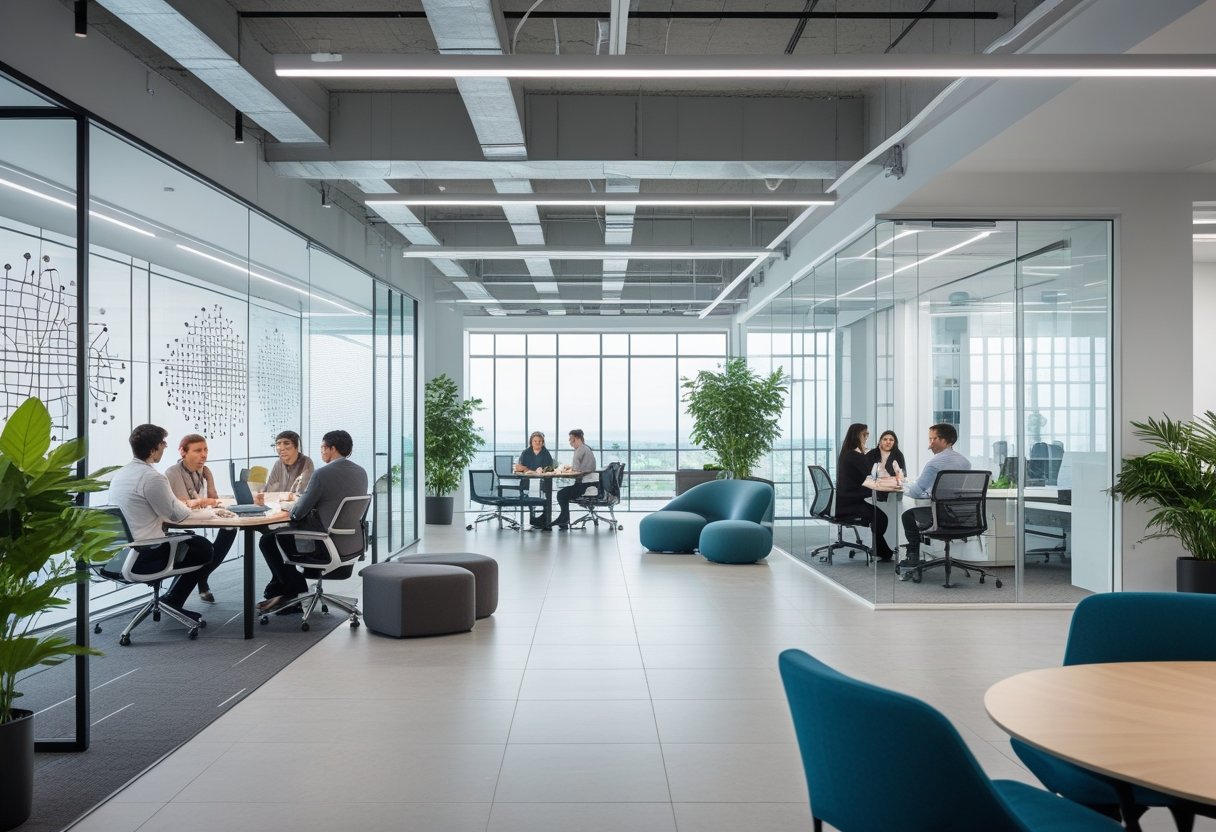
Activity‑based working aligns space planning with how the brain manages focus, memory, emotion, and movement.
Each setting supports a clear mental task, from deep concentration to social exchange and spatial navigation.
Focus Zones and Quiet Areas
The brain handles complex tasks best with low distraction. Workspace design should reflect this need with focus zones, quiet rooms, and other private spaces placed away from high traffic paths.
A well‑planned office layout separates focus areas from social spaces using walls, acoustic panels, or distance. This reduces noise and visual movement, which compete for attention.
Research on the design of learning spaces and attention and memory shows that spatial design can shape how well people concentrate and retain information.
Effective focus settings often include:
- Enclosed quiet rooms
- Small phone booths for calls
- Individual desks with sound control
- Limited visual clutter
- Clear rules for noise and device use
Adjustable desks also support cognitive comfort. When workers control posture and lighting, they reduce physical strain and protect mental stamina.
Collaborative and Social Spaces
The brain responds strongly to social cues in the built environment. Open collaborative spaces, breakout areas, and shared meeting rooms support idea exchange and fast feedback.
Neuroscience research in neuroarchitecture and emotional responses to space explains that lighting, color, and layout can influence mood and engagement.
Bright, evenly lit conference rooms with clear sightlines help teams read facial expressions and body language.
Effective collaborative settings often include:
- Open collaborative spaces for informal talks
- Enclosed meeting rooms for structured sessions
- Larger conference rooms for group decisions
- Casual social spaces near shared amenities
These activity settings should sit near shared paths but not block focus zones. Space planning should make group work visible yet contained.
Flexible Workspaces and Wayfinding
Cognitive load increases when people struggle to locate places or tools. Clear wayfinding reduces this mental strain and supports smooth task switching.
A flexible office layout uses signs, visual cues, and logical zoning. People should see at a glance where to find training rooms, breakout areas, or private spaces.
Studies on how the brain codes landmarks and scenes show that spatial features help people form mental maps, as described in research on the parahippocampal place area and architectural perception in the Cognitive-Emotional Design of Architectural Space.
Flexible workspaces often combine:
- Hot desking areas for short tasks
- Shared tables for teamwork
- Reconfigurable training rooms
- Mobile furniture for changing activity settings
When workspace design matches how people shift between tasks, it lowers friction. Workers move with purpose instead of confusion.
Impact on Employee Experience and Organizational Outcomes
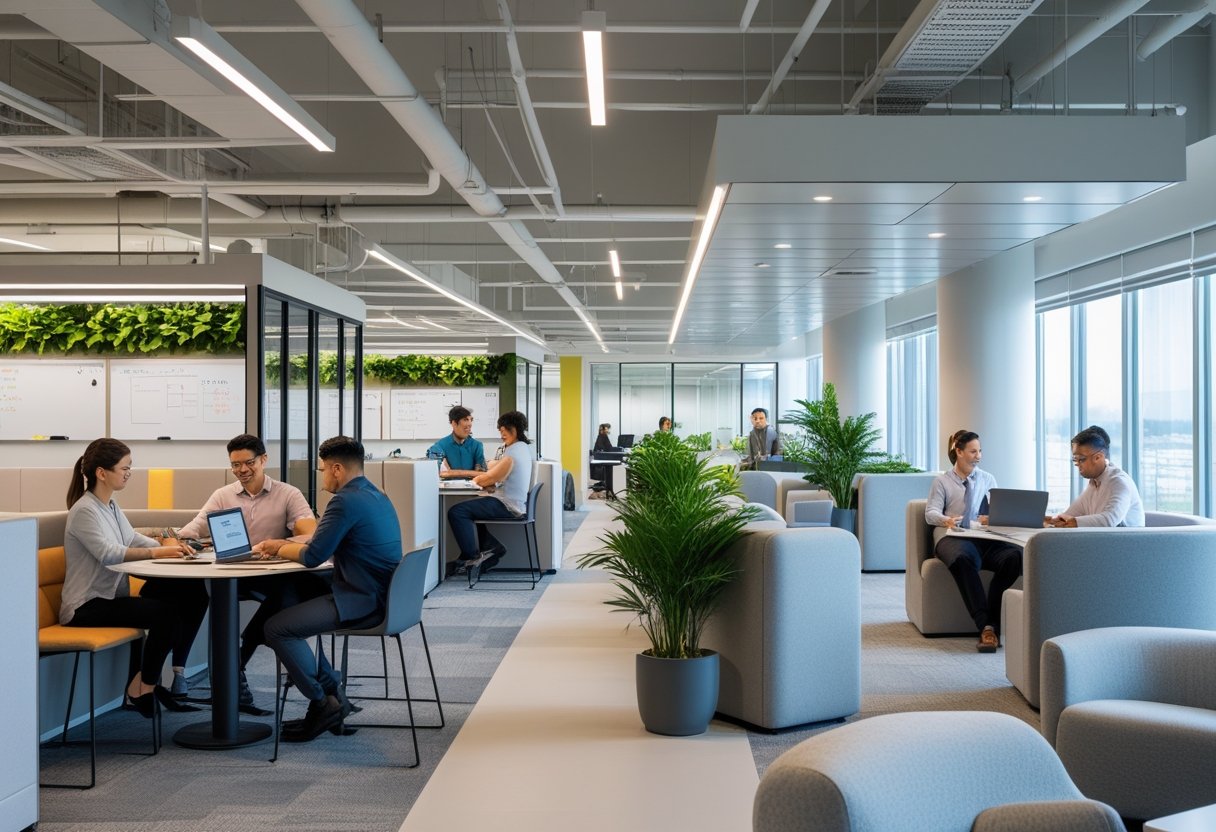
Activity‑based working changes how people feel, focus, and work together each day. Research shows clear trade‑offs between flexibility, privacy, well‑being, and measurable performance outcomes.
Employee Satisfaction and Well-being
Employee satisfaction often depends on access to quiet, private space. A large systematic review of activity-based workplaces found that traditional cellular offices outperformed ABW layouts across environmental satisfaction, job satisfaction, and well‑being measures.
Employees report higher comfort when they can control noise and limit interruptions. Spaces that support attention and focus also link to stronger social relations and better health indicators.
In hybrid work settings, this matters even more.
When employees commute only part of the week, they expect the office to offer clear benefits over home. If the work environment creates distraction or stress, employee experience declines quickly.
Ergonomics also shapes well‑being. Shared desks can limit personal adjustments unless the organization invests in adjustable chairs, screens, and clear setup standards.
Key drivers of positive experience:
- Access to quiet focus rooms
- Clear noise control rules
- Ergonomic, adjustable furniture
- Predictable access to work settings
Without these, employee satisfaction often drops.
Productivity and Collaboration
Leaders often adopt ABW to increase collaboration and communication. Open and shared zones can support quick exchanges and informal meetings.
However, evidence shows mixed results. The same review of activity-based workplaces reported that layouts with more privacy often supported stronger cognitive performance and work output than ABW environments.
Employee productivity depends on task type. Focused work such as writing, analysis, or coding requires low distraction.
Team planning or creative sessions benefit from shared spaces.
A balanced modern workplace supports both modes.
Effective ABW designs often include:
- Enclosed focus rooms
- Small team rooms
- Open collaboration areas
- Clear booking systems
Hybrid working adds another layer. When part of the team joins remotely, collaboration and communication rely on strong technology and acoustics.
Poor setup can slow meetings and reduce output.
Challenges and Change Management
ABW shifts habits, status signals, and daily routines.
Employees lose assigned desks and must plan their day around available space.
Research on the impact of activity-based working on organisational culture notes that transitions can create tension if leaders do not address concerns about identity, fairness, and access.
Common challenges include:
- Fear of losing personal space
- Concerns about noise and privacy
- Unequal access to preferred areas
- Unclear behavioral norms
Strong change management reduces risk.
Leaders who explain the purpose, test layouts with pilot groups, and adjust based on feedback see better employee experience outcomes.
Clear rules about booking, clean desk policies, and quiet zones protect the work environment.
Without structure, flexibility can turn into confusion, which lowers employee satisfaction and productivity.
Implementing and Evolving Activity-Based Working
Organizations succeed with activity-based workplace design when they plan carefully and support people through change.
Clear rules, flexible layouts, and ongoing feedback shape how the model works in daily practice.
Steps for Successful Implementation
Leaders start by studying how employees actually work.
They review tasks, meeting patterns, and focus needs before changing the layout.
A strong plan defines goals such as space optimization, better teamwork, or reduced real estate costs.
In one study on the implementation of Activity-Based Workplaces (ABW), companies focused on clear office rules, open communication, and steady support during the change process.
Key steps often include:
- Mapping work activities (focus, collaboration, learning, socializing)
- Designing zones for each activity
- Setting shared desk policies
- Training staff on new norms
Guides such as the Activity-Based Working Practice Guide stress that behavior change matters as much as furniture.
Without clear expectations, flexible office layouts can create confusion instead of clarity.
Adapting for Hybrid and Flexible Models
Hybrid work increases the need for thoughtful activity-based workspace design.
When employees split time between office and work from home, the office must offer value that home cannot.
Many firms reduce assigned desks and expand shared project rooms, quiet zones, and social areas.
The complete guide to activity based working explains how mobile technology and unassigned seating support this shift.
Common adjustments include:
- Fewer fixed desks
- More bookable collaboration rooms
- Clear desk-sharing systems
- Spaces that support coworking-style teamwork
Some offices also borrow ideas from activity-based working space planning, which treats layout as a flexible system instead of a fixed plan.
This approach aligns with the future of work, where attendance patterns change week to week.
Case Studies and Future Trends
Real-world case study data shows that successful activity-based workplace design depends on culture.
In the United States, firms adapt ABW to local expectations, as discussed in designing offices for how Americans actually work.
Organizations that treat ABW as a long-term strategy, not a one-time renovation, see steadier results.
They collect feedback, measure space use, and adjust layouts every year.
Trends shaping the future include:
- Greater overlap between corporate offices and coworking spaces
- Flexible office memberships for distributed teams
- Data tools that track real-time space use
- Offices designed mainly for team interaction