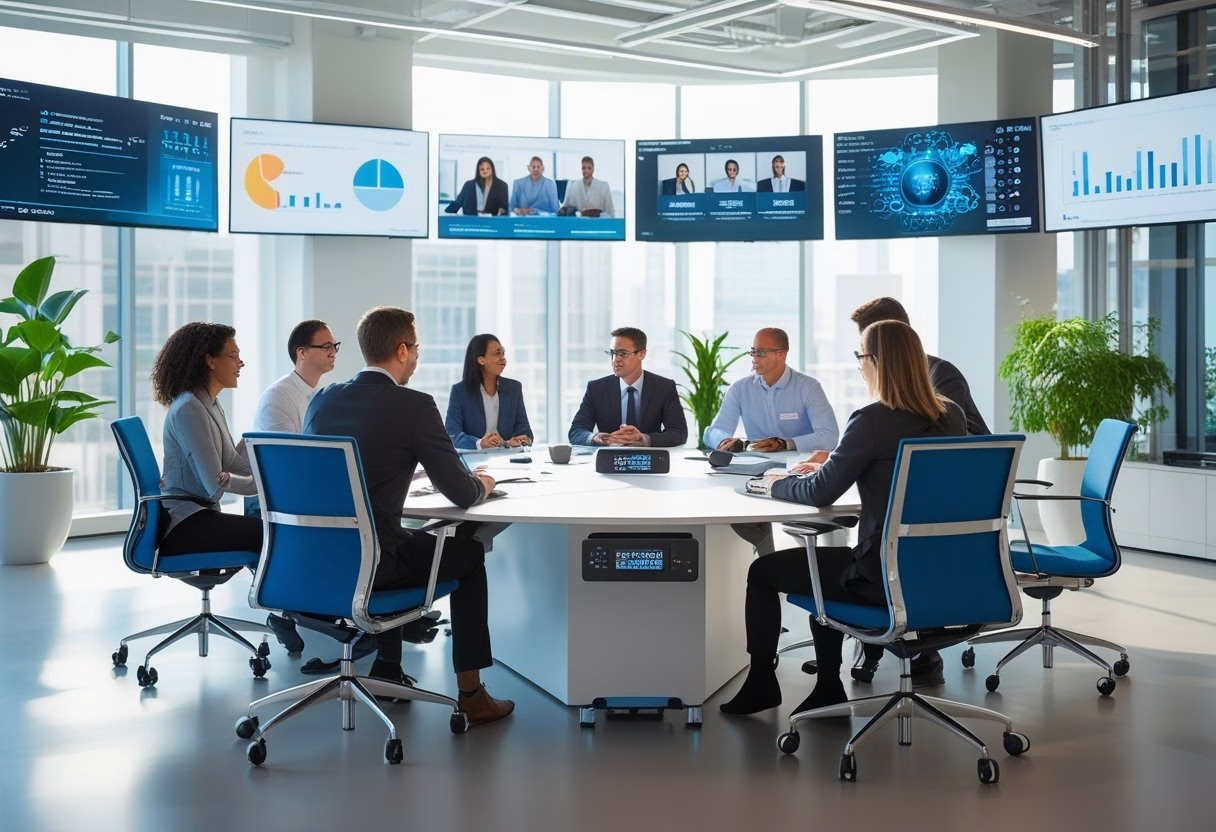
Creating connected workspaces with Crestron and MLV Teknologi brings seamless integration of technology into office environments. They provide solutions that simplify managing meeting rooms, enhance collaboration, and improve user experience in smart workspaces. This helps businesses operate more efficiently in today’s hybrid work model.

These companies combine audio-visual technology with reliable tools to build spaces where communication flows smoothly. Their systems allow easy access to resources like video conferencing, lighting controls, and room booking, making work less complicated for employees.
By using advanced technology from Crestron paired with MLV Teknologi’s expertise, companies can ensure their workplaces are flexible, secure, and future-ready. This kind of integration supports better teamwork and productivity, adapting to the needs of modern businesses.
Key Takeaways
- Connected workspaces improve efficiency and collaboration.
- Integrated AV and control systems simplify technology use.
- Flexible solutions help businesses adapt to future demands.
The Foundations of Connected Workspaces
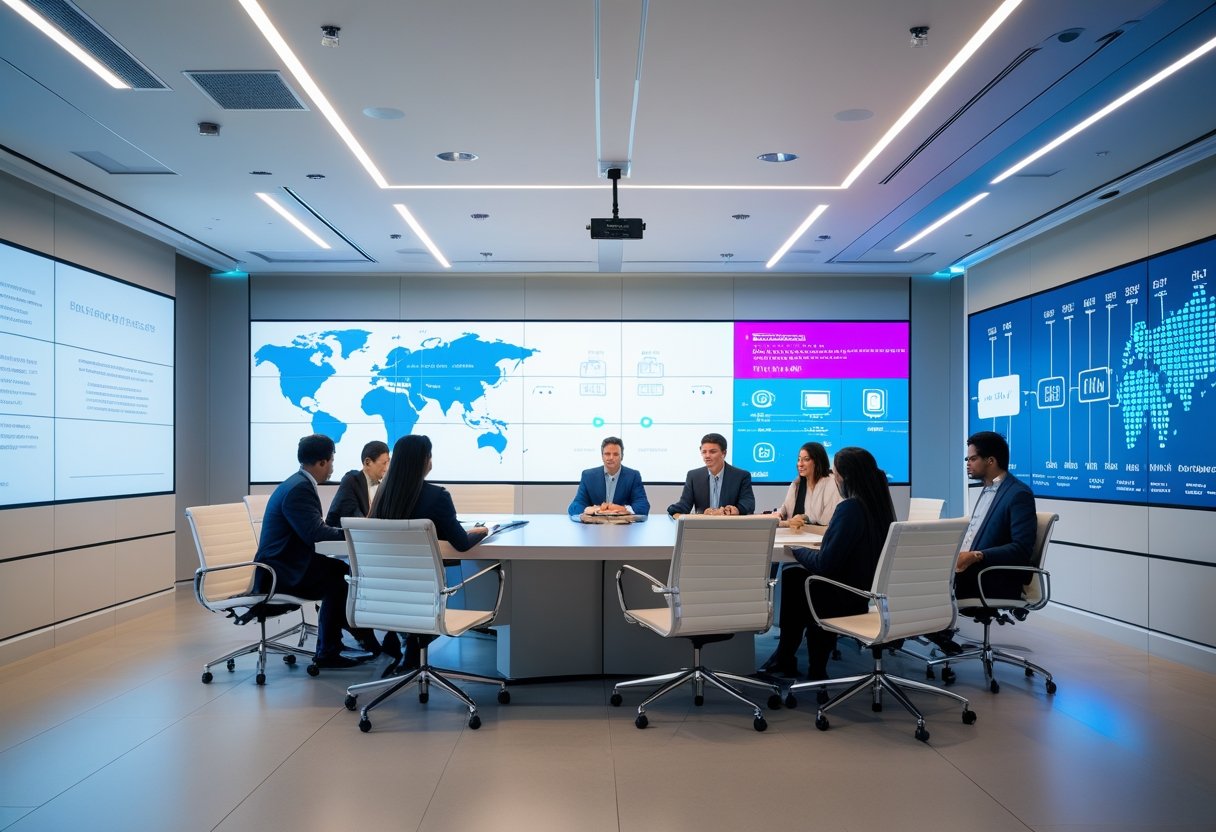
Connected workspaces rely on combining advanced technologies and strong network systems. They improve office design by linking devices and systems that support productivity, security, and comfort in digital workspaces.
Role of Crestron and MLV Teknologi
Crestron provides core technology that controls audio, video, lighting, shades, thermostats, and room scheduling. This technology enhances operational efficiency by automating office environments and making workflows smoother.
MLV Teknologi, a system integrator based in Jakarta Selatan, specializes in engineering smart office solutions using Crestron’s devices. They design and implement digital workspace systems that connect IoT devices with network infrastructure to create seamless communication across office spaces.
Together, Crestron and MLV Teknologi deliver integrated solutions that increase comfort, security, and business uptime. Their expertise helps companies adopt teknologi terkini without disrupting daily operations.
Defining Smart Office Environments
A smart office uses connected devices to improve how people work. These include automated lighting, climate control, audio-visual setups, and room booking systems.
Smart offices focus on:
- Flexibility: Adjusting environments based on user needs
- Comfort: Enhancing employee satisfaction with easy controls
- Security: Monitoring access and usage through digital tools
- Collaboration: Enabling seamless communication through connected AV systems
By combining these elements, smart offices reduce overhead costs and boost productivity. The right office design makes technology invisible yet effective.
Network Infrastructure and IoT Integration
The backbone of connected workspaces is a robust network infrastructure. It links IoT devices like sensors, cameras, and control panels for real-time communication and data sharing.
Key features include:
- High-speed wired and wireless connections to support heavy data loads
- Secure protocols to protect sensitive office data
- Scalable systems ready to add new devices without downtime
Integrating IoT devices with this infrastructure allows companies to monitor energy use, automate maintenance, and supply actionable insights. Expert engineering from providers like MLV Teknologi ensures this network supports a reliable and efficient digital workspace.
For more on workplace technology design, see the Crestron Workplace Technology Design Guide.
Enhancing Productivity and Collaboration
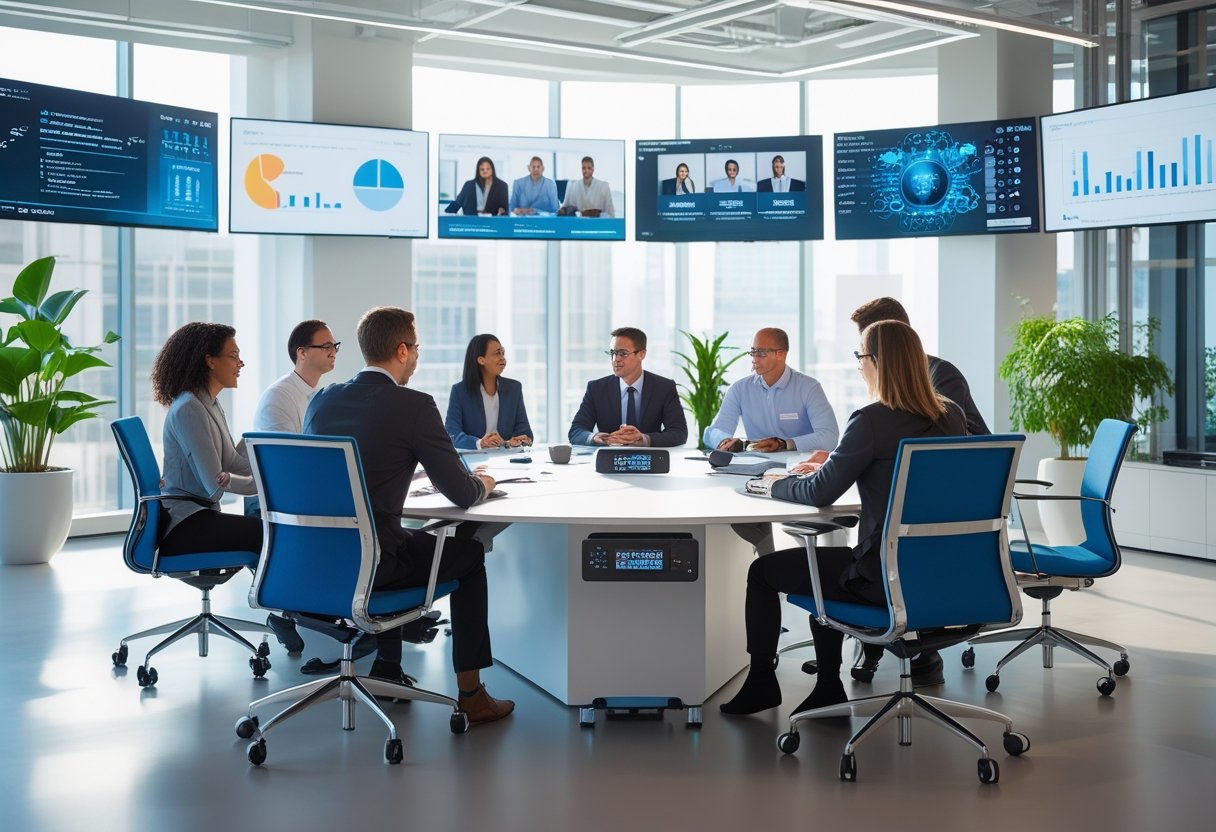
Connected workspaces improve team coordination by integrating tools that streamline communication, manage tasks, and adapt to different work styles. This helps businesses maintain smooth operations while supporting flexible work environments.
Unified Communications and Collaboration Tools
Unified communication systems combine messaging, video calls, and file sharing into one platform. This reduces time lost switching between apps and improves the flow of information.
Teams can communicate instantly, whether they are in the office or remote. Real-time collaboration features like screen sharing and virtual whiteboards help solve problems faster.
Platforms that integrate with existing software allow easy access to documents and calendars. This makes scheduling meetings and sharing updates more efficient, supporting better teamwork.
Supporting Hybrid and Remote Work Models
Hybrid work models require technology that keeps employees connected regardless of location. Solutions that support video conferencing, chat, and cloud access offer flexibility.
These tools allow remote and in-office employees to participate equally in meetings and projects. This reduces misunderstandings and improves team alignment.
Flexible setups help businesses keep productivity high while accommodating personal work preferences and schedules. This flexibility is key to adapting to changing workplace demands.
Project Management and Business Operations
Integrated project management tools track tasks, deadlines, and resources in one place. This visibility helps teams stay on schedule and avoid bottlenecks.
Automation of routine tasks ensures business operations run smoothly with fewer errors. Clear task assignments and progress updates improve accountability.
By combining project management with communication platforms, businesses can coordinate efforts effectively. This coordination supports better decision-making and drives business success.
See how MLV Teknologi uses advanced control systems to build command centers that centralize these capabilities.
Integrating Advanced Audio-Visual and Security Solutions
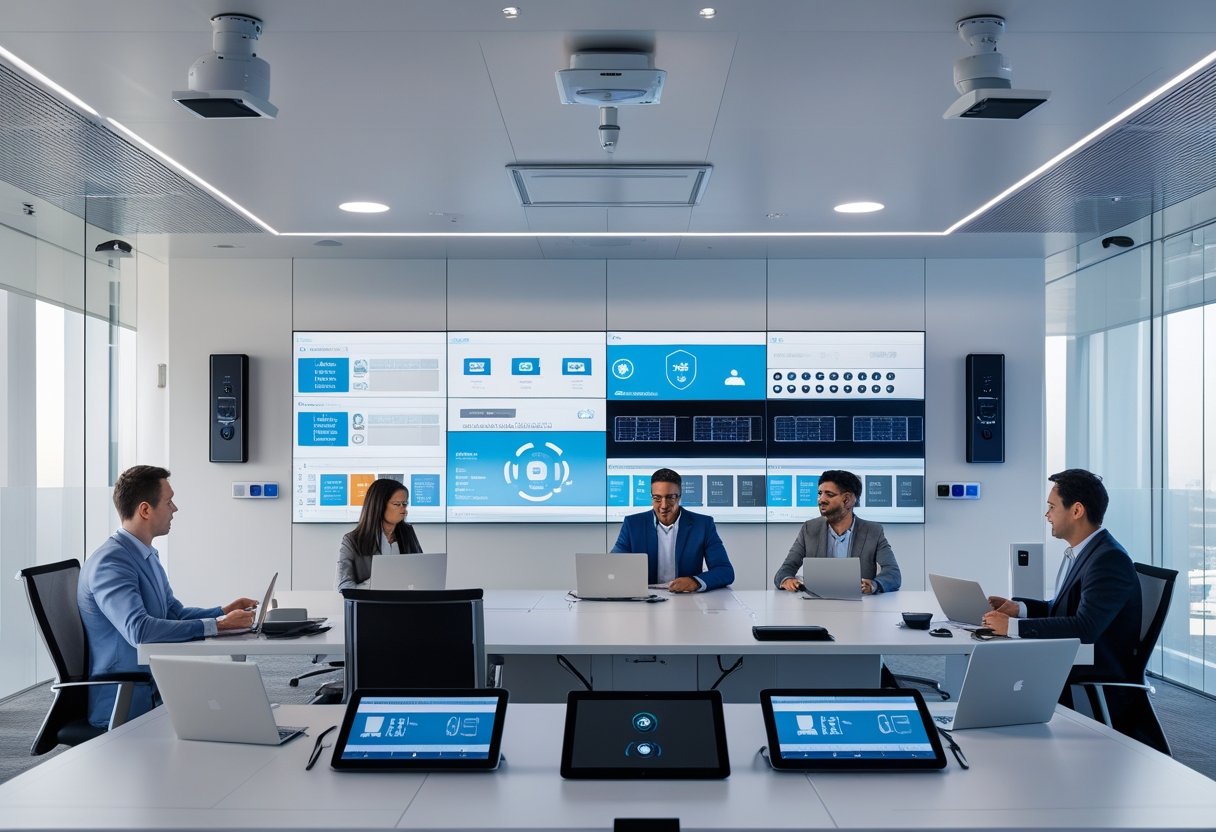
Connected workspaces rely on combining cutting-edge audio-visual tools with strong security systems. This approach improves communication, enhances visual engagement, and ensures safety. Using integrated systems drives better user experience and operational efficiency.
Video Conferencing and Seamless Communication
Video conferencing systems provide clear, real-time communication for teams no matter where they are. Crestron and MLV Teknologi use integrated audio-visual equipment that supports high-quality video and audio. This ensures meetings are smooth without lag or distortion.
Motion sensors and automation help manage room occupancy, simplifying booking and check-in. These features reduce disruptions and allow workers to focus on collaboration. The combination of microphones, speakers, and cameras is designed to deliver consistent audio-visual quality.
This setup links in-office and remote employees, bridging physical distance with clear, seamless interactions. The goal is to minimize technical issues and maximize communication flow.
Digital Signage and Visual Display Technologies
Digital signage and video walls provide large, vivid displays to share information across a workspace. LED display panels offer sharp, bright images even in well-lit environments. These help communicate schedules, alerts, or promotional content effectively.
Companies benefit from customizable tampilan visual, adjusting content to meet specific business needs. Content management systems allow easy control over multiple displays remotely, saving time and effort.
Well-integrated video walls also support immersive presentations and enhance creativity during meetings. Both Crestron and MLV Teknologi focus on delivering reliable visual quality and easy user control.
Security Systems and Command Centers
Security systems use CCTV cameras and command centers to monitor and protect corporate spaces. MLV Teknologi designs these systems to provide clear images and real-time alerts, increasing workplace safety.
Command centers integrate data from multiple cameras and sensors, allowing for quick response to security incidents. With included automation, these systems can detect unusual activity without constant human supervision.
Strong security ensures peace of mind for employees and management. It also protects assets by providing comprehensive real-time monitoring and control.
Future Trends: Artificial Intelligence and Continuous Innovation
Advances in technology continue to reshape how connected workspaces operate. New tools improve how systems run and support the ongoing growth of employee skills. These developments focus on smarter decision-making and effective learning.
Artificial Intelligence and Operational Efficiency
Artificial intelligence (AI) enhances workplace operations by automating routine tasks and improving system responses. It collects data from building sensors and uses this information to adjust lighting, heating, and security in real-time. This reduces energy waste and lowers costs.
AI also supports faster decision-making by analyzing patterns that people might miss. It can predict maintenance needs before breakdowns occur, minimizing downtime and repair expenses.
By integrating AI into platforms like Crestron and MLV Teknologi, companies gain flexible control over multiple systems. This streamlines workflows and provides a more comfortable work environment with less manual effort.
Training and Professional Development
Continuous learning is key to maximizing AI’s benefits in connected workspaces. Employees need training (or pelatihan) to understand how AI tools support their roles. This can include how to operate smart systems or interpret AI-generated insights.
Professional development programs now often use AI to offer personalized learning paths. These tailor courses based on individual skill levels and work demands, making training more effective.
Investing in training helps workers keep up with rapid technological changes. It also encourages smoother adoption of new tools by reducing anxiety and boosting confidence with AI-enhanced systems.