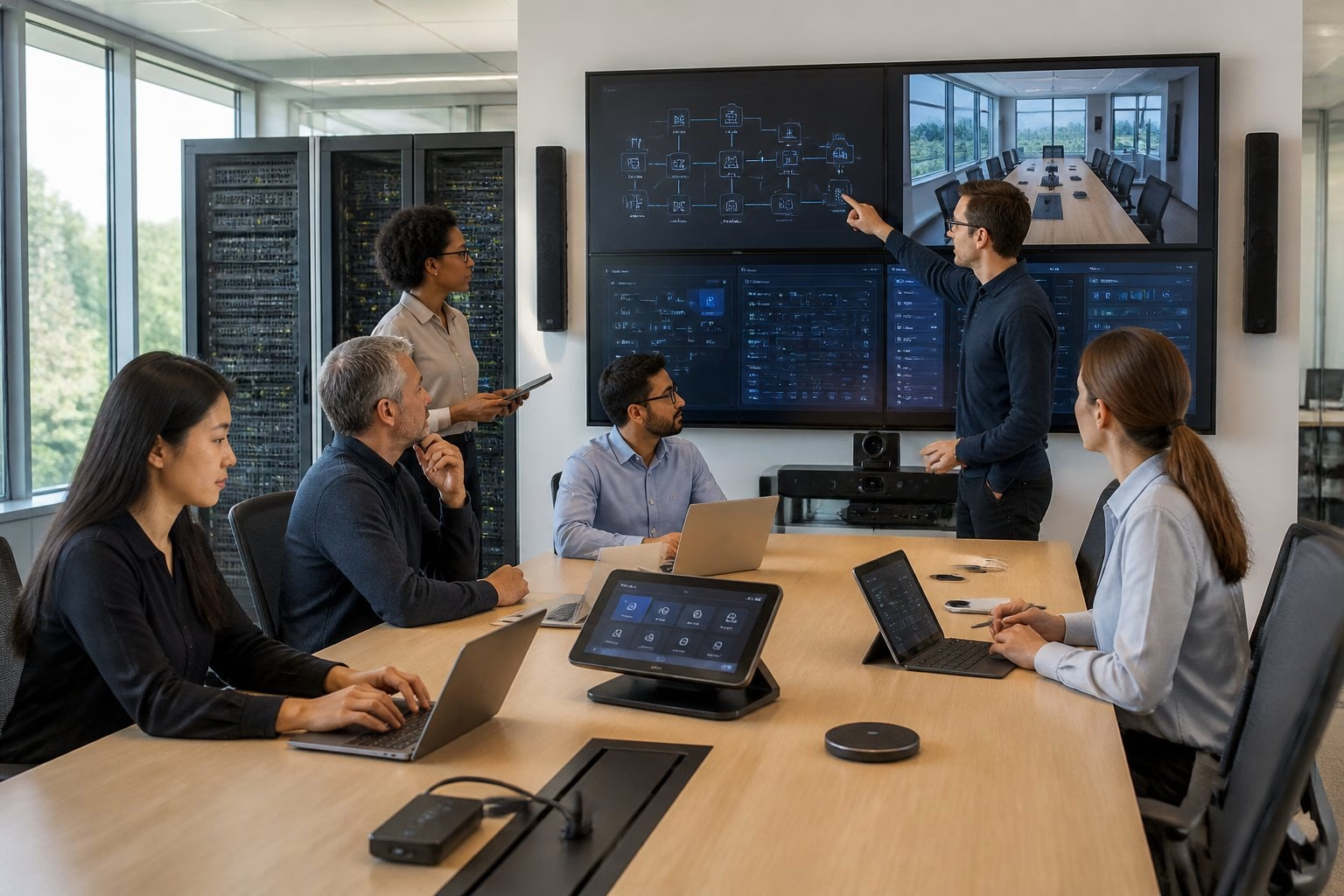
You can no longer treat AV and IT as separate projects. In modern meeting rooms, collaboration spaces, and hybrid work setups, the same network that carries business data also carries audio, video, control, and security traffic. That shift changes who owns the risk, who supports the system, and what success looks like after installation.
If you are planning workplace technology in Indonesia, you need an integrator who can handle both the network side and the user experience side, because a good-looking room that drops calls or disrupts daily work is still a failed room. If you are evaluating partners in Jakarta, it is worth speaking with teams like MLV Teknologi that combine AV consultation, installation, and responsive coordination in active office environments.
How AV And IT Responsibilities Now Overlap
The old model was simple: AV handled screens, sound, and cabling, while IT handled networks, access, and security. That split no longer fits most workplaces. Today, room systems run on IP networks, connect to cloud platforms, and depend on policies that live inside your IT environment.
From Standalone Rooms To Connected Platforms
Meeting rooms now behave more like endpoints in a larger digital workplace. A room system may need authentication, remote monitoring, content sharing, firmware updates, and links to calendar and collaboration tools. That means the room is not a closed box anymore; it is part of your wider operating environment.
Why User Experience Depends On Network Performance
A polished display means little if audio lags, video freezes, or a meeting fails to connect. In practice, user experience depends on bandwidth, switch configuration, latency, and traffic priorities as much as it depends on the hardware itself. When the network is not designed with AV in mind, the room may look complete while still failing users every day.
The Rising Importance Of Security, Manageability, And Support
Every AV endpoint is now also an IP device, which creates new responsibilities for patching, passwords, segmentation, and access control. IT teams want systems they can monitor and support without special exceptions, while facilities teams want fast recovery when a room goes down. That is why the best integration work now includes lifecycle planning, not just installation.
What Organizations Should Expect From Modern Integration Partners
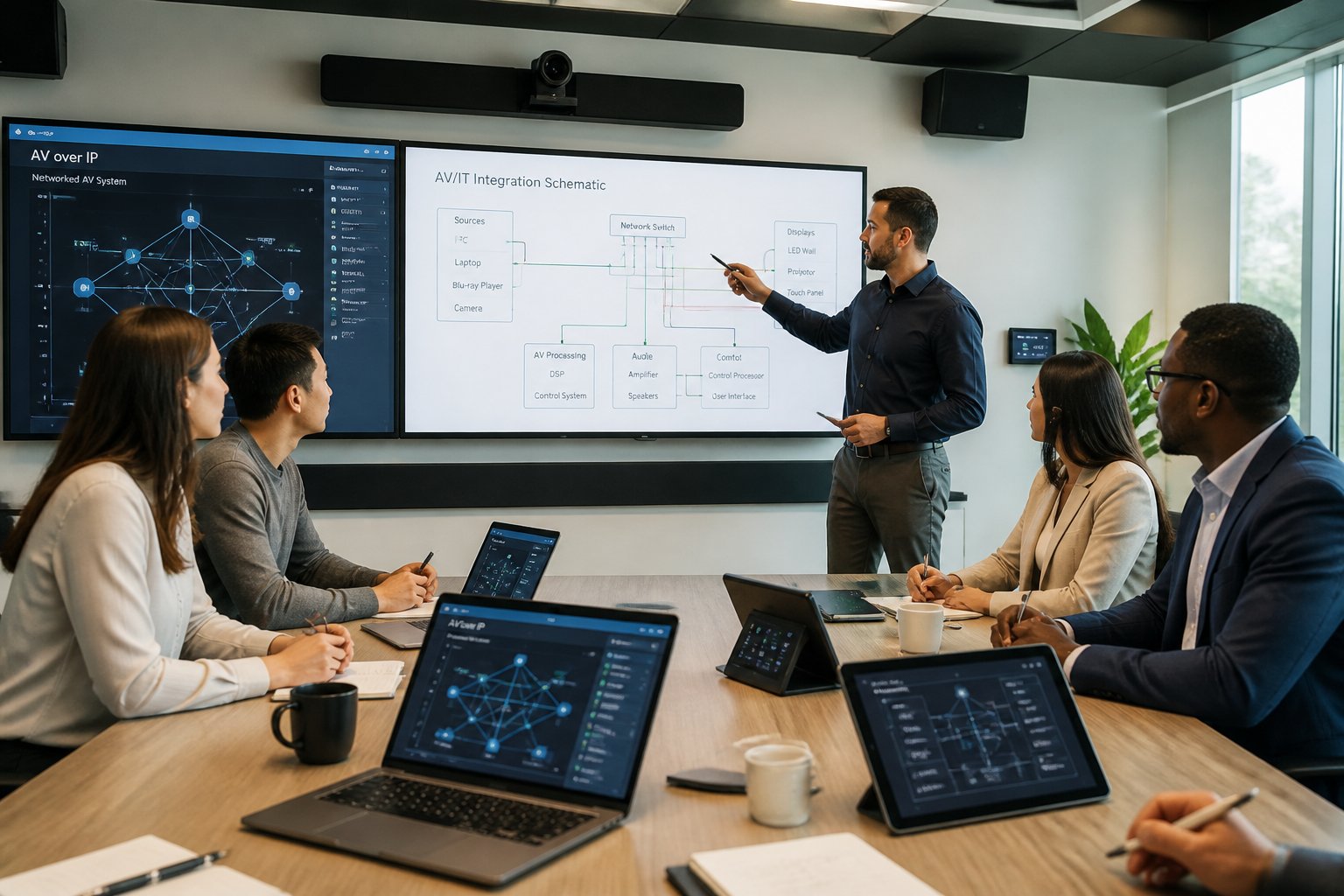
A modern integrator should reduce uncertainty, not add it. The right partner helps you design for the network, deploy in live environments, and support the system after handover with clear accountability.
Cross-Functional Design And Consultation Skills
You should expect your partner to speak with IT, facilities, procurement, and business leaders in one project flow. Strong AV consulting is not just about choosing devices; it is about mapping user needs to network limits, room use, support process, and budget reality. This is where a team with both AV and IT fluency creates real value.
Delivery That Minimizes Operational Disruption
In active offices, timing matters as much as technical quality. A capable integrator plans work so staff can keep using the space, which may mean phased installation, careful scheduling, and neat coordination with site teams. Customers often value this most when the project is completed cleanly without interrupting daily operations, which is the kind of delivery approach you should look for from partners like MLV Teknologi.
Long-Term Service Models For Hybrid Work Environments
Hybrid work changes support expectations. You need a partner who can help after go-live with troubleshooting, tuning, refreshes, and room standardization across sites. The strongest model is one where your integrator stays available as systems evolve, because the room that works today still needs support when workflows, apps, and user habits change.