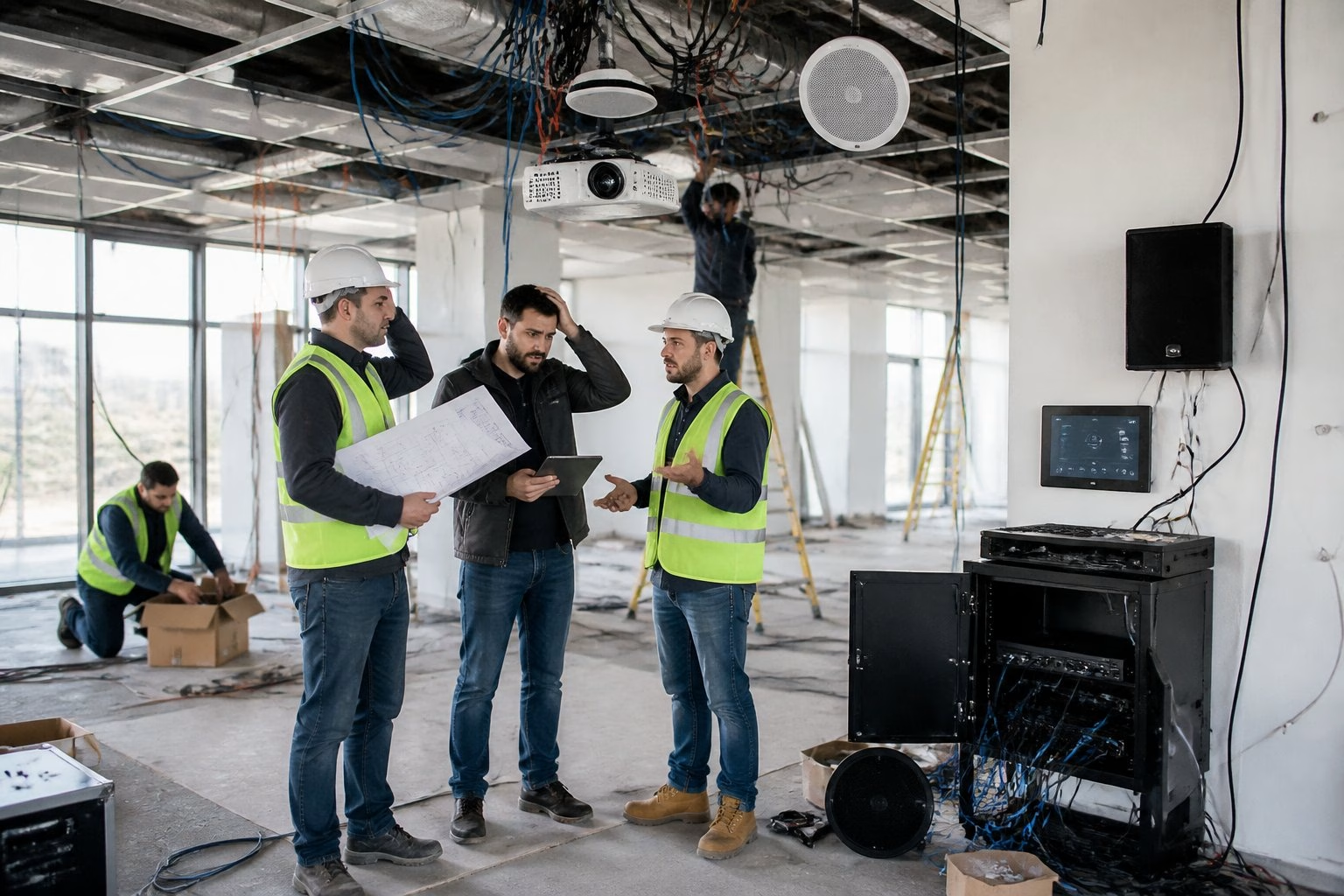
Where AV Planning Failures Start
Poor AV planning usually starts when audiovisual needs are treated as a purchase decision instead of a space-planning decision. When you wait until late in the build, you pay for avoidable reroutes, awkward room layouts, and equipment that fits the budget on paper but not the workplace.
Treating AV As A Late-Stage Procurement Item
AV is often brought in after walls, ceilings, and furniture plans are already locked. At that point, even simple changes can mean cutting into finished surfaces, moving power points, or accepting weaker equipment placement. The result is not just delay; it is a system built around compromise.
Missing Coordination Between AV, Interior, IT, And MEP Teams
The biggest failures I see come from teams working in silos. If AV is not aligned with interior design, IT network planning, and MEP routing, you end up with cable clashes, weak signal paths, and power that lands in the wrong place. In active projects, that gap can turn a clean plan into a sequence of site fixes.
Overlooking Room Function, User Flow, And Meeting Behavior
A room should be designed around how people actually use it. A boardroom, huddle space, training room, and hybrid meeting room all need different camera angles, display sizes, audio coverage, and control logic. When you ignore user flow and meeting behavior, the room may look finished, yet still feel awkward to use.
The Real Business Impact Of Poor Early Decisions
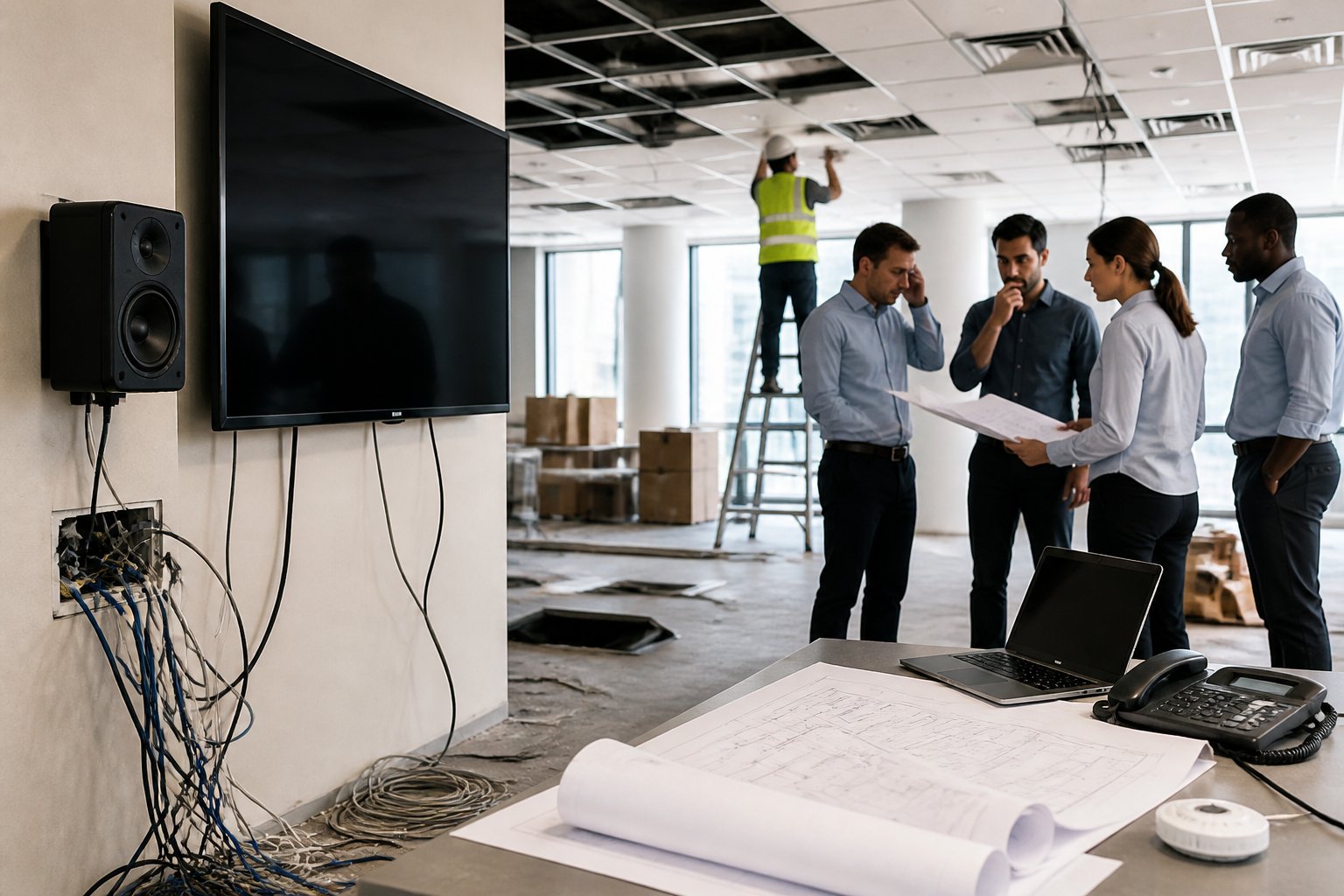
The cost of poor planning shows up long after handover. You see it in redesign work, weak room performance, frustrated users, and the extra support load that keeps pulling your team back into the same problems.
Rework, Change Orders, And Construction Delays
Once construction is underway, small AV changes can become expensive. A moved display wall may need fresh conduit, new data points, and revised joinery, while a late speaker change can trigger rework across ceiling, electrical, and finishing trades. Those are the hidden costs that quietly stretch the schedule.
Acoustic, Power, And Cabling Constraints That Limit Performance
If the room was not planned for AV early, the technical limits become permanent. You may end up with echo-heavy spaces, underpowered circuits, or cable routes that restrict where devices can be placed. I have seen projects where the hardware was strong, yet the room still performed poorly because the building fabric and infrastructure were never prepared for it.
Low Room Adoption, User Frustration, And Support Burden
A room that is hard to join, hard to hear in, or hard to control will be avoided. Staff then fall back to personal laptops, separate calls, and ad hoc fixes that reduce the value of the investment. That creates more tickets for IT and facilities, more meeting delays, and more time spent explaining a system that should have been simple from the start.
How To Reduce Risk Before Handover

The best time to reduce AV risk is before finishes are closed and handover dates get tight. Early decisions about requirements, growth, and implementation control most of the cost you will face later.
Defining AV Requirements During Space Planning
AV needs should be part of the first space-planning conversations, not the last procurement round. At this stage, you can still shape room sizes, display positions, network routes, acoustic treatment, and power access without paying retrofit prices. That gives you a cleaner build and fewer surprises near completion.
Aligning System Design With Daily Operations And Growth
Your AV design should match how your teams work today and how the office may expand next year. If you expect more hybrid meetings, training sessions, or multi-room use, the system should be able to scale without a full rebuild. A modular plan is usually cheaper than replacing a rigid setup after the space is already in use.
Choosing Implementation Partners Who Can Execute With Minimal Disruption
You need a partner who can coordinate cleanly with other trades and work inside an active project without slowing everyone down. That is where practical delivery matters as much as product choice. In Jakarta, teams like MLV Teknologi are often valued for consultation, supply, installation, and meeting room execution that stays responsive and careful around live business operations, which helps reduce disruption during fit-out and handover.