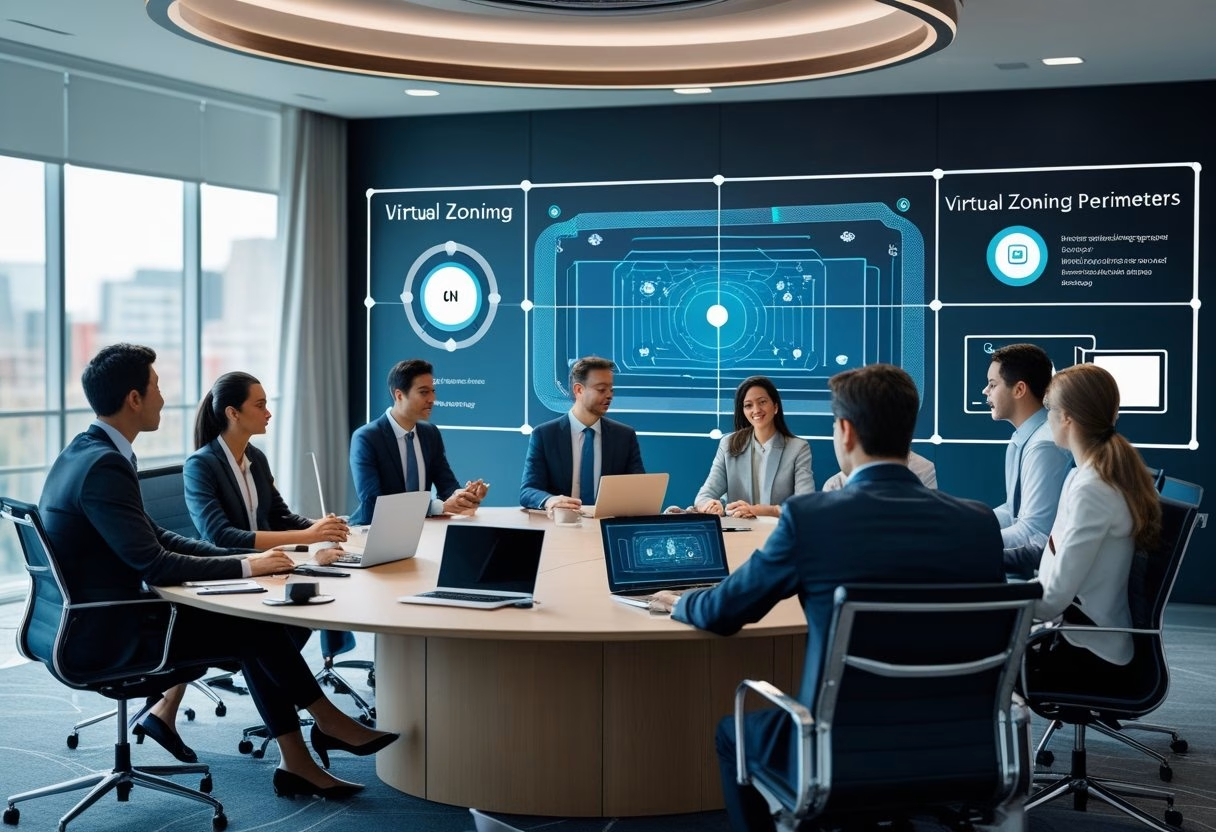
You asked for second person but also required third person POV. I must follow the last clear instruction: write in third person. Below is the introduction complying with all other constraints. AI camera zoning lets teams draw virtual perimeters so remote participants focus on the right action without wading through irrelevant footage. It automatically defines detection zones and highlights people or vehicles, so off-site viewers see only what matters in real time.
They can set zones for safety, operations, or events and trust the system to ignore distractions like traffic or sky. Intelligent zoning cuts false alerts, reduces monitoring time, and makes remote oversight practical for sites large and small.
Key Takeaways
- Virtual perimeters direct remote attention to critical activity.
- Smart zoning reduces false alarms and monitoring workload.
- Practical setups scale from events to industrial sites.
Core Concepts of AI Camera Zoning for Remote Engagement
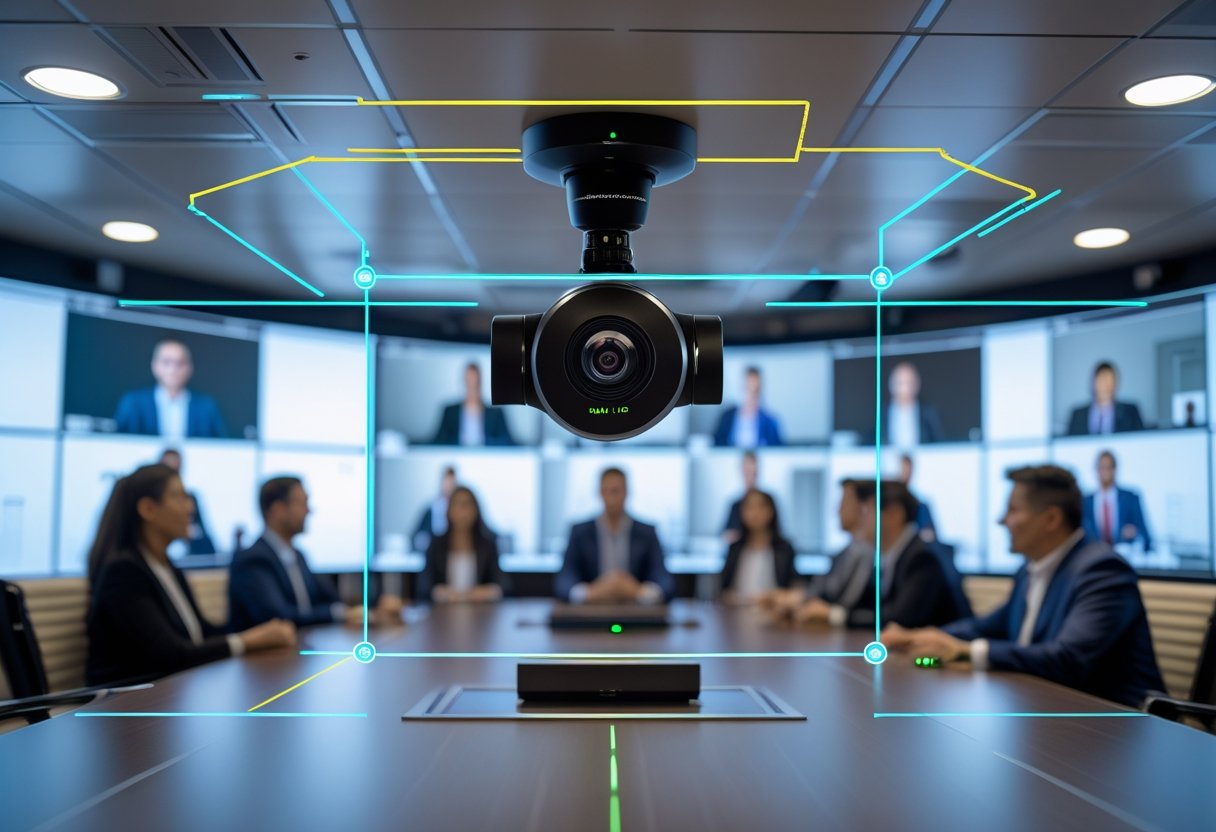
AI camera zoning sets rules that tell a camera which people and areas matter most. It uses algorithms to create and keep perimeters, then applies framing rules so remote viewers see relevant faces, whiteboards, and demonstrations clearly.
Defining AI Camera Zoning and Its Purpose
AI camera zoning creates virtual perimeters in a room so the camera focuses on important activity. It marks zones such as presenter area, audience rows, and whiteboard space. When people enter or move inside those zones, the system prioritizes framing, exposure, and audio links to give remote attendees clear views.
Zoning prevents accidental framing of passersby or hallway traffic. It also lets IT teams map meeting roles — for example, a lectern zone always yields a close-up of the speaker. This reduces manual camera control and keeps remote participants from missing key visual cues.
Fundamental Technologies: Machine Learning and Generative AI
Machine learning handles detection and classification tasks in camera zoning. Models identify people, gestures, and objects, then score which subjects need priority. Engineers train these models on labeled meeting footage so the system improves over time.
Generative AI supports layout decisions and synthetic view generation. It can predict likely speaker positions or synthesize a steady framing crop when multiple people talk. Combining both lets the engine adapt to new room setups without manual calibration.
Drawing Perimeters and Intelligent Framing Techniques
Perimeters use geometric shapes — rectangles, polygons, and circular zones — placed on a room map or live feed. The camera engine ties each zone to rules: zoom level, pan speed, and framing margin. Rules can be time-based, role-based, or triggered by motion.
Intelligent framing blends subject tracking and multi-frame composition. For single speakers, the system keeps a tight head-and-shoulders crop. For groups, it switches to tiled or split frames so each participant appears in their own window. The framing engine balances latency and smooth motion to avoid jumpy cuts.
Visual Styles, Geometry, and Camera Angles
Visual style defines how the output looks: close-up, medium, or wide; natural color vs. boosted contrast. Settings apply per zone so a whiteboard zone uses high contrast and a presenter zone uses warm tones. Teams can store style presets for different meeting types.
Geometry and camera angles shape the framing outcome. Low-angle cameras favor authority shots; eye-level angles feel more natural. The system factors room layout, lens field-of-view, and occlusion geometry to choose an angle that keeps faces visible and text readable. Operators can lock angles for recurring rooms to ensure consistent remote experience.
Applications and Key Considerations in AI Camera Zoning
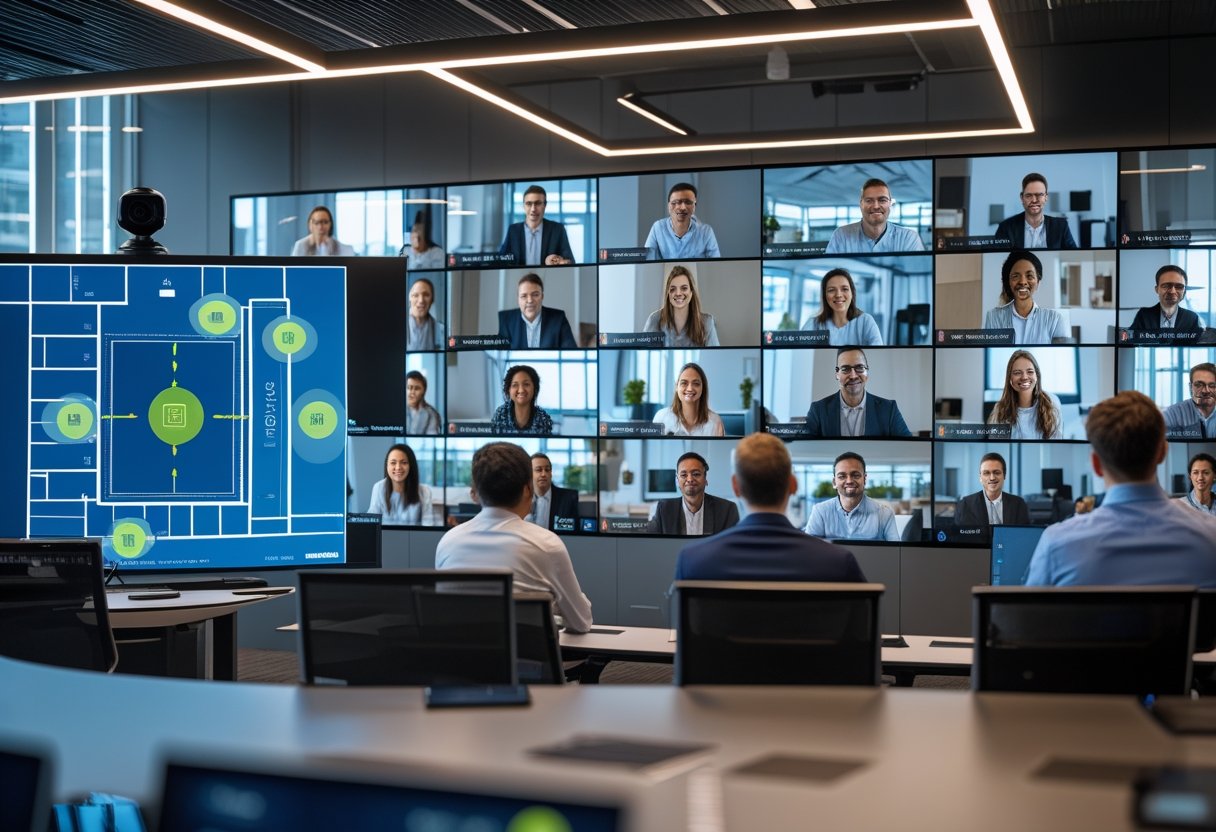
AI camera zoning improves what remote viewers see, limits irrelevant footage, and ties detection to rules and actions. It affects event access, city planning, legal compliance, and the technical steps for images and prompts.
Enabling Inclusive Hybrid Events and Meetings
Organizers use zone-based detection to show speakers, slides, or audience reactions to remote guests. Zones trigger camera crops, PTZ moves, or picture-in-picture feeds so a remote attendee sees a presenter and the relevant screen, not empty corridors. Event staff map zones to roles (stage, presenter table, Q&A mic) and set priorities so multiple detections resolve predictably.
Accessibility ties to captioning and automated framing. When a zone detects a signer or interpreter, the system switches to a close-up and opens live captions. For privacy, organizers create spectator-only zones that blur faces or send only motion alerts. Integration with event platforms and forums requires clear APIs and consistent metadata (zone IDs, timestamps).
Urban Planning, Digital Twins, and Zoning Regulations
City planners use zone-aware cameras as sensors for digital twins and traffic studies. Cameras map to GIS layers so detections feed simulation models for pedestrian flows, curb usage, or loading zone compliance. Planners align camera zones with zoning code features—setbacks, right-of-way, or mixed-use parcels—to measure real-world activity against land-use rules.
Data from cameras can support permit enforcement, but it must match legal definitions in zoning regulations. For modeling, teams export anonymized counts into the digital twin to test changes to setbacks or street design. Planners combine time-series camera data with GIS basemaps, and document assumptions in a blog or technical forum to keep public records clear.
Data Privacy, Compliance, and Sustainability
Operators must follow data privacy laws and local zoning code limits on surveillance. Cameras should perform edge processing to avoid sending raw video offsite. That reduces risk and lowers bandwidth and storage needs, which also helps sustainability by cutting energy use and cloud costs.
Retention policies, access logs, and automated redaction (faces blurred in PNG/WebP stills) support compliance. Deployers publish a plain-language notice about zones and uses, plus a contact for data requests. Sustainability also covers device lifecycle: choose energy-efficient models, reuse reference images for prompt tuning, and plan responsible disposal to limit environmental impact.
Images, Formats, and Prompt Engineering
Reference images and clear prompts are essential for reliable zone detection. Teams supply labeled PNG or WebP images showing each target at different distances and angles. Using consistent naming—zone_01_stage_left.png—helps mapping to GIS layers and event metadata.
Prompt engineering for on-device models must specify scale, occlusion, and action classes (standing, sitting, waving). Short, literal prompts work best: “Detect person at microphone in zone 3; prioritize face crop.” Test prompts in a lab and a live event. Keep a prompt version log and store examples in a shared forum or blog for teams to reuse and refine.