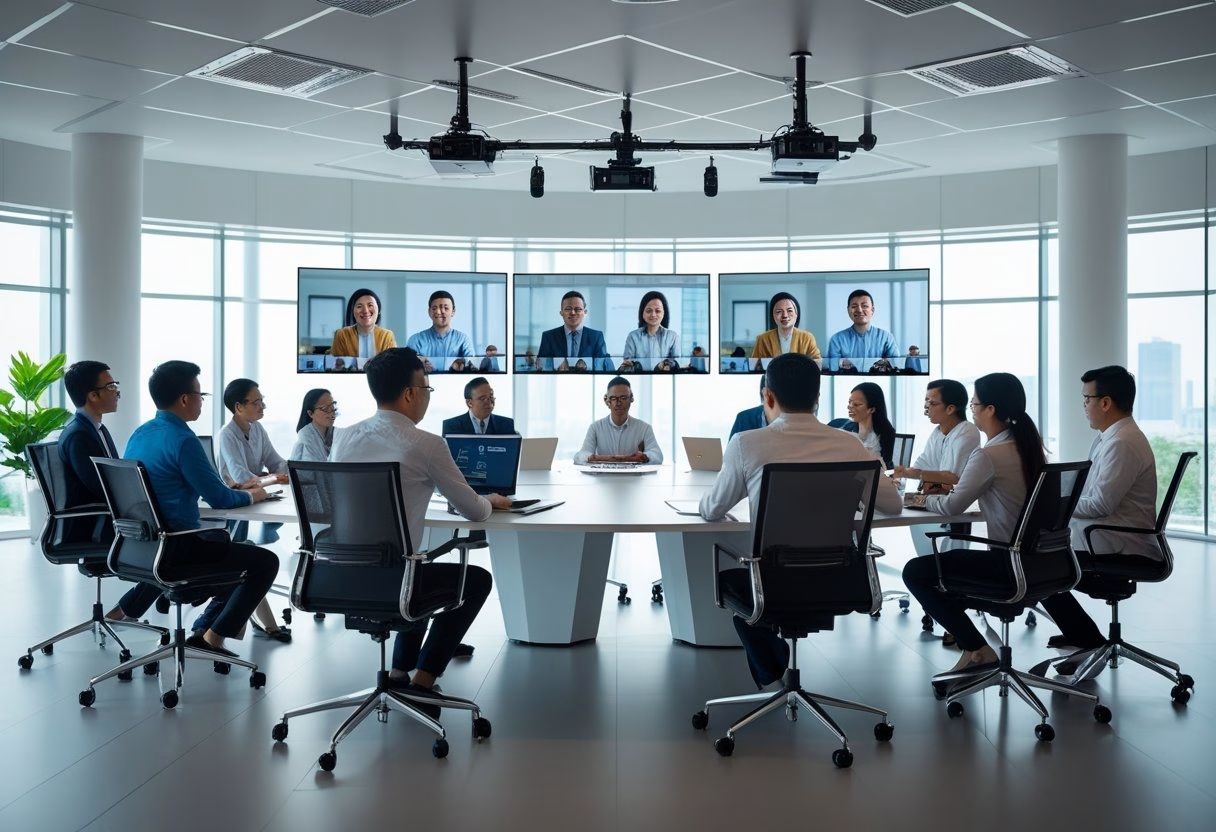
Indonesian enterprises no longer treat hybrid work as a temporary fix. They design it as a long-term strategy powered by smart audio visual systems. Companies now connect office teams and remote staff through integrated meeting rooms, cloud platforms, and secure networks.
Indonesian enterprises are redefining hybrid work by investing in integrated AV systems that make communication clear, meetings reliable, and collaboration equal for in-office and remote teams. They upgrade cameras, microphones, and control systems to remove common meeting problems. Many also rely on professional AV integration to align IT, networks, and room design for daily use.
Industry leaders highlight how AV now supports innovation and distributed teams, as seen in insights on how the AV industry powers innovation in the new era of work. Local providers also help firms deploy smart meeting rooms and full system integration, such as services that bring AV & IT to life in Indonesia. This shift shows how enterprises move beyond basic video calls toward structured, scalable hybrid environments.
Key Takeaways
- Indonesian enterprises treat hybrid work as a long-term business model supported by AV.
- Companies invest in integrated meeting rooms to support both in-office and remote teams.
- Modern AV solutions align technology, space design, and daily operations for stable collaboration.
Indonesia’s Shift to Hybrid Work: Key Drivers, Models, and Human Factors
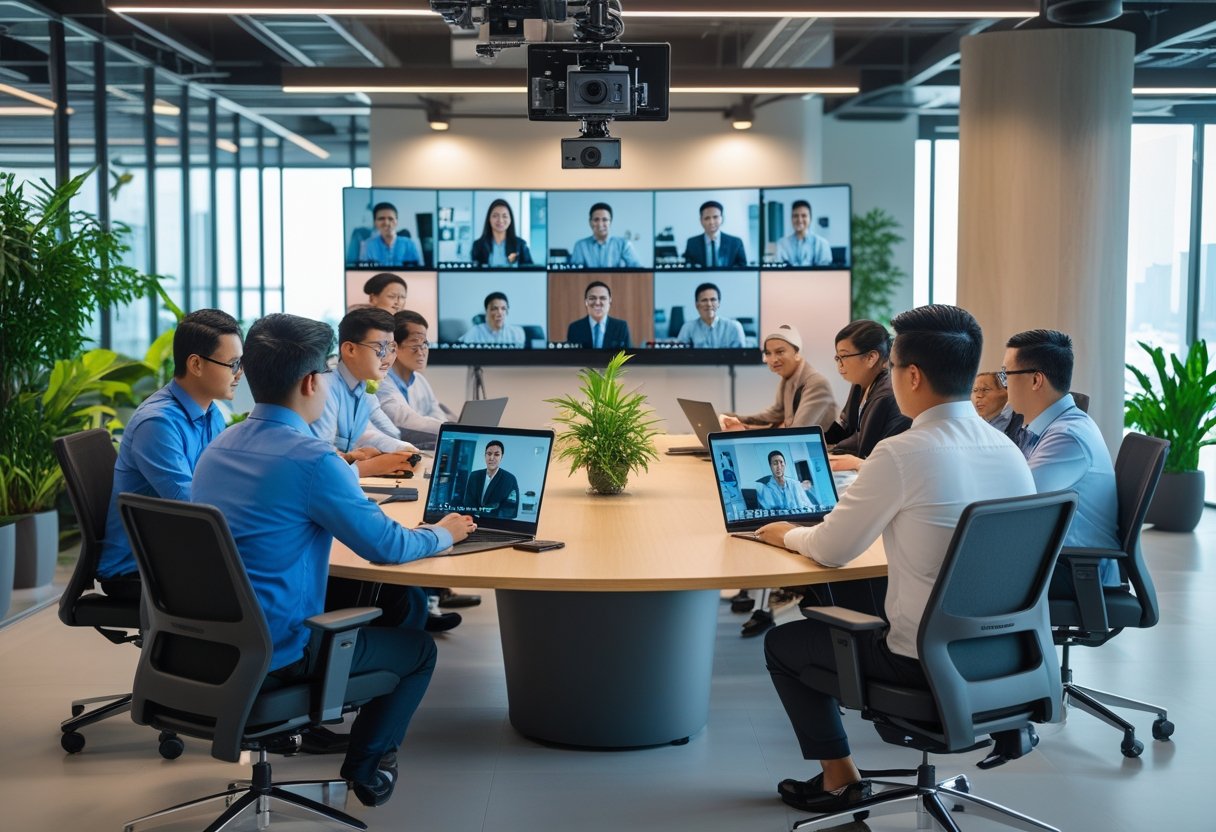
Indonesian enterprises now treat hybrid work as a core business model, not a temporary fix. Leaders align flexible work arrangements with human capital strategy, digital growth, and employee well-being to protect performance and support long-term development goals.
Workforce Preferences and Hybrid Work Models
Many employees in Indonesia prefer kerja hybrid that blends wfh (work from home) and wfo (work from office). They value work flexibility, shorter commutes, and better control of daily schedules.
The COVID-19 period pushed firms to test telework and remote work at scale. As described in the article on the hybrid work revolution in Indonesia, companies saw that productivity often stayed stable when staff worked off-site.
Enterprises now use several hybrid work models:
- Fixed days in office and fixed days remote
- Role-based models where only certain teams work on-site
- Fully flexible schedules based on output targets
Gig workers in the digital economy often operate in fully remote or telecommuting setups. National discussions also link hybrid work and technology support to productivity and decent work under SDG 8 in Indonesia.
These models require strong digital literacy and clear output metrics to maintain organizational performance.
Human Capital and HR Strategies for Hybrid Work
Hybrid work forces a shift in human resource management. HR teams now focus on outcomes instead of physical presence.
Research on human resource transformation in Indonesia’s hybrid work era shows that firms adjust performance systems, leadership training, and communication rules to fit hybrid settings. They also invest in digital tools to support collaboration and monitoring.
Key HR priorities include:
- Clear KPIs tied to results, not office hours
- Training in virtual leadership and digital literacy
- Policies for data security and compliance
- Structured feedback to maintain work engagement
Startups and large firms both treat hybrid work as part of strategic human capital development. They link employee experience to business goals and measure impact on productivity and retention.
Organizational readiness now depends on culture. Leaders must build trust, encourage accountability, and support boundary management between home and work spaces.
Employee Well-being, Engagement, and Work-Life Balance
Hybrid work affects employee well-being in direct ways. Reduced commuting time improves work-life balance, but blurred boundaries can increase stress.
A study on well-being in hybrid work among Indonesian civil servants highlights the role of organizational support in lowering burnout. Employees report stronger engagement when managers provide clear communication and fair workload distribution.
Enterprises now address well-being through:
- Defined working hours for remote staff
- Mental health support programs
- Regular virtual check-ins to sustain employee engagement
- Clear rules on availability to improve boundary management
Hybrid systems can improve employee experience when firms protect social connection and team identity. Strong support structures also help align hybrid work with sustainable development goals by promoting inclusive, decent, and productive employment.
AV Technology Advancements and Enterprise Solutions for Hybrid Work Success
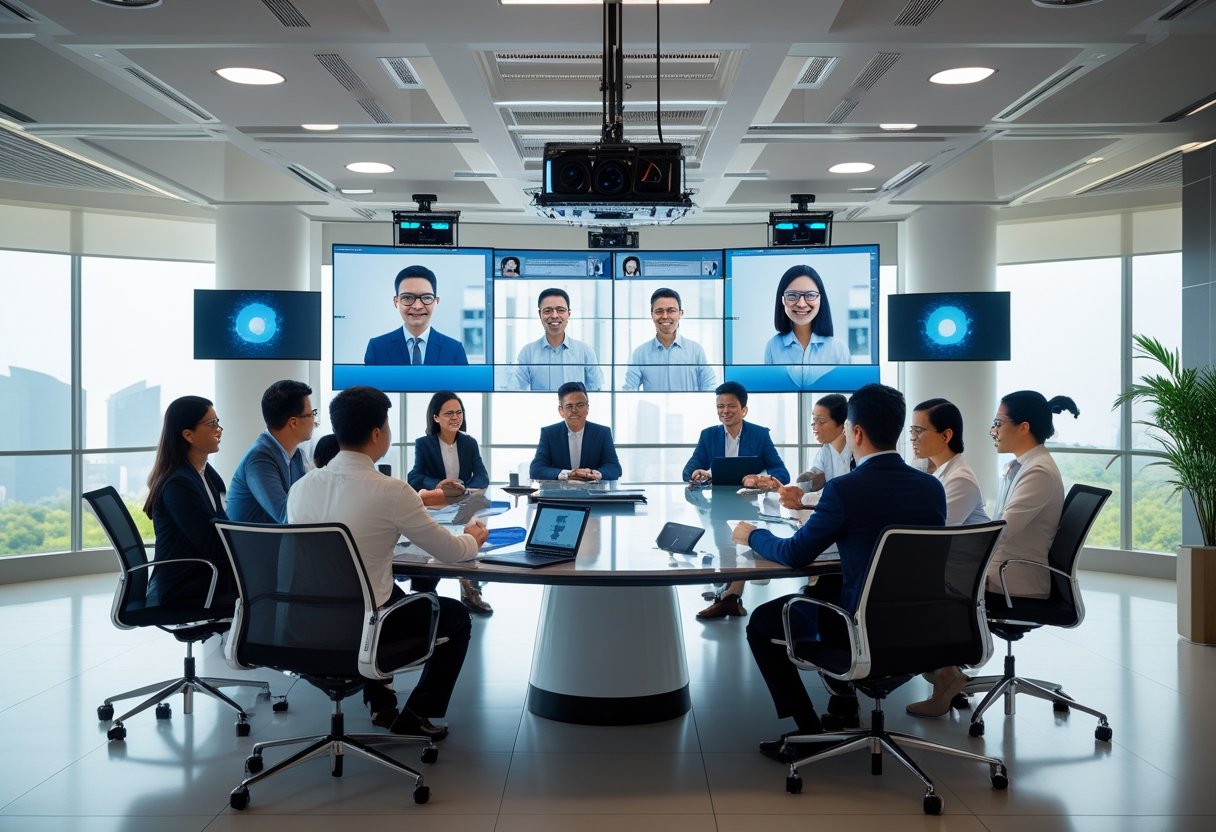
Indonesian enterprises now invest in integrated audio-visual systems that support clear communication, stable koneksi internet, and measurable productivity. They focus on practical tools that improve user experience and strengthen digital infrastructure across offices and remote locations.
Video Conferencing and Virtual Collaboration Platforms
Enterprises rely on secure video conferencing platforms such as Zoom, Microsoft Teams, Slack, and Cisco Webex to support daily remote collaboration. They integrate these platforms with room cameras, ceiling microphones, and centralized control panels.
A well-designed system avoids echo, lag, and unclear images. Companies deploy PTZ or AI tracking cameras and noise-canceling microphones to maintain focus during executive meetings.
Many firms now implement structured AV integration strategies similar to those outlined in AV integration solutions for hybrid work environments. These strategies align hardware, software, and network capacity with business goals.
IT teams also track usage data to improve digital adoption. They train employees to build digital competencies and reduce resistance during change management efforts. Strong platform integration supports better organizational performance and faster decision-making.
Immersive AV Solutions and Future-Ready Infrastructure
Hybrid work demands more than cameras and screens. Enterprises build future-ready infrastructure that supports AV over IP, cloud collaboration, and scalable network design.
Some companies adopt systems similar to the Hybrid Meeting Room AV System with CSA Indonesia to ensure seamless communication between in-room and remote participants. These systems combine high-resolution displays, intelligent cameras, and centralized AV control.
AV over IP reduces complex cabling and supports easier expansion. IT teams can add new displays or collaboration tools without major renovation.
Immersive AV solutions also include large LED walls and multi-screen setups. These tools help teams review data, engineering plans, and financial dashboards in real time.
Enterprises treat digital infrastructure as a long-term asset. They align AV investments with digital transformation goals and ensure stable koneksi internet across branches and satellite offices.
Digital Signage, Wayfinding, and Interactive Displays
Digital signage now plays a direct role in workplace coordination. Companies use it to share schedules, room availability, and internal announcements.
Interactive displays allow employees to book meeting rooms, access company dashboards, and join video conferencing sessions with one touch. This reduces delays and improves user experience.
In large corporate offices, wayfinding screens guide staff and visitors to meeting rooms or event spaces. These systems support organized movement inside hybrid offices.
Many Indonesian firms view these tools as part of broader digital innovation efforts, similar to trends discussed in Indonesia’s big firms embrace hybrid work models. Clear information flow supports budaya kerja that values transparency and efficiency.
When enterprises connect digital signage with collaboration platforms, they strengthen productivity and reinforce digital adoption across the organization.