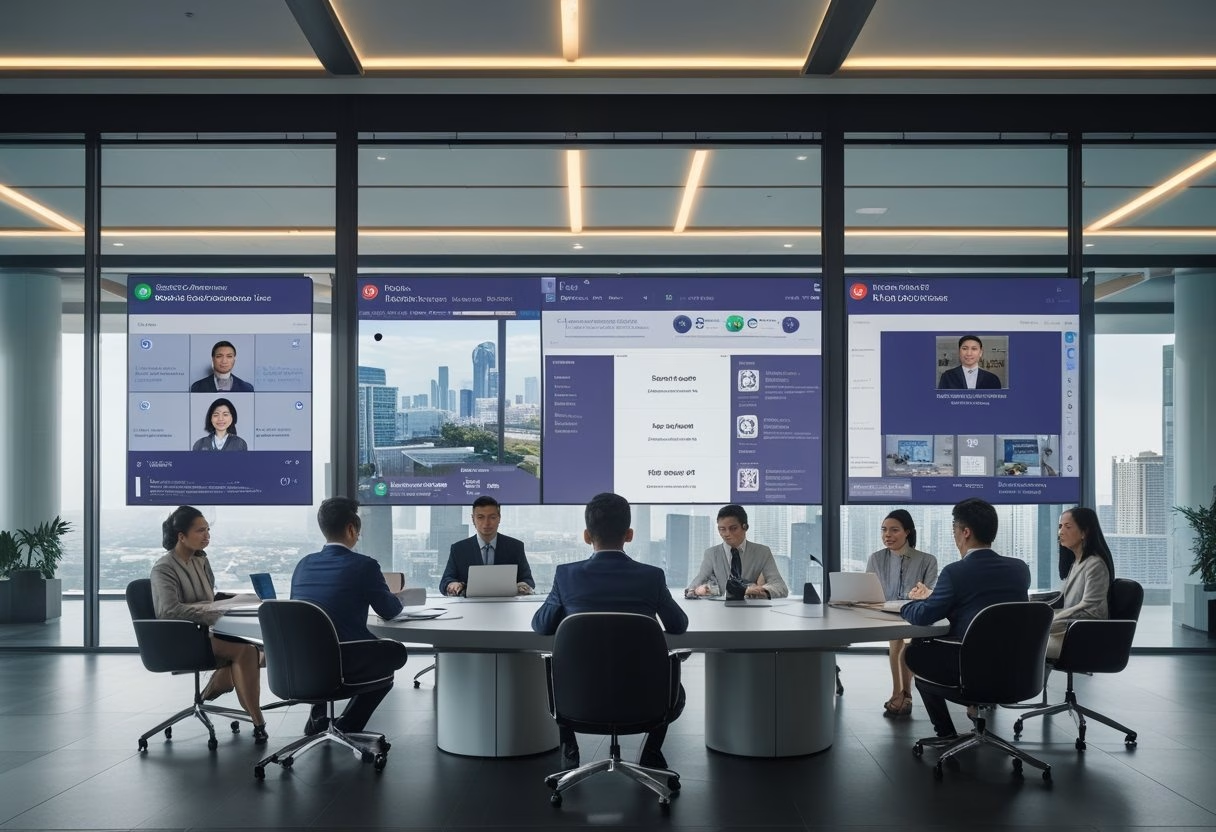
Microsoft Teams Rooms now matters in Indonesia because meeting spaces are no longer just rooms, they are part of the digital infrastructure that supports hybrid work, cloud services, and business continuity.
How Microsoft Teams Rooms Supports Enterprise-Grade Hybrid Collaboration
For large enterprises, Microsoft Teams Rooms helps turn ordinary meeting spaces into consistent collaboration environments. It brings audio, video, and device control into one experience, which reduces friction for employees joining from the office, home, or another site. In practice, that consistency matters most in boardrooms, project rooms, and training spaces where meeting quality affects decisions.
The strongest value is not the hardware itself. It is the way the room becomes a dependable endpoint for Microsoft cloud-based collaboration, with a familiar interface and fewer support issues for IT teams. That makes it easier to standardize across branches, regional offices, and state-owned enterprise environments.
Why Indonesia’s Digital Transformation Raises The Stakes For Workplace Technology
Indonesia’s digital transformation has moved workplace tools from a comfort issue to a business issue. As digitalization spreads across the digital economy, enterprises need collaboration systems that can support digital services, digital skills development, and distributed teams at scale. This is especially relevant for msmes linked to larger supply chains, as well as public sector bodies and state-owned enterprise operations.
Cloud computing has also changed expectations. Leaders now expect meeting platforms to work within a secure cloud model, support inclusive economic growth, and fit broader digital infrastructure plans. For many organizations, the meeting room is becoming a visible test of whether the wider technology stack is ready.
What Enterprises Need From Collaboration Platforms In A Fast-Growing Digital Economy
Enterprises in Indonesia need more than simple video calls. They need platforms that support cloud services, protect sensitive discussions, and adapt as teams grow across cities and islands. They also need systems that can help with digital talent retention, since employees are less patient with unreliable room setups and broken meeting flows.
A practical deployment should support security, easy management, and room consistency across sites. For CIOs and workplace leaders, the real question is whether the platform can serve as a stable digital hub for everyday work, not just a meeting aid for occasional use.
How Indonesia Central Changes Performance, Compliance, And Scale

Indonesia Central changes the conversation from basic connectivity to enterprise design. A local cloud region affects latency, data residency, and the way organizations think about nationwide rollout, especially when collaboration tools sit on top of cloud infrastructure.
Why Local Cloud Region Availability Matters For Latency And Reliability
When a meeting platform relies on nearby cloud region support, the user experience is usually more predictable. Lower latency helps with call setup, video stability, and shared content, which matters in rooms where executives and project teams need fast, clear interaction. That difference is easy to notice in long meetings, streamed town halls, and cross-office collaboration.
For enterprises with sites across Java, Sumatra, Kalimantan, and beyond, local cloud region availability can also improve operational resilience. A cloud region in-country gives IT leaders a stronger base for performance planning, especially when wide area network paths vary in quality across locations.
Data Residency, Security, And Availability Zones In Enterprise Collaboration
Data residency has become a major concern for regulated industries, government-linked organizations, and state-owned enterprise stakeholders. Keeping data inside Indonesia can simplify policy alignment and reduce concern around where meeting data, logs, and related records are processed. That is especially relevant for organizations handling strategic or sensitive internal discussions.
Availability zones matter in the same way, because they support higher resilience and better planning for enterprise workloads. In a secure cloud model, the combination of local processing, redundancy, and strong policy control gives collaboration platforms a more credible fit for business-critical use.
How Microsoft Azure And The Global Network Support Nationwide Operations
Microsoft Azure provides the cloud foundation, while the global network helps move traffic efficiently across sites and regions. For large enterprises, that combination supports scalability without forcing every location to be engineered the same way. It also helps when organizations need to support streaming for all-hands meetings, training sessions, or cross-country broadcasts.
From an IT leadership view, the value is practical. A strong cloud region, availability zone design, and global network path can reduce avoidable strain on the WAN while improving user experience for remote and in-room participants. That makes the platform more suitable for nationwide operations, not just Jakarta headquarters.
The Next Enterprise Opportunity: AI-Enabled Rooms And Ecosystem Partnerships

The next stage for Microsoft Teams Rooms in Indonesia is shaped by generative AI and partnerships. Enterprises will want meeting spaces that do more than connect people, they will want rooms that save time, improve note capture, and fit into wider AI in Indonesia strategies.
Where Generative AI And Azure OpenAI Service Can Improve Meeting Workflows
Generative AI can make meeting workflows cleaner when it is applied with care. In Microsoft Teams Rooms, that could mean better summaries, action tracking, speaker support, and faster retrieval of meeting decisions. Azure OpenAI Service gives enterprises a path to test these features within a cloud environment that aligns with existing Microsoft governance.
The best use cases are the simple ones. If AI can reduce missed action items, help with meeting follow-up, and improve search across notes and recordings, it creates clear value without changing how teams already work. Responsible AI remains essential, since enterprises will want strong controls over data use and user access.
How Partnerships Shape Enterprise Adoption In Indonesia
Ecosystem partnerships matter because enterprise adoption in Indonesia often depends on local reach and trusted delivery. Local providers help connect enterprise demand with deployment, support, and network planning. This alignment also fits the wider Berdayakan Indonesia agenda, which is closely tied to cloud adoption and workforce readiness.
Public sector alignment is part of this picture too. With support from various stakeholders and industry leaders, the market has a clearer path to discuss AI-ready infrastructure, not only device refresh cycles. The Microsoft Cloud Dividend framing also signals that meeting technology now sits inside a larger national productivity story.
What Responsible AI And Workforce Readiness Mean For Long-Term Rollout
Long-term rollout will depend on trust and readiness. If employees do not know how to use the rooms, or if IT teams do not have the skills to manage them, the technology will underperform no matter how strong the cloud layer is. That is why skilling at scale matters as much as hardware choice.
Organizations should also watch workforce inclusion. A focus on accessibility shows that modern collaboration spaces should serve more than the average user. In a market moving toward deeper digital skills and digital talent development, Teams Rooms can become part of a broader enterprise learning curve rather than a standalone AV project.