
Hybrid meeting rooms matter now because they shape who gets heard, how fast teams decide, and how credible the workplace feels to both employees and clients.
How Hybrid Work Changed Expectations For Meetings
Hybrid work has made meeting quality visible in a new way. A room is no longer judged only by its chairs and table, it is judged by how well it supports hybrid meetings, remote participants, and virtual participants at the same time. In many organizations, the old standard of a simple camera in a traditional conference room no longer feels enough.
The expectation has shifted from “can we connect?” to “can everyone participate well?” That change affects daily meeting spaces, executive sessions, and hybrid events alike. When a hybrid meeting room works well, the meeting experience feels smooth for both in-room and remote attendees, which supports better focus and stronger decisions.
What Separates A Hybrid-Ready Space From A Traditional Room
A traditional room may handle video conferencing, yet still leave people struggling with poor audio, awkward sightlines, or weak content sharing. A hybrid-ready hybrid meeting room is planned around equal participation, with hybrid rooms designed to make speech, visuals, and collaboration tools work together. Even a small huddle room can feel capable when the setup is balanced and easy to use.
The difference shows up fast in real use. In a hybrid-ready space, meeting participants do not waste time repeating comments, adjusting laptops, or asking who can see the screen. That consistency matters across conference rooms because it reduces friction and makes the room usable without constant help.
Why Remote Equity Matters For Decision-Making And Culture
Remote equity is not a soft benefit, it changes who contributes and how decisions are made. If remote attendees cannot hear clearly or share content without delay, they tend to speak less, and the discussion tilts toward the people in the room. Over time, that pattern can weaken culture and lower trust.
When hybrid meeting rooms support equal visibility and clear audio, the organization sends a stronger message about inclusion. People notice when remote participants are treated as full contributors, not just guests on a screen. That is one reason modern hybrid meeting room planning has become a visible sign of workplace quality.
The Technology And Design Signals That Matter
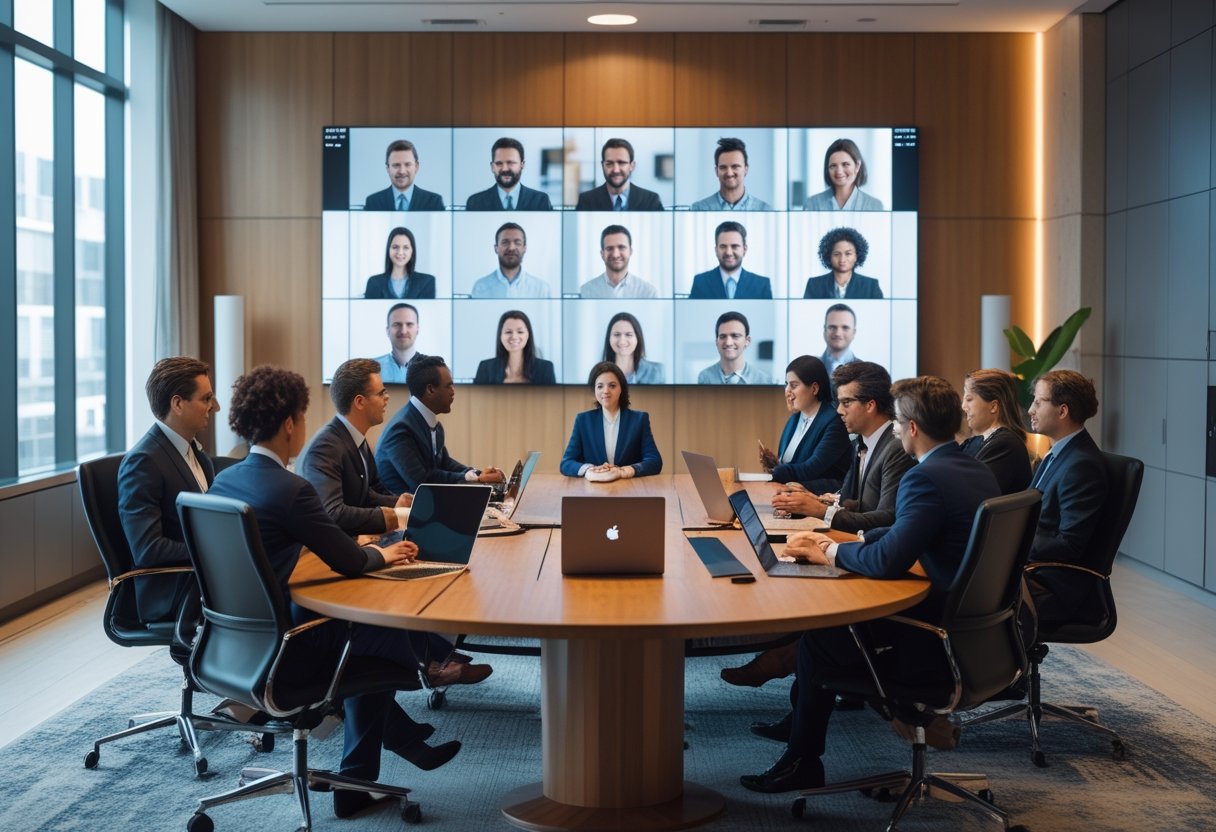
The strongest rooms do not depend on a single device. They combine sound, cameras, screen layout, and platform support so meetings feel simple to start and steady to run.
Audio, Cameras, And Microphones That Make Participation Feel Equal
Audio quality usually decides whether a room feels polished or frustrating. Good microphones, especially those tuned for room pickup, let remote attendees hear side comments, not just the loudest voice at the table. Cameras also matter, since people engage more when faces are framed well and movement is easy to follow.
In practice, the best hybrid meeting rooms do not make users think about equipment. The room captures discussion cleanly, shows the right people on screen, and keeps the meeting experience focused on the work. That is far more valuable than adding flashy gear that requires constant adjustment.
Platform Compatibility Across Zoom, Microsoft Teams, And Google Meet
Platform consistency is a practical test of room quality. Many organizations work across zoom, microsoft teams, and google meet, so the room should support all three without awkward workarounds. Zoom Rooms and Microsoft Teams Rooms can help standardize the experience, yet the real measure is whether people can join, share, and switch between systems without confusion.
IT teams also look for clean interoperability with collaboration tools and cloud services. When a hybrid meeting room works across the main platforms, adoption improves and support calls drop. That kind of reliability matters more than a long feature list.
Layouts, Digital Whiteboards, And Content Sharing That Reduce Friction
Room layout affects whether people can actually use the technology. Screens should be placed so both in-room and remote participants can follow the discussion, and table shape should support sightlines instead of blocking them. In a huddle room, the setup should stay simple; in larger conference rooms, the room should support stronger camera coverage and clearer content sharing.
Digital whiteboards and digital whiteboard workflows add real value when they are easy to use. Shared notes, sketches, and file transfers should feel natural, not technical. When content sharing is smooth, meetings move faster and the room feels designed for real collaboration rather than occasional video calls.
Why Better Rooms Now Reflect Organizational Status
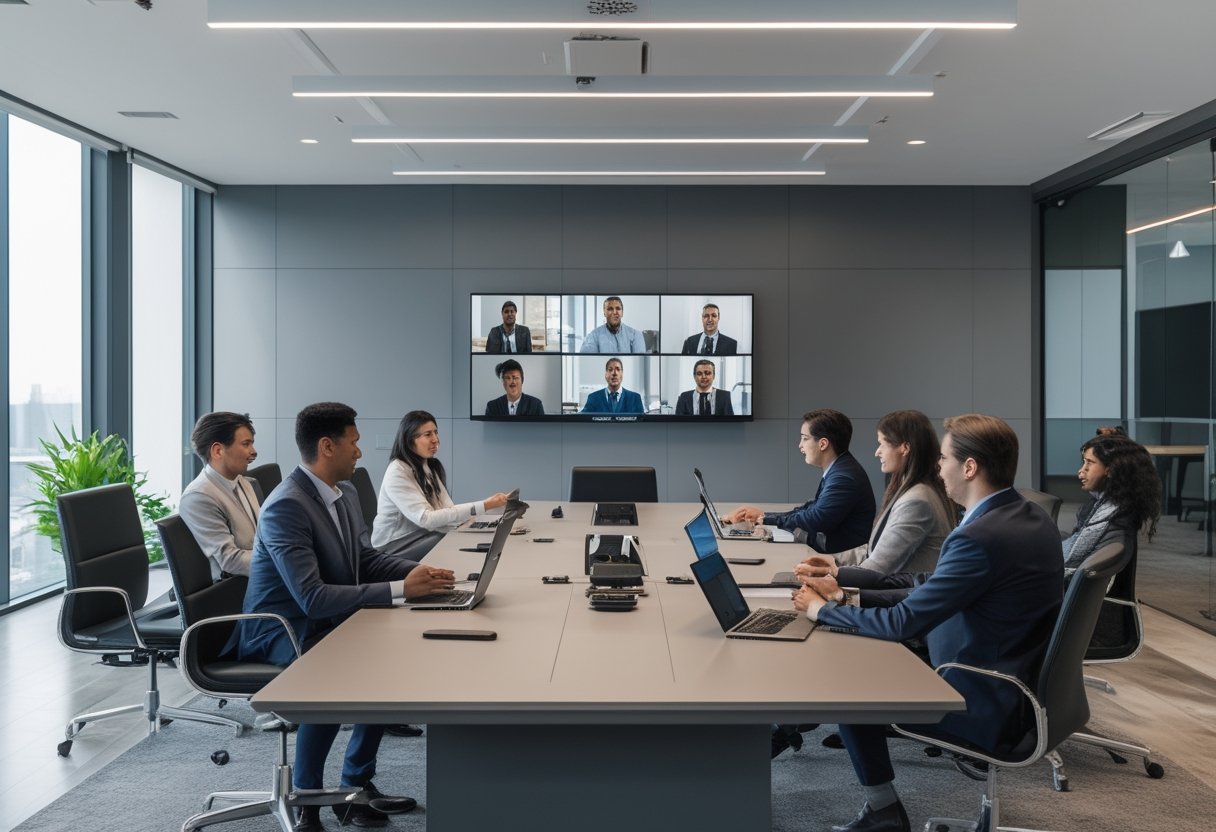
A better room is no longer only a facilities upgrade, it is a signal about how the organization operates. Executives, clients, and candidates all read the room quickly, and they notice whether the workplace feels current or neglected.
How Consistency Across Rooms Shapes Executive And Employee Perception
Consistency across hybrid rooms builds confidence. When one meeting space works well and another feels outdated, people start to question the standard behind the workplace. A consistent experience across meeting spaces tells employees that the organization takes hybrid work seriously, not as a temporary patch.
That perception reaches beyond convenience. Executives often see well-run hybrid meeting rooms as part of a broader operating standard, and employees connect that standard with respect for their time. When every room supports the same basic experience, the workplace feels more mature and more dependable.
Why Network, Cloud, And Security Readiness Influence Confidence
Room quality depends on more than the hardware people can see. A strong network, cloud readiness, and SSE-backed security controls help the system stay stable and trusted. If sign-ins fail, content lags, or access rules get in the way, the room quickly loses credibility.
IT leaders also watch how systems handle everyday interactions. Hybrid meetings should start cleanly, support secure content sharing, and keep management simple enough for scale. When the infrastructure is solid, people trust the room, and that trust shapes how the workplace is judged.
Where High-Stakes Environments Reveal The Real Standard
High-stakes spaces show the true level of investment. Boardrooms, client presentation areas, and leadership rooms expose weak audio, lagging video, or awkward switching faster than casual spaces do. If the room cannot support a critical meeting, the organization’s modern image suffers in plain view.
That is why hybrid rooms have become more than a technical choice. They reflect how a company treats hybrid work, how much it values remote participants, and how seriously it prepares for the future of meetings. In the end, the room becomes part of the brand, because it shapes every important interaction that happens inside it.