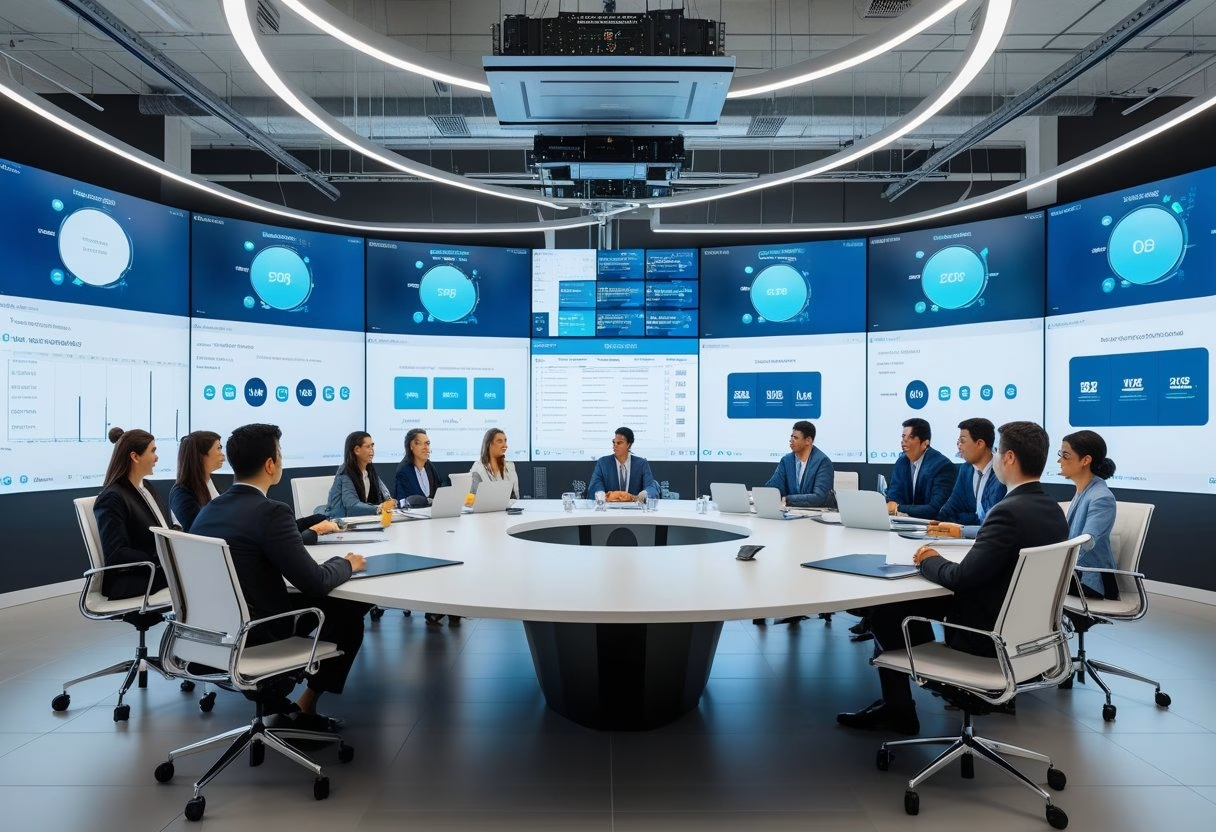
Enterprise AV has moved far beyond projectors and speakerphones. Organizations now expect meeting spaces to support hybrid work, real-time collaboration, and simple user experiences. Static conference rooms no longer meet daily demands.
Enterprise AV has evolved from basic meeting room equipment into intelligent collaboration spaces that use AI, automation, and integrated platforms to create consistent, secure, and inclusive experiences across locations. These spaces combine smart cameras, advanced audio, and platform integration to keep teams connected whether they sit in the office or join remotely.
As expectations rise, companies must rethink how they design, manage, and secure their AV systems. The shift is not just about adding new devices. It is about building environments that support productivity, reduce friction, and adapt as work continues to change.
Key Takeaways
- Enterprise AV now centers on intelligent, connected collaboration spaces rather than standalone meeting rooms.
- Modern systems rely on integrated video, audio, automation, and secure network design.
- Successful adoption depends on thoughtful planning, user experience, and long-term scalability.
The Journey from Traditional Meeting Rooms to Intelligent Collaboration Spaces

Enterprise AV has moved from simple in-room presentation tools to connected systems that support hybrid collaboration. Audio, video, and meeting room technology now work together to support remote meetings, unified communications, and data-driven space planning.
Initial Audio and Visual Solutions
Early meeting rooms focused on basic audio and video playback. Teams used projectors, pull-down screens, ceiling speakers, and table microphones to support in-person presentations.
These setups worked well for slide decks and local discussions. They did not support remote participation in a reliable way.
Most systems relied on fixed wiring and manual controls. An AV technician often configured mixers, amplifiers, and display inputs. This approach created complexity and limited flexibility.
Traditional conference rooms were built around hierarchy and one-way presentation. As explained in collaboration spaces vs traditional meeting rooms, older rooms prioritized a single speaker at the front.
The AV industry focused on hardware performance, not user experience. Integration between audio, video, and control systems remained limited.
Rise of Video Conferencing and Collaboration Platforms
Video conferencing changed meeting room technology. Platforms such as Microsoft Teams and Zoom became central to daily work.
Rooms began to include dedicated codecs, PTZ cameras, and integrated microphones. Organizations adopted unified communications systems to connect voice, chat, and video in one interface.
Appliance-based room systems reduced setup time and simplified support. As described in the evolution of meeting rooms from traditional conference rooms to modern solutions, meeting spaces shifted toward integrated and inclusive communication tools.
Cloud services replaced many on-site servers. IT teams gained remote monitoring and firmware updates.
The focus moved from equipment to workflow. Users expected one-touch join, screen sharing, and consistent audio quality across rooms.
Hybrid Collaboration and Meeting Equity
Hybrid work forced another shift. Teams needed rooms that treated remote and in-room participants equally.
Modern systems now use AI-enabled cameras, beamforming microphones, and auto-framing features. These tools support clear audio pickup and balanced video layouts.
Industry reports on the future of meeting rooms in 2025 highlight trends such as intelligent video, booking analytics, and flexible layouts.
Meeting equity means remote participants appear in individual video tiles and receive clear audio. Large 21:9 displays often show shared content and remote faces side by side.
Today’s intelligent collaboration spaces combine:
- Integrated audio and video systems
- Cloud-based video conferencing platforms
- Room analytics and occupancy sensors
- Flexible furniture and reconfigurable layouts
The AV industry now designs spaces around inclusion, usability, and measurable performance rather than just equipment specifications.
Key Technologies Powering Modern Enterprise AV
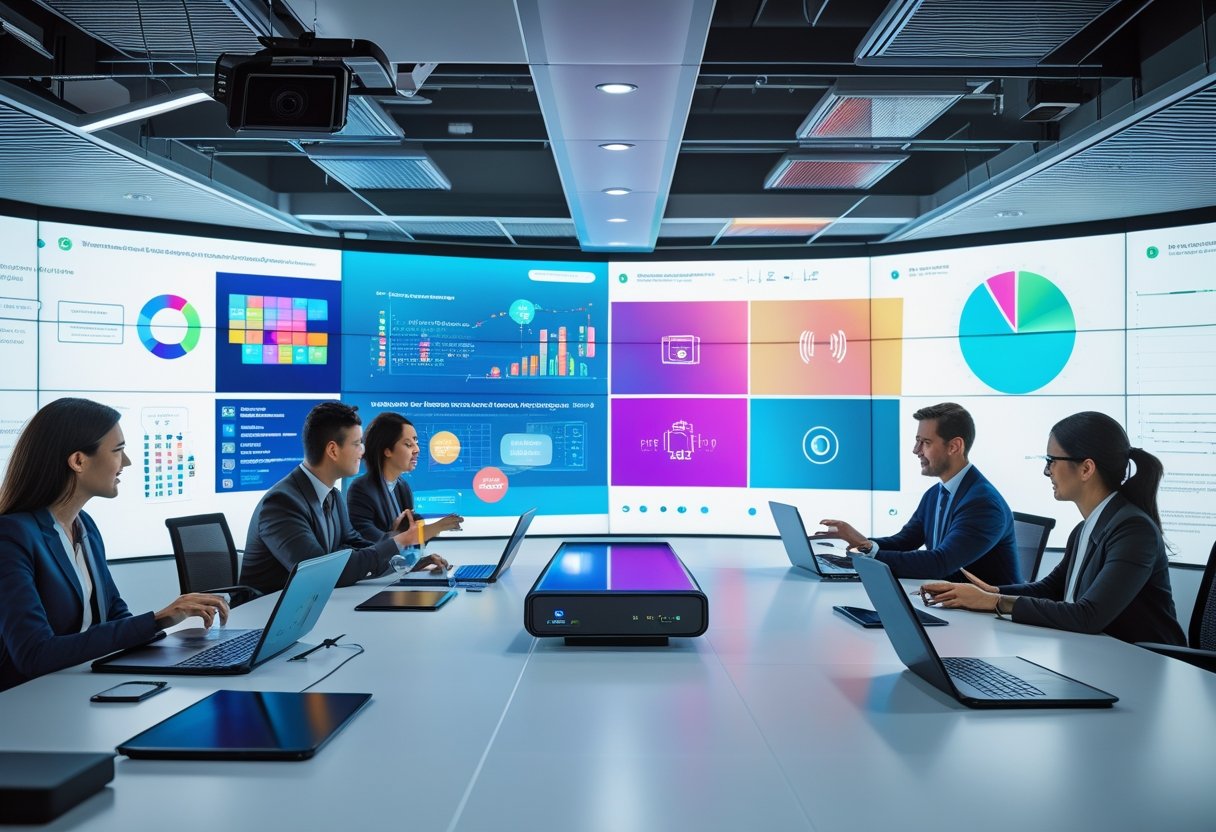
Enterprise AV now relies on AI software, intelligent cameras, advanced microphones, and cloud platforms that connect every meeting space. These tools improve clarity, reduce setup time, and create a consistent user experience across offices.
AI-Powered AV and Automation
AI-powered AV systems manage many tasks that once required manual control.
Cameras frame speakers automatically and switch views based on who is talking. Microphones use intelligent noise cancellation to reduce background sounds like typing or HVAC noise. Many systems also provide real-time transcription, live captions, and speaker attribution for accurate meeting records.
In 2026, AI features such as speaker tracking and automated layout adjustments define Meeting Room AV trends transforming offices. These tools help meetings start on time and keep remote participants engaged.
Automation also improves room scheduling and system health monitoring. AV platforms can power on displays, launch Zoom Rooms or Teams Rooms sessions, and adjust lighting without user input. This reduces friction and supports consistent performance across locations.
Advanced Microphone and Camera Systems
Modern enterprise AV depends on high-quality audio and video capture.
Ceiling microphone arrays pick up voices evenly across the room. They allow teams to speak naturally without passing handheld microphones. Beamforming technology focuses on active speakers and supports clear speech pickup in large spaces.
PTZ cameras (pan-tilt-zoom) track movement and adjust framing in real time. Wide-angle lenses cover huddle rooms, while multi-camera systems support boardrooms and training spaces.
Recent guidance on AI-powered conference room technology highlights how advanced camera systems improve reliability and engagement. When paired with spatial audio and speaker tracking, these systems create balanced sound for both in-room and remote participants.
The result is clear video, stable framing, and consistent audio pickup in hybrid meetings.
Unified Collaboration Platforms and Cloud Integration
Enterprise AV now integrates tightly with collaboration platforms such as Zoom, Microsoft Teams, Google Meet, and Webex.
Dedicated systems like Zoom Rooms and Teams Rooms provide one-touch meeting join, wireless content sharing, and calendar integration. Users can walk into a room, tap a panel, and launch a session without adjusting cables or inputs.
Organizations adopt unified tools to replace disconnected systems. A review of enterprise conference rooms in 2026 notes the shift toward integrated platforms that combine conferencing, scheduling, and device management.
Cloud integration allows IT teams to monitor performance, push updates, and manage devices remotely. It also enables secure guest access and centralized reporting across multiple offices.
This approach supports consistent user experience and reduces support requests.
Human-Centered AV Design and User Experience
Modern AV design focuses on how people use the space, not just the hardware installed in it.
Clear sightlines, front-of-room displays, and balanced speaker placement support natural conversation. Touch panels use simple layouts with large buttons and clear labels. Voice control and touchless options reduce physical contact and speed up interaction.
Designers also consider accessibility. Live captions, adjustable audio levels, and flexible seating layouts support inclusive meetings. Intelligent camera framing ensures remote participants see all speakers, not just one side of the table.
Human-centered AV design aligns technology with daily workflows. It reduces confusion, shortens meeting setup time, and helps teams focus on collaboration instead of troubleshooting equipment.
AV Integration, Security, and Operational Challenges
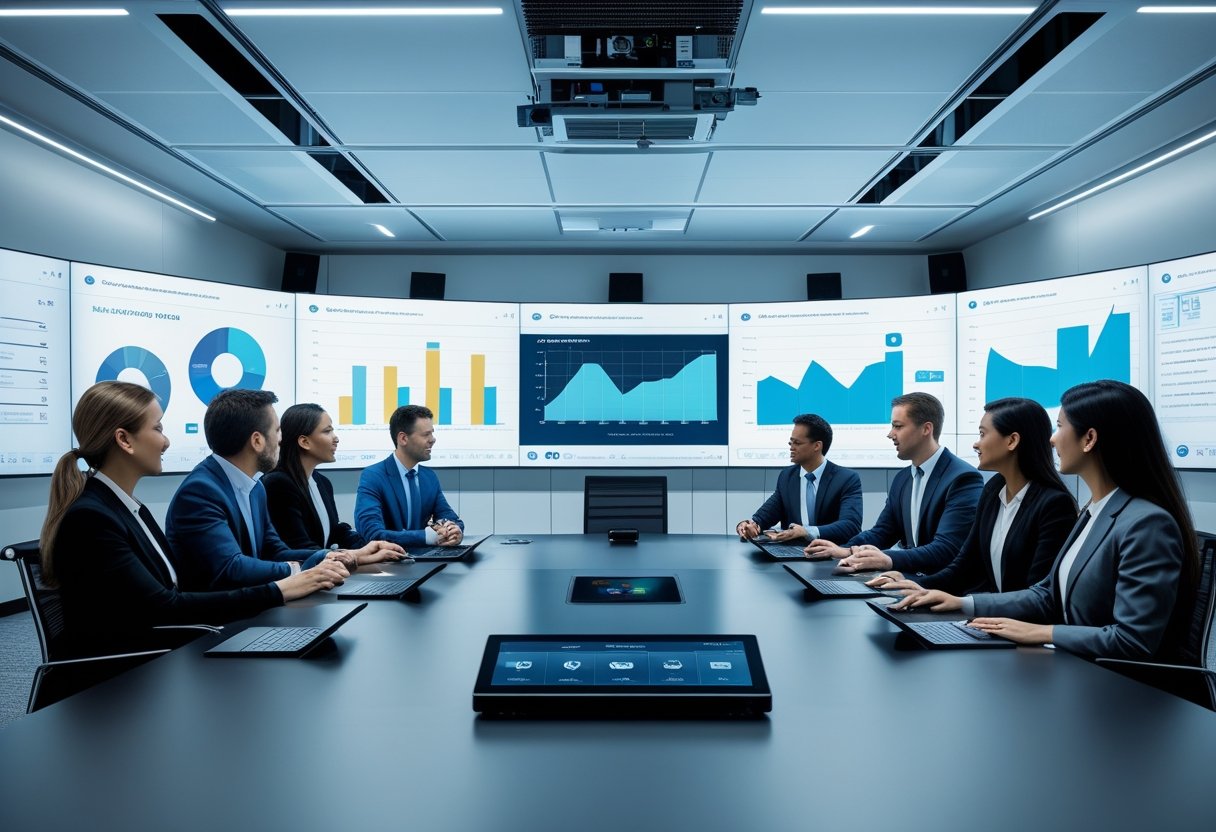
Enterprise AV now runs on the same networks as core business systems. Organizations must align AV integration, cybersecurity controls, and daily operations to avoid risk and reduce support costs.
AV and IT Convergence
AV systems no longer sit outside the network. IT directors now expect AV integration to follow the same standards as servers, laptops, and cloud apps.
Modern meeting rooms connect control systems, projectors, digital signage players, cameras, and microphones directly to enterprise switches. Teams place these devices on dedicated VLANs and apply QoS policies to protect real-time audio and video traffic. Without this setup, video calls freeze and audio drops.
Manufacturers design platforms with tighter IT alignment. Many solutions support centralized device management, remote firmware updates, and secure authentication. Industry events like ISE 2026 AV integration trends highlight how lifecycle planning and simplification now guide system design.
Standards also matter. HDMI remains common inside rooms, but IP transport and cloud control dominate across buildings and campuses. AVIXA and InfoComm continue to promote shared best practices between AV and IT teams.
Cybersecurity and Network Considerations
Every networked AV device creates a potential entry point. Cameras, DSPs, wireless presentation tools, and digital signage players all sit on the same infrastructure as business data.
Security teams now require:
- Network segmentation with VLANs
- Strong password policies and role-based access
- Encrypted management traffic
- Regular firmware updates
Articles on AV security challenges in IT environments explain how unmanaged endpoints increase risk. An outdated projector or control processor can expose the wider network.
Procurement processes reflect this shift. Many RFPs demand secure-by-design hardware, vulnerability disclosure programs, and documented patch cycles. Cybersecurity no longer sits as an afterthought. It shapes vendor selection and system architecture from day one.
Managing Enterprise Collaboration Estates
Large organizations often manage dozens or hundreds of rooms. Without standardization, support costs rise fast.
They reduce complexity by limiting room types, such as:
- Huddle spaces
- Standard conference rooms
- Executive boardrooms
- Training or divisible spaces
Each type uses approved hardware lists and consistent control systems. This approach simplifies device management and speeds up troubleshooting.
Cloud dashboards now monitor device health, usage, and firmware status across the estate. Research on enterprise AV systems and hybrid collaboration in 2026 notes that organizations treat AV as ongoing operational infrastructure, not a one-time install.
IT and AV teams track uptime, patch compliance, and room utilization. Clear ownership and shared metrics prevent gaps between facilities, IT directors, and external integrators.
Driving Adoption, Inclusivity, and the Future of Enterprise AV
Organizations gain value from enterprise AV only when people use it with confidence. Clear change management, practical training, and inclusive design drive adoption while AI, AR, and VR expand how teams collaborate across distance and time zones.
Change Management and User Training
Enterprise AV fails when teams avoid the tools. Leaders must treat rollout as a change management program, not a hardware upgrade.
They should set clear standards for room design, meeting workflows, and support. They also need executive sponsors who model correct use during hybrid meetings and town halls.
Strong user training focuses on daily tasks:
- Starting a video meeting in under one minute
- Sharing content wirelessly
- Using ai transcription and action item extraction
- Managing microphones for clear professional audio
Many platforms now support speaker identification, live captions, and meeting summaries. AI-powered features like those described in AI powered meeting rooms gaining momentum reduce friction and help teams focus on discussion instead of controls.
AV professionals should offer short, role-based training sessions. They should also track adoption data to improve operational efficiency and reduce repeat support tickets.
Future Trends: AI, AR, VR, and Smart Spaces
Enterprise AV now blends physical and digital workspaces. AI tools handle tasks such as noise suppression, camera framing, transcription, and automated meeting notes.
Advanced systems also support analytics and automation. Insights described in Five AV Tech Trends Reshaping Enterprise Communication in 2026 show how AI and smart platforms improve system performance and planning.
AR and VR expand collaboration beyond flat screens. Teams use VR for immersive design reviews and safety simulations. AR overlays digital models onto physical spaces, which helps engineering and field teams make faster decisions.
In healthcare, smart AV enables telemedicine consults with high-quality video and clear audio. Some integrators, including firms such as 1 Beyond and Automate VX, focus on intelligent camera systems that support presenter tracking and hybrid events.
Smart spaces connect room sensors, scheduling panels, and analytics dashboards. This data improves room usage and supports better space planning.
Enhancing Global Collaboration and Accessibility
Most enterprise meetings now include remote participants. Clear AV design supports global collaboration across regions and time zones.
Hybrid-first room layouts use wide-angle cameras, ceiling microphones, and front displays so remote staff see and hear clearly. Guidance from Meeting Equity AV Systems: What Enterprises Need in 2026 highlights the need to give remote and in-room participants equal presence.
Accessibility requires more than video. Teams rely on:
- Live captions and ai transcription
- Language translation tools
- Adjustable audio levels
- Screen reader compatibility
Inclusive design helps employees with hearing or vision limits take part fully. It also supports flexible remote work policies.
When organizations invest in inclusive AV, they reduce barriers and create consistent meeting experiences across offices worldwide.