
Core Operational Shifts in AI-Enabled Control Rooms
AI changes your control room from a place that watches events to a place that helps you anticipate them. It also changes how you assign people, how quickly you respond, and how much confidence you place in each alert. The biggest practical shift is that your operators spend less time hunting for signals and more time acting on the right ones.
From Passive Monitoring to Predictive Oversight
Traditional control rooms depend on steady human attention and a lot of screen watching. AI adds pattern detection, trend spotting, and early warning logic, so you can see risk before it becomes a visible failure. In practice, that means you can move from reacting to incidents toward planning around likely issues, such as equipment drift, crowding, access anomalies, or system faults.
For facility and operations teams, this matters because real environments rarely stay still. A good AI layer can spot small changes across video, sensors, access logs, and building systems that a person would miss during a busy shift. That gives you more lead time, which is often the difference between a short interruption and a bigger service problem.
How AI Changes Operator Decision Support
AI does not replace judgment; it changes the shape of judgment. Instead of forcing your team to interpret raw data from multiple systems, AI can surface likely causes, rank alerts by urgency, and suggest the next step. That reduces cognitive load and helps newer operators act with more confidence.
You still need trained people to confirm context and make final calls. In a live environment, that human check is critical because the same alert can mean very different things depending on occupancy, time of day, or maintenance activity. Teams that work with partners like MLV Teknologi often see the best results when the system design supports clear escalation paths and clean handoff between software and operator action.
The New Balance Between Automation and Human Judgment
The practical goal is not full automation. It is a better split between what software should do quickly and what people should decide carefully. AI is strongest at pattern recognition, alert filtering, and repetitive analysis, while your team remains best at exceptions, policy decisions, and cross-functional coordination.
That balance changes staffing as well. You may need fewer people staring at status boards, yet stronger people for oversight, escalation, and system tuning. The control room becomes less about constant watching and more about managed intervention, with humans staying in charge of risk and accountability.
System Design and Workflow Implications
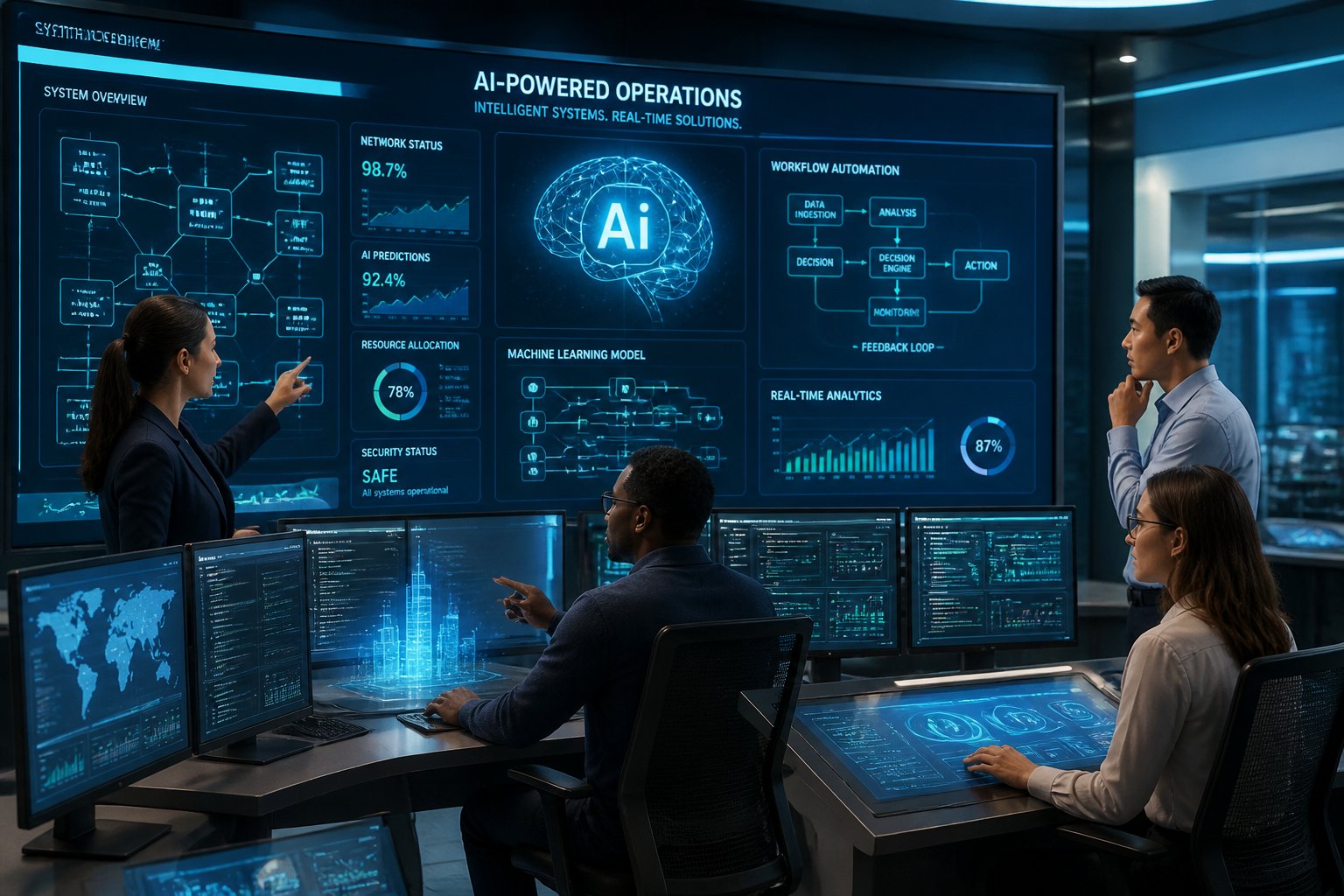
AI only works well when the surrounding workflow is designed for it. That means cleaner data feeds, clearer alarm logic, faster interfaces, and room layouts that support quick decisions rather than distraction. The design work matters as much as the model itself.
Data Integration Across AV, Security, and Building Systems
Your AI system becomes much more useful when it can read across AV, security, and building management platforms. A meeting room camera, access control event, environmental sensor, and room booking system can each tell part of the story. AI adds value by connecting those signals into one operational view.
This is where many projects succeed or stall. If your systems are poorly integrated, AI will still give you fragments instead of context. A strong implementation usually starts with interoperability, reliable data mapping, and a clear plan for which systems are trusted sources versus supporting inputs.
Alert Prioritization and Escalation Logic
Alert overload is a common control room problem, and AI can help if it is configured carefully. The system should filter noise, group related events, and push only the alerts that need attention. You want fewer interruptions, not just more notifications with a new label.
Escalation logic should match your business rules, not just technical thresholds. For example, a minor fault during low occupancy may need a different response than the same fault during peak use. Good workflow design turns alerting into decision support, while weak design creates new confusion.
Control Room Interface Changes for Faster Response
AI changes the interface as much as it changes the backend. Operators need dashboards that show what changed, why it matters, and what action comes next. That usually means fewer cluttered screens, clearer status grouping, and better visual cues for priority and confidence.
The room itself may also need adjustment. Lighting, screen placement, seating, and sight lines all affect how fast your team can interpret AI-assisted information. In active office environments, low-disruption installation and careful coordination matter a lot, which is why practical AV delivery experience is as important as software selection.
Adoption Risks, Governance, and Readiness
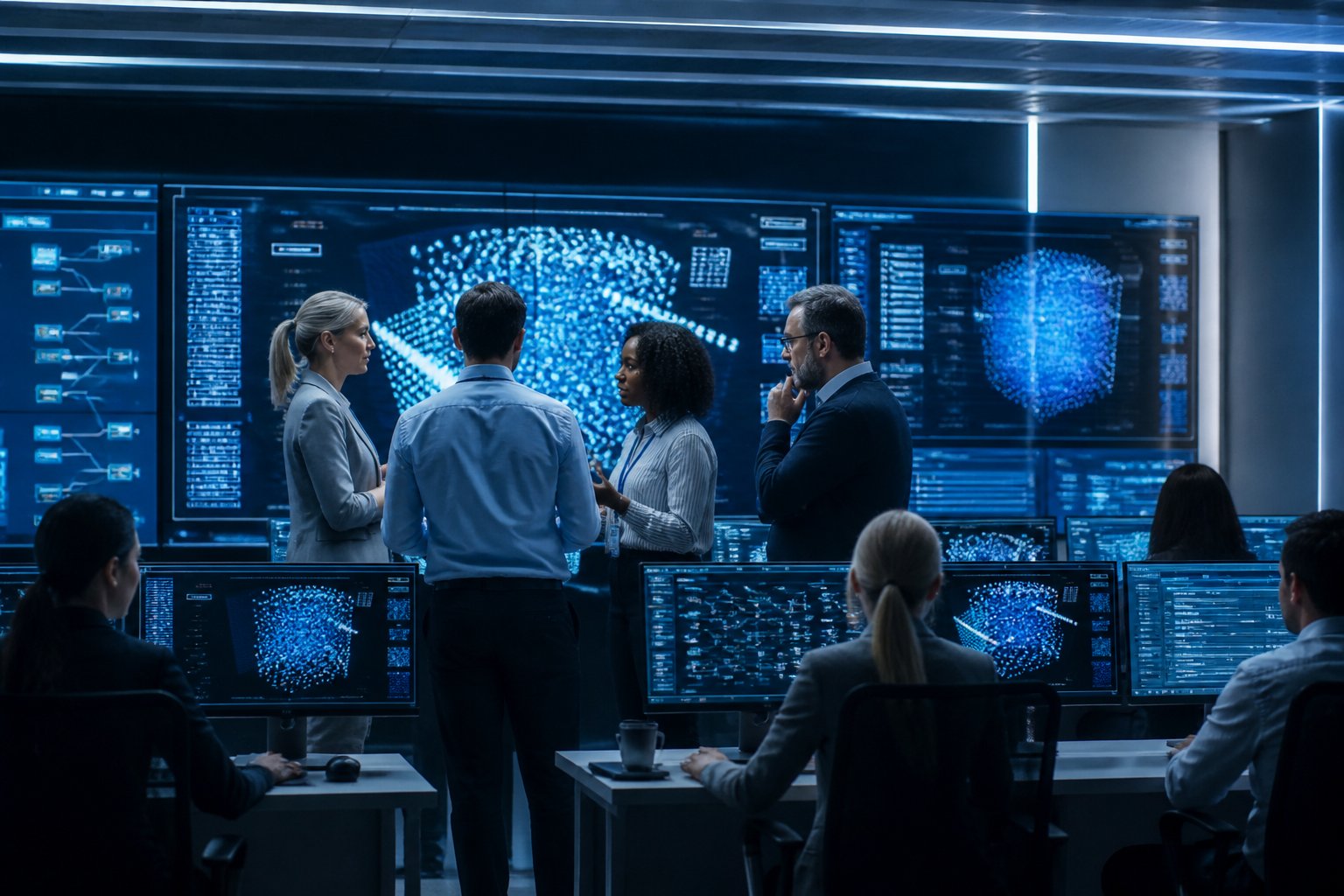
AI can improve control room performance, yet it also creates new exposure points. You need to treat accuracy, cyber risk, and governance as operational issues, not side topics. The teams that plan for these risks early tend to deploy with less friction and fewer surprises.
Accuracy, Bias, and False Alarm Management
AI systems are only useful if their outputs stay reliable in your actual environment. False alarms, missed detections, and biased pattern recognition can make operators lose trust fast. Once that trust drops, people stop using the tool the way it was intended.
You should test the system against your own data, your own shift patterns, and your own exception cases. A model that performs well in a demo can still struggle with local workflows or unusual operating conditions. A phased rollout with human review is usually safer than a wide cutover.
Cybersecurity and Operational Resilience
AI expands the attack surface because it depends on data feeds, APIs, user access, and connected systems. If one of those layers is weak, the control room can inherit the risk. Gartner-style adoption trends show why this matters: faster AI rollout often arrives before governance and security controls are fully mature.
Operational resilience should include fallback procedures, logging, access controls, and a clear way to run the room if the AI layer fails. You need to know what happens when the model goes offline, gives a bad recommendation, or receives bad input. That planning is part of uptime, not separate from it.
What Organizations Should Assess Before Deployment
Before deployment, check five things: data quality, system interoperability, operator readiness, escalation policy, and cybersecurity controls. If any one of these is weak, AI will add complexity instead of reducing it. The most successful projects start with one use case, one room, and one clear business goal.
You should also assess whether your implementation partner can work cleanly inside a live environment. In South Jakarta and similar commercial settings, practical delivery often depends on responsive coordination, careful installation timing, and minimal disruption to daily operations. That is the kind of execution standard that separates a workable control room upgrade from a difficult one.