
by Melvin Halpito | Mar 23, 2026 | Article
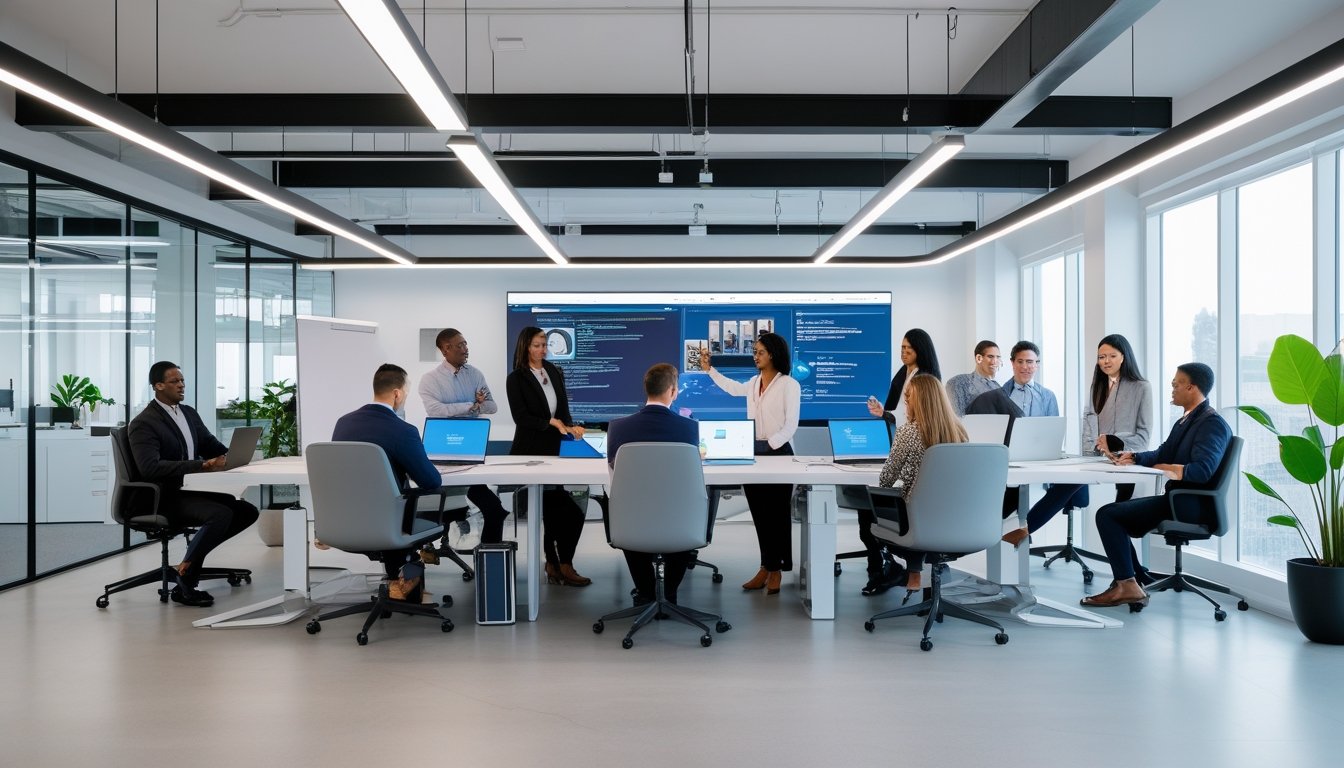
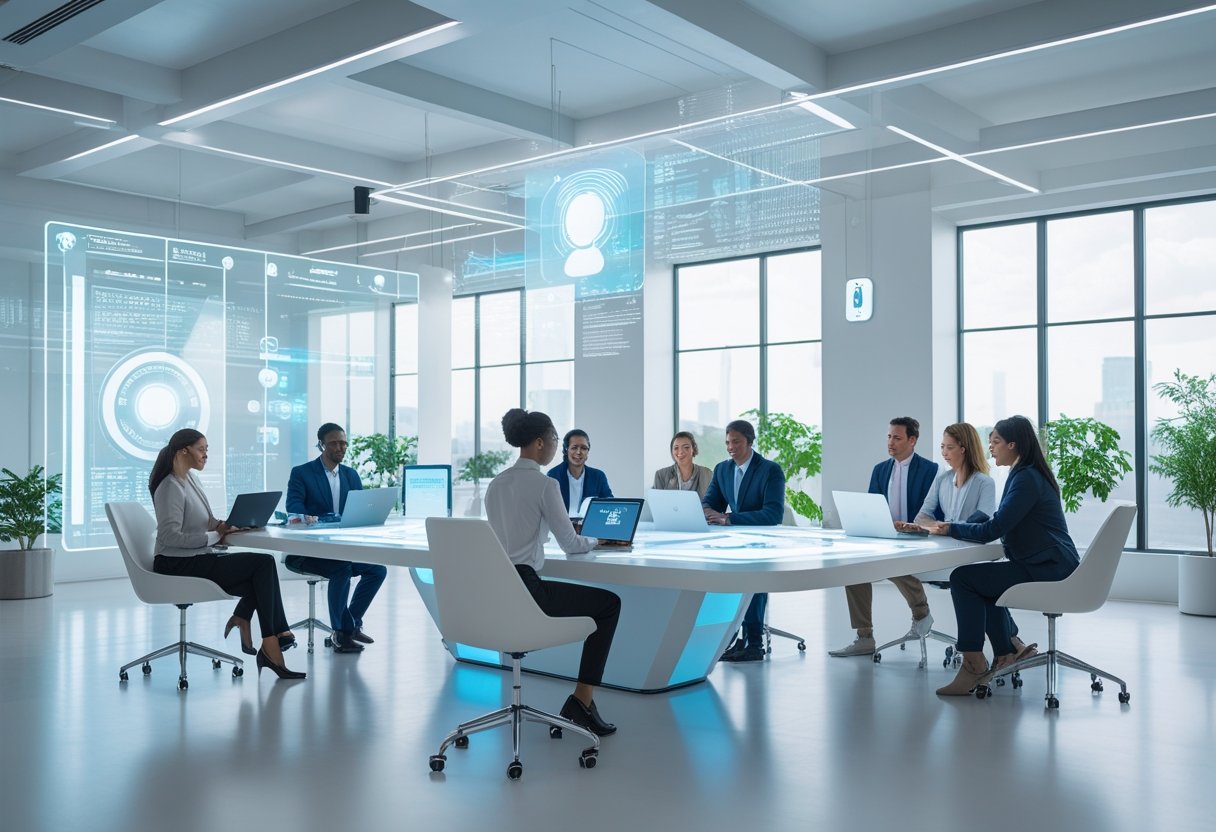
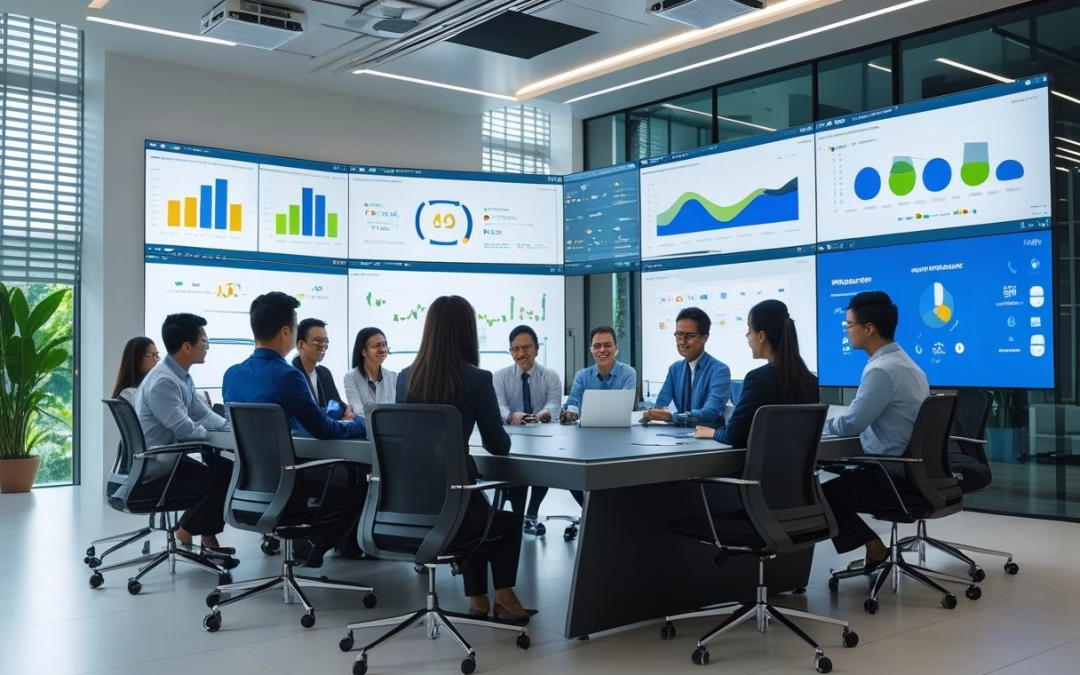
Kantor kini berubah fungsi: bukan lagi hanya tempat untuk menyelesaikan tugas, tetapi ruang yang dirancang agar tim bisa bertukar ide, memutus masalah cepat, dan membangun budaya kerja bersama. Anda akan melihat bagaimana suasana, teknologi, dan tata ruang mendukung kolaborasi yang nyata, bukan sekadar rapat yang berulang.
Jika kantor ingin tetap relevan, ia harus menjadi tempat yang memudahkan kerja tim, komunikasi terbuka, dan akses informasi secara real time. Artikel ini menunjukkan langkah praktis yang bisa diterapkan untuk membuat kantor seperti itu, dari pola kerja hybrid hingga desain ruang dan alat digital yang benar-benar membantu.
Baca terus untuk menemukan cara mengubah kantor menjadi pusat kolaborasi yang efektif dan masuk akal bagi semua pihak.
Ringkasan Utama
- Kantor berfungsi ulang sebagai ruang kolaborasi, bukan sekadar lokasi kerja.
- Perubahan fokus disokong oleh teknologi dan pola kerja hybrid.
- Desain ruang dan alat digital menentukan efektivitas kolaborasi.
Mengapa Kantor Bertransformasi Menjadi Tempat Kolaborasi

Perusahaan kini menata ruang kerja untuk memperkuat kerja tim, mendukung hybrid work, dan menjaga kesejahteraan karyawan. Perubahan ini muncul karena kebutuhan konkret: komunikasi lebih cepat, akses ke alat digital, dan tempat bertemu untuk ide bersama.
Peran Kolaborasi dan Budaya Kerja Masa Kini
Kolaborasi jadi inti budaya kerja yang efektif. Tim di startup hingga perusahaan berkembang menuntut alat dan ruang yang mendukung diskusi tatap muka singkat, brainstorming, dan keputusan cepat.
Ruang komunal, meja modular, dan papan tulis digital mempermudah pertukaran ide. Ini mengurangi rapat panjang yang tidak produktif dan mempercepat iterasi produk atau layanan.
Budaya kerja yang mendorong keterbukaan membuat karyawan lebih berani berbagi gagasan. Manajemen memberi ruang untuk eksperimen, feedback, dan tanggung jawab bersama.
Hasilnya: tim lebih terikat pada tujuan perusahaan dan proses kerja menjadi lebih transparan.
Model Kerja Hybrid dan Fleksibilitas Lokasi
Model kerja hybrid menggabungkan kerja jarak jauh dan kehadiran di kantor sesuai kebutuhan tugas. Perusahaan menerapkan jadwal kantor untuk kolaborasi intensif dan kerja remote untuk tugas fokus.
Fleksibilitas lokasi mengurangi kebutuhan ruang kerja permanen dan menekan biaya kantor. Sistem cloud, platform manajemen tugas, dan meeting virtual memastikan sinkronisasi antaranggota tim.
Kebijakan hybrid juga memerlukan ruang yang mudah di-booking, koneksi video berkualitas, dan kebijakan yang jelas soal hari kolaborasi. Perusahaan yang menjalankan model ini melihat alur kerja lebih efisien tanpa kehilangan kontrol operasional.
Dampak terhadap Kesejahteraan dan Produktivitas Karyawan
Perubahan ruang menuju kolaborasi berdampak langsung pada kesejahteraan. Ruang yang ramah, pencahayaan alami, dan area istirahat meningkatkan mood dan mengurangi stres.
Karyawan merasa didukung saat perusahaan menyediakan fasilitas untuk interaksi sosial dan kerja fokus.
Produktivitas naik ketika kolaborasi dipakai secara efektif: keputusan lebih cepat, kesalahan berkurang, dan waktu pengembangan produk menurun. Namun perusahaan harus menjaga keseimbangan; terlalu banyak gangguan bisa menurunkan konsentrasi.
Kebijakan kerja hybrid yang fleksibel membantu menjaga work-life balance dan menurunkan burnout, sehingga produktivitas jangka panjang lebih stabil.
Desain dan Teknologi Pendukung Kolaborasi di Kantor Modern
Desain ruang dan teknologi bekerja bersama untuk mendukung kerja tim, pertemuan hybrid, dan kesejahteraan karyawan. Fokusnya pada tata ruang fleksibel, perangkat konferensi, fasilitas inovasi, dan keseimbangan antara area terbuka dan pribadi.
Ruang Kolaborasi dan Pusat Interaksi
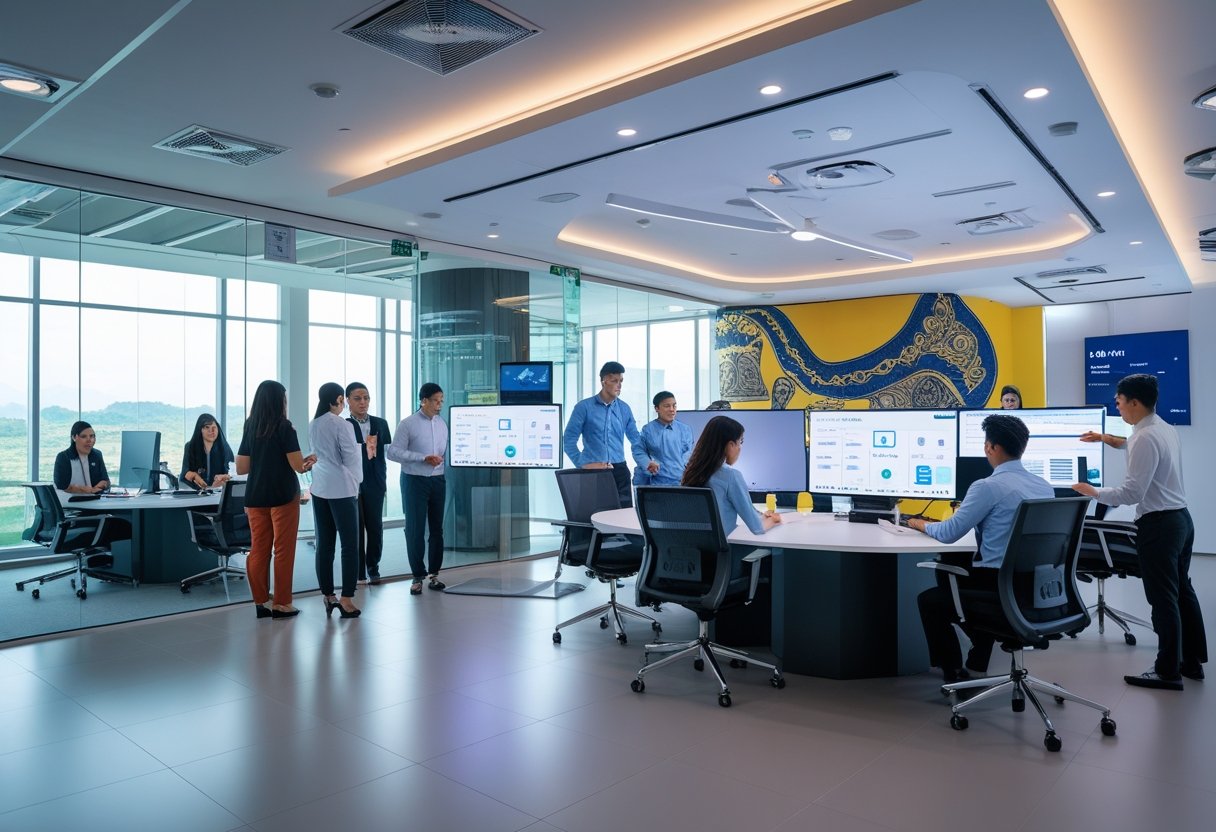
Ruang kolaborasi ditempatkan dekat area layanan umum untuk mendorong pertemuan spontan. Ia dilengkapi meja bergerak, papan tulis digital, dan meja tinggi untuk diskusi singkat. Zona ini mendukung hot-desking sehingga tim lintas fungsi dapat duduk bersama saat proyek intensif.
Pusat interaksi memuat beberapa format: meja panjang untuk kerja tim, booth kecil untuk diskusi dua hingga tiga orang, dan lounge santai untuk brainstorming. Semua area terhubung dengan Wi‑Fi kuat dan banyak colokan daya. Identitas perusahaan tercermin lewat warna, signage, dan materi visual di dinding agar ruang terasa milik bersama.
Ruang Meeting Fisik dan Virtual
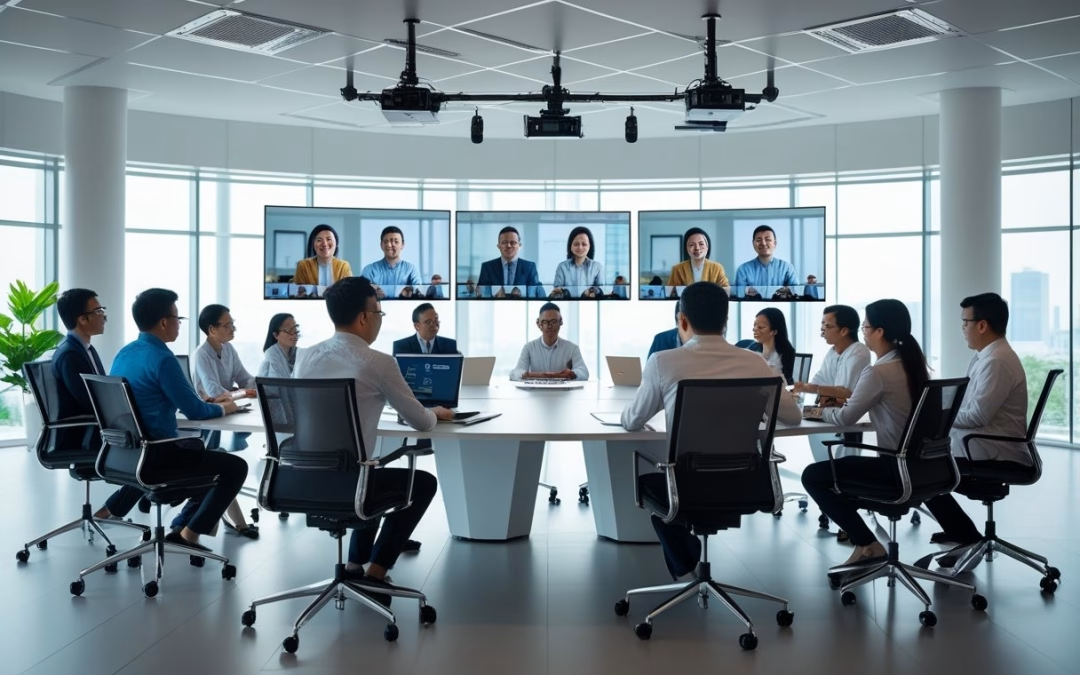
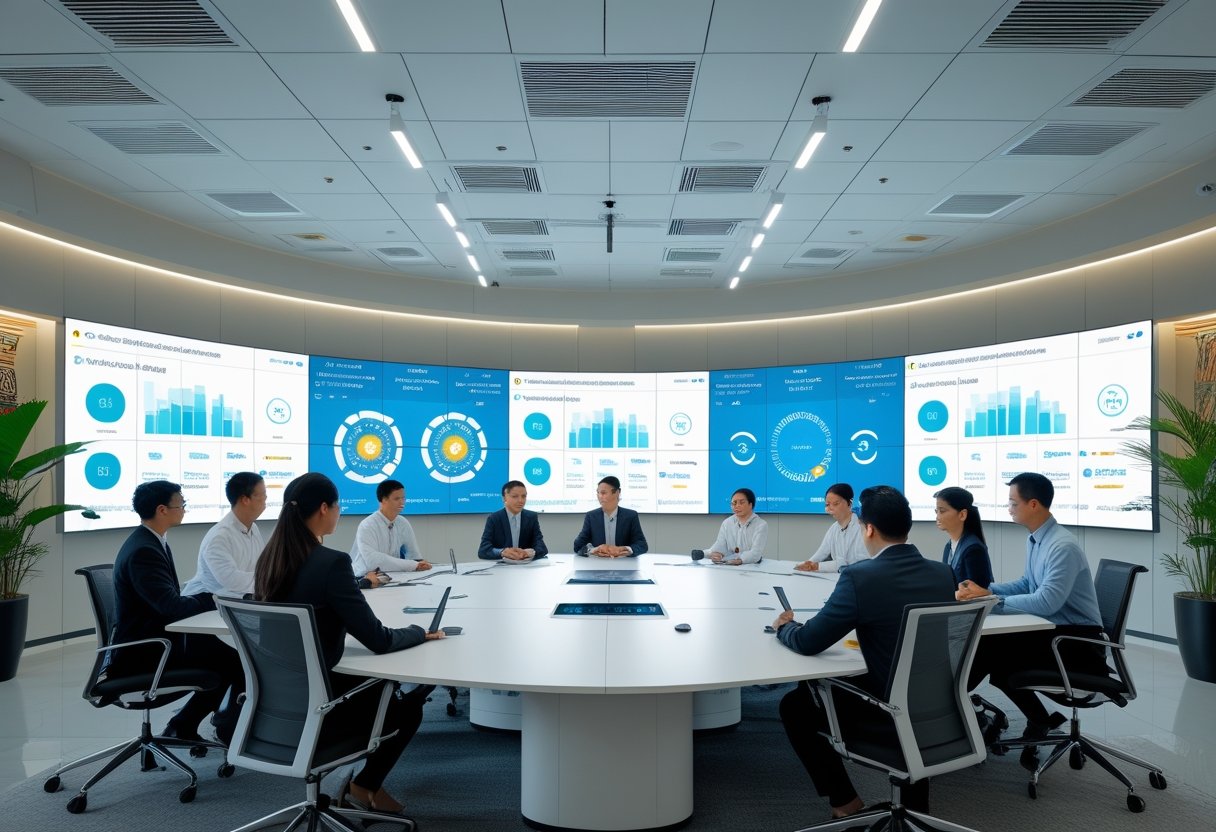
Ruang meeting dirancang untuk pertemuan hybrid dengan perangkat video conference kelas bisnis. Kamera wide‑angle, mikrofon ceiling, dan speaker terintegrasi menjaga kualitas suara dan gambar. Ruang kecil dilengkapi solusi plug‑and‑play untuk memudahkan presentasi cepat.
Di sisi virtual, platform konferensi terintegrasi dengan digital whiteboard sehingga peserta remote bisa menulis dan menandai dokumen real time. Sistem reservasi ruang otomatis menghindari bentrok jadwal. Kebijakan keamanan data diterapkan pada rekaman dan file yang dibagikan selama meeting untuk melindungi informasi perusahaan.
Fasilitas Penunjang Inovasi dan Green Office
Area inovasi menyediakan prototyping corner dengan meja kerja, alat presentasi, dan rak bahan referensi. Ada juga ruang fokus singkat untuk pekerja yang butuh konsentrasi. Fasilitas ini mendorong eksperimen cepat tanpa mengganggu operasi utama.
Green office diterapkan lewat pencahayaan alami, tanaman indoor, dan material ramah lingkungan. Sistem ventilasi dan kontrol suhu hemat energi meningkatkan kenyamanan. Stasiun pengisian perangkat dan stasiun daur ulang mendukung praktik berkelanjutan tanpa mengorbankan produktivitas.
Keseimbangan antara Ruang Terbuka dan Pribadi
Kantor modern menyeimbangkan open space dengan ruang pribadi untuk mengurangi gangguan. Area terbuka dipakai untuk kolaborasi tim dan acara internal. Untuk tugas mendalam, tersedia focus pods dan ruang telepon pribadi.
Desain fleksibel memudahkan rekonfigurasi meja dan partisi sesuai kebutuhan proyek. Kebijakan penggunaan ruang jelas: kapan memakai hot‑desking, kapan memesan ruang pribadi. Hal ini menjaga privasi, meningkatkan konsentrasi, dan tetap memudahkan interaksi antar tim.
by Melvin Halpito | Mar 23, 2026 | Article
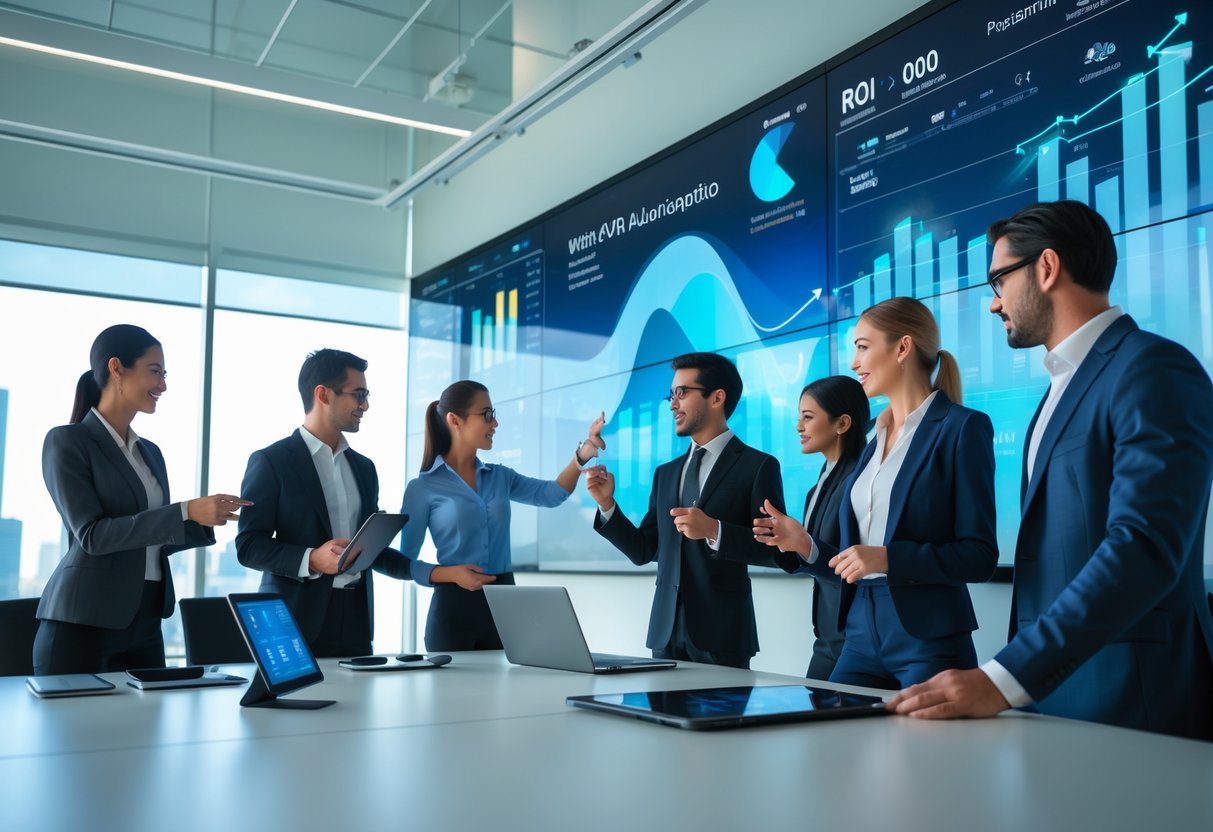
You’re used to judging AV investments by screens, speakers, and wattage. That view misses the point: enterprise value now comes from how technology shapes meetings, collaboration, and employee time. Measure AV ROI by the experiences it enables, not just the hardware you buy.
Think about how often people struggle with setups, drop calls, or leave a meeting frustrated — those moments cost time and momentum. Shift the focus to user satisfaction, room utilization, and workflow gains to see the real returns from AV upgrades.
Key Takeaways
- Move beyond counting equipment and track the impact on daily workflows.
- Prioritize ease of use and adoption to unlock measurable value.
- Use utilization and satisfaction metrics to judge long-term ROI.
The Evolution of AV ROI: From Hardware to Experience
AV investments now tie to user outcomes, room utilization, and business goals. Measurement shifts from counting devices to tracking meeting productivity, hybrid work quality, and long-term adoption across sites.
Defining the Experience-Driven AV Approach
The experience-driven AV approach measures how systems improve work, not just how many devices were installed. It looks at meeting start times, call quality, participant engagement, and how often rooms are used. Teams track metrics like average time to join a meeting, number of dropped calls, and percentage of meetings that use video and content sharing.
This approach ties AV systems to business KPIs such as reduced travel, faster decision cycles, and higher training completion rates. It requires instrumenting AV infrastructure with analytics: device telemetry, room sensors, and logs from conferencing platforms. These data points show whether modern AV systems actually make hybrid work smoother and justify the investment.
Limitations of Traditional Hardware-Focused ROI
Traditional ROI focused on unit costs, warranty terms, and expected lifespan of AV hardware. That view misses recurring costs: room scheduling friction, cloud service fees, and staff time spent fixing unreliable gear. It also ignores intangible losses such as meeting delays and poor remote participant experience.
Counting installed displays, cameras, and DSPs gives a procurement score, not a performance score. Enterprises with modern AV systems need to budget for monitoring, software updates, and user training. Without those, hardware may sit unused or underused, lowering the true return on AV investments.
The Rise of Digital Experience Platforms
Digital experience platforms bring AV telemetry, room scheduling, and collaboration app data into one dashboard. They combine AV system health, user feedback, and usage trends to show where improvements matter most. This helps IT and facilities prioritize upgrades to cameras, microphones, or network capacity.
These platforms enable predictive maintenance and remote troubleshooting, reducing on-site service calls. They also allow comparison across locations to see which AV infrastructure designs drive higher adoption. For organizations moving to hybrid work, a digital platform ties AV performance directly to employee experience and operational costs.
Key Drivers for Experience-Based Measurement
Four drivers push measurement toward experience: hybrid work demands, need for consistent user experience, data availability, and pressure to prove business impact. Hybrid work forces AV systems to support both in-room and remote participants equally. That raises the bar on audio quality, camera framing, and network reliability.
Data availability from modern AV systems and collaboration apps makes experience metrics practical. Leaders use these metrics to justify AV investments in better microphones, managed AV-over-IP networks, or subscription-based services. Finally, measuring experience helps optimize room layouts and AV infrastructure to increase utilization and improve ROI for the entire enterprise.
Measuring Enterprise AV ROI in a Hybrid and Experience-Centric Era
Enterprises must track both technical performance and user experience. Metrics should tie AV systems to business outcomes like meeting efficiency, reduced travel costs, and higher customer engagement.
Critical Success Metrics for AV Deployments
They should measure meeting start time reliability, time to resolve issues, and average session quality. Track the percentage of meetings that start on schedule in Teams Rooms or Zoom Rooms. Lowering meeting delays directly saves staff hours and reduces lost productivity.
Measure mean time to repair (MTTR) for AV deployments. Faster MTTR keeps user trust high and prevents repeated calls to Level 3 audiovisual support. Include display uptime, microphone and camera health, and call drop rates.
Also capture engagement metrics: digital signage dwell time, remote participant speaking time, and polling responses. Tie these to revenue or satisfaction where possible. Use a dashboard to show KPIs in real time for stakeholders.
Standardization, Scalability, and Holistic Integrator Partnerships
Standardize room kits and cabling across floors to cut installation time and spare parts needs. A common bill of materials for displays, codecs, and control systems reduces procurement friction and simplifies technician training.
Choose integrators that offer managed services and can scale from pilot rooms to enterprise rollouts. Holistic integrators handle initial design, deployment, and ongoing monitoring, which lowers time to resolve and avoids fragmented vendor handoffs.
Plan for modular upgrades: swap codecs or cameras without rewiring. Standardization enables rollout speed and predictable costs while preserving choice for Teams Rooms versus Zoom Rooms features. Track rollout velocity and per-room cost to measure scalability.
Enabling Meeting Equity and Collaboration with Modern AV
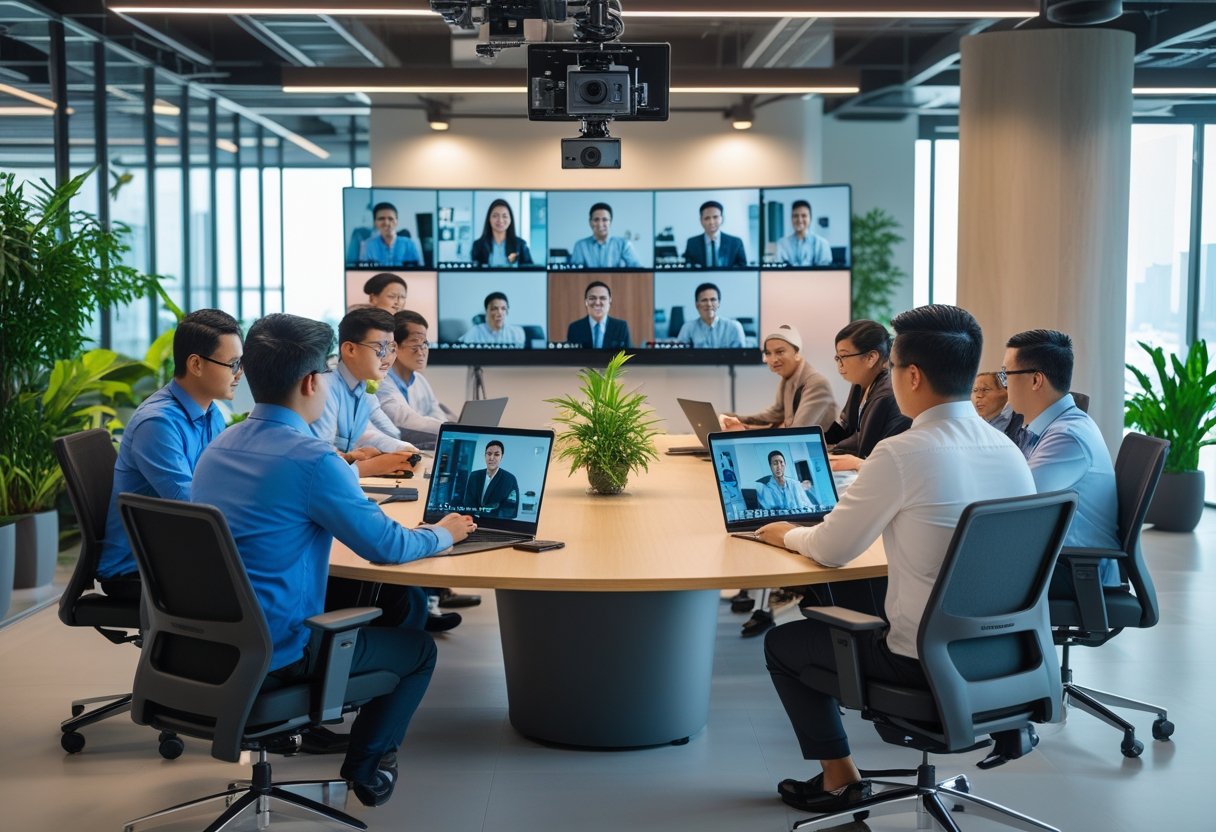
Meeting equity means remote participants have the same ability to see, hear, and contribute as in-room attendees. Deploy wide field-of-view cameras, ceiling or beamforming microphones, and consistent display placement to reduce audio or visual bias.
Measure equity via participant feedback and objective signals: percentage of remote speakers per meeting, number of sidebar chat interruptions, and camera framing quality. Ensure every room supports both Teams Rooms and Zoom Rooms workflows when required.
Train hosts on simple workflows and provide one-touch join. One-touch reduces meeting start time and support calls. Combine thoughtful hardware choices with policy and training to make hybrid collaboration repeatable and fair.
Leveraging Data and Intelligence for Continuous ROI Improvement
Collect system telemetry: usage hours, connection quality, device errors, and firmware versions. Correlate telemetry with business metrics like decreased travel spend or faster decision cycles to show ROI.
Use analytics to predict failures and prioritize Level 3 audiovisual interventions before users notice problems. Automate alerts for display offline events and set SLAs for time to resolve. Regularly review dashboards and adjust room types or displays based on actual usage.
Run A/B tests—compare two camera models or control interfaces in matched rooms. Measure differences in meeting start time, support tickets, and user satisfaction. Apply learnings to procurement and integrator SLAs to continuously raise AV value.
by Melvin Halpito | Mar 23, 2026 | Article
Workplaces now demand speed, flexibility, and clear communication. Companies need systems that connect people, data, and space without adding complexity. MLV Teknologi steps into this shift by designing smart workspaces that use integrated AV, control systems, and real-time monitoring tools.
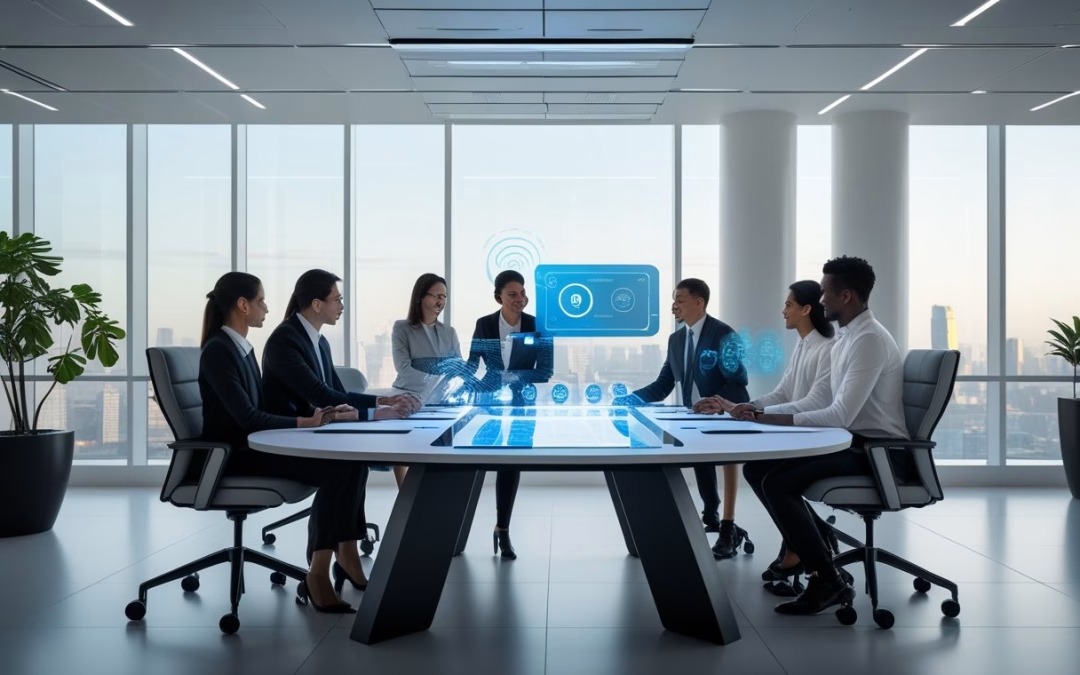
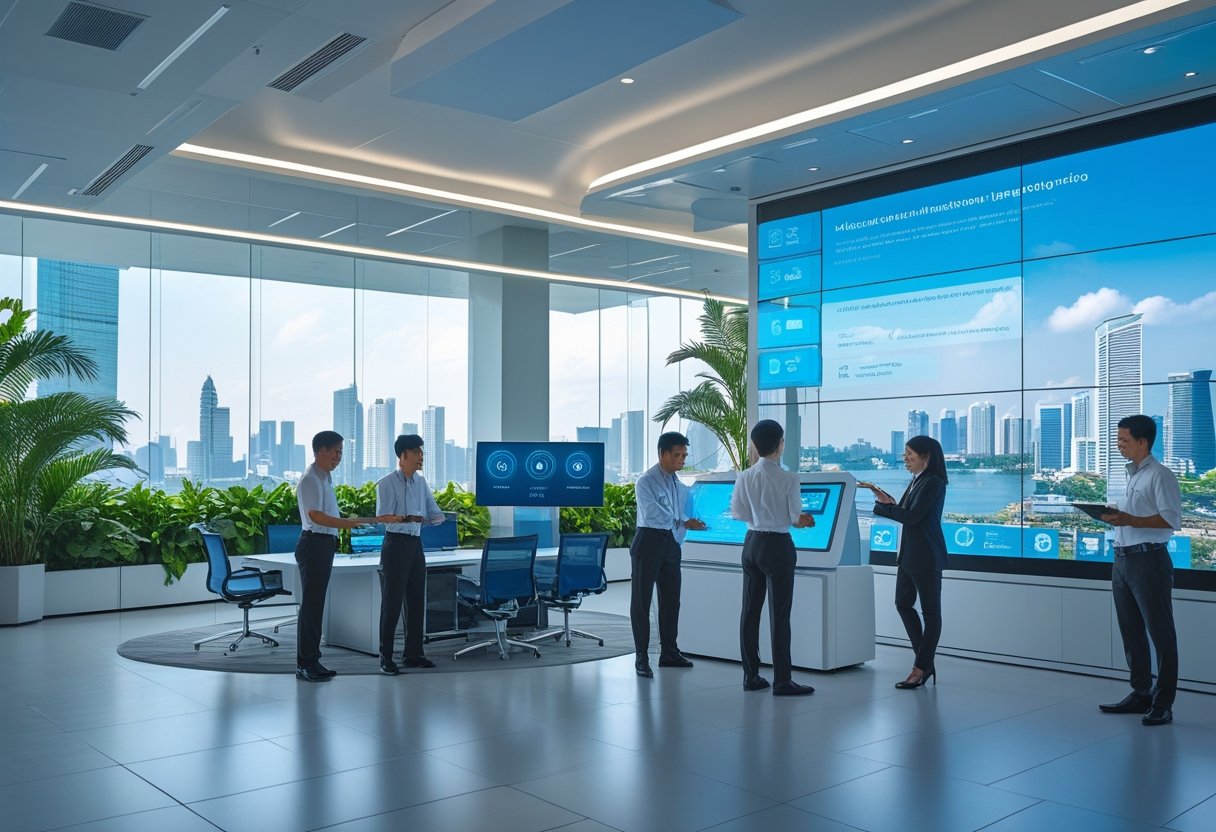
MLV Teknologi shapes the next generation of smart workspaces by integrating audio visual systems, IoT sensors, and centralized controls to help companies manage space, improve collaboration, and support faster decisions. Through partnerships and technology integration, it builds environments where teams can adjust lighting, temperature, displays, and meeting tools from one connected system.
Its projects show how modern offices can support hybrid meetings, digital signage, and command centers that track data in real time. These solutions help organizations use office space more efficiently while keeping communication clear and reliable.
Key Takeaways
- MLV Teknologi integrates smart systems to improve how offices function.
- Its solutions connect AV, controls, and real-time data in one ecosystem.
- Modern workspace design now centers on flexibility, efficiency, and clear communication.
MLV Teknologi’s Innovations and Impact on Smart Workspaces
MLV Teknologi drives measurable change in how companies manage meetings, space, and daily operations. It combines integrated audio visual systems, real-time space data, and strong industry partnerships to build practical and scalable smart workspaces.
Integrated Audio Visual Solutions and Centralized Control
MLV Teknologi acts as an AV system integrator that connects devices into one controlled ecosystem. It designs smart office systems that link konferensi video, interactive flat panel displays, digital signage, and video wall setups under a single kontrol terpusat platform.
Through its expertise in integrating Crestron systems for smart office solutions, the company enables users to manage lighting, room booking, audio, and security from one interface. This setup reduces manual steps and supports faster meeting starts.
Its partnerships with brands such as Crestron, Extron, Atlona, Neat, and Absen strengthen system reliability. In command center environments and executive boardrooms, centralized control improves efisiensi operasional by cutting technical delays and simplifying device management.
Leaders like Melvin Halpito focus on practical system design. The goal is stable performance, clear video conferencing, and easy operation for daily users.
Real-Time Space Management and User Experience Enhancement
MLV Teknologi applies sensor and IoT systems to improve manajemen ruang. Real-time data helps companies track room use and reduce idle space.
As explained in its overview of MLV Teknologi and Smart Office solutions, the company enables businesses to monitor workspace usage and adjust layouts based on actual demand. This data-driven approach supports better planning and cost control.
Employees benefit from faster room booking and clearer availability displays through digital signage panels. Interactive flat panels and responsive conference systems improve meeting flow and reduce setup time.
In smart workspace deployments for clients such as Bank UOB, Taspen Properti Indonesia, The Executive Center, and Aquila Data Indonesia, MLV Teknologi aligns technology with user behavior. The result is a ruang kerja pintar that supports comfort, accessibility, and consistent performance.
Collaboration with Industry Partners and Clients
MLV Teknologi builds its smart office ecosystem through active collaboration with global technology partners. It works closely with Crestron and Extron to deliver secure and scalable AV infrastructures.
Coverage by VRITimes on MLV Teknologi’s smart office approach highlights its focus on integrated systems that improve operational efficiency. These partnerships allow the company to combine automation, conferencing tools, and display technologies into unified platforms.
Client collaboration also shapes project outcomes. Stakeholders such as Stella Damayanti and Cecillia Kristywulan represent the type of decision makers who require reliable systems for high-traffic offices and premium commercial spaces.
By aligning technical standards with client goals, MLV Teknologi ensures each smart workspace supports security, flexibility, and long-term usability.
Transforming the Future of Work and Workspace Design
Smart workspaces now combine digital systems, interior design, and property strategy into one plan. MLV Teknologi connects technology, people, and space to shape the future of work in clear and practical ways.
Digital Transformation and Operational Efficiency
MLV Teknologi drives transformasi digital by building connected systems that support daily tasks. It designs digital workspaces that link devices, networks, and collaboration tools into one platform.
Through its focus on the role of digital workspaces in enhancing productivity, the company helps businesses reduce manual steps and limit system gaps. Teams can access shared files, video meetings, and room controls from a single interface.
This approach improves operational efficiency. Automated room booking, smart AV systems, and centralized control panels reduce downtime and lower support requests.
In the ruang kerja masa depan, technology must feel simple. MLV Teknologi prioritizes user-friendly controls so employees spend less time managing tools and more time completing work.
Integration with Interior Design and Real Estate
Technology must align with desain interior and real estate goals. MLV Teknologi works with design partners and property stakeholders to ensure systems fit the layout, lighting, and materials of each space.
Its collaboration in transforming corporate interiors with Crestron technologies shows how AV and control systems can blend into modern office design. Equipment does not dominate the room. It supports the function of the space.
In real estate projects, smart systems can increase building value and attract tenants who expect advanced features. Developers and landlords view smart offices as long-term assets, not add-ons.
Figures in the industri interior, such as Naila Djatnika of IHD Ltd and Adrian Lim, represent the type of professionals who benefit from early technology planning. When design and engineering teams coordinate from the start, projects move faster and avoid costly redesign.
Fostering Collaboration Across Stakeholders
Smart workspace projects require coordination among IT teams, architects, consultants, and leadership. MLV Teknologi acts as a system integrator that connects these groups.
Through initiatives such as the Smart Workspaces event on redefining the future of work, the company encourages open discussion about trends, user needs, and performance goals. These forums help align expectations before implementation begins.
Clear communication reduces risk. Project managers define technical requirements, while design partners focus on layout and user flow.
This shared process improves pengalaman pengguna. Employees enter spaces where meeting rooms, displays, lighting, and controls work together without confusion.
By guiding collaboration across stakeholders, MLV Teknologi supports a practical vision of the future of work—one where technology, space, and people operate as a single system.
by Melvin Halpito | Mar 22, 2026 | Article
Indonesian enterprises no longer treat hybrid work as a temporary fix. They design it as a long-term strategy powered by smart audio visual systems. Companies now connect office teams and remote staff through integrated meeting rooms, cloud platforms, and secure networks.
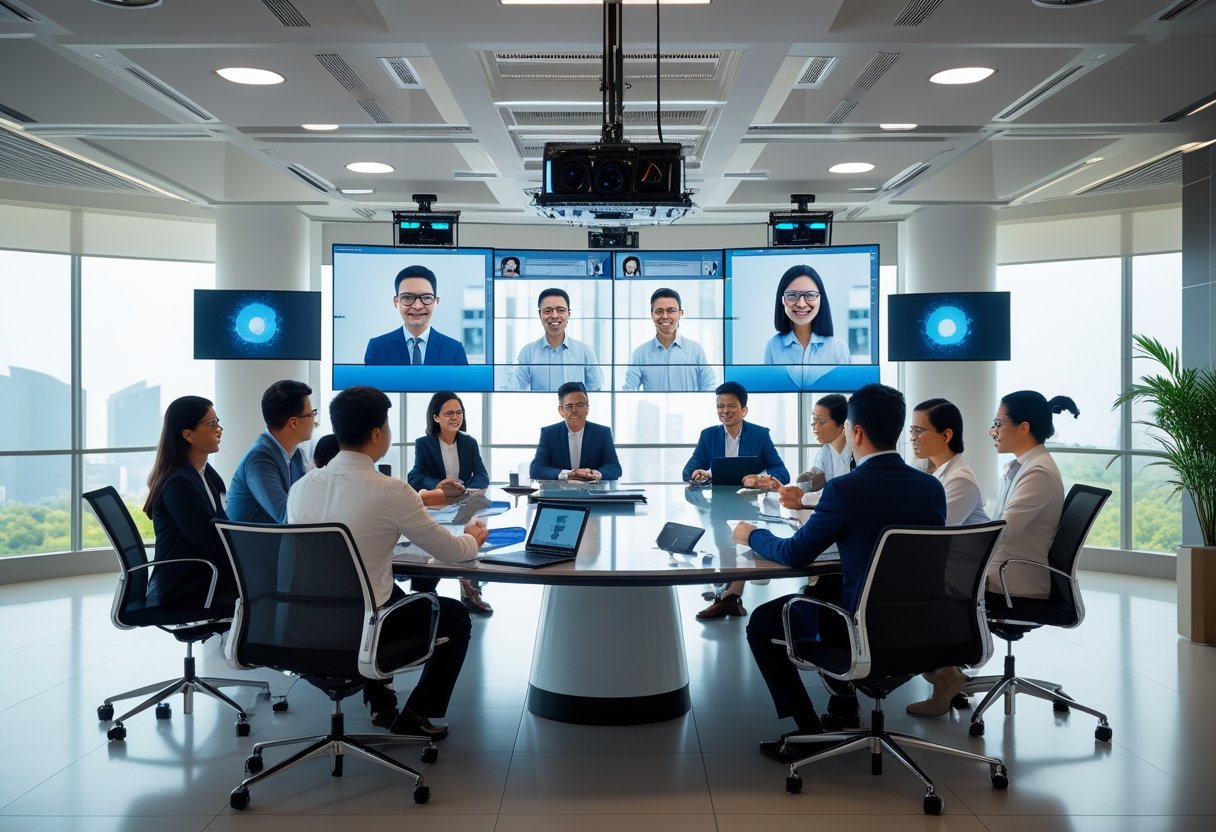
Indonesian enterprises are redefining hybrid work by investing in integrated AV systems that make communication clear, meetings reliable, and collaboration equal for in-office and remote teams. They upgrade cameras, microphones, and control systems to remove common meeting problems. Many also rely on professional AV integration to align IT, networks, and room design for daily use.
Industry leaders highlight how AV now supports innovation and distributed teams, as seen in insights on how the AV industry powers innovation in the new era of work. Local providers also help firms deploy smart meeting rooms and full system integration, such as services that bring AV & IT to life in Indonesia. This shift shows how enterprises move beyond basic video calls toward structured, scalable hybrid environments.
Key Takeaways
- Indonesian enterprises treat hybrid work as a long-term business model supported by AV.
- Companies invest in integrated meeting rooms to support both in-office and remote teams.
- Modern AV solutions align technology, space design, and daily operations for stable collaboration.
Indonesia’s Shift to Hybrid Work: Key Drivers, Models, and Human Factors
Indonesian enterprises now treat hybrid work as a core business model, not a temporary fix. Leaders align flexible work arrangements with human capital strategy, digital growth, and employee well-being to protect performance and support long-term development goals.
Workforce Preferences and Hybrid Work Models
Many employees in Indonesia prefer kerja hybrid that blends wfh (work from home) and wfo (work from office). They value work flexibility, shorter commutes, and better control of daily schedules.
The COVID-19 period pushed firms to test telework and remote work at scale. As described in the article on the hybrid work revolution in Indonesia, companies saw that productivity often stayed stable when staff worked off-site.
Enterprises now use several hybrid work models:
- Fixed days in office and fixed days remote
- Role-based models where only certain teams work on-site
- Fully flexible schedules based on output targets
Gig workers in the digital economy often operate in fully remote or telecommuting setups. National discussions also link hybrid work and technology support to productivity and decent work under SDG 8 in Indonesia.
These models require strong digital literacy and clear output metrics to maintain organizational performance.
Human Capital and HR Strategies for Hybrid Work
Hybrid work forces a shift in human resource management. HR teams now focus on outcomes instead of physical presence.
Research on human resource transformation in Indonesia’s hybrid work era shows that firms adjust performance systems, leadership training, and communication rules to fit hybrid settings. They also invest in digital tools to support collaboration and monitoring.
Key HR priorities include:
- Clear KPIs tied to results, not office hours
- Training in virtual leadership and digital literacy
- Policies for data security and compliance
- Structured feedback to maintain work engagement
Startups and large firms both treat hybrid work as part of strategic human capital development. They link employee experience to business goals and measure impact on productivity and retention.
Organizational readiness now depends on culture. Leaders must build trust, encourage accountability, and support boundary management between home and work spaces.
Employee Well-being, Engagement, and Work-Life Balance
Hybrid work affects employee well-being in direct ways. Reduced commuting time improves work-life balance, but blurred boundaries can increase stress.
A study on well-being in hybrid work among Indonesian civil servants highlights the role of organizational support in lowering burnout. Employees report stronger engagement when managers provide clear communication and fair workload distribution.
Enterprises now address well-being through:
- Defined working hours for remote staff
- Mental health support programs
- Regular virtual check-ins to sustain employee engagement
- Clear rules on availability to improve boundary management
Hybrid systems can improve employee experience when firms protect social connection and team identity. Strong support structures also help align hybrid work with sustainable development goals by promoting inclusive, decent, and productive employment.
AV Technology Advancements and Enterprise Solutions for Hybrid Work Success
Indonesian enterprises now invest in integrated audio-visual systems that support clear communication, stable koneksi internet, and measurable productivity. They focus on practical tools that improve user experience and strengthen digital infrastructure across offices and remote locations.
Video Conferencing and Virtual Collaboration Platforms
Enterprises rely on secure video conferencing platforms such as Zoom, Microsoft Teams, Slack, and Cisco Webex to support daily remote collaboration. They integrate these platforms with room cameras, ceiling microphones, and centralized control panels.
A well-designed system avoids echo, lag, and unclear images. Companies deploy PTZ or AI tracking cameras and noise-canceling microphones to maintain focus during executive meetings.
Many firms now implement structured AV integration strategies similar to those outlined in AV integration solutions for hybrid work environments. These strategies align hardware, software, and network capacity with business goals.
IT teams also track usage data to improve digital adoption. They train employees to build digital competencies and reduce resistance during change management efforts. Strong platform integration supports better organizational performance and faster decision-making.
Immersive AV Solutions and Future-Ready Infrastructure
Hybrid work demands more than cameras and screens. Enterprises build future-ready infrastructure that supports AV over IP, cloud collaboration, and scalable network design.
Some companies adopt systems similar to the Hybrid Meeting Room AV System with CSA Indonesia to ensure seamless communication between in-room and remote participants. These systems combine high-resolution displays, intelligent cameras, and centralized AV control.
AV over IP reduces complex cabling and supports easier expansion. IT teams can add new displays or collaboration tools without major renovation.
Immersive AV solutions also include large LED walls and multi-screen setups. These tools help teams review data, engineering plans, and financial dashboards in real time.
Enterprises treat digital infrastructure as a long-term asset. They align AV investments with digital transformation goals and ensure stable koneksi internet across branches and satellite offices.
Digital Signage, Wayfinding, and Interactive Displays
Digital signage now plays a direct role in workplace coordination. Companies use it to share schedules, room availability, and internal announcements.
Interactive displays allow employees to book meeting rooms, access company dashboards, and join video conferencing sessions with one touch. This reduces delays and improves user experience.
In large corporate offices, wayfinding screens guide staff and visitors to meeting rooms or event spaces. These systems support organized movement inside hybrid offices.
Many Indonesian firms view these tools as part of broader digital innovation efforts, similar to trends discussed in Indonesia’s big firms embrace hybrid work models. Clear information flow supports budaya kerja that values transparency and efficiency.
When enterprises connect digital signage with collaboration platforms, they strengthen productivity and reinforce digital adoption across the organization.
by Melvin Halpito | Mar 22, 2026 | Article
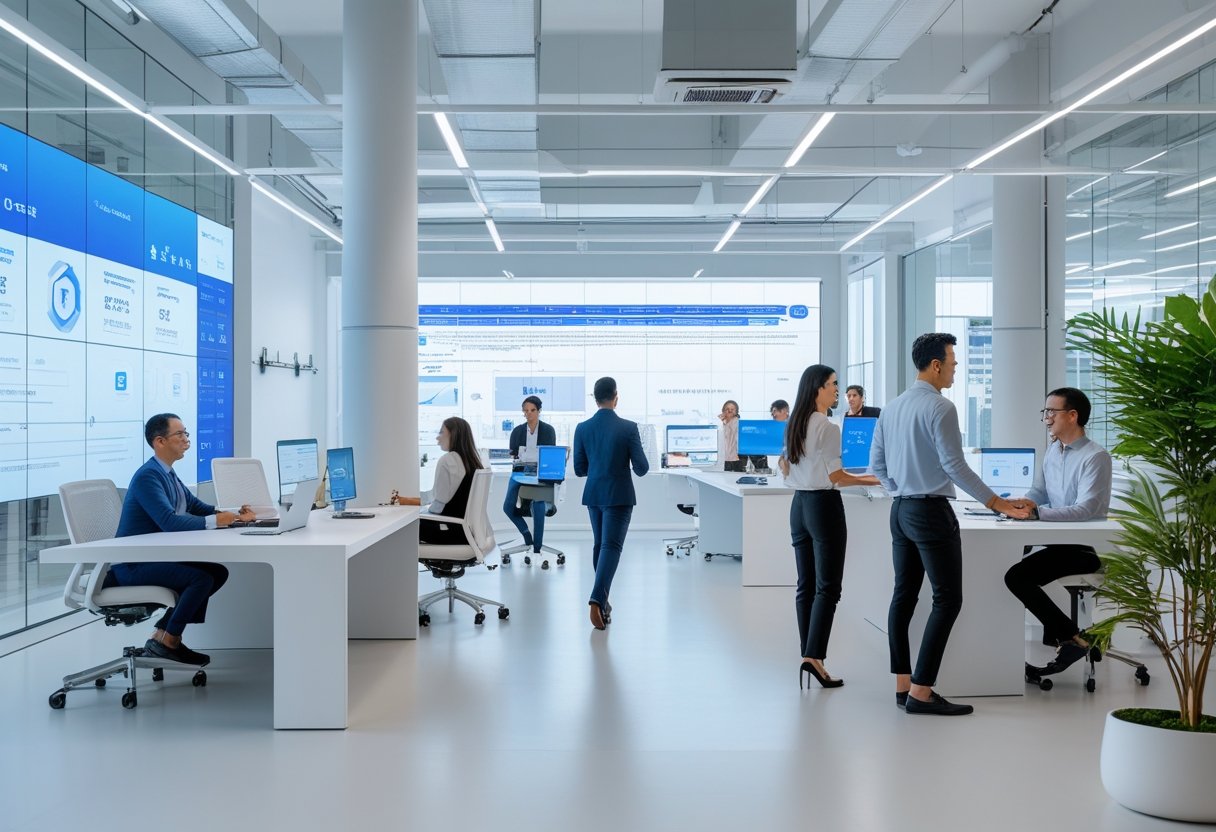
Indonesia’s offices are changing fast. Companies no longer rely on basic meeting rooms and manual systems. They invest in smart technology that connects teams, spaces, and data in real time. Audio visual (AV) technology sits at the center of Indonesia’s smart office boom because it powers communication, automation, and collaboration in one integrated system. Modern offices now depend on video conferencing, interactive displays, smart room controls, and automated scheduling to support hybrid work and daily operations.
As businesses push for higher productivity and better energy control, AV systems link lighting, sound, security, and network tools into a single platform. This shift turns traditional offices into connected environments that support flexible work, improve efficiency, and strengthen team coordination.
Key Takeaways
- Smart offices in Indonesia rely on integrated technology to modernize daily operations.
- AV systems drive communication, automation, and seamless collaboration.
- Connected workplaces improve efficiency, comfort, and operational control.
The Smart Office Revolution in Indonesia
Companies across Indonesia now invest in integrated AV systems, automation, and cloud tools to support hybrid work and tighter cost control. This shift reshapes how the modern workplace operates, from daily meetings to building management.
Market Growth and Changing Workplace Trends
Indonesia’s major business hubs, especially Jakarta, lead the shift toward the smart office model. New office towers in areas such as Sudirman and SCBD promote integrated AV and automation as core building features, not add-ons.
Industry coverage of Jakarta Smart Office Audio Visual Automation shows how companies now treat intelligent AV as a basic need for daily operations.
Hybrid work also drives demand. Teams split time between home and office, so meeting rooms must support clear video, strong audio, and simple controls. Firms no longer accept unstable calls or complex setups.
Reports on Smart Office trends in Indonesia note that many Southeast Asian companies plan to increase spending on digital workspace tools. This budget shift reflects a clear goal: improve collaboration and reduce wasted time.
Core Concepts of Smart Office Environments
A kantor pintar combines automation, AV systems, and digital access control into one connected setup. It links devices through a central platform so staff can manage rooms, lighting, and displays from one interface.
Key elements often include:
- Interactive displays and video conferencing systems
- Automated lighting and climate control
- Room booking panels with live schedules
- Cloud-based CCTV and secure entry systems
The Smart Office Audio Visual Automation di Jakarta approach shows how AV and automation work together to improve comfort and efficiency.
This konsep smart office focuses on practical gains. Motion sensors switch off unused lights. Integrated AV reduces meeting delays. Access systems log entry data in real time.
Each feature supports daily tasks, not just building appearance.
Digital Transformation in Indonesian Workspaces
Digital transformation in Indonesian offices centers on connected systems. Companies link AV, IoT devices, and software platforms to create a responsive modern workplace.
A typical setup may include:
| Function | Smart Office Application |
|---|
| Collaboration | High-quality video conferencing and screen sharing |
| Energy control | Automated lighting and temperature adjustment |
| Security | Biometric or RFID access with cloud monitoring |
| Space management | Digital room booking and occupancy tracking |
Technology providers such as those behind Smart Office Indonesia digital workspace solutions promote integrated systems that adapt to user needs.
These systems support faster decisions and clearer communication. They also give managers data on room use, energy costs, and system performance.
In Indonesia, the smart office no longer acts as a pilot project. It operates as a structured part of corporate strategy, especially in competitive urban markets.
AV Technology as a Key Driver of Smart Offices
Audio visual systems now shape how smart offices in Indonesia connect people, manage space, and control daily operations. Companies rely on integrated AV, cloud platforms, and otomatisasi to support hybrid work, improve meeting quality, and reduce manual tasks.
Integrating Audio Visual Systems With Smart Office Infrastructure
Smart offices connect audio visual systems with lighting, climate control, access systems, and network infrastructure. AV no longer stands alone. It works as part of a single digital ecosystem.
In many Jakarta projects, firms adopt integrated platforms similar to those described in Jakarta Smart Office Audio Visual Automation. These setups link displays, speakers, cameras, and control panels to centralized systems that manage meeting rooms and shared spaces.
Cloud-based dashboards allow IT teams to monitor device status, push updates, and troubleshoot problems without visiting each room. This reduces downtime and keeps systems consistent across floors or buildings.
Strong integration also improves security. Companies can align AV access with ID cards or biometric systems, so only authorized staff can use certain rooms or equipment.
Interactive Displays and Smart Meeting Rooms
Modern offices replace basic projectors with interactive displays and connected smart meeting room systems. These displays support touch input, wireless screen sharing, and real-time annotation.
Teams can write on the screen, save notes to the cloud, and send files directly to participants. This shortens meetings and reduces follow-up confusion.
A typical smart meeting room includes:
- 4K interactive display
- Video conferencing camera with auto-framing
- Ceiling or table microphones
- Integrated speakers
- Central control panel or tablet
As shown in discussions about the benefits of AV integration for offices and businesses in 2026, integrated AV improves usability and reduces technical delays. Employees start meetings faster because devices connect automatically.
This setup supports both in-person and remote participants without separate tools.
Enabling Collaboration and Hybrid Work Models
Hybrid work and remote work have become standard in many Indonesian companies. AV systems now play a direct role in keeping distributed teams aligned.
High-quality cameras and microphones capture clear audio and video. Large displays show remote participants at eye level, which supports natural conversation.
Cloud-based conferencing platforms connect offices in Jakarta with branch offices or home workers. AV integrators in Indonesia highlight how connected systems support corporate and education environments, as noted in the overview of a top AV integrator in Indonesia for corporate and events.
Reliable AV reduces common hybrid problems such as echo, poor lighting, and unstable connections. When meetings run smoothly, teams focus on decisions instead of technical issues.
This directly supports productivity and faster coordination across departments.
AV Automation for Operational Efficiency
Otomatisasi strengthens the operational side of smart offices. AV systems can trigger lighting, blinds, and air conditioning when a meeting starts.
For example:
| Trigger | Automated Action |
|---|
| Room booking confirmed | Display turns on, camera activates |
| No motion detected | System powers down |
| Scheduled presentation | Correct input auto-selects |
These functions reduce energy waste and limit manual setup. Motion sensors switch off screens and speakers in unused rooms.
Articles on Smart Office Solutions with smart AV technology describe how connected AV systems align with sustainability and long-term cost control. Companies track usage data through cloud dashboards and adjust room layouts or device counts based on real demand.
By combining AV, cloud control, and otomatisasi, smart offices operate with fewer disruptions and clearer oversight.
Core Technologies Empowering Indonesia’s Smart Offices
Indonesia’s smart offices rely on connected devices, data systems, and automated controls to run daily operations. These tools link AV, facilities, and IT into one coordinated smart building environment.
Internet of Things and Smart Devices
The Internet of Things (IoT) forms the base of many smart office systems in Indonesia. IoT connects sensors, cameras, meeting room panels, and access controls through a shared network.
In a typical smart building, smart devices track room occupancy, air quality, and device usage in real time. AV systems connect to this network so teams can book rooms, launch video calls, and adjust displays from one control panel.
Many providers define a smart office as a workspace that integrates IoT, AI, and digital tools into one adaptive system, as explained by Smart Office Indonesia solutions.
Cloud platforms store device data and allow remote monitoring. IT teams can update firmware, manage digital signage, and review system alerts without being on site.
This structure reduces manual work. It also gives facility managers clear data about how employees use space and technology.
Artificial Intelligence and Workplace Automation
Artificial intelligence (AI) adds intelligence to connected systems. It analyzes patterns and supports automated decisions in daily operations.
Indonesia views AI as a key driver of digital transformation, though adoption is still in early stages, according to the Indonesia digital transformation overview. Businesses now use AI to improve scheduling, customer service chatbots, and predictive maintenance.
In smart offices, AI supports:
- Automatic meeting room recommendations
- Voice control for AV systems
- Predictive equipment maintenance
- Smart visitor management
AI also strengthens workplace automation. For example, systems can adjust room layouts based on booking data or detect when a meeting ends and power down displays.
Some enterprise reports highlight how AI helps companies manage data silos and improve decision making, as discussed in AI transforming Indonesia’s enterprises.
When linked to cloud dashboards, AI tools give managers clear performance data across multiple office locations.
Automated Lighting, Temperature, and Energy Management
Energy control is central to any smart building strategy. Offices now use sistem pencahayaan otomatis and smart HVAC systems to lower waste.
Pencahayaan otomatis uses motion sensors and daylight sensors. Lights turn on when someone enters a room and dim when natural light increases.
Smart kontrol suhu systems adjust air conditioning based on occupancy data. If a meeting room sits empty, the system reduces cooling output.
Key features include:
| System | Function | Benefit |
|---|
| Automated lighting | Motion and daylight sensing | Lower electricity use |
| Smart thermostats | Occupancy-based cooling | Reduced energy cost |
| Energy dashboards | Real-time tracking | Clear usage reports |
Smart office platforms often link these systems with AV controls. When a meeting starts, lighting, displays, and temperature adjust together.
Guides on creating a smart workplace explain how automation simplifies daily tasks and improves efficiency.
Facility teams use cloud dashboards to monitor performance across floors and buildings.
Data Security and Building Safety Features
As offices connect more devices, keamanan data becomes critical. Smart devices collect user data, access logs, and video feeds.
Companies must protect this data with:
- Network segmentation
- Encrypted communication
- Secure cloud storage
- Access control policies
AV systems now integrate with building access cards and biometric scanners. This link supports stronger security features across the workspace.
Indonesia continues to build digital infrastructure, including data centers and cloud services, to support this growth, as noted in the report on accelerating digital transformation in Indonesia.
Modern smart offices combine cybersecurity tools with physical safety systems. Fire alarms, CCTV, and emergency alerts connect to centralized dashboards.
This approach helps managers respond faster to incidents while protecting both digital and physical assets.
Impact on Productivity, Sustainability, and Employee Well-Being
Smart office AV systems in Indonesia do more than improve meeting quality. They drive peningkatan produktivitas, support efisiensi operasional, reduce konsumsi energi, and strengthen corporate sustainability goals while improving kesejahteraan karyawan.
Operational Efficiency and Cost Savings
Integrated AV systems streamline daily operations. Teams launch meetings with one touch, share content wirelessly, and connect remote staff without delay. This reduces setup time and supports improved productivity across departments.
Companies also cut travel costs. High-quality video conferencing lowers the need for intercity flights between Jakarta, Surabaya, and other hubs. Fewer business trips reduce expenses and limit downtime.
Smart scheduling panels and occupancy sensors improve efisiensi operasional. Offices track real-time room usage and adjust space planning based on data. This prevents underused meeting rooms and supports better asset management.
Research shows that sustainable workplace practices support both employee engagement and business results, as seen in findings on the impact of sustainable practices on employee well-being and organizational success. AV systems play a direct role by aligning technology use with measurable efficiency goals.
Workforce Comfort and Engagement
Modern AV improves kenyamanan karyawan by creating consistent audio and visual quality. Clear sound and sharp displays reduce fatigue during long meetings. Employees spend less time repeating information or resolving technical issues.
Flexible work setups also support kesejahteraan karyawan. Hybrid meeting tools allow staff to join from home or satellite offices without losing visibility or voice. Studies on the impact of work-life balance on employee well-being and organizational productivity show that flexible arrangements help maintain performance while protecting well-being.
Interactive displays and digital collaboration boards increase participation. Teams brainstorm in real time, annotate documents, and save outputs instantly. This direct engagement strengthens focus and supports measurable peningkatan produktivitas.
Well-designed AV environments also reduce stress linked to poor communication. Reliable systems build trust in daily operations.
Energy Consumption and Environmental Sustainability
Smart offices in Indonesia now link AV systems to building management platforms. Devices power down automatically when rooms are empty. This lowers konsumsi energi without manual oversight.
Energy-efficient displays, LED walls, and smart lighting controls support efisiensi energi and hemat energi targets. Companies track usage data and adjust system settings to reduce waste during non-peak hours.
Sustainable HR and environmental strategies often connect employee health with green initiatives, as outlined in research on companies focusing on employee wellbeing and sustainability goals. AV contributes by reducing paper use through digital signage and enabling remote collaboration that cuts travel emissions.
By combining reduced energy demand with digital workflows, organizations align technology investment with long-term sustainability commitments.





Recent Comments