
by Melvin Halpito | Sep 21, 2026 | Article
Komponen Apa yang Membentuk Sistem Audio Ruang Konferensi?
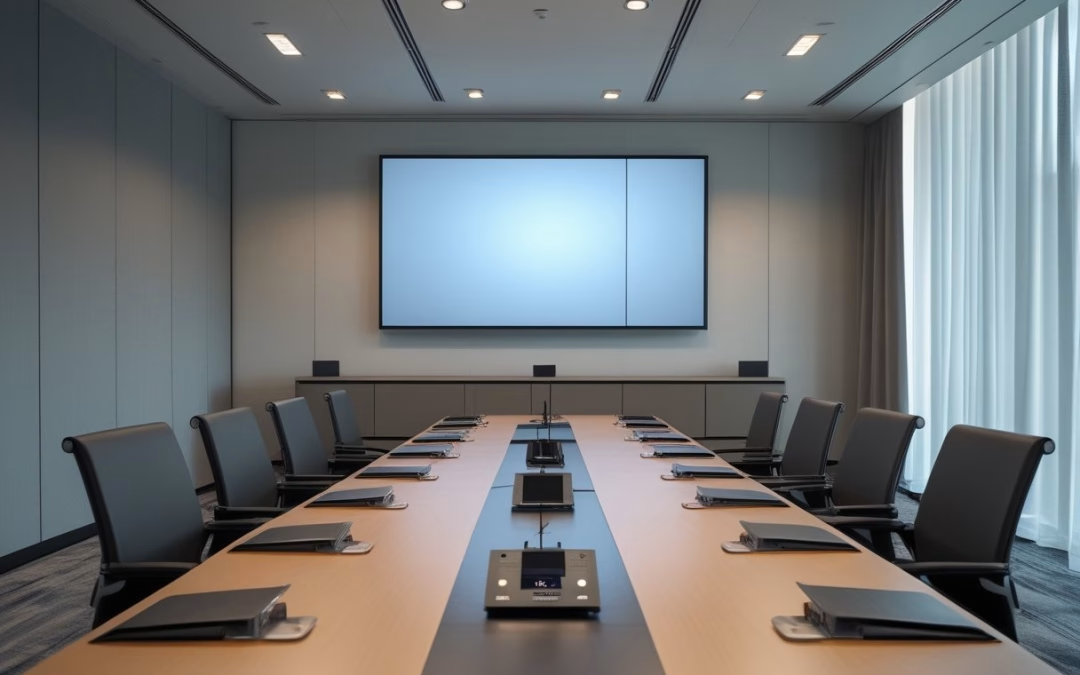
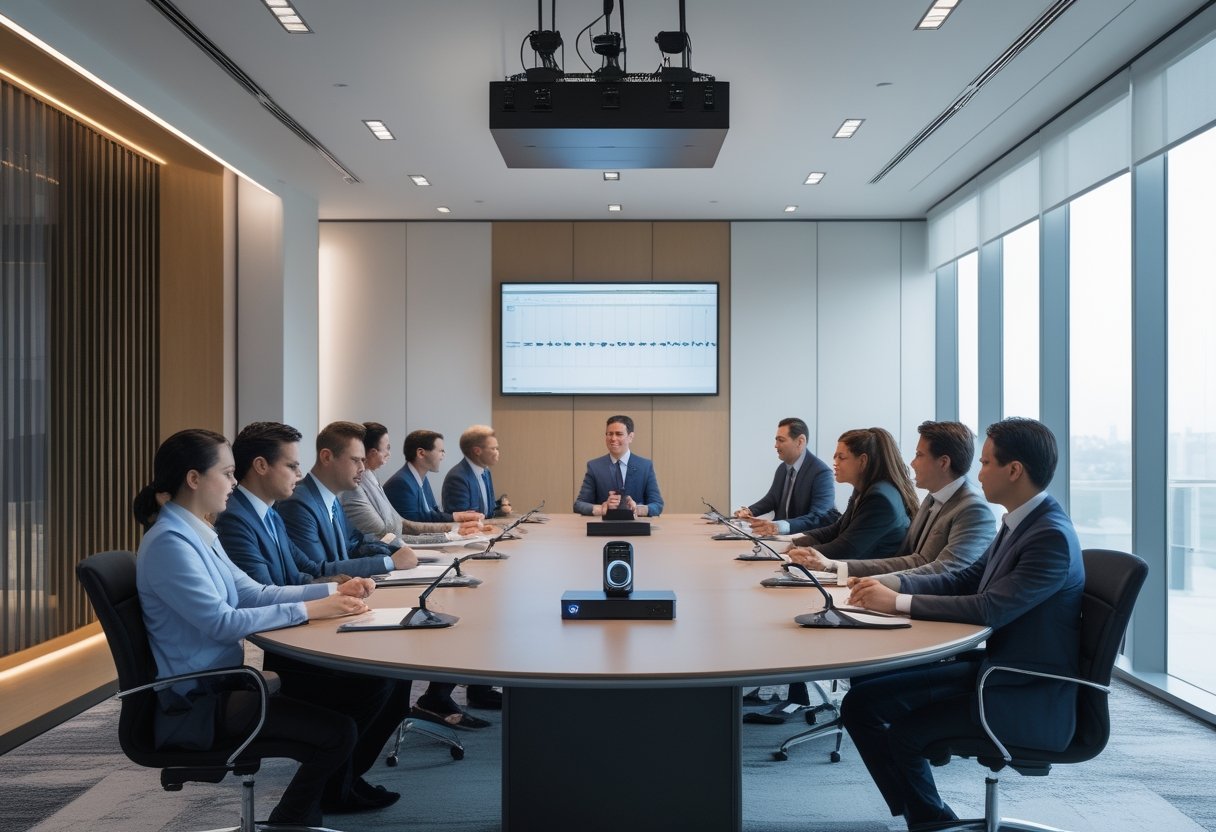
Audio System for Conference Room yang efektif dibangun dari mikrofon, DSP, speaker, amplifier, serta kontrol yang bekerja sebagai satu sistem sesuai kondisi ruang. Setiap komponen memengaruhi pengalaman peserta, mulai dari kemampuan menangkap suara hingga kejernihan komunikasi dengan peserta jarak jauh.
Penerapan sistem audio ruang rapat, sistem audio ruang meeting, dan sistem konferensi yang tepat akan menjaga kualitas suara tetap stabil. Pemilihan komponen sound system yang terpadu menjadi kunci agar sound system ruang meeting bekerja optimal.
Mikrofon konferensi untuk menangkap suara peserta secara merata
Mikrofon konferensi menentukan seberapa jelas suara peserta ditangkap. Penggunaan mikrofon meja seperti mikrofon boundary atau mikrofon gooseneck dapat dipilih sesuai posisi duduk dan jumlah peserta.
Pada meja rapat kompak, mikrofon boundary mampu menangkap suara dari berbagai sudut tanpa menghalangi pandangan. Solusi ini menjaga kualitas suara vokal tetap natural dan jernih.
Pilihan conference microphone yang tepat memastikan vokal setiap peserta tertangkap jelas saat berbicara bergantian.
Selain itu, mikrofon wireless atau wireless microphone memberikan fleksibilitas gerak bagi pembicara. Anda juga dapat memilih ceiling microphone tersembunyi di plafon agar meja tetap bersih dan rapi.
Penempatan mikrofon perlu menjangkau area diskusi tanpa membuat peserta harus mendekat atau meninggikan suara. Pada rapat hybrid, mikrofon juga harus mengirim sinyal yang stabil ke platform video conference agar peserta daring menerima suara yang utuh.
DSP untuk mengendalikan echo, noise, dan level suara
DSP atau audio processor memproses sinyal audio sebelum diteruskan ke speaker atau platform konferensi. Kehadiran DSP processor pada sistem audio profesional sering dipadukan dengan mixer audio untuk mengelola berbagai input mikrofon.
Penggunaan mixer mempermudah pengaturan gain agar level suara setiap peserta tetap seimbang, sementara equalizer menyelaraskan respon frekuensi vokal. Fitur echo cancellation dan noise cancellation menjaga kualitas audio tetap bersih dari gangguan gema maupun suara latar.
Penyetelan equalizer yang presisi juga memotong frekuensi dengung dan menonjolkan artikulasi bicara. Dengan pemrosesan yang tepat, kualitas audio yang dihasilkan tetap nyaman didengar sepanjang rapat.
Speaker dan amplifier untuk distribusi suara yang seimbang
Speaker harus menyebarkan suara secara merata ke seluruh area duduk. Pemasangan ceiling speaker atau speaker ceiling cocok untuk menghasilkan distribusi suara merata dan rapi dari atas, sedangkan unit soundbar atau speaker dinding dapat digunakan sesuai kebutuhan tata letak.
Banyak pengelola memilih ceiling speaker karena instalasinya menyatu mulus dengan interior ruang rapat modern. Pilihan ini membuat tata ruang tetap bersih dari kabel pengeras suara yang melintang.
Amplifier memasok daya sesuai kebutuhan speaker dan luas ruangan. Penempatan speaker, pengaturan volume, serta delay audio perlu diselaraskan agar peserta di bagian depan dan belakang menerima suara dengan waktu serta tingkat kekuatan yang konsisten.
Sistem kontrol dan integrasi dengan platform video conference
Sistem kontrol menyatukan fungsi mikrofon, DSP, speaker, kamera, display, dan sumber presentasi dalam satu alur pengoperasian. Sistem ini dapat terhubung langsung ke platform konferensi ternama seperti Microsoft Teams dan Zoom.
Kompatibilitas dengan Zoom dan Microsoft Teams memudahkan pengguna memulai konferensi video dalam hitungan detik. Hal ini membuat operasional meeting room berjalan jauh lebih mulus dan praktis.
Anda dapat mengatur skenario rapat melalui panel kontrol, seperti memulai panggilan, memilih sumber tampilan, atau menonaktifkan mikrofon.
Integrasi audio ruang meeting membantu tim IT mengurangi langkah manual dan kesalahan saat rapat dimulai. Untuk kebutuhan desain menyeluruh, Anda dapat melihat pembahasan tentang manfaat integrasi sistem audio visual untuk ruang rapat modern.
Bagaimana Merancang Audio yang Sesuai dengan Kebutuhan Ruang?
Rancangan audio yang tepat dimulai dari kapasitas, tata letak, akustik, dan pola penggunaan ruang, lalu diterjemahkan ke konfigurasi perangkat yang saling kompatibel. Spesifikasi satu perangkat tidak cukup untuk menjamin suara jernih jika penempatannya tidak sesuai kondisi ruangan.

Menentukan kebutuhan berdasarkan kapasitas, tata letak, dan fungsi ruangan
Jumlah peserta menentukan jumlah mikrofon, cakupan speaker, dan kapasitas pemrosesan audio. Kebutuhan perangkat untuk huddle room tentu berbeda dibandingkan ruang rapat skala besar atau auditorium.
Selain itu, meja panjang membutuhkan pola tangkap mikrofon yang berbeda dari ruang dengan meja modular atau area diskusi terpisah.
Fungsi ruangan juga memengaruhi desain. Ruang untuk rapat dewan membutuhkan kontrol pembicara yang teratur, sementara ruang presentasi memerlukan jalur audio untuk pembicara, video, dan konten multimedia.
Tata letak kursi sebaiknya dipetakan sebelum perangkat dipilih. Referensi tentang layout meeting room yang meningkatkan produktivitas dapat membantu Anda menghubungkan posisi peserta dengan jangkauan audio.
Mengatasi tantangan akustik seperti gema, kebisingan AC, dan pantulan suara
Permukaan kaca, beton, dan meja keras memantulkan suara sehingga ucapan terdengar bergaung. Kondisi akustik ruangan yang kurang ideal akan mengaburkan kejelasan vokal peserta rapat.
Plafon tinggi juga memperpanjang waktu pantulan suara, sedangkan hembusan AC dapat masuk ke mikrofon sebagai noise konstan.
Solusinya mencakup pemilihan pola mikrofon, penempatan speaker, penyesuaian EQ, serta konfigurasi echo cancellation pada DSP. Material penyerap suara seperti panel akustik, karpet, atau tirai dapat mendukung hasil ketika pantulan ruangan terlalu kuat.
Treatment pada akustik ruangan secara langsung mendongkrak kualitas suara yang ditangkap mikrofon. Peredaman yang tepat memastikan meeting room menghasilkan kejernihan suara terbaik bagi semua partisipan.
Memilih konfigurasi untuk rapat tatap muka, hybrid, dan presentasi
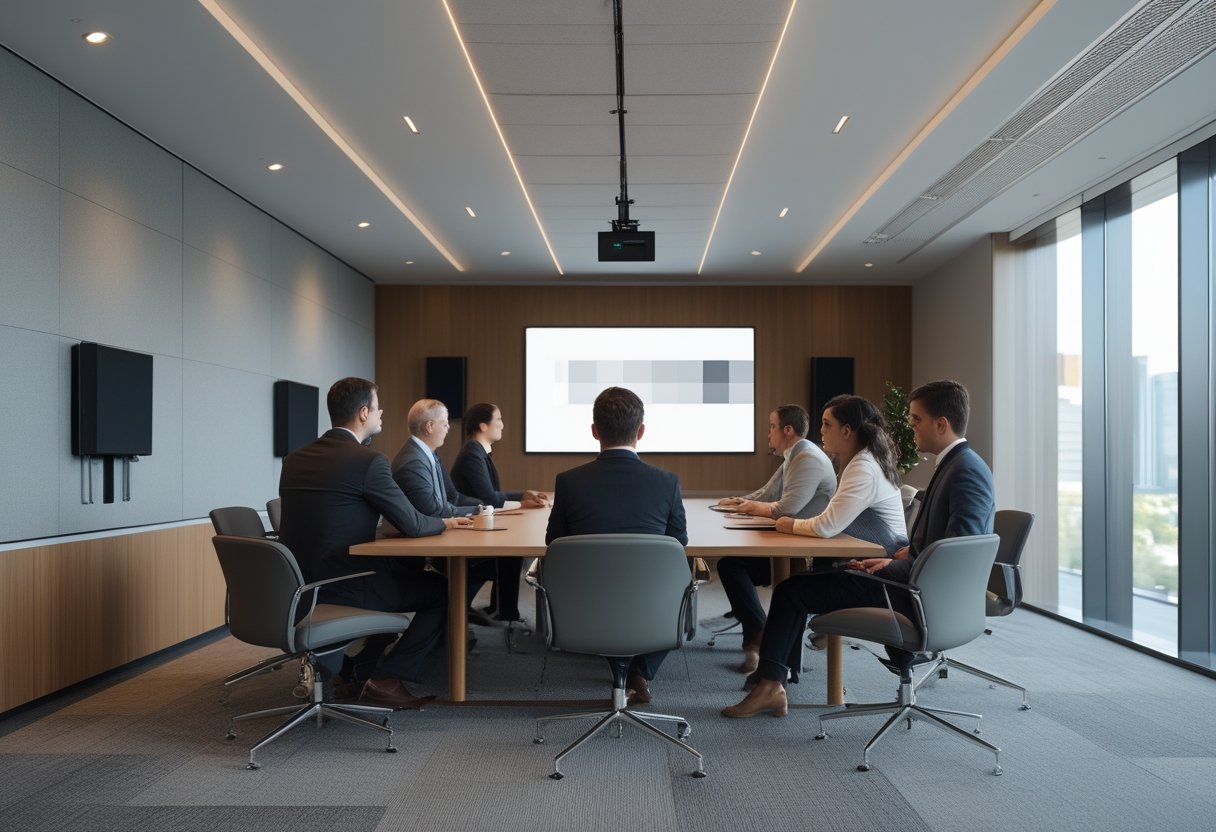
Rapat tatap muka membutuhkan suara merata untuk peserta di dalam ruangan. Sementara itu, kolaborasi jarak jauh pada format hybrid menambah kebutuhan capture suara yang konsisten dan integrasi dengan perangkat konferensi.
Konfigurasi presentasi perlu menggabungkan mikrofon pembicara dengan audio dari laptop atau sumber media. Menerapkan solusi audio profesional memastikan jalur sinyal tetap rapi dan suara pembicara terdengar jelas ketika konten video diputar.
Mengapa survei lokasi dan instalasi profesional memengaruhi hasil akhir
Survei lokasi memperlihatkan kondisi yang tidak terlihat dari denah, termasuk titik pantulan, sumber noise, jarak antar peserta, serta jalur kabel. Pemilihan kabel audio berkualitas tinggi juga penting untuk menjaga kejernihan transmisi sinyal tanpa derau.
Instalasi profesional memastikan koneksi, gain, DSP, dan arah penempatan speaker dikonfigurasi dengan benar. Standar instalasi sound system berstandar audio profesional menghindarkan ruangan dari kabel berantakan dan interferensi sinyal.
Didukung ketersediaan perangkat audio profesional dari prinsipal dan distributor sound system meeting resmi seperti CSA Indonesia serta PT. Soundlab Indonesia, MLV Teknologi menyediakan konsultasi, survei kebutuhan, integrasi, dan instalasi audio visual secara andal. Pelanggan juga menilai timnya cepat, rapi, serta responsif dalam pelaksanaan pekerjaan di ruang rapat.
Sistem Terintegrasi Menjadikan Komunikasi Rapat Lebih Efektif
Sistem audio terintegrasi membuat rapat lebih efektif dengan menyatukan capture suara, pemrosesan, distribusi audio, video conference, presentasi, dan kontrol dalam satu alur kerja. Peserta dapat berbicara dengan posisi wajar, sementara peserta daring menerima suara yang jelas dan konsisten.
Integrasi juga memudahkan tim IT mengelola ruang. Preset dapat mengatur volume, sumber tampilan, status mikrofon, dan mode rapat melalui satu panel. Pengguna tidak perlu memindahkan kabel atau mengatur banyak perangkat secara terpisah setiap kali rapat dimulai.
Kepraktisan semacam ini menjadi standar utama pada ruang rapat modern saat ini. Otomasi sistem yang andal memastikan fasilitas meeting room siap pakai kapan pun dibutuhkan.
Keberhasilan sistem tetap bergantung pada kesesuaian desain dengan ruang dan cara kerja tim. Pengujian langsung setelah instalasi membantu memeriksa area yang kurang terdengar, potensi feedback, sinkronisasi audio-video, serta kenyamanan pengoperasian.
Untuk kebutuhan ruang meeting, presentasi, atau rapat hybrid, Anda dapat mengunjungi website MLV Teknologi di www.mlvteknologi.com dan menghubungi langsung melalui nomor WhatsApp yang tertera di website kami untuk berdiskusi langsung dengan kami.
by Melvin Halpito | Sep 20, 2026 | Article
Pengertian dan Fungsi Utama Audio Conference
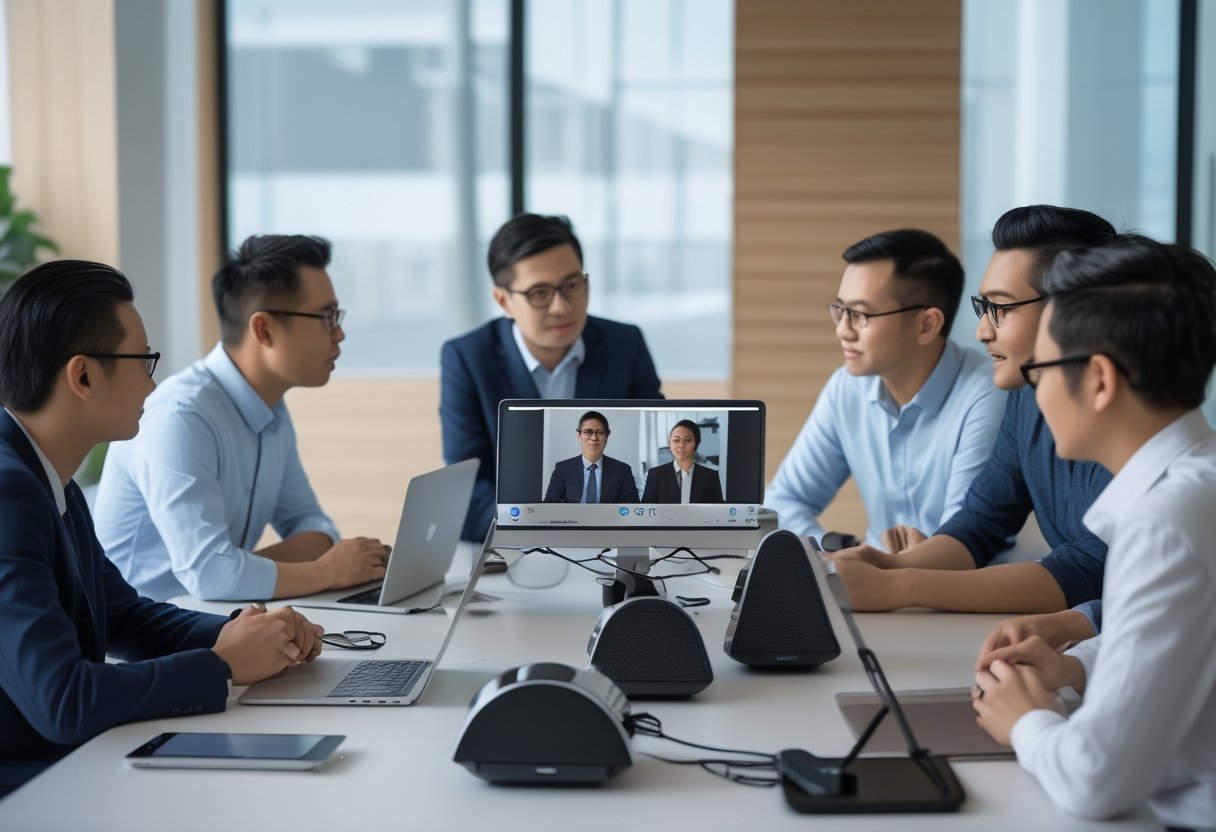
Audio conference adalah rapat jarak jauh yang menghubungkan tiga peserta atau lebih melalui suara secara real-time menggunakan telepon, aplikasi, atau sistem audio ruang meeting. Sistem ini membantu Anda berkomunikasi lintas lokasi dengan kebutuhan perangkat dan bandwidth yang lebih ringan dibandingkan rapat berbasis video.
Dikenal juga sebagai konferensi audio atau conference call, metode ini menjadi pilar utama efisiensi komunikasi bisnis. Melalui komunikasi audio yang lancar, panggilan konferensi atau konferensi suara ini memungkinkan koordinasi cepat tanpa kendala visual.
Infrastruktur komunikasi audio ini mencakup mikrofon, speaker, koneksi jaringan atau telepon, serta platform yang menggabungkan suara dari setiap peserta.
Penggunaan mikrofon berkualitas dan penataan ruang yang tepat sangat memengaruhi kualitas panggilan. Faktor akustik dan volume juga menentukan kejernihan suara yang didengar peserta.
Apa Bedanya dengan Video Conference dan Teleconference?
Teleconference merupakan istilah umum untuk pertemuan jarak jauh melalui teknologi komunikasi. Berbeda dari pertukaran pesan teks, panggilan audio menyajikan interaksi langsung secara real-time. Model panggilan suara ini membantu pertukaran ide berjalan lebih spontan.
Audio conference atau konferensi audio menjadi salah satu bentuk teleconference yang berfokus pada suara, sedangkan video conference atau konferensi video menambahkan gambar peserta atau materi visual.
Perbedaan praktisnya terlihat pada kebutuhan rapat:
| Aspek | Audio Conference | Video Conference |
|---|
| Media utama | Suara | Suara dan video |
| Kebutuhan bandwidth | Lebih ringan | Lebih besar |
| Perangkat utama | Mikrofon dan speaker | Mikrofon, speaker, kamera, layar |
| Fokus rapat | Diskusi verbal | Diskusi dan visual |
| Persiapan | Cepat | Membutuhkan pengaturan kamera dan tampilan |
Audio conference sesuai untuk pembaruan proyek, koordinasi singkat, konsultasi, atau rapat saat peserta memiliki koneksi terbatas. Video conference lebih tepat saat Anda perlu membaca ekspresi, membagikan presentasi, berbagi dokumen secara langsung, atau menunjukkan detail visual.
Dibandingkan panggilan suara biasa, konferensi video membutuhkan koneksi yang lebih stabil untuk kelancaran transmisi visual.
Jika dibandingkan dengan panggilan video yang menuntut fokus visual terus-menerus, format audio terasa lebih fleksibel bagi peserta yang sedang berpindah tempat.
Fungsi Audio Conference bagi Kolaborasi Perusahaan
Audio conference membantu perusahaan mempercepat komunikasi bisnis antar kantor, tim remote, vendor, dan klien. Kehadirannya mempermudah kolaborasi tim lintas departemen tanpa hambatan jarak.
Banyak industri, termasuk sektor perbankan dan korporasi multinasional, mengandalkan solusi konferensi audio untuk koordinasi harian yang aman. Efektivitas komunikasi audio memastikan diskusi internal tetap fokus dan produktif.
Rapat dapat berjalan lintas lokasi tanpa perjalanan, menghemat waktu dan biaya operasional.
Platform rapat modern seperti Zoom, Google Meet, Microsoft Teams, Cisco Webex, hingga Skype kini menyediakan opsi audio yang fleksibel. Berbagai aplikasi konferensi tersebut memudahkan peserta bergabung dari berbagai perangkat.
Fungsi utamanya meliputi:
- Menghubungkan peserta dari beberapa lokasi dalam satu percakapan.
- Mendukung rapat internal, pembaruan proyek, dan koordinasi operasional.
- Memudahkan komunikasi saat video tidak diperlukan.
- Menjaga rapat tetap berjalan ketika koneksi internet peserta terbatas.
- Menjadi bagian dari sistem ruang meeting hybrid.
Audio-only juga menuntut tata kelola rapat yang lebih disiplin. Moderator perlu menyebut nama pembicara, mengatur giliran bicara, dan merangkum keputusan karena peserta tidak dapat mengandalkan ekspresi wajah atau bahasa tubuh.
Untuk hasil yang konsisten, Anda perlu menyelaraskan sistem audio dengan desain ruang dan pola penggunaan. Manfaat integrasi sistem audio visual untuk ruang rapat modern dapat membantu Anda melihat hubungan antara perangkat, konektivitas, dan pengalaman meeting.
Cara Kerja dan Waktu Tepat Menggunakannya
Audio conference bekerja dengan menangkap suara peserta, membersihkan sinyal, mencampurnya, lalu mengirimkan suara tersebut ke peserta lain melalui jaringan atau saluran telepon. Pilihan sistemnya perlu mengikuti jumlah peserta, luas ruangan, akustik, dan kebutuhan rapat perusahaan.
Sistem yang tepat membuat peserta dapat berbicara tanpa mengulang kalimat, menaikkan suara, atau berpindah tempat untuk mendekati mikrofon. Penataan perangkat dan pengujian sebelum rapat membantu mengurangi gema, kebisingan, serta suara yang terputus.
Komponen yang Membentuk Sistem Audio Conference
Komponen audio conference terdiri atas perangkat input, pemrosesan, output, dan konektivitas. Setiap bagian memiliki fungsi yang memengaruhi kejelasan percakapan.
- Mikrofon: menangkap suara pembicara. Anda dapat memilih microphone array, mikrofon meja, headset, atau unit mikrofon conference.
- Speaker: menyampaikan suara peserta jarak jauh ke dalam ruangan. Peserta individu juga dapat memakai headphone atau headset agar pendengaran lebih fokus tanpa terganggu suara sekitar.
- DSP: memproses sinyal melalui pengurangan noise, echo cancellation, dan pengaturan level suara.
- Audio mixer: mengatur beberapa sumber suara sebelum diteruskan ke sistem.
- Platform atau bridge: menghubungkan peserta melalui aplikasi, Voice over Internet Protocol (VoIP), atau saluran telepon.
- Koneksi jaringan: membawa sinyal audio antara ruang meeting dan lokasi peserta.
Secara historis, rapat jarak jauh terhubung melalui Public Switched Telephone Network atau operator telekomunikasi lokal seperti Esia. Pada era tersebut, jaringan tetap nirkabel seperti Esia kerap diandalkan untuk koordinasi kantor sebelum internet berkecepatan tinggi meluas.
Saat ini, sistem berbasis VoIP dan internet lebih mendominasi karena menawarkan fleksibilitas yang lebih tinggi.
Ruang kecil mungkin cukup menggunakan speakerphone dengan mikrofon terintegrasi. Ruang yang lebih besar memerlukan beberapa mikrofon dan speaker yang ditata agar jangkauan suara merata.
Bagaimana Suara Peserta Diproses dan Disalurkan?
Mikrofon mengubah suara menjadi sinyal audio, kemudian DSP membersihkan sinyal tersebut dari gema, dengung, dan kebisingan yang tertangkap. Sistem lalu mencampur suara peserta dan mengirimkannya melalui platform konferensi atau jaringan telepon.
Di sisi penerima, sinyal dikirim ke speaker dan diputar kembali di ruang meeting. Echo cancellation mencegah suara dari speaker masuk kembali ke mikrofon sehingga peserta jarak jauh mendengar pengulangan suara.
Penempatan perangkat memiliki pengaruh langsung. Mikrofon sebaiknya berada dekat area bicara, sedangkan speaker perlu diarahkan agar suara tidak kembali masuk ke mikrofon.
Jika peserta mengakses rapat lewat peramban web, gangguan teknis seperti network issues terkadang muncul. Periksa browser settings untuk memastikan mikrofon diizinkan, atau nonaktifkan browser extension dan ad blockers yang memblokir audio. Menggunakan different browser juga bisa menyelesaikan masalah dengan cepat.
Kapan Perusahaan Perlu Memilih Audio Conference?
Anda perlu memilih audio conference ketika tujuan rapat berpusat pada percakapan dan keputusan verbal. Format ini sesuai untuk:
- Koordinasi harian dengan agenda singkat.
- Pembaruan status proyek lintas cabang.
- Diskusi dengan peserta yang tersebar di beberapa kota.
- Rapat saat bandwidth peserta tidak seragam.
- Percakapan operasional yang tidak membutuhkan presentasi visual.
- Peserta yang bergabung melalui telepon saat berada di perjalanan.
Video tetap lebih sesuai untuk presentasi, pelatihan visual, negosiasi yang membutuhkan ekspresi, atau kolaborasi berbagi dokumen secara mendalam. Anda juga dapat menghubungkan sistem rapat audio dengan siaran live streaming untuk kebutuhan town hall perusahaan.
Penerapan perangkat berskala professional memastikan seluruh audiens menerima suara yang jelas. Anda juga dapat menggabungkan sistem audio conference dengan platform konferensi video ketika sebagian peserta hadir di ruang meeting dan sebagian lainnya bergabung secara daring.
MLV Teknologi dapat membantu Anda menilai kebutuhan perangkat, tata letak, dan instalasi AV meeting room agar pekerjaan berlangsung rapi serta meminimalkan gangguan terhadap operasional kantor.
Memilih Sistem Audio Conference Sesuai Pola Kerja
Pemilihan sistem audio conference perlu dimulai dari pola kerja dan karakter ruang, kemudian diterjemahkan menjadi kebutuhan mikrofon, speaker, konektivitas, serta kontrol rapat. Perangkat yang sesuai membuat peserta di dalam dan di luar ruangan mendengar percakapan dengan tingkat kejernihan yang konsisten.
Untuk ruang kecil dengan empat sampai enam peserta, speakerphone USB atau perangkat conference all-in-one dapat menjadi pilihan praktis. Peserta yang mengikuti rapat secara personal juga dapat memakai headset berkualitas agar suara terdengar jernih.
Ruang rapat menengah membutuhkan jangkauan mikrofon lebih luas, pengaturan echo yang baik, dan speaker yang mampu mengisi ruangan tanpa volume berlebihan.
Perusahaan dengan beberapa ruang meeting perlu memperhatikan konsistensi penggunaan. Antarmuka yang serupa, koneksi yang jelas, dan panduan singkat membantu tim berpindah ruang tanpa mempelajari sistem baru setiap kali rapat.
Pertimbangkan beberapa hal berikut:
- Ukuran ruang dan jumlah peserta: menentukan jangkauan mikrofon serta kebutuhan speaker.
- Akustik ruangan: karpet, panel akustik, dan tata letak meja memengaruhi pantulan suara.
- Pola rapat: koordinasi singkat membutuhkan akses cepat, sedangkan rapat formal memerlukan kontrol pembicara.
- Konektivitas: pastikan sistem sesuai dengan laptop, perangkat telepon, serta kompatibel dengan aplikasi seperti Zoom, Microsoft Teams, Google Meet, atau Cisco Webex.
- Integrasi: pertimbangkan koneksi ke display, kamera, recording system, atau control panel bila kebutuhan rapat berkembang.
- Pemeliharaan: pilih konfigurasi yang mudah diperiksa dan didukung oleh tim teknis.
Sebelum membeli perangkat, lakukan survei ruang dan petakan posisi meja, sumber bising, titik listrik, serta jalur kabel. Konsultasi dengan penyedia AV membantu Anda menghindari perangkat yang kurang menjangkau ruangan atau sistem yang sulit digunakan oleh pengguna harian.
MLV Teknologi melayani konsultasi, pengadaan perangkat, instalasi, dan dukungan untuk kebutuhan audio visual perusahaan. Kunjungi website MLV Teknologi di www.mlvteknologi.com dan hubungi langsung melalui nomor WhatsApp yang tertera di website kami untuk berdiskusi langsung dengan kami.
by Melvin Halpito | Sep 20, 2026 | Article
Berapa Jarak Pandang Ideal untuk Videotron P2.5?
Videotron P2.5 memiliki jarak pandang nyaman mulai sekitar 2,5 meter dan mencapai tampilan yang lebih halus di sekitar 6,25 meter. Angka ini menjadi acuan awal untuk ruang rapat, ruang presentasi, lobby, showroom, auditorium, dan panggung event dengan audiens di dalam ruangan.
Posisi kursi terdekat, ukuran layar, pencahayaan, serta jenis konten tetap perlu diperiksa sebelum menentukan konfigurasi. Anda juga dapat menggunakan viewing distance calculator untuk membantu menyusun estimasi awal.
Apa Arti Pixel Pitch 2,5 mm terhadap Ketajaman Gambar?
Pixel pitch adalah jarak antara pusat satu LED dan LED berikutnya. Pada P2.5, jarak tersebut adalah 2,5 mm. Nilai yang lebih kecil menghasilkan kepadatan pixel dan kerapatan pixel lebih tinggi sehingga detail halus terlihat lebih baik pada jarak pandang dekat.
Dengan pixel pitch 2,5 mm, setiap modul LED mampu menampilkan gambar dengan detail tinggi tanpa bintik-bintik kasar. Tingkat kepadatan pixel yang optimal memastikan tampilan grafis tetap solid saat dilihat dari jarak beberapa meter saja.
Karakteristik modul dengan lampu SMD2121 berbasis teknologi SMD memungkinkan layar menampilkan visual resolusi tinggi dengan kontras pekat. Hasilnya menghadirkan visual tajam dan detail visual yang optimal sehingga teks maupun grafik terlihat sangat jernih.
Dukungan rancangan PCB (printed circuit board) yang berkualitas turut menjaga kestabilan sinyal serta pelepasan panas pada panel.
P2.5 memiliki sekitar 160.000 titik per meter persegi, menghasilkan pixel density tinggi yang ideal untuk jarak dekat. Sebagai gambaran, layar berukuran 4 × 2 meter menghasilkan perhitungan sekitar 1600 × 800 piksel. Kualitas akhir tetap dipengaruhi oleh modul, sumber konten, controller, dan proses kalibrasi.
Menentukan Jarak Audiens Terdekat dan Terjauh
Gunakan 2,5 meter sebagai batas awal posisi audiens terdekat. Pada jarak ini, gambar sudah menyatu bagi banyak penggunaan indoor, meski teks berukuran sangat kecil tetap perlu diuji melalui simulasi konten.
Untuk tampilan yang lebih halus, acuan pixel pitch × 2,5 menempatkan P2.5 di sekitar 6,25 meter. Audiens yang berada lebih jauh tetap dapat melihat gambar dengan baik apabila ukuran layar dan ukuran teks sesuai.
Saat membuat layout, ukur jarak penonton dari permukaan layar ke mata audiens. Periksa juga posisi menyamping karena dapat memengaruhi keterbacaan teks dan persepsi warna.
Layar LED modern umumnya menawarkan sudut pandang lebar yang memadai untuk ruangan luas. Karakteristik viewing angle yang baik memastikan audiens di baris pinggir tetap melihat warna secara konsisten.
Dukungan viewing angle yang luas hingga 140 derajat horizontal maupun vertikal menjaga kenyamanan visual seluruh peserta yang hadir di ruangan.
Mengapa Ukuran Layar dan Jenis Konten Memengaruhi Jarak Pandang?
Ukuran layar menentukan jumlah piksel total dan skala konten visual. Layar P2.5 yang terlalu kecil untuk ruangan besar membuat teks, grafik, atau dashboard sulit dibaca dari baris belakang meskipun pitch-nya sudah sesuai.
Konten video dan gambar produk memberi toleransi lebih luas. Di dalam ruang presentasi, materi dengan tabel, spreadsheet, atau angka kecil memerlukan font lebih besar, kontras yang cukup, serta jarak audiens yang terkontrol.
Rasio layar juga perlu mendekati format konten, terutama 16:9 untuk presentasi dan video modern. Dengan begitu, Anda mengurangi risiko gambar tampak tertarik atau menyisakan bidang kosong di sisi layar.
Aplikasi dan Pertimbangan Teknis Sebelum Memilih Sistem
P2.5 paling sesuai untuk ruang indoor dengan audiens mulai sekitar 2,5 meter dan kebutuhan visual yang mencakup presentasi, video, branding, atau data berukuran sedang. Keputusan instalasi videotron indoor perlu menggabungkan jarak audiens, ukuran layar, pencahayaan, struktur, kelistrikan, jalur data, dan akses servis.
Brief proyek yang baik mencatat posisi kursi terdekat, jarak baris terakhir, dimensi dinding, sumber listrik, serta perangkat AV yang akan terhubung ke layar. Informasi ini membantu Anda meminta penawaran yang lebih akurat.
Ruang Apa yang Paling Sesuai untuk LED Display P2.5?
P2.5 cocok untuk ruang rapat, ruang meeting, ruang konferensi, auditorium skala menengah, mini ballroom, dan ruang serbaguna. Layar ini juga banyak digunakan di gedung perkantoran, lobi hotel, showroom, ballroom komersial, seminar, command center, hingga studio siaran.
Di fasilitas publik seperti bandara, gerai retail, atrium mall, dan pusat perbelanjaan, layar ini berfungsi sebagai media informasi serta promosi produk. Keberadaannya di koridor pusat perbelanjaan, koridor mall, maupun toko retail mampu menarik perhatian pengunjung lewat materi promosi produk.
Pada ballroom hotel, layar videotron sering dijadikan panggung visual utama untuk pesta maupun peluncuran produk berskala besar.
Tampilan visual yang jernih juga menjadikannya andalan dalam ajang exhibition, event pameran, dan seminar bergengsi. Begitu pula di studio siaran, layar ini sering digunakan sebagai latar panggung berita yang profesional.
Pada booth pameran, perangkat LED display indoor mampu menarik perhatian pengunjung dengan konten visual yang memikat. Begitu pula saat digunakan untuk seminar edukasi atau konferensi industri, materi presentasi dapat dibaca dengan jelas dari berbagai sudut.
Jarak audiens 2–8 meter memberi ruang kerja ideal untuk menampilkan video, slide, promosi, dan visual branding acara.
Penggunaan LED display indoor pada ruang konferensi memastikan seluruh pesan dan materi visual tersampaikan secara akurat kepada audiens.
Di ruang presentasi atau lobby, layar ini dapat dipadukan dengan signage interaktif untuk menyajikan konten interaktif. Untuk showroom, kualitas warna, gradasi, dan detail foto produk perlu diuji menggunakan konten nyata.
P2.5 juga sesuai untuk meeting room yang membutuhkan layar besar dengan tampilan tanpa garis bezel. MLV Teknologi dapat membantu menghubungkan kebutuhan LED display dengan sistem audio visual dan alur operasional ruangan.
Kapan P2.5 Lebih Tepat Dibandingkan P1.5, P1.8, P3, atau P4?
Dalam perbandingan videotron indoor p2.5 dengan opsi lain, P2.5 menjadi pilihan seimbang saat audiens berada mulai sekitar 2,5 meter. Layar ini memberikan detail yang baik dengan luas layar yang memadai.
Pitch yang lebih rapat seperti P1.5 atau P1.8 lebih tepat ketika posisi audiens sangat dekat atau konten berisi teks kecil dan detail tinggi.
P3 sesuai untuk jarak mulai sekitar 3 meter dengan kebutuhan visual umum. Sementara itu, varian seperti P4 dan P5 lebih cocok untuk ruang yang lebih luas dengan jarak audiens lebih jauh. Pilihan antara P2, P2.5, P3, P4, hingga P5 perlu disesuaikan dengan ukuran layar dan anggaran proyek.
| Kriteria | P1.5/P1.8 | P2.5 | P3/P4 |
|---|
| Jarak terdekat | Sekitar 1,5–1,8 m | Sekitar 2,5 m | Sekitar 3–4 m |
| Detail teks kecil | Sangat baik | Baik | Bergantung ukuran teks |
| Kebutuhan ruang | Dekat dan detail | Indoor serbaguna | Ruang lebih luas |
| Kepadatan piksel | Lebih tinggi | 160.000 titik/m² | Lebih rendah |
| Efisiensi area besar | Biaya lebih tinggi | Seimbang | Lebih efisien |
Spesifikasi Teknis yang Perlu Dievaluasi Selain Pixel Pitch
Periksa refresh rate layar, di mana standar 1920 Hz hingga 3840 Hz sangat dianjurkan untuk rekaman kamera bebas flicker dan siaran langsung. Refresh rate pada level 1920 Hz sudah memadai untuk presentasi, sedangkan refresh rate yang lebih tinggi krusial pada studio siaran agar hasil rekaman tetap jernih.
Tingkat brightness berkisar 600 sampai 1000 nit juga perlu disesuaikan dengan pencahayaan ruangan agar tidak menyilaukan. Pengaturan nit yang tepat mencegah mata audiens cepat lelah sekaligus menjaga gambar tetap kontras.
Kemampuan menampilkan gambar resolusi tinggi dengan warna merata menjadi kunci kenyamanan audiens di dalam ruangan.
Evaluasi kualitas modul LED, keseragaman warna, gray scale, sudut pandang, serta komponen IC driver berkualitas seperti MBI, controller, dan kalibrasi. Penggunaan chip IC driver MBI terbukti andal dalam menjaga stabilitas visual dan kedalaman warna.
Komponen sending card dan receiving card juga sangat krusial dalam mendistribusikan sinyal visual secara presisi.
Unit receiving card bertugas mengolah sinyal data dari sistem kontrol untuk diteruskan ke masing-masing modul LED. Keandalan receiving card menjamin visual bergerak tetap mulus tanpa distorsi atau latensi yang mengganggu.
Sebagai layar LED modular, konfigurasi cabinet yang rapi dan presisi sambungan ikut menentukan tampilan bidang layar LED secara keseluruhan.
Material kabinet juga berpengaruh pada pemasangan. Die-cast aluminum memberi bobot lebih ringan dan presisi yang baik untuk penggunaan indoor, sedangkan kabinet besi memiliki karakter konstruksi berbeda yang perlu dihitung sejak tahap struktur.
Apa Saja yang Harus Disiapkan untuk Instalasi dan Perawatan?
Proses instalasi videotron indoor p2.5 membutuhkan persiapan menyeluruh sejak awal perencanaan instalasi videotron. Pelaksanaan instalasi videotron indoor harus memperhatikan struktur dinding, titik penyangga, kapasitas listrik, grounding, dan ruang ventilasi.
Kerapian jalur data serta tata letak sistem kontrol pada instalasi videotron indoor p2.5 akan mempermudah tim teknisi selama pengoperasian. Hal ini juga memastikan seluruh modul berfungsi optimal sejak hari pertama pemasangan.
Tentukan pula apakah kabinet dipasang permanen, front service, atau memerlukan akses belakang untuk kemudahan maintenance rutin. Sistem front service mempermudah proses maintenance modul secara praktis tanpa membongkar seluruh kabinet.
Prosedur perawatan berkala mencakup pemeriksaan modul, kabel data, power supply, controller, dan kebersihan panel. Perhatikan efisiensi energi serta estimasi konsumsi daya harian untuk menekan total cost of ownership dalam jangka panjang.
Perhitungan konsumsi daya puncak dan rata-rata juga penting agar pasokan listrik gedung selalu stabil selama layar beroperasi.
Kualitas unit power supply sangat menentukan kestabilan distribusi arus listrik ke seluruh modul LED. Pemilihan power supply dengan proteksi lonjakan beban menjaga perangkat tetap awet selama pemakaian intensif.
Jadwalkan pekerjaan di luar jam sibuk jika layar dipasang di kantor yang aktif. MLV Teknologi dikenal membantu instalasi dengan koordinasi yang rapi dan gangguan operasional minimal, termasuk untuk kebutuhan meeting room dan lingkungan komersial.
Memilih Konfigurasi P2.5 Berdasarkan Kebutuhan Ruang
Konfigurasi P2.5 perlu ditentukan dari posisi audiens, ukuran konten, rasio layar, dan kondisi pemasangan, lalu diterjemahkan menjadi ukuran serta resolusi yang realistis. Memahami cara memilih videotron indoor p2.5 secara tepat membantu Anda menghindari layar terlalu kecil, bidang gambar terpotong, atau biaya pitch yang tidak sesuai kebutuhan.
Mulailah dengan mengukur jarak audiens terdekat dan terjauh. Setelah itu, tentukan ukuran bidang layar berdasarkan lebar dinding, tinggi pandangan, jalur evakuasi, serta kebutuhan kamera atau presenter.
Untuk konten 16:9, pilih dimensi layar yang mendekati rasio tersebut. Sebagai contoh, layar 4 × 2 meter menghasilkan rasio 2:1 sehingga konten widescreen dapat memerlukan penyesuaian layout. Layar berukuran sekitar 4,4 × 2,5 meter lebih dekat ke 16:9, dengan jumlah piksel P2.5 sekitar 1760 × 1000.
Periksa posisi speaker, lampu, sprinkler, pintu akses, dan perangkat presentasi sebelum menetapkan titik pemasangan. Layar yang terlihat baik dari kursi tengah tetap perlu terbaca dari sisi ruangan dan tidak menghalangi elemen keselamatan.
Baik untuk agenda seminar korporat, ruang presentasi, panggung event, maupun pameran dagang, layar dengan pixel pitch 2,5 mm menawarkan fleksibilitas yang sangat seimbang. Layar ini mampu menghadirkan visual resolusi tinggi dengan detail tinggi yang memanjakan mata.
Sebelum memutuskan pengadaan, perhatikan faktor anggaran dan estimasi harga videotron indoor p2.5 secara menyeluruh. Meskipun ada pihak yang jual videotron indoor p2.5 murah, pastikan Anda tetap memprioritaskan mutu komponen dan layanan purna jual yang andal.
Susun brief yang memuat ukuran ruang, jarak audiens, jenis konten, durasi pemakaian, kebutuhan kamera, format sinyal, target brightness, metode servis, dan jadwal instalasi.
Anda dapat menghubungi MLV Teknologi melalui website www.mlvteknologi.com dan nomor WhatsApp yang tertera di website untuk mendiskusikan survei lokasi, perencanaan AV, pemasangan, serta koordinasi proyek.
by Melvin Halpito | Sep 19, 2026 | Article
Berapa Estimasi Investasi LED Fine Pixel P1,2?
Harga Videotron P1,2 untuk corporate space perlu dihitung sebagai investasi sistem lengkap, bukan hanya tarif modul per meter persegi. Sebagai pilihan LED display beresolusi ultra-halus, layar LED videotron indoor ini menghadirkan visual tanpa batas garis sambungan. Nilai akhirnya mengikuti luas layar, resolusi, controller, struktur, instalasi, dan dukungan purna jual.
Ukuran layar yang besar memang meningkatkan anggaran, tetapi spesifikasi yang tepat membantu menjaga kualitas visual. Untuk ruang rapat premium, ruang meeting eksekutif, atau lobby sebagai display informasi korporat, panel P1.2 sangat ideal ketika audiens duduk dekat layar. Jika dibandingkan model lain, harga videotron indoor pada kelas rapat ini sebanding dengan ketajaman yang dihasilkan.
Komponen biaya apa saja di luar harga modul per meter persegi?
Harga modul LED hanya mencakup bagian utama bidang tampilan. Anggaran sistem perlu memasukkan:
- kabinet dan struktur pemasangan;
- receiving card sistem seperti NovaStar, sending card, serta controller;
- video processor dan sistem distribusi input multi-sumber;
- power supply efisien, kabel daya, serta kebutuhan kelistrikan;
- instalasi, konfigurasi modul LED, dan pengujian;
- pekerjaan integrasi dengan sistem ruang rapat;
- akses perawatan dan ketersediaan suku cadang;
- transportasi serta penyesuaian interior bila diperlukan.
Controller dan video processor menentukan cara Anda mengatur sumber konten serta konfigurasi layar. Komponen pendukung seperti power supply berkualitas dan kartu kendali NovaStar menjamin keandalan pemakaian harian.
Struktur penopang juga perlu disesuaikan dengan dinding, rangka, ventilasi, dan akses servis. Penghematan berlebihan pada komponen pendukung dapat meningkatkan risiko gangguan teknis saat operasional penting berlangsung.
Bagaimana ukuran layar dan resolusi memengaruhi total anggaran?
Luas layar menentukan jumlah kabinet dan modul LED yang dibutuhkan. Pada pixel pitch P1.2, kerapatan piksel sangat tinggi sehingga harga videotron per meter persegi berada di kelas teratas.
Meskipun patokan harga videotron indoor per meter sering dicari, kebutuhan total bergantung pada konfigurasi ruang. Dalam kategori videotron indoor, terdapat opsi pitch seperti P1.5, P1.8, P2, P2.0, hingga P2.5.
Model P1.5 dan P1.8 sering menjadi pembanding terdekat untuk ruang presentasi detail. Sementara itu, varian P2.5 banyak diaplikasikan pada ruang pelatihan yang membutuhkan layar cukup lebar.
Untuk area korporat yang lebih luas seperti auditorium, opsi P3, P3.0, P4, P4.0, P5, hingga P6 dapat dipertimbangkan. Kategori tersebut umum diaplikasikan pada aula pertemuan maupun gereja dengan jarak pandang menengah. Sementara itu, modul P10 biasanya difokuskan untuk kebutuhan jarak jauh.
Resolusi layar perlu disesuaikan dengan materi presentasi, dashboard, dan video conference agar visual terlihat proporsional. Untuk menyusun estimasi yang tepat, mintalah vendor merinci harga videotron indoor lengkap dengan kontrol, struktur, dan kelistrikan.
Mengapa penawaran termurah belum tentu paling ekonomis dalam jangka panjang?
Memilih videotron murah tanpa meneliti daya tahan komponen justru berisiko memicu biaya perbaikan tinggi di kemudian hari. Nilai kepemilikan jangka panjang dipengaruhi stabilitas gambar, kualitas modul LED, dan efisiensi power supply.
Faktor konsumsi daya yang hemat energy, ketersediaan dukungan teknis, serta kemudahan servis juga meminimalkan waktu henti operasional. Sentuhan visual yang berkelas sekaligus menghadirkan elan profesional pada ruang kerja modern.
Sistem LED display yang dirancang modular memudahkan penggantian komponen secara cepat tanpa mengganggu seluruh susunan kabinet.
Anda juga perlu memeriksa garansi, prosedur layanan, stok suku cadang, serta kemampuan tim melakukan instalasi rapi di area yang tetap aktif. MLV Teknologi menyediakan konsultasi AV, pemasangan, dan dukungan implementasi dengan perhatian pada koordinasi pekerjaan agar gangguan terhadap aktivitas kantor tetap rendah.
Menilai Kelayakan P1,2 untuk Ruang Kerja dan Rapat
P1,2 paling sesuai untuk ruang dengan jarak pandang sekitar 1–2 meter yang membutuhkan teks tajam dan detail visual tinggi. Pilihan ini sangat relevan untuk ruang meeting direksi, studio siaran, hingga command center saat pemantauan data membutuhkan presisi maksimal.
Pemasangan layar beresolusi ultra-fine ini memancarkan elan arsitektur modern yang meningkatkan reputasi kantor di mata pemangku kepentingan.
Kelayakan P1,2 perlu dinilai bersama ukuran ruangan, jenis konten, pencahayaan, posisi kamera, serta pola pemakaian harian. Pada studio penyiaran modern, layar LED beresolusi tinggi mencegah munculnya moiré saat tertangkap lensa kamera. Pixel pitch kecil memberi tampilan halus, sedangkan layar dengan pitch lebih besar dapat memenuhi kebutuhan ruangan yang audiensnya duduk lebih jauh.
Untuk jarak pandang berapa meter pixel pitch 1,2 mm paling efektif?
Jarak pandang ideal untuk P1,2 berada pada rentang 1–2 meter. Pada jarak ini, susunan LED yang rapat membantu teks, spreadsheet, diagram, dan wajah peserta video conference terlihat lebih halus.
Jika kursi terdekat berjarak lebih dari 2 meter, Anda tetap dapat memilih P1,2 untuk kebutuhan detail atau tampilan premium. Perhitungkan manfaat visualnya terhadap tambahan investasi. Survei posisi duduk membantu Anda menilai apakah seluruh peserta memperoleh pengalaman yang konsisten.
Bila jarak duduk sedikit lebih jauh, opsi P1.5 atau P1.8 tetap menyajikan kenyamanan mata yang prima. Berbeda dari auditorium luas yang leluasa memakai modul P6, ruang rapat internal membutuhkan kerapatan piksel agar teks presentasi tidak pecah.
Spesifikasi apa yang menentukan ketajaman konten, warna, dan kelancaran tampilan?
Tingkat pixel density yang tinggi memastikan ketajaman detail pada seluruh bidang layar. Anda juga perlu mengevaluasi parameter tingkat brightness, reproduksi warna, grayscale, viewing angle yang luas, dan refresh rate.
Tingkat refresh rate yang tinggi menjaga rekaman video conference bebas efek kedip (flicker). Selain itu, pengaturan brightness yang tepat pada videotron indoor memastikan visual tetap nyaman dipandang tanpa menyilaukan mata peserta.
Peran video processor dan sistem kontrol sangat krusial dalam mengelola distribusi multi-sumber, termasuk integrasi live camera maupun transmisi sinyal RF nirkabel. Keandalan sistem kontrol memastikan peralihan antar-sumber video berjalan mulus tanpa jeda. Pastikan perangkat mendukung laptop, kamera ruang rapat, modul RF pengendali jarak jauh, presentasi interaktif, serta format konten digital yang digunakan tim kerja.
Bagaimana merencanakan instalasi, kontrol konten, dan perawatan agar operasional tetap lancar?
Mulailah dari gambar kerja yang memuat ukuran layar, titik listrik, jalur data, ventilasi, posisi controller, dan akses servis. Rencana ini mencegah perubahan konstruksi saat pemasangan berlangsung.
Gunakan kabinet modular dengan akses perawatan yang sesuai kondisi dinding. Tetapkan prosedur penggantian modul, jadwal inspeksi, pencadangan konfigurasi controller, dan penanggung jawab pengelolaan konten.
Koordinasikan pekerjaan pemasangan di luar jam rapat penting jika area tetap digunakan. Mitra seperti MLV Teknologi dapat membantu survei, konsultasi sistem, instalasi, dan koordinasi pekerjaan sehingga implementasi berlangsung rapi dengan gangguan operasional yang terukur.
Memilih Investasi Layar yang Tepat untuk Pengalaman Rapat Profesional
Pilih P1,2 ketika ruang Anda memiliki jarak pandang dekat, konten detail, dan tuntutan tampilan premium yang membenarkan investasi sistem lengkap. Untuk keputusan procurement, susun spesifikasi berdasarkan fungsi ruang lalu minta penawaran terperinci yang mencakup panel, controller, struktur, instalasi, integrasi, garansi, dan perawatan.
Layar yang tepat perlu menyatu dengan alur rapat. Periksa posisi kamera, tinggi layar, sudut pandang peserta, pencahayaan, akustik, serta kemudahan berbagi konten dari perangkat kerja. Detail tersebut menentukan apakah layar membantu kolaborasi atau hanya menjadi elemen visual di dinding.
Bandingkan vendor melalui kualitas dokumentasi teknis, kemampuan survei, kerapian instalasi, respons layanan, dan rencana dukungan setelah serah terima. MLV Teknologi melayani kebutuhan audio visual, konsultasi, rental, instalasi, dan solusi meeting room dari kawasan Jakarta Selatan dengan rating Google Maps 4,9 berdasarkan 19 ulasan.
Untuk membahas kebutuhan ruang Anda, kunjungi website MLV Teknologi di www.mlvteknologi.com dan hubungi langsung melalui nomor WhatsApp yang tertera di website.
by Melvin Halpito | Sep 19, 2026 | Article
Berapa Anggaran Videotron P2.5 untuk Ruang Rapat?
Untuk ruang rapat dan boardroom, siapkan anggaran awal sekitar Rp150 juta–Rp500 juta untuk proyek Videotron P2.5 indoor yang mencakup layar, sistem kontrol, struktur, instalasi, dan commissioning. Nilai akhirnya mengikuti luas layar, kualitas panel, kondisi dinding, jalur kabel, serta kebutuhan integrasi AV.
Anggaran per meter persegi membantu membuat estimasi awal. Anda tetap perlu meminta rincian pekerjaan agar harga panel tidak menutupi biaya sistem yang dibutuhkan saat implementasi.
Kisaran biaya per meter persegi dan ukuran layar yang umum
Secara umum, harga videotron indoor untuk tipe videotron indoor P2.5 berada di kisaran Rp10 juta–Rp25 juta per m² untuk panel. Variasi harga tergantung pada kualitas panel LED display, material kabinet, tingkat kecerahan, refresh rate, dan dukungan purna jual.
Dengan pixel pitch 2,5 mm, layar ini sangat cocok dinikmati dari jarak pandang sekitar 3–5 meter di ruang meeting.
Ukuran yang sering dipakai untuk ruang rapat meliputi:
- 3 m × 1,7 m: sekitar 5 m² untuk ruang meeting menengah.
- 4 m × 2,25 m: sekitar 9 m² untuk boardroom dengan peserta lebih banyak.
- 5 m × 3 m: sekitar 15 m² untuk ruang presentasi atau forum internal.
Perhitungan luas perlu disesuaikan dengan rasio konten. Jika Anda menampilkan spreadsheet, dashboard, atau dokumen dengan teks kecil, tinggi layar perlu memberi ruang vertikal yang cukup agar peserta di ujung meja tetap dapat membaca isi presentasi.
Komponen biaya proyek: panel, controller, struktur, instalasi, dan commissioning
Panel LED hanya menjadi salah satu bagian dari harga Videotron P2.5 Indoor untuk Meeting Room dan Boardroom. Penawaran yang setara perlu memisahkan komponen berikut:
- Panel dan kabinet: modul LED, receiving card, power supply, serta kabinet.
- Controller: perangkat video processor dan sending card yang menerima sumber HDMI atau DisplayPort lalu mendistribusikan sinyal visual ke modul LED.
- Struktur: frame, bracket, penguat dinding, dan pekerjaan finishing.
- Instalasi: pemasangan panel, penarikan kabel, kelistrikan, grounding, serta pengaturan jalur sinyal.
- Commissioning: pengujian warna, mapping kabinet, kalibrasi, pengaturan brightness, uji sumber input, dan serah terima sistem.
Biaya tambahan dapat muncul dari pekerjaan sipil, akses lokasi, penguatan dinding, distribusi listrik, serta integrasi kamera dan audio. MLV Teknologi dapat membantu survei lokasi dan koordinasi instalasi agar pekerjaan tetap rapi serta mengurangi gangguan aktivitas kantor.
Biaya operasional dan perawatan sepanjang masa pakai
Total cost of ownership mencakup listrik, inspeksi, penggantian modul, suku cadang, dan dukungan teknis selama layar digunakan. Spesifikasi P2.5 indoor dapat mencantumkan konsumsi daya maksimum sekitar 300–700 W/m², sehingga kapasitas listrik perlu dihitung sejak tahap desain.
Kabinet dengan akses perawatan dari depan memudahkan teknisi menangani modul tanpa membongkar seluruh struktur. Anda juga perlu memeriksa ketersediaan modul pengganti, durasi garansi, waktu respons layanan, serta cakupan kunjungan teknisi.
Mintalah vendor menjelaskan jadwal preventive maintenance dan prosedur penanganan gangguan. Sistem yang dirawat dengan baik membantu menjaga keseragaman warna, kestabilan controller, dan kesiapan layar untuk rapat harian.
Bagaimana Menentukan Spesifikasi yang Tepat untuk Boardroom?
Spesifikasi boardroom perlu ditentukan dari jarak duduk terjauh, ukuran konten yang dibaca, kondisi pencahayaan, dan kebutuhan integrasi meeting. P2.5 sesuai untuk banyak ruang rapat dengan jarak pandang dekat hingga menengah, sementara layout dan sistem kontrol menentukan seberapa nyaman layar digunakan setiap hari.
Ukur posisi kursi, tinggi mata, bidang dinding, serta arah cahaya sebelum meminta penawaran. Data ini membuat ukuran layar dan anggaran lebih realistis.
Jarak pandang, ukuran ruangan, dan kebutuhan resolusi presentasi
Pixel pitch 2,5 mm menghasilkan kepadatan piksel yang sesuai untuk peserta yang duduk sekitar 3–5 meter dari layar. Jika meja rapat menempatkan peserta lebih dekat, Anda perlu menilai apakah teks kecil, grafik, dan detail spreadsheet tetap terlihat halus dari kursi terdepan.
Ukuran layar harus mengikuti fungsi ruang. Presentasi video dapat berjalan pada bidang layar yang lebih lebar, sedangkan dashboard operasional memerlukan tinggi layar yang cukup agar beberapa baris informasi tetap terbaca.
Sisakan ruang untuk kamera di atas atau di bawah layar. Posisi kamera yang sejajar dengan peserta membantu menjaga sudut pandang alami dalam video conference.
Kecerahan, refresh rate, dan kualitas visual untuk video conference
Videotron indoor membutuhkan kecerahan yang nyaman untuk mata dalam kondisi cahaya ruang rapat. Spesifikasi P2.5 indoor yang tersedia di pasar mencantumkan kecerahan sekitar 800–1000 cd/m², dengan pengaturan brightness agar layar tidak menyilaukan peserta.
Pilihlah refresh rate tinggi hingga 3840Hz untuk boardroom modern. Spesifikasi 3840Hz membantu menghasilkan transisi visual yang halus dan mencegah efek flicker saat layar direkam kamera.
Pastikan juga pengaturan warna konsisten agar tampilan wajah peserta, logo perusahaan, dan grafik data tetap terlihat natural.
Lakukan uji dengan konten nyata sebelum menyetujui spesifikasi. Gunakan file presentasi berisi teks kecil, tabel, video conference, dan tampilan dashboard agar penilaian tidak hanya berdasarkan gambar promosi.
Integrasi dengan kamera, audio, sistem kontrol, dan perangkat meeting
Videotron harus terhubung dengan sumber presentasi, kamera, mikrofon, speaker, dan platform meeting melalui alur sinyal yang jelas. Controller mengatur distribusi gambar ke panel, sementara perangkat seperti switcher, scaler, atau sistem kontrol dapat mengatur perpindahan sumber dan layout tampilan.
Periksa resolusi input, jumlah sumber, jenis konektor, manajemen kabel, serta lokasi perangkat rack. Sistem audio perlu disetel agar suara peserta jarak jauh terdengar jelas tanpa memicu gema atau feedback.
Untuk ruang hybrid, koordinasikan sudut kamera dengan ukuran layar dan posisi meja. Panduan meeting room hybrid untuk kerja remote dapat membantu Anda menilai kebutuhan kolaborasi antara peserta di ruangan dan peserta jarak jauh.
Cara membandingkan penawaran vendor secara setara
Bandingkan penawaran melalui spesifikasi dan cakupan pekerjaan yang sama. Minta setiap vendor mencantumkan:
- Luas dan resolusi layar.
- Jenis LED, kabinet, brightness, serta refresh rate.
- Controller dan perangkat distribusi sinyal.
- Struktur, instalasi, kelistrikan, dan finishing.
- Commissioning, pelatihan, garansi, serta dukungan teknis.
- Pajak, biaya transportasi, dan pekerjaan tambahan.
Pastikan istilah harga per m² menjelaskan panel saja atau seluruh sistem. Penawaran dengan angka awal lebih rendah dapat memiliki cakupan instalasi, controller, atau integrasi yang berbeda.
Dokumentasikan kebutuhan dalam brief yang sama untuk setiap vendor. MLV Teknologi dikenal responsif dan profesional dalam koordinasi proyek, termasuk pekerjaan instalasi yang perlu menyesuaikan jadwal operasional kantor.
Memilih Investasi Layar LED yang Efektif untuk Kolaborasi Rapat
Investasi Videotron P2.5 akan efektif ketika ukuran layar, keterbacaan konten, integrasi AV, dan biaya perawatan dihitung sebagai satu sistem. Harga panel memberi titik awal, sedangkan pengalaman rapat ditentukan oleh kualitas implementasi dan kemudahan penggunaan.
Mulailah dari daftar aktivitas ruang: presentasi direksi, pembahasan spreadsheet, video conference, dashboard, atau town hall internal. Catat jarak kursi terdekat dan terjauh, ukuran meja, pencahayaan, posisi kamera, serta sumber sinyal yang digunakan tim.
Gunakan P2.5 ketika jarak pandang peserta minimal 3 meter. Jika meja rapat berada sangat dekat dengan layar, Anda dapat mempertimbangkan opsi fine-pitch seperti P2, P1.8, atau P1.5 agar teks kecil tetap terbaca tajam.
Saat meminta penawaran, sertakan target waktu instalasi, batas gangguan kerja, kebutuhan akses gedung, serta jadwal commissioning. Tim AV yang mampu mengatur pekerjaan secara rapi membantu menjaga ruang tetap berfungsi selama proyek berjalan.
Banyak penyedia jasa jual videotron di pasar, namun pastikan Anda memilih mitra yang berpengalaman menangani integrasi ruang rapat korporasi. MLV Teknologi menyediakan konsultasi audio visual, pasokan peralatan LED display, instalasi, hingga dukungan purna jual di Jakarta.
Untuk menyusun estimasi harga videotron sesuai ukuran ruang rapat Anda, kunjungi website MLV Teknologi dan hubungi langsung tim kami melalui WhatsApp.





Recent Comments