
by Melvin Halpito | Apr 1, 2026 | Article
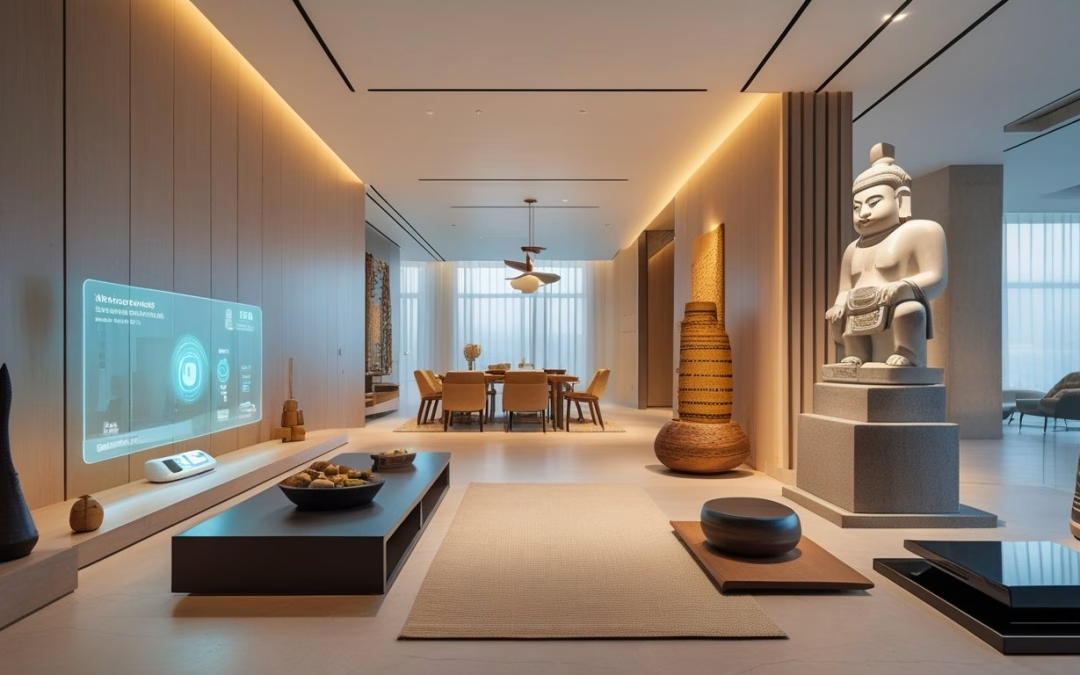
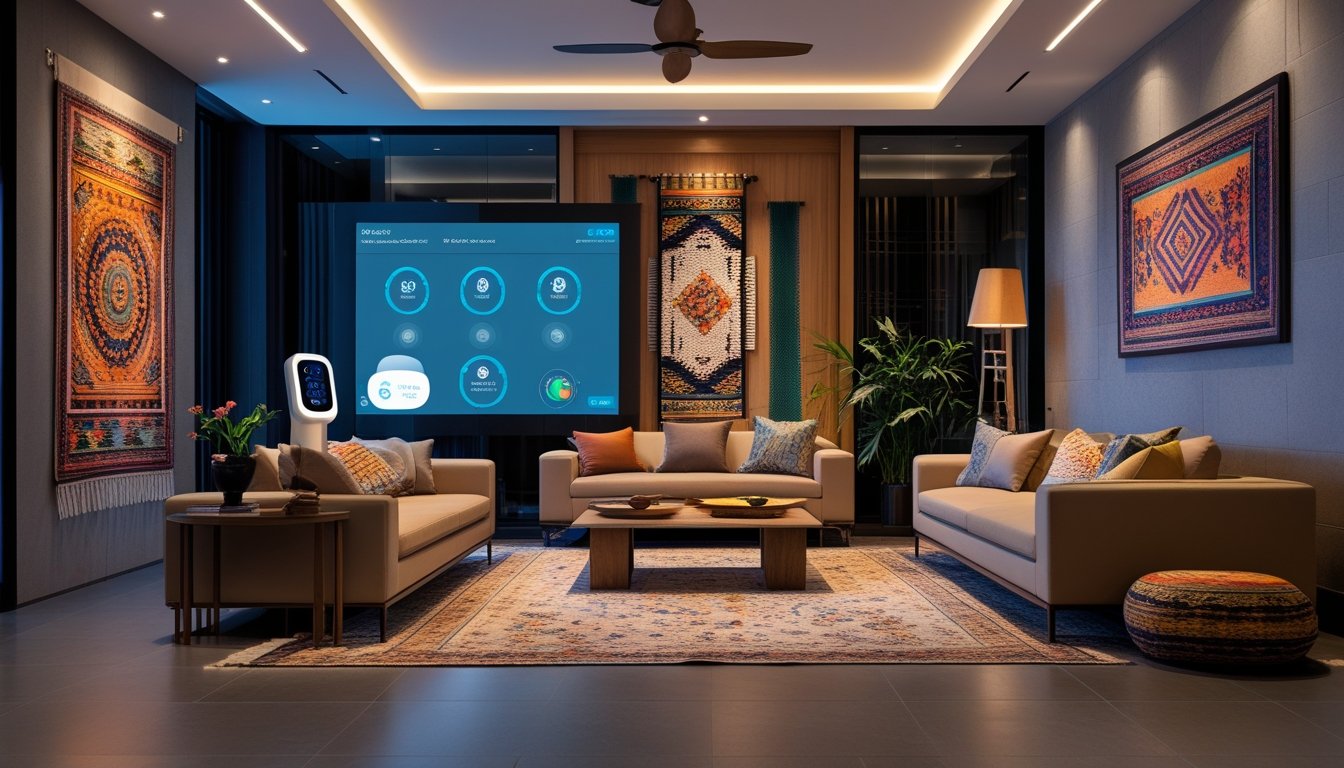
Kamu sering berada di ruang yang penuh gaya dan teknologi, tapi merasa ada yang tidak nyambung. Ketika interior, teknologi, dan budaya berbicara bahasa yang sama, ruang itu jadi mudah dipakai, terasa akrab, dan mendukung aktivitas sehari-hari. Satu bahasa desain dan teknologi yang selaras dengan budaya lokal membuat ruang lebih fungsional dan bermakna bagi siapa pun yang menggunakannya.
Artikel ini menunjukkan cara menyelaraskan elemen visual, cara pakai teknologi, dan nilai budaya sehingga setiap pilihan desain dan fitur digital punya alasan jelas. Kamu akan menemukan langkah praktis untuk menciptakan ruang yang tidak hanya tampak modern, tetapi juga menghormati kebiasaan dan identitas komunitas.
Poin Penting
- Menggabungkan gaya, fungsi, dan konteks budaya membuat ruang lebih relevan.
- Menyatukan antarmuka teknologi dan bahasa desain memudahkan penggunaan sehari-hari.
- Mempertahankan identitas lokal saat berinovasi meningkatkan rasa kepemilikan.
Menyatukan Interior, Teknologi, dan Budaya Lewat Bahasa

Bahasa berfungsi sebagai jembatan praktis antara bentuk ruang, alat digital, dan nilai-nilai masyarakat. Ia membantu desainer, pengembang, dan komunitas saling memahami tujuan, simbol, dan aturan penggunaan ruang serta teknologi.
Peran bahasa dalam menyatukan keanekaragaman interior dan budaya
Bahasa menyampaikan makna simbolik pada elemen interior seperti motif, warna, dan tata letak.
Saat desainer memakai istilah lokal yang dipahami pengguna, pilihan material dan ornamen lebih sesuai dengan konteks budaya.
Contoh konkret: penggunaan istilah tradisi Banjar saat menjelaskan pola kain memandu pemilihan motif pada dinding atau tekstil sehingga penghuni merasa dikenali.
Bahasa juga memfasilitasi dialog lintas disiplin—arsitek, antropolog, dan pengrajin—agar fungsi ruang tidak mereduksi nilai budaya.
Daftar singkat peran bahasa:
- Menjelaskan simbol lokal agar diterjemahkan ke desain.
- Menyatukan istilah teknis dan istilah tradisional.
- Memastikan fungsi ruang sesuai ritual dan kebiasaan.
Pengaruh nilai budaya terhadap desain dan komunikasi interior
Nilai budaya menentukan prioritas ruang: privasi, keramahan, atau ritus bersama.
Ketika nilai kolektif tinggi, desain akan menonjolkan area komunal; bila nilai individual lebih kuat, ruang pribadi diperkuat.
Komunikasi interior harus memakai kosakata yang mencerminkan nilai tersebut.
Misalnya, tanda arah, label ruang, dan antarmuka digital di ruang publik harus memakai bahasa yang sopan dan konteks-kultural agar pengguna paham dan nyaman.
Praktik terbaik:
- Gunakan padanan istilah lokal untuk instruksi ruang.
- Libatkan tokoh budaya saat merumuskan pesan visual dan verbal.
- Uji desain dengan kelompok budaya berbeda sebelum produksi massal.
Konteks bahasa dalam adaptasi teknologi digital di ranah budaya
Bahasa menentukan bagaimana teknologi diserap dalam kehidupan sehari-hari.
Antarmuka berbahasa lokal meningkatkan akses, terutama untuk konten budaya seperti cerita lisan dan arsip tradisi.
Saat mengembangkan aplikasi atau realitas virtual untuk pelestarian budaya, istilah yang dipilih harus akurat secara budaya dan teknis.
Kesesuaian konteks budaya mencegah kesalahan interpretasi dan menjaga otentisitas konten.
Poin implementasi:
- Terjemahan literal digabungkan dengan catatan budaya.
- Gunakan terminologi yang sudah dipakai komunitas agar adopsi cepat.
- Sediakan mode bahasa ganda: teknis untuk profesional, naratif untuk publik umum.
Bahasa Sebagai Jembatan Identitas Budaya di Tengah Inovasi Digital
Bahasa mengikat nilai, ingatan, dan praktik sehari-hari menjadi satu identitas. Teknologi menawarkan cara baru menyimpan, mengajar, dan menyebarkan warisan budaya tanpa menghapus bentuk tradisional.
Pentingnya identitas budaya dalam era teknologi
Identitas budaya memberi kerangka nilai yang membentuk perilaku dan cara berpikir suatu komunitas. Ketika Bahasa Indonesia dan bahasa daerah seperti Bahasa Jawa tetap hidup, mereka menyalakan praktik lokal—pantun, upacara, dan tata krama—yang tidak tercermin hanya lewat data digital.
Teknologi mempercepat perubahan peradaban. Jika identitas budaya tidak diperkuat lewat kebijakan, pendidikan, dan ruang publik berbahasa lokal, ada risiko homogenisasi budaya. Untuk itu, pengelola kebijakan dan komunitas lokal perlu menetapkan standar penggunaan bahasa di media publik, layanan pemerintah, dan konten digital.
Pendidikan bahasa dan literasi digital untuk pelestarian budaya
Pendidikan bahasa harus memasukkan materi praktis: membaca naskah tradisional, menulis cerita lokal, dan praktik berbicara formal serta non-formal. Kurikulum dapat menambahkan modul Bahasa Indonesia dan bahasa daerah bersama keterampilan literasi digital.
Literasi digital mengajarkan cara membuat konten yang menjaga konteks budaya—misalnya metadata yang menyertakan asal cerita, terjemahan, dan penjelasan adat. Guru dan pembuat konten perlu pelatihan rutin tentang hak cipta budaya, etika publikasi, dan cara menggunakan platform digital untuk edukasi tanpa merusak makna asli.
Transformasi pelestarian budaya melalui teknologi digital
Teknologi memberi alat konkret: repositori audio untuk dialek, aplikasi pembelajaran interaktif, dan platform realitas virtual yang merekonstruksi upacara tradisional. Proyek seperti museum virtual atau koleksi cerita berbahasa daerah memudahkan akses bagi generasi muda.
Namun transformasi harus menjaga kualitas data budaya. Standar dokumentasi, kolaborasi dengan penutur asli, dan format terbuka membuat warisan budaya lebih tahan lama. Organisasi budaya dapat bekerja sama dengan startup AI untuk mengembangkan model yang paham variasi bahasa Indonesia dan dialek lokal, sehingga pelestarian bahasa dan kebudayaan berjalan seimbang dengan inovasi teknologi.
by Melvin Halpito | Apr 1, 2026 | Article
Kamu bisa merancang kantor yang benar-benar mendukung alur kerja tim dengan memetakan perjalanan pengguna dari awal hingga akhir. Dengan memahami langkah, kebutuhan, dan hambatan yang dialami orang di kantor, kamu bisa menata ruang, alur, dan layanan yang mengurangi gesekan dan meningkatkan produktivitas. Tulisan ini akan menunjukkan cara praktis untuk menyesuaikan ruang kerja dengan perilaku nyata orang yang menggunakannya.
Artikel ini akan membawa kamu melalui ide desain yang fokus pada pengalaman pengguna, contoh titik sentuh penting di kantor, dan tindakan sederhana yang langsung bisa diterapkan. Ikuti langkah-langkah yang membantu tim bekerja lebih lancar, merasa lebih nyaman, dan menyelesaikan tugas lebih cepat.
Ringkasan Inti
- Identifikasi langkah dan kebutuhan pengguna untuk mendesain ruang yang tepat.
- Sesuaikan elemen fisik dan layanan kantor untuk mengurangi hambatan kerja.
- Terapkan perubahan kecil yang memberi dampak langsung pada kenyamanan dan produktivitas.
Prinsip Dasar Merancang Kantor Sesuai Journey Pengguna
Ruang kantor harus mendukung setiap tahap interaksi pengguna dengan layanan atau produk. Desain harus memetakan touchpoint, mengurangi hambatan, dan memperkuat momen penting yang meningkatkan kepuasan pengguna dan pelanggan.
Pengertian Journey Pengguna dan Perbedaannya dengan Customer Journey
Journey pengguna fokus pada bagaimana seseorang berinteraksi dengan produk digital atau layanan selama tugas tertentu. Ia melihat alur pengguna (user journey) pada tingkat tugas: langkah yang diambil, UI/UX yang ditemui, dan rasa yang muncul saat menyelesaikan pekerjaan.
Customer journey lebih luas. Ia memasukkan konteks pemasaran, pembelian, dan hubungan jangka panjang dengan merek. Perbedaan penting: user journey menilai pengalaman pengguna saat menggunakan produk; customer journey menilai seluruh pengalaman pelanggan termasuk pra- dan pasca-pembelian.
Desainer kantor memakai user journey untuk mengatur ruang fisik yang mendukung aktivitas digital—misalnya area fokus untuk pengguna baru yang butuh onboarding, atau ruang kolaborasi dekat touchpoints layanan pelanggan. Ini membantu mencocokkan fungsi ruang dengan kebutuhan nyata pengguna.
Pentingnya Memahami Journey Pengguna dalam Desain Kantor
Memahami journey pengguna membantu menempatkan touchpoints fisik dan digital pada lokasi yang paling relevan. Ruang resepsionis, demo produk, stasiun kerja, dan ruang rapat disusun berdasarkan alur penggunaan sehingga mengurangi waktu perpindahan dan kebingungan.
Desain yang berdasarkan journey meningkatkan kepuasan pengguna dan pelanggan. Contoh: jalur masuk yang jelas untuk pelanggan baru mempercepat onboarding; area yang tenang untuk sesi uji produk memperbaiki kualitas riset user experience. Tim juga bisa mengukur dan memperbaiki pain points lebih cepat.
Prinsip ini mengarah pada keputusan konkret: tata letak meja, penempatan layar demo, signage untuk touchpoints, dan akustik yang mendukung fokus. Semua perubahan difokuskan pada perbaikan pengalaman pengguna dan hasil produk digital.
Tahapan Journey Pengguna: Dari Awareness hingga Retensi
Awareness: Ruang publik dan branding di lobi berperan sebagai touchpoint pertama. Materi visual dan demo singkat membantu calon pengguna mengetahui produk dan layanan.
Consideration & Onboarding: Area demo, ruang presentasi, dan workstation uji digunakan untuk memberi pengalaman hands-on. Desain harus memudahkan pengguna baru menemukan panduan, bantuan staf, dan akses ke UI/UX produk.
Conversion & Use: Stasiun kerja yang ergonomis dan konektivitas cepat mendukung penggunaan produk sehari-hari. Touchpoints seperti kios layanan atau meja bantuan menyelesaikan kendala teknis dengan cepat.
Retention: Ruang komunitas, area pelatihan, dan ruang feedback membantu menjaga kepuasan pelanggan. Fasilitas untuk sesi review UX dan user journey mapping memungkinkan tim memperbaiki pengalaman dan mengurangi pain points.
Langkah-Langkah Merancang Kantor Berdasarkan Journey Pengguna
Langkah ini fokus pada pemahaman pengguna, memetakan perjalanan mereka, melibatkan tim lintas fungsi, dan menata ruang serta proses agar mendukung tujuan pengguna. Setiap langkah menghubungkan data penelitian dengan keputusan desain yang konkret.
Mengenal dan Membuat Persona Pengguna
Tim mulai dengan riset kualitatif dan kuantitatif untuk membuat persona pengguna. Mereka mengumpulkan data demografis, tugas utama, motivasi pengguna, serta hambatan yang sering ditemui. Gunakan wawancara, survei singkat, dan data analitik kunjungan agar persona mencerminkan perilaku nyata.
Setiap persona harus mencakup: tujuan utama (mis. menyelesaikan meeting hybrid), motivasi pengguna (efisiensi, privasi), emosi kunci di titik tertentu (frustrasi saat sinyal lemah), dan skenario penggunaan. Sertakan empathy map untuk menangkap pikiran, perasaan, dan kebutuhan mereka.
Persona menjadi dasar keputusan tata ruang, fasilitas, dan alur layanan. Mereka membantu menentukan prioritas fitur ruang seperti zona tenang, ruang kolaborasi, atau titik pembayaran layanan kantor.
Pemetaan Journey Map: Identifikasi Pain Points dan Touchpoints
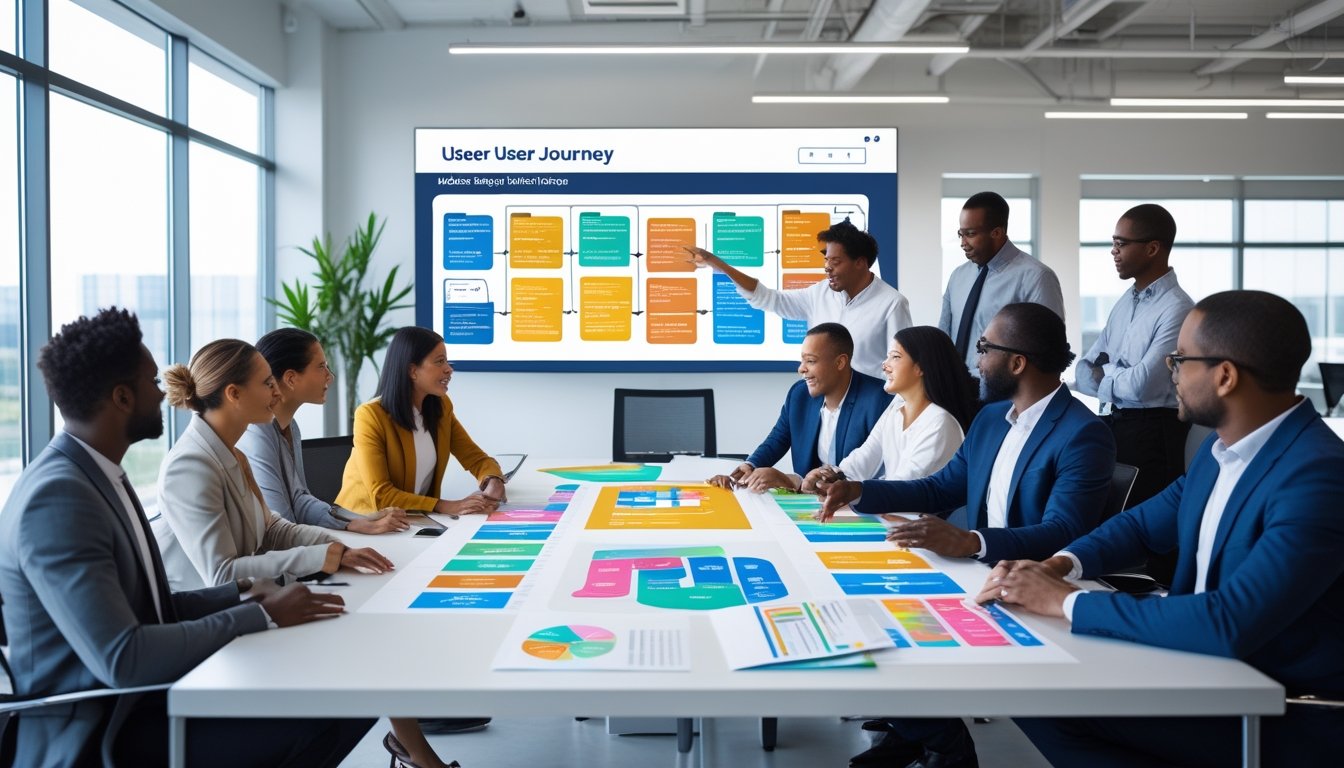
Buat user journey map untuk tiap persona dari tahap awareness hingga retensi. Petakan langkah konkret: datang ke kantor, mendaftar tamu, mencari ruang, menggunakan fasilitas, checkout layanan, dan meninggalkan gedung. Tandai touchpoints seperti resepsionis, aplikasi booking, papan penunjuk, dan pembayaran.
Identifikasi pain points spesifik pada setiap tahap: antrian panjang di resepsionis, kebingungan lokasi meeting, proses checkout yang rumit, atau metode pembayaran yang terbatas. Catat emosi pengguna dan kemungkinan tindakan mereka saat menghadapi masalah.
Gunakan format visual sederhana: garis waktu dengan kolom action, touchpoints, emotions, pain points, dan peluang perbaikan. Prioritaskan perbaikan yang berdampak langsung pada konversi dan retensi, mis. menyederhanakan proses checkout atau menambah opsi metode pembayaran.
Kolaborasi Tim dan Alat Pendukung dalam Perancangan (Figma, User Testing, dll)
Libatkan tim lintas fungsi: UX designer, manajemen fasilitas, TI, dan operasional. Mereka berkumpul untuk menyusun skenario dan solusi berdasar persona dan journey map. Tetapkan peran jelas untuk iterasi desain dan pengukuran hasil.
Gunakan alat seperti Figma untuk prototipe tata letak digital dan user flow aplikasi booking. Lakukan user testing dengan pengguna nyata untuk menguji alur booking, signage, dan proses checkout. Catat metrik: waktu penyelesaian tugas, tingkat error, dan skor kepuasan.
Siklus kerja harus singkat: prototipe → uji → perbaiki → uji ulang. Pastikan dokumentasi perubahan pada peta perjalanan pengguna sehingga semua anggota tim memahami efek pada pengalaman dan konversi.
Optimalisasi Ruang dan Proses untuk Meningkatkan Pengalaman dan Konversi
Desain ruang berdasarkan temuan journey map. Contoh tindakan: tempatkan meja resepsionis dekat pintu untuk mengurangi waktu orientasi; sediakan signage yang konsisten untuk meminimalkan kebingungan; dan buat zona transisi dari area publik ke ruang tenang.
Perbaiki proses digital: sederhanakan form pendaftaran tamu, tambahkan opsi metode pembayaran di proses checkout, dan integrasikan sistem booking dengan kalender tim. Hal ini mengurangi friction dan meningkatkan retensi serta loyalitas pelanggan.
Pantau hasil dengan metrik: waktu penyelesaian proses, tingkat pengulangan kunjungan, dan konversi layanan berbayar. Terus ulangi pemetaan perjalanan pengguna untuk menemukan pain points baru dan mengoptimalkan user journey agar desain tetap user-centered.
by Melvin Halpito | Mar 31, 2026 | Article
Anda seringkali mengira pengalaman kerja dimulai dari kebijakan HR, tetapi kenyataannya terbentuk di ruang kerja setiap hari. Saat suasana, alat, dan hubungan antarrekan mendukung, karyawan merasa dihargai dan lebih terikat pada tujuan organisasi.
Pengalaman kerja yang nyata lahir dari interaksi sehari-hari di tempat kerja, bukan sekadar aturan di kertas. Perubahan kecil pada tata ruang, alur kerja, atau cara tim berkomunikasi bisa langsung meningkatkan motivasi dan produktivitas.
Mereka yang ingin memperbaiki pengalaman karyawan harus fokus pada lingkungan kerja yang konkret—bukan hanya menyusun kebijakan baru. Perhatikan hal-hal praktis yang memengaruhi hari kerja, dan dampaknya akan terlihat lebih cepat dan lebih nyata.
Poin Penting
- Pengalaman karyawan muncul dari interaksi harian di tempat kerja.
- Lingkungan fisik dan alat kerja memengaruhi keterikatan dan produktivitas.
- Perbaikan praktis di ruang kerja memberi dampak lebih cepat daripada kebijakan semata.
Employee Experience: Definisi dan Faktor Penentu
Employee experience mencakup semua interaksi karyawan dengan organisasi, mulai dari perekrutan hingga keluar. Faktor utama yang menentukan pengalaman ini meliputi lingkungan fisik, budaya perusahaan, dan praktik manajemen yang nyata di tempat kerja.
Apa Itu Employee Experience dan Pentingnya
Employee experience adalah keseluruhan persepsi dan emosi yang dirasakan karyawan selama bekerja di sebuah organisasi. Ini mencakup proses rekrutmen, onboarding, aktivitas sehari-hari, peluang pengembangan, hingga offboarding. Pengalaman kerja yang baik membuat karyawan lebih termotivasi, produktif, dan cenderung bertahan lebih lama.
Organisasi yang fokus pada pengalaman karyawan melihat dampak nyata: penurunan turnover, peningkatan kualitas layanan pelanggan, dan efisiensi biaya rekrutmen. HR dan manajemen perlu mengukur pengalaman ini lewat survei kepuasan, wawancara keluar, dan metrik keterlibatan untuk menemukan area perbaikan yang spesifik.
Peran Lingkungan Kerja dalam Pengalaman Karyawan
Lingkungan kerja meliputi ruang fisik, peralatan teknologi, dan suasana interaksi antar rekan kerja. Ruang yang terang, tenang, dan ergonomis mengurangi stres fisik dan meningkatkan konsentrasi. Teknologi yang berjalan lancar juga mengurangi hambatan kerja sehari-hari.
Budaya kerja di ruangan itu — misalnya norma komunikasi, dukungan atasan, dan kerja tim — sangat menentukan bagaimana karyawan merasakan hari kerja mereka. Perbaikan sederhana seperti area kolaborasi, ruang istirahat yang layak, dan kebijakan WFH yang jelas memberi efek langsung pada kesejahteraan dan produktivitas.
Perbedaan Employee Experience dan HR Policy
Kebijakan perusahaan (HR policy) adalah aturan tertulis: tunjangan, cuti, struktur gaji, dan prosedur disiplin. Employee experience adalah bagaimana aturan itu dirasakan dan dilaksanakan sehari-hari. Sebuah kebijakan baik bisa gagal jika pelaksanaannya buruk di lapangan.
Contoh: kebijakan fleksibilitas waktu resmi memberi opsi WFH, tapi jika manajer menolak tanpa alasan, pengalaman karyawan tetap buruk. Jadi organisasi perlu menyelaraskan kebijakan dengan praktik manajemen, budaya perusahaan, dan desain ruang kerja agar pengalaman karyawan menjadi nyata dan konsisten.
Membentuk Employee Experience Melalui Ruang Kerja
Ruang kerja memengaruhi suasana, cara orang berkolaborasi, dan seberapa mudah tugas diselesaikan. Pilihan desain, alat kolaborasi, dan kebijakan fleksibel di tempat kerja langsung berdampak pada kepuasan, produktivitas, dan kesejahteraan karyawan.
Desain dan Lingkungan Fisik Ruang Kerja
Desain menentukan interaksi sehari-hari. Pencahayaan alami, ventilasi baik, dan area istirahat yang layak menurunkan stres dan meningkatkan well-being. Meja yang dapat disesuaikan dan kursi ergonomis mengurangi keluhan kesehatan sehingga menurunkan absen.
Ruang terbuka memudahkan knowledge sharing, namun juga butuh ruang tenang untuk fokus. Oleh karena itu, perlu kombinasi: zona kolaborasi, bilik fokus, dan ruang temu santai. Warna dinding, tanaman, dan akustik juga memengaruhi mood dan konsentrasi.
Desain harus mendukung kerja fleksibel dan work-life balance. Ruang yang mudah diubah (modular) memungkinkan tim menyesuaikan area untuk proyek singkat atau pertemuan client. Hal ini membuat pengalaman kerja lebih personal dan fungsional.
Pengaruh Kolaborasi dan Teknologi di Ruang Kerja
Platform kolaborasi mengubah cara tim bekerja dalam ruang fisik dan jarak jauh. Alat seperti ruang digital untuk dokumen bersama, chat tim, dan video conference mempercepat pengambilan keputusan dan penyebaran informasi.
Teknologi ruang—layar presentasi mudah pakai, sistem pemesanan ruang, dan integrasi kalender—mengurangi hambatan operasional. Ini membuat pertemuan lebih efektif dan menghemat waktu karyawan sehingga produktivitas naik.
Integrasi antara ruang fisik dan platform kolaborasi penting. Misalnya, ruang meeting dengan kamera dan mic terintegrasi memudahkan partisipasi remote. Koneksi yang lancar mendorong knowledge sharing lintas tim dan menjaga keterlibatan karyawan.
Dampak Ruang Kerja terhadap Kepuasan dan Produktivitas
Ruang kerja yang dirancang dengan baik menaikkan kepuasan karyawan secara langsung. Karyawan merasa dihargai ketika perusahaan menyediakan fasilitas yang mendukung tugas dan kesejahteraan mereka.
Produktivitas meningkat bila gangguan berkurang dan alat kerja mendukung alur tugas. Ketersediaan zona fokus meningkatkan quality time bekerja, sementara area kolaboratif mempercepat inovasi dan penyelesaian masalah.
Kepuasan kerja juga terkait fleksibilitas. Ketika perusahaan mengizinkan kerja fleksibel dan menyediakan ruang untuk berbagai mode kerja, karyawan lebih mudah menyeimbangkan pekerjaan dan kehidupan pribadi. Ini menurunkan turnover dan memperbaiki retensi talenta.
Studi Kasus: Airbnb, IBM Smarter Workforce, dan Workhuman
Airbnb merancang kantor sebagai cerminan kultur perusahaan. Ruang tematik, area kolaborasi, dan fasilitas santai memudahkan karyawan berinteraksi dan berbagi ide. Hasilnya, pengalaman karyawan lebih kohesif dan mendukung inovasi produk.
IBM Smarter Workforce memadukan data EX dengan desain ruang. IBM menggunakan survei dan analitik untuk menentukan konfigurasi ruang yang meningkatkan keterlibatan. Mereka juga menggabungkan teknologi cerdas untuk memonitor penggunaan ruang dan menyesuaikan layout berdasarkan pola kerja.
Workhuman fokus pada recognition dan well-being melalui ruang dan platform. Program pengakuan publik mereka dipadukan dengan event ruang kerja untuk memperkuat hubungan antar-karyawan. Kombinasi ini meningkatkan kepuasan karyawan dan budaya yang mendukung kolaborasi.
Contoh-contoh ini menunjukkan bahwa kombinasi lingkungan fisik, platform kolaborasi, dan kebijakan kerja fleksibel menghasilkan manfaat nyata: peningkatan kepuasan karyawan, produktivitas, dan praktik knowledge sharing yang lebih baik.
by Melvin Halpito | Mar 31, 2026 | Article
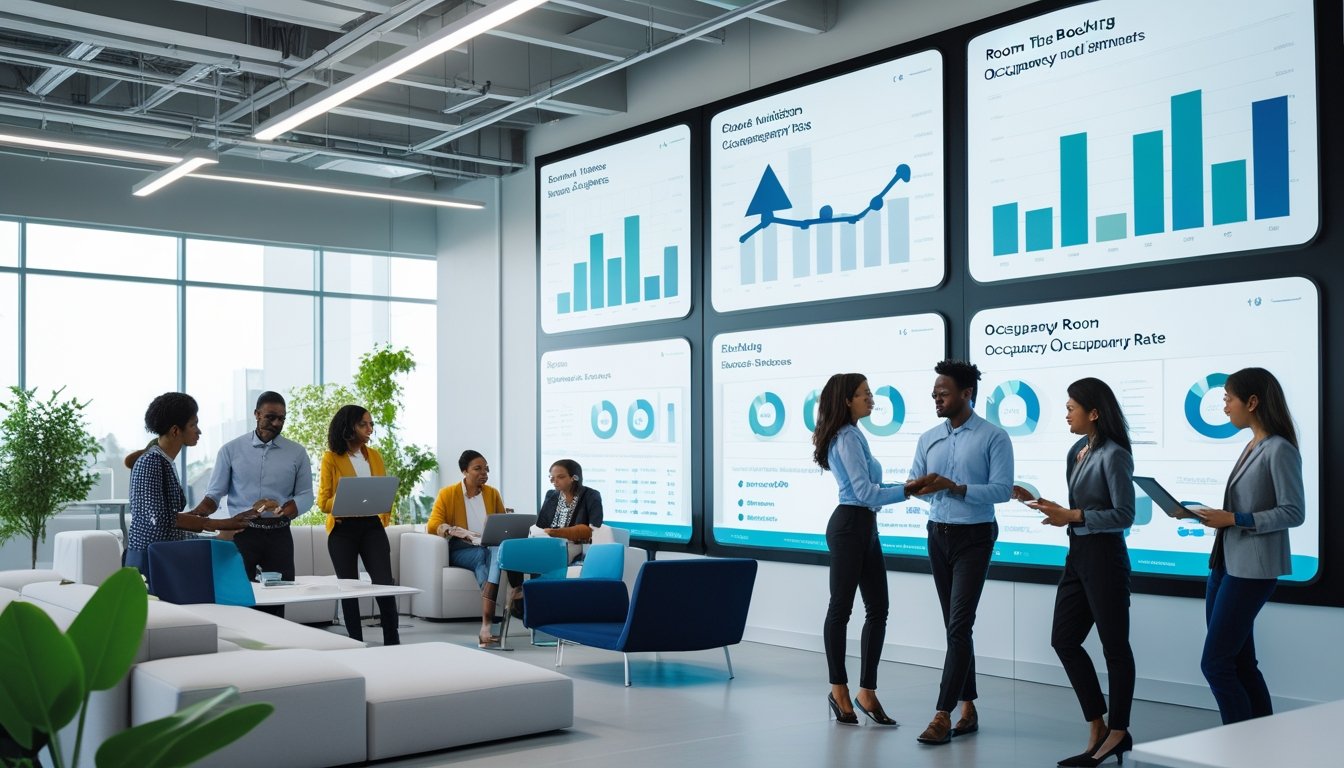
Kamu ingin tahu seberapa efektif ruang kerja dan alat kolaborasi mendukung tujuan tim. Gabungkan metrik utilisasi, booking, dan okupansi dengan data badge untuk melihat bukan hanya seberapa sering ruang dipakai, tetapi juga siapa yang berkolaborasi dan dampak nyata pada produktivitas.
Dengan pendekatan ini, kamu bisa menemukan ruang yang terbuang, pola kolaborasi yang kuat, dan peluang untuk meningkatkan nilai bisnis dari layout dan kebijakan ruang. Artikel ini akan menunjukkan cara menghubungkan data teknis dan perilaku nyata sehingga keputusan tentang ruang dan alat kolaborasi jadi lebih tepat.
Intisari Utama
- Ukur penggunaan ruang untuk menemukan kapasitas dan pemborosan.
- Padukan data reservasi dengan okupansi untuk melihat pola nyata pemakaian.
- Gunakan data badge untuk menilai siapa berkolaborasi dan dampaknya pada bisnis.
Metrik Utilisasi Ruang, Booking, dan Okupansi
Bagian ini menjelaskan cara mengukur penggunaan ruang, pola booking, dan tingkat okupansi yang membantu pengambilan keputusan operasional. Pembaca akan menemukan metrik praktis, cara pengukuran, dan indikator kinerja utama yang dipakai untuk meningkatkan efisiensi dan retensi pengguna.
Konsep Utilisasi Ruang dan Kepentingannya
Utilisasi ruang berarti persentase waktu atau kapasitas ruang yang dipakai dibandingkan kapasitas tersedia. Organisasi melihatnya sebagai indikator kinerja utama (IKU) untuk menilai efisiensi operasi dan menurunkan biaya tetap.
Fokusnya bukan hanya apakah ruang terpakai, tapi kapan dan untuk siapa. Data penggunaan per jam, jenis kegiatan, dan segmentasi pengguna memberi gambaran terperinci. Informasi ini mendukung kebijakan pengalokasian ruang, investasi fasilitas, dan penjadwalan ulang untuk memaksimalkan nilai ruang.
Utilisasi ruang juga mempengaruhi KPI lain seperti kepuasan pengguna, biaya per penggunaan, dan pendapatan dari sewa ruang. Alat manajemen proyek dan sistem pemesanan mempermudah pemantauan dan pelaporan metrik ini secara otomatis.
Metode Pengukuran Tingkat Utilisasi Ruang
Ada beberapa metode yang umum dipakai untuk mengukur utilisasi: sensor kehadiran, data booking, dan pengamatan manual.
- Sensor dan IoT: mencatat kehadiran nyata setiap menit atau jam. Cocok untuk ruang terbuka dan kantor fleksibel.
- Data booking: mengukur waktu terpesan di kalender. Berguna untuk ruang rapat yang butuh penjadwalan rapat.
- Survei dan audit: mengonfirmasi tujuan penggunaan dan kepuasan pengguna.
Rumus sederhana: Utilisasi (%) = (Jam Terpakai / Jam Tersedia) × 100. Untuk akurasi, bandingkan data booking dengan data sensor untuk mengidentifikasi no-show dan underuse.
Laporan harian, mingguan, dan bulanan membantu pemantauan dan pengambilan keputusan berdasarkan data. Integrasikan metrik ke dasbor KPI untuk tindak lanjut cepat.
Indikator Utama: Booking, Okupansi, dan Retensi Pengguna
Booking mengukur jumlah pemesanan dan pola waktu. Metode pelaporan meliputi: jumlah booking per hari, rasio no-show, dan rata-rata durasi booking. Data ini berguna untuk optimasi penjadwalan ruang rapat dan pengaturan tarif bila ada.
Okupansi (occupancy) menunjukkan persentase kapasitas terisi pada periode tertentu. Rumus umum: Occupancy (%) = (Jumlah Pengguna atau Kamar Terisi / Kapasitas Total) × 100. Okupansi tinggi tidak selalu berarti efisien; perlu dikorelasikan dengan jenis kegiatan dan pendapatan per ruang.
Retensi pengguna mengukur seberapa sering pengguna kembali memakai ruang atau sistem booking. KPI retensi termasuk repeat bookings per pengguna dan churn rate. Retensi tinggi menandakan nilai layanan dan efektivitas sistem manajemen ruang.
Gabungkan metrik operasional ini dalam satu dasbor untuk pemantauan dan pelaporan terintegrasi. Keputusan berbasis data akan meningkatkan efisiensi, menurunkan biaya, dan memberi arah pada perbaikan layanan.
Menghubungkan Badge, Kolaborasi, dan Dampak Nilai Bisnis
Badge, sistem booking, dan metrik okupansi bekerja bersama untuk merekam perilaku tim, memicu umpan balik, dan mengukur efek pada produktivitas serta pendapatan. Data ini membantu memetakan hubungan antara kepuasan pelanggan, retensi, dan nilai ekonomi seperti CLV dan margin laba kotor.
Menetapkan dan Mengevaluasi Metrik Kolaborasi
Organisasi harus memilih metrik yang konkret: frekuensi pertemuan lintas-tim, durasi kolaborasi dalam ruang bersama, dan rasio booking yang berujung pada hasil (mis. keputusan produk selesai). Metrik ini dipasangkan dengan indikator hasil seperti produktivitas tim, waktu siklus proyek, dan perubahan CLV untuk melihat dampak bisnis nyata.
Tetapkan tolok ukur awal sebelum intervensi. Lakukan evaluasi berkala—mis. triwulan—menggunakan data booking dan okupansi untuk mengecek apakah kolaborasi meningkatkan KPI seperti retensi pelanggan dan CSAT. Gunakan pelajaran yang dipetik untuk menyempurnakan aturan booking dan tata ruang.
Libatkan stakeholder lintas fungsi: HR, Customer Success, dan Finance. HR mengaitkan metrik kolaborasi ke evaluasi kinerja karyawan. Customer Success mengamati dampak pada umpan balik pelanggan dan retensi. Finance memonitor efek pada ROI dan margin laba kotor.
Peran Badge dan Umpan Balik dalam Peningkatan Kinerja
Badge digital atau kartu akses mencatat siapa hadir dan kapan, memungkinkan pengukuran kontribusi individu dalam sesi kolaborasi. Data badge bisa mengungkap pola partisipasi yang berkorelasi dengan kinerja karyawan dan outcome proyek.
Umpan balik langsung setelah sesi—survei CSAT singkat atau penilaian internal—menghubungkan pengalaman kolaborasi ke kepuasan pelanggan dan tim. Gabungkan umpan balik ini dengan data badge untuk menilai kualitas interaksi, bukan hanya kuantitasnya.
Hasil umpan balik dipakai untuk program peningkatan: pelatihan, redisain ruang, atau aturan booking yang menstimulasi pertemuan bernilai. Sistem ini mendukung pelajaran yang dipetik, sehingga organisasi mengulangi praktik yang meningkatkan produktivitas dan menurunkan churn pelanggan.
Dampak Metrik Terpadu terhadap Produktivitas dan ROI
Menggabungkan data badge, booking, dan okupansi memungkinkan pengukuran hubungan langsung antara aktivitas kolaborasi dan hasil bisnis. Contohnya: peningkatan frekuensi kolaborasi yang terukur dapat menurunkan waktu siklus produk dan menaikkan retensi pelanggan, sehingga meningkatkan CLV.
Analisis ROI memakai metrik seperti penghematan waktu kerja, peningkatan throughput, dan perubahan margin laba kotor. Jika kolaborasi mempercepat penyelesaian fitur yang meningkatkan konversi, ROI terlihat dari pendapatan tambahan terhadap biaya fasilitas dan program kolaborasi.
Pantau metrik leading dan lagging. Leading: partisipasi badge, tingkat booking efektif. Lagging: CSAT, retensi pelanggan, laba atas investasi. Gabungkan keduanya untuk membuat keputusan berbasis data yang menjaga produktivitas dan mendukung peningkatan CLV serta profitabilitas.
by Melvin Halpito | Mar 30, 2026 | Article
Kantor bukan lagi cuma tempat duduk; itu adalah panggung interaksi yang mempengaruhi bagaimana orang kerja, berkolaborasi, dan merasa dihargai. Ketika Anda masuk ke ruang kerja, Anda membawa harapan untuk koneksi, produktivitas, dan rasa aman—bukan sekadar tugas yang harus diselesaikan.
Kantor berfungsi sebagai ruang sosial yang mendorong interaksi, kreativitas, dan fleksibilitas kerja. Menata kantor dengan area sosial, ruang privasi, dan alat kolaborasi digital membuat tim lebih cepat bertukar ide dan tetap terhubung, bahkan saat bekerja dari jarak jauh.
Ruang yang dirancang untuk hubungan manusia juga membantu menjaga keseimbangan antara kerja dan kehidupan pribadi serta membuka akses ke talenta lebih luas. Perubahan kecil dalam tata letak, kebijakan hybrid, dan budaya komunikasi bisa mengubah kantor menjadi pengalaman kerja yang lebih bermakna.
Hal-hal Penting
- Ruang kantor yang sosial meningkatkan interaksi dan kreativitas tim.
- Desain dan kebijakan hybrid membantu fleksibilitas kerja dan kesejahteraan.
- Kombinasi ruang fisik dan alat digital memperluas kolaborasi lintas lokasi.
Kantor sebagai Ruang Sosial dan Pengalaman Kerja Modern
Kantor kini berfungsi sebagai tempat interaksi, pembelajaran, dan budaya perusahaan. Ruang itu dirancang untuk mendukung kolaborasi, kenyamanan karyawan, dan aktivitas yang meningkatkan produktivitas.
Makna Ruang Sosial di Kantor
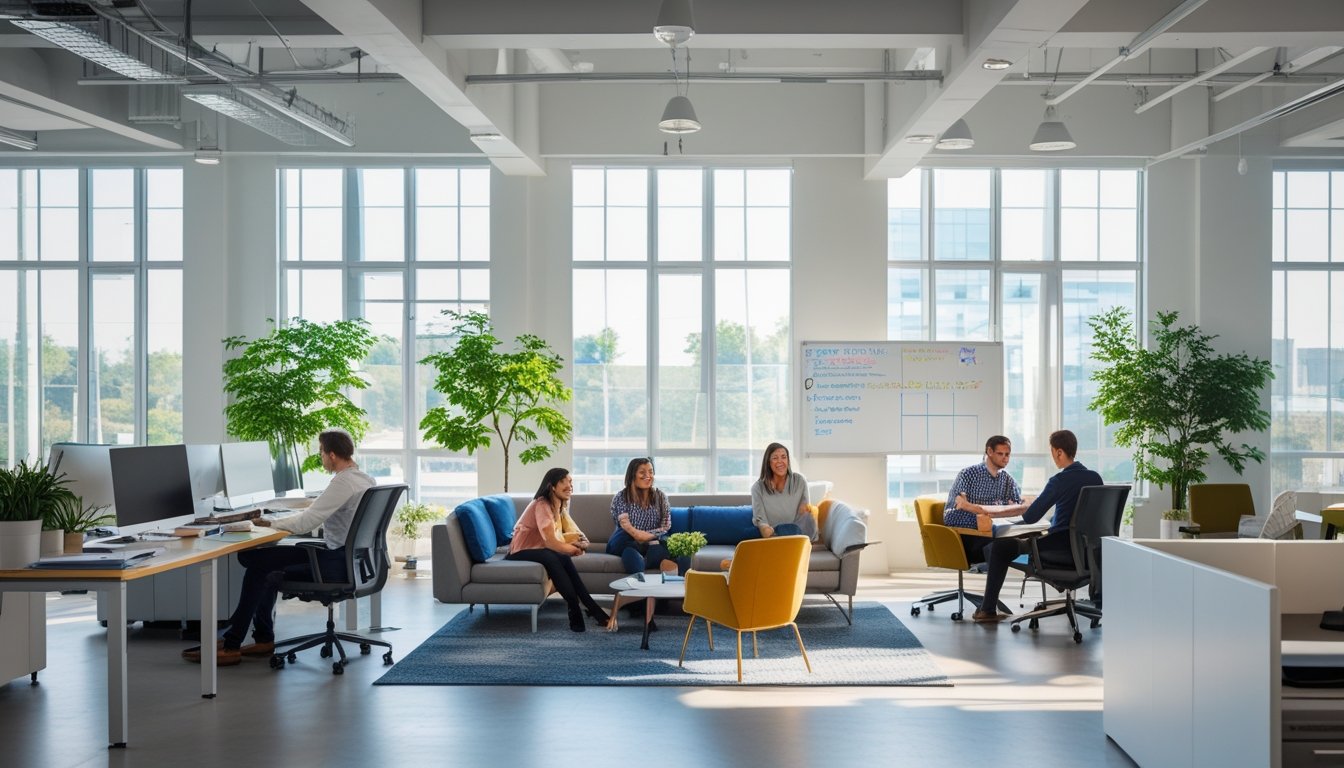
Ruang sosial di kantor adalah area di mana karyawan berinteraksi secara informal dan profesional. Contohnya meliputi lounge, pantry bersama, dan zona kolaborasi terbuka. Area ini memfasilitasi percakapan singkat, bertukar ide, dan hubungan antar-tim yang sulit tercipta lewat email atau rapat formal.
Interaksi di ruang sosial mempercepat penyelesaian masalah karena orang bisa berdiskusi langsung. Selain itu, ruang ini membantu membangun budaya perusahaan dan rasa memiliki. Ketika karyawan merasa terhubung, absensi cenderung turun dan keterlibatan kerja meningkat.
Desain ruang sosial harus memperhatikan akustik, pencahayaan, dan kenyamanan tempat duduk. Furnitur fleksibel dan titik pengisian daya memudahkan karyawan berpindah fungsi dari santai ke kerja cepat. Pengelolaan ruang yang baik juga mencakup aturan penggunaan agar area tetap ramah dan produktif.
Evolusi Desain dan Fungsi Kantor
Desain kantor bergeser dari sekadar meja baris ke pengelompokan fungsi. Saat ini banyak kantor menerapkan zona: fokus untuk pekerjaan individual, kolaborasi untuk tim, dan jeda untuk istirahat. Model hybrid mendorong transformasi ini karena kehadiran karyawan di kantor menjadi lebih terencana.
Teknologi melengkapi desain; sistem booking meja, layar presentasi di zona kolaborasi, dan sensor ruangan membantu alokasi ruang yang efisien. Perusahaan yang menerapkan desain berbasis aktivitas melihat penggunaan ruang lebih optimal dan biaya operasional turun.
Prinsip desain kini menekankan fleksibilitas dan inklusivitas. Ruang harus mudah diakses semua generasi karyawan dan mendukung berbagai gaya kerja. Dengan begitu, kantor berfungsi sebagai pangkalan budaya, bukan hanya tempat duduk.
Dampak Ruang Sosial terhadap Kesejahteraan Karyawan
Ruang sosial yang baik meningkatkan kesejahteraan karyawan secara fisik dan mental. Area untuk istirahat singkat atau bersosialisasi menurunkan stres dan memberi kesempatan rehat kognitif yang memperbaiki fokus. Karyawan yang memiliki akses ke ruang santai melaporkan kepuasan kerja lebih tinggi.
Interaksi sosial membantu membangun dukungan antar-rekan kerja. Hubungan positif memperkuat rasa aman psikologis sehingga orang lebih berani berbagi ide dan menerima umpan balik. Ini berdampak langsung pada pengalaman kerja dan keterlibatan karyawan.
Pengukuran sederhana seperti survei kepuasan, tingkat retensi, dan data penggunaan ruang dapat menunjukkan manfaat nyata. Investasi pada ruang sosial yang dirancang dengan baik sering kali kembali lewat produktivitas yang meningkat dan biaya rekrutmen yang menurun.
Mendorong Kolaborasi, Inovasi, dan Fleksibilitas di Lingkungan Kerja
Kantor harus memfasilitasi interaksi nyata, dukungan teknologi, dan pilihan kerja yang fleksibel agar ide bisa muncul dan tim tetap produktif. Ruang, kebijakan, dan alat harus selaras untuk mendukung kolaborasi, kerja hybrid, etika penggunaan teknologi, serta pertemuan yang efektif.
Peran Kolaborasi dalam Budaya Kantor
Kolaborasi memadukan keahlian berbeda untuk memecahkan masalah nyata. Ia mendorong percakapan lintas fungsi, misalnya antara tim produk, pemasaran, dan layanan pelanggan, agar keputusan berdasar data dan pengalaman pengguna.
Praktik yang efektif meliputi sesi ide terjadwal, papan ide bersama, dan waktu blok bebas gangguan untuk kerja mendalam. Pemimpin dapat memberi tugas lintas-tim dan tujuan bersama untuk mengikat kontribusi individu ke hasil nyata.
Ruang fisik juga penting: area terbuka untuk diskusi cepat dan bilik kecil untuk brainstorming fokus. Selain itu, budaya umpan balik yang konstruktif membantu ide berkembang tanpa menimbulkan konflik yang tidak perlu.
Kerja Hybrid dan Kerja Jarak Jauh: Adaptasi Ruang Kerja Masa Kini
Kerja hybrid menggabungkan hari di kantor dan hari kerja jarak jauh agar staf tetap terhubung dan fleksibel. Perusahaan perlu menata kebijakan jelas tentang siapa hadir kapan, serta memetakan ruang yang mendukung kehadiran episodik.
Desain kantor harus menyediakan hot desk, ruang kolaborasi yang bisa dipesan, dan ruang tenang untuk tugas fokus saat karyawan hadir. Untuk pekerja jarak jauh, standar teknis, alat kolaborasi daring, dan jadwal sinkronisasi membantu menjaga ritme kerja tim.
Manajemen harus mengukur keluaran kerja, bukan jam di tempat duduk. Pelatihan komunikasi jarak jauh dan aturan rapat hibrid memastikan partisipasi setara bagi yang bekerja dari rumah dan dari kantor.
Teknologi dan Etika dalam Ruang Sosial Kantor
Teknologi mempercepat kolaborasi—chat, papan digital, dan alat manajemen proyek menjaga alur kerja. Namun, penggunaan data dan pengawasan membutuhkan batas etis agar privasi karyawan tetap dihormati.
Perusahaan harus menetapkan kebijakan penggunaan alat, akses data, dan penyimpanan rekaman rapat. Transparansi tentang tujuan pengumpulan data dan siapa yang dapat mengaksesnya membangun kepercayaan.
Pelatihan etika teknologi membantu staf memahami batasan pengintaian digital dan penggunaan AI. Dengan begitu, teknologi menjadi pendukung hubungan sosial, bukan sumber kecemasan atau ketidakadilan.
Ruang Rapat dan Fasilitas Penunjang Interaksi
Ruang rapat harus dirancang untuk tujuan berbeda: rapat cepat, diskusi mendalam, dan presentasi formal. Satu ruang besar tidak cukup; variasi ukuran dan tata letak meningkatkan efektivitas pertemuan.
Fasilitas penting meliputi layar untuk peserta remote, whiteboard fisik dan digital, serta akustik yang baik. Sistem pemesanan daring mengurangi bentrokan jadwal dan memberi waktu persiapan yang jelas.
Penting juga menyediakan area informal di luar ruang rapat untuk percakapan santai yang sering memicu ide baru. Fasilitas ini memperkuat jaringan sosial dan menurunkan hambatan untuk kolaborasi lintas tim.











Recent Comments