
by Melvin Halpito | Mar 23, 2026 | Article
Workplaces now demand speed, flexibility, and clear communication. Companies need systems that connect people, data, and space without adding complexity. MLV Teknologi steps into this shift by designing smart workspaces that use integrated AV, control systems, and real-time monitoring tools.
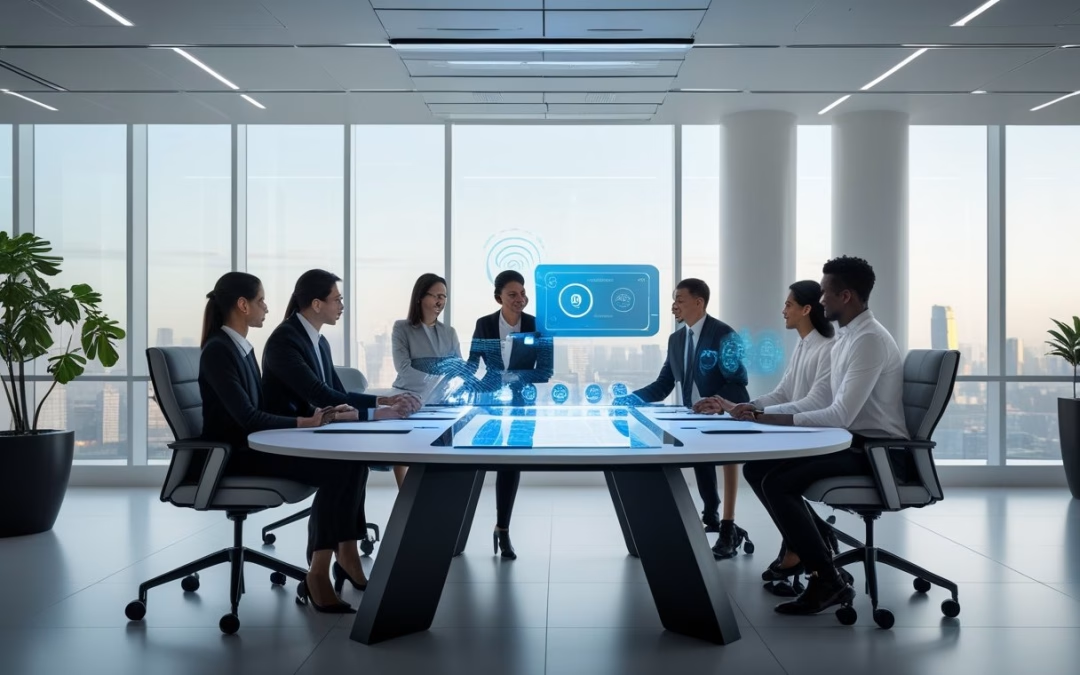
MLV Teknologi shapes the next generation of smart workspaces by integrating audio visual systems, IoT sensors, and centralized controls to help companies manage space, improve collaboration, and support faster decisions. Through partnerships and technology integration, it builds environments where teams can adjust lighting, temperature, displays, and meeting tools from one connected system.
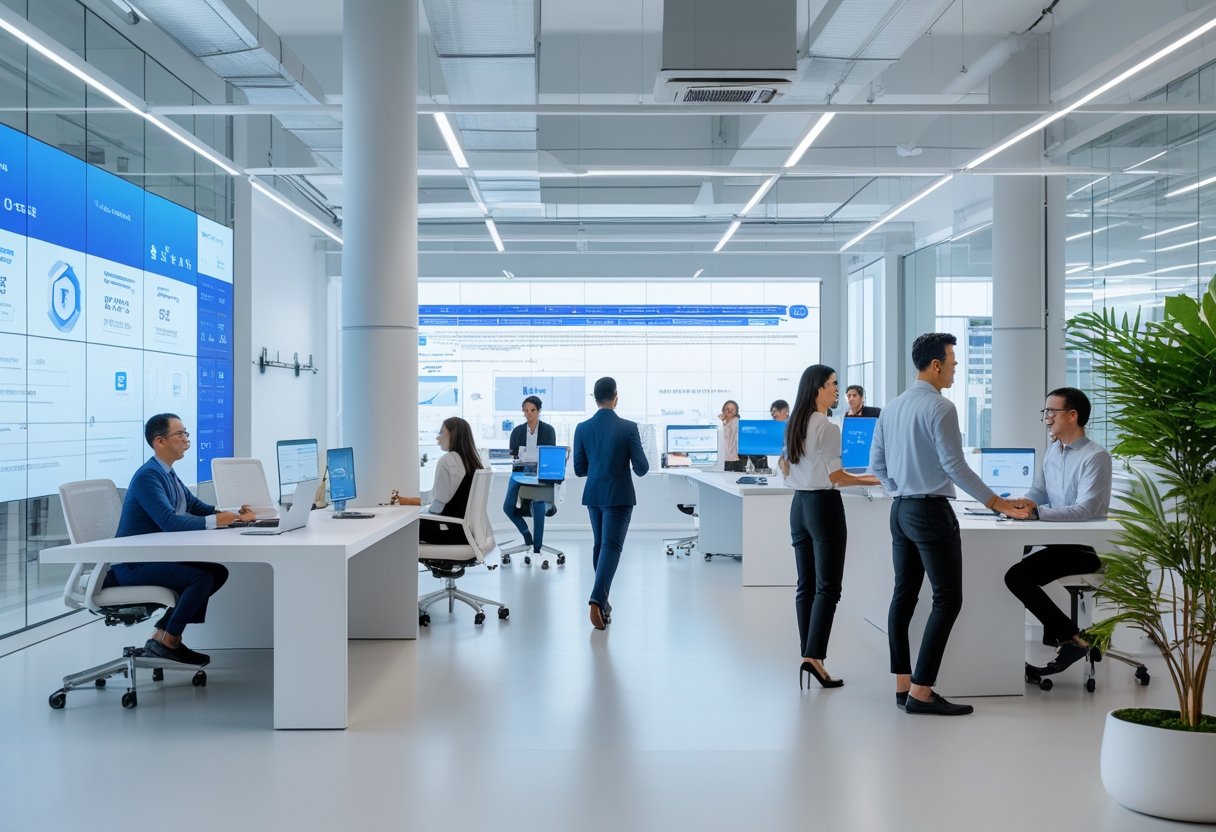
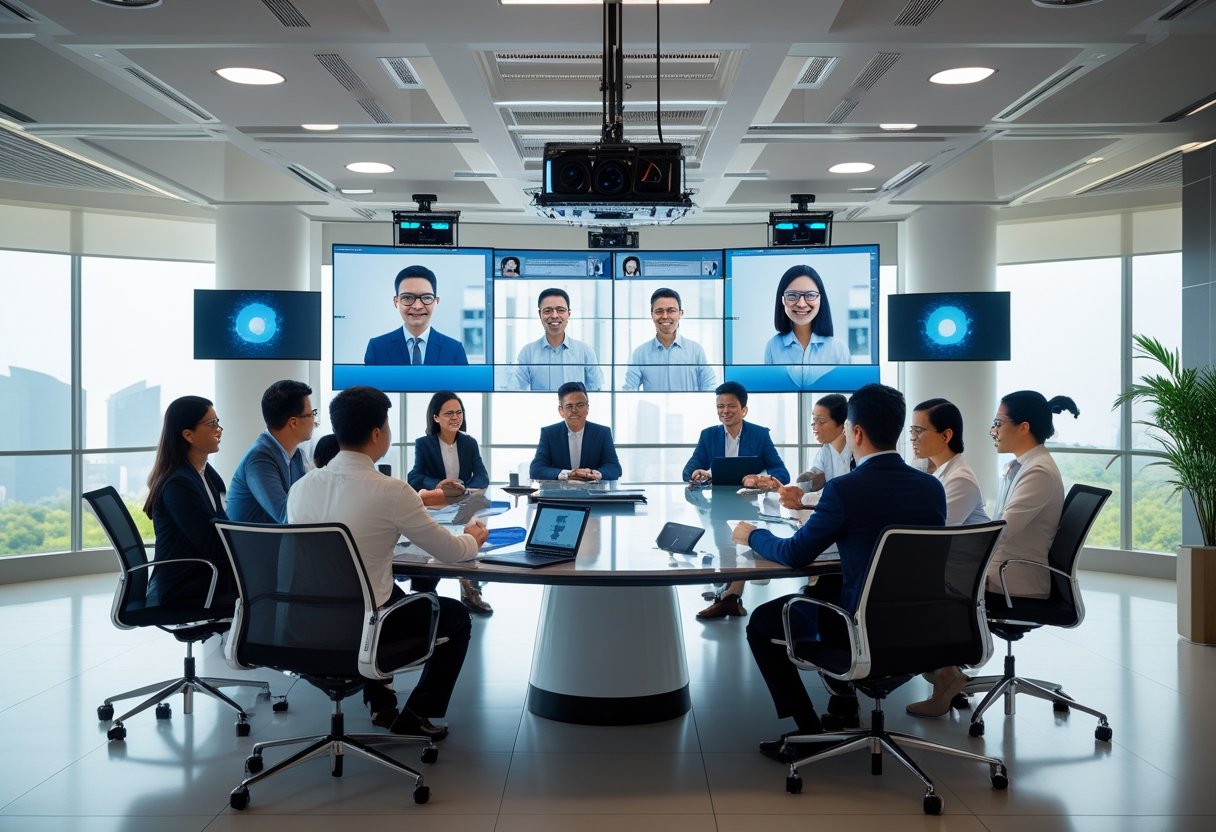
Its projects show how modern offices can support hybrid meetings, digital signage, and command centers that track data in real time. These solutions help organizations use office space more efficiently while keeping communication clear and reliable.
Key Takeaways
- MLV Teknologi integrates smart systems to improve how offices function.
- Its solutions connect AV, controls, and real-time data in one ecosystem.
- Modern workspace design now centers on flexibility, efficiency, and clear communication.
MLV Teknologi’s Innovations and Impact on Smart Workspaces

MLV Teknologi drives measurable change in how companies manage meetings, space, and daily operations. It combines integrated audio visual systems, real-time space data, and strong industry partnerships to build practical and scalable smart workspaces.
Integrated Audio Visual Solutions and Centralized Control
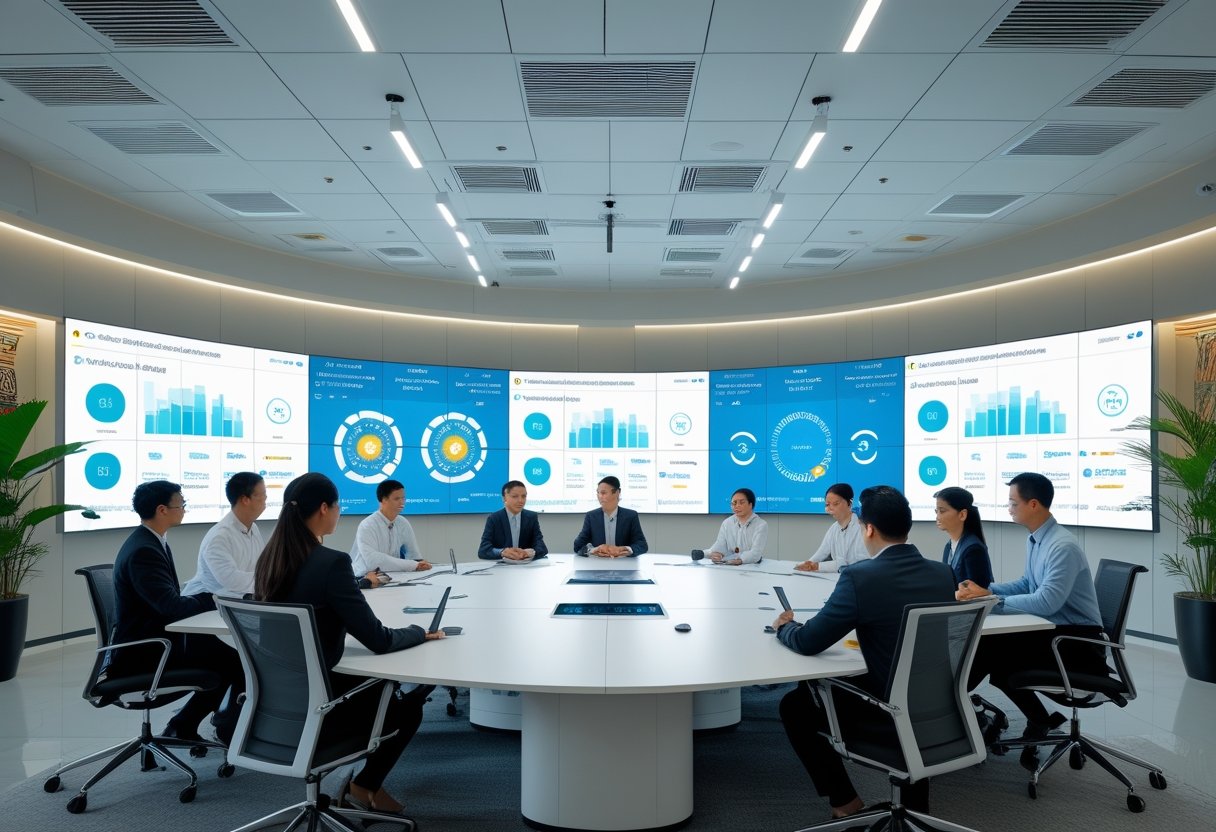
MLV Teknologi acts as an AV system integrator that connects devices into one controlled ecosystem. It designs smart office systems that link konferensi video, interactive flat panel displays, digital signage, and video wall setups under a single kontrol terpusat platform.
Through its expertise in integrating Crestron systems for smart office solutions, the company enables users to manage lighting, room booking, audio, and security from one interface. This setup reduces manual steps and supports faster meeting starts.
Its partnerships with brands such as Crestron, Extron, Atlona, Neat, and Absen strengthen system reliability. In command center environments and executive boardrooms, centralized control improves efisiensi operasional by cutting technical delays and simplifying device management.
Leaders like Melvin Halpito focus on practical system design. The goal is stable performance, clear video conferencing, and easy operation for daily users.
Real-Time Space Management and User Experience Enhancement
MLV Teknologi applies sensor and IoT systems to improve manajemen ruang. Real-time data helps companies track room use and reduce idle space.
As explained in its overview of MLV Teknologi and Smart Office solutions, the company enables businesses to monitor workspace usage and adjust layouts based on actual demand. This data-driven approach supports better planning and cost control.
Employees benefit from faster room booking and clearer availability displays through digital signage panels. Interactive flat panels and responsive conference systems improve meeting flow and reduce setup time.
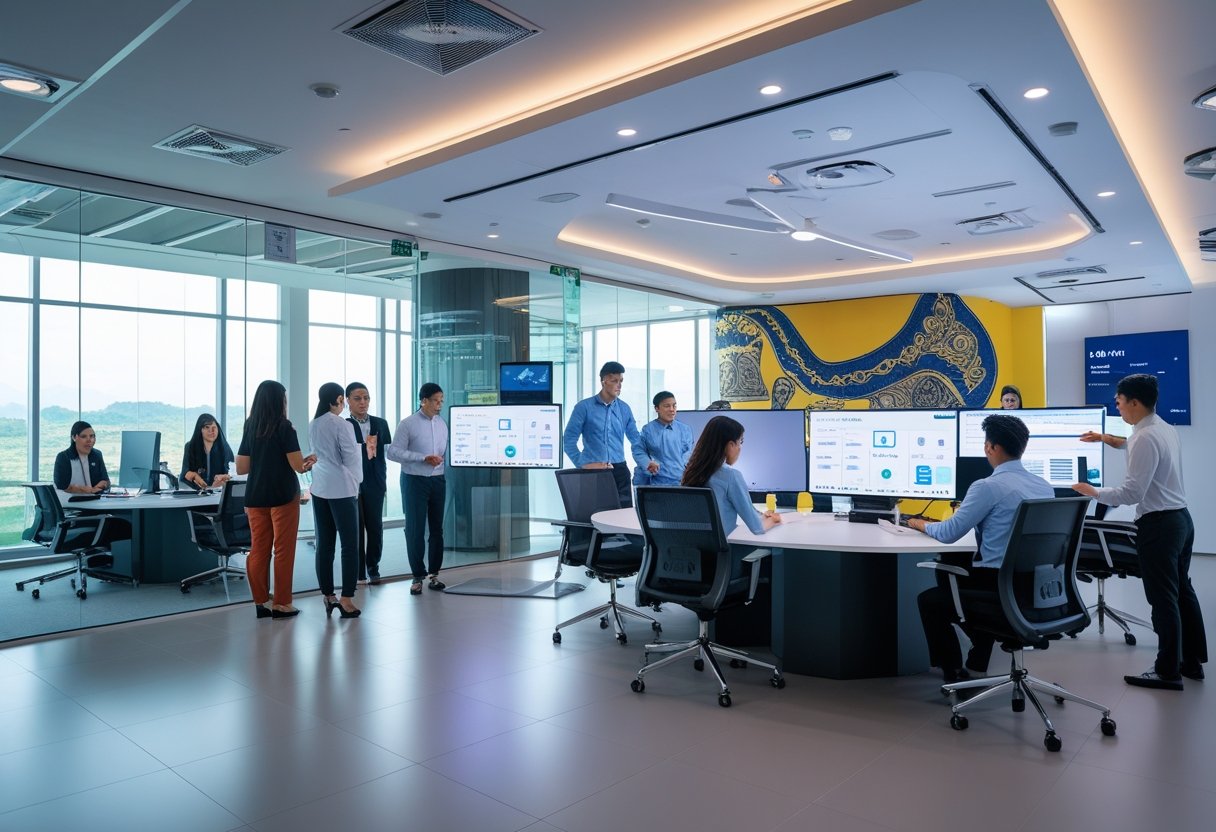
In smart workspace deployments for clients such as Bank UOB, Taspen Properti Indonesia, The Executive Center, and Aquila Data Indonesia, MLV Teknologi aligns technology with user behavior. The result is a ruang kerja pintar that supports comfort, accessibility, and consistent performance.
Collaboration with Industry Partners and Clients
MLV Teknologi builds its smart office ecosystem through active collaboration with global technology partners. It works closely with Crestron and Extron to deliver secure and scalable AV infrastructures.
Coverage by VRITimes on MLV Teknologi’s smart office approach highlights its focus on integrated systems that improve operational efficiency. These partnerships allow the company to combine automation, conferencing tools, and display technologies into unified platforms.
Client collaboration also shapes project outcomes. Stakeholders such as Stella Damayanti and Cecillia Kristywulan represent the type of decision makers who require reliable systems for high-traffic offices and premium commercial spaces.
By aligning technical standards with client goals, MLV Teknologi ensures each smart workspace supports security, flexibility, and long-term usability.
Transforming the Future of Work and Workspace Design
Smart workspaces now combine digital systems, interior design, and property strategy into one plan. MLV Teknologi connects technology, people, and space to shape the future of work in clear and practical ways.
Digital Transformation and Operational Efficiency
MLV Teknologi drives transformasi digital by building connected systems that support daily tasks. It designs digital workspaces that link devices, networks, and collaboration tools into one platform.
Through its focus on the role of digital workspaces in enhancing productivity, the company helps businesses reduce manual steps and limit system gaps. Teams can access shared files, video meetings, and room controls from a single interface.
This approach improves operational efficiency. Automated room booking, smart AV systems, and centralized control panels reduce downtime and lower support requests.
In the ruang kerja masa depan, technology must feel simple. MLV Teknologi prioritizes user-friendly controls so employees spend less time managing tools and more time completing work.
Integration with Interior Design and Real Estate
Technology must align with desain interior and real estate goals. MLV Teknologi works with design partners and property stakeholders to ensure systems fit the layout, lighting, and materials of each space.
Its collaboration in transforming corporate interiors with Crestron technologies shows how AV and control systems can blend into modern office design. Equipment does not dominate the room. It supports the function of the space.
In real estate projects, smart systems can increase building value and attract tenants who expect advanced features. Developers and landlords view smart offices as long-term assets, not add-ons.
Figures in the industri interior, such as Naila Djatnika of IHD Ltd and Adrian Lim, represent the type of professionals who benefit from early technology planning. When design and engineering teams coordinate from the start, projects move faster and avoid costly redesign.
Fostering Collaboration Across Stakeholders
Smart workspace projects require coordination among IT teams, architects, consultants, and leadership. MLV Teknologi acts as a system integrator that connects these groups.
Through initiatives such as the Smart Workspaces event on redefining the future of work, the company encourages open discussion about trends, user needs, and performance goals. These forums help align expectations before implementation begins.
Clear communication reduces risk. Project managers define technical requirements, while design partners focus on layout and user flow.
This shared process improves pengalaman pengguna. Employees enter spaces where meeting rooms, displays, lighting, and controls work together without confusion.
By guiding collaboration across stakeholders, MLV Teknologi supports a practical vision of the future of work—one where technology, space, and people operate as a single system.
by Melvin Halpito | Mar 22, 2026 | Article
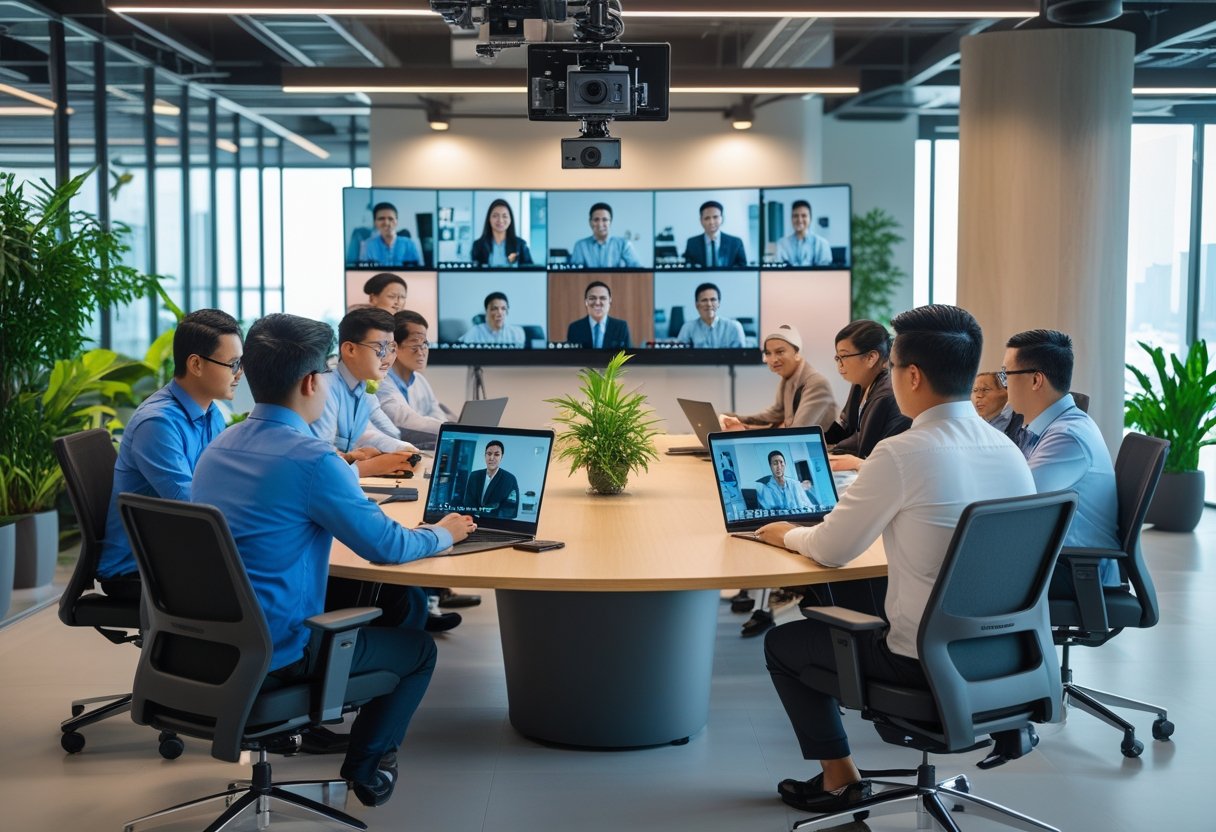
Indonesian enterprises no longer treat hybrid work as a temporary fix. They design it as a long-term strategy powered by smart audio visual systems. Companies now connect office teams and remote staff through integrated meeting rooms, cloud platforms, and secure networks.
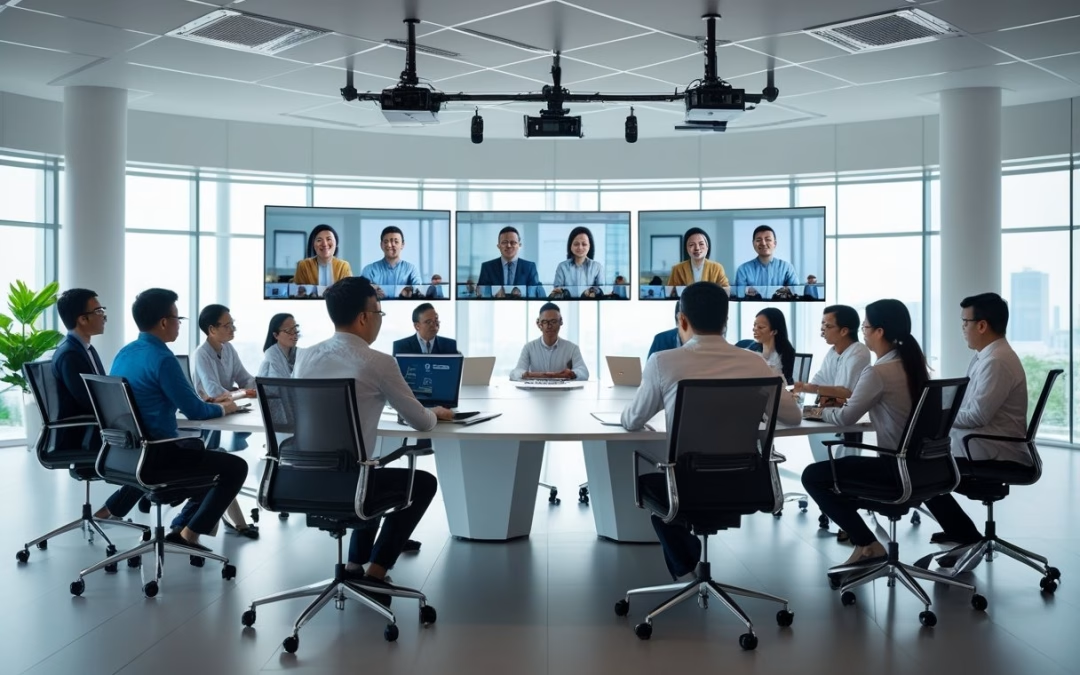
Indonesian enterprises are redefining hybrid work by investing in integrated AV systems that make communication clear, meetings reliable, and collaboration equal for in-office and remote teams. They upgrade cameras, microphones, and control systems to remove common meeting problems. Many also rely on professional AV integration to align IT, networks, and room design for daily use.
Industry leaders highlight how AV now supports innovation and distributed teams, as seen in insights on how the AV industry powers innovation in the new era of work. Local providers also help firms deploy smart meeting rooms and full system integration, such as services that bring AV & IT to life in Indonesia. This shift shows how enterprises move beyond basic video calls toward structured, scalable hybrid environments.
Key Takeaways
- Indonesian enterprises treat hybrid work as a long-term business model supported by AV.
- Companies invest in integrated meeting rooms to support both in-office and remote teams.
- Modern AV solutions align technology, space design, and daily operations for stable collaboration.
Indonesia’s Shift to Hybrid Work: Key Drivers, Models, and Human Factors
Indonesian enterprises now treat hybrid work as a core business model, not a temporary fix. Leaders align flexible work arrangements with human capital strategy, digital growth, and employee well-being to protect performance and support long-term development goals.
Workforce Preferences and Hybrid Work Models
Many employees in Indonesia prefer kerja hybrid that blends wfh (work from home) and wfo (work from office). They value work flexibility, shorter commutes, and better control of daily schedules.
The COVID-19 period pushed firms to test telework and remote work at scale. As described in the article on the hybrid work revolution in Indonesia, companies saw that productivity often stayed stable when staff worked off-site.
Enterprises now use several hybrid work models:
- Fixed days in office and fixed days remote
- Role-based models where only certain teams work on-site
- Fully flexible schedules based on output targets
Gig workers in the digital economy often operate in fully remote or telecommuting setups. National discussions also link hybrid work and technology support to productivity and decent work under SDG 8 in Indonesia.
These models require strong digital literacy and clear output metrics to maintain organizational performance.
Human Capital and HR Strategies for Hybrid Work
Hybrid work forces a shift in human resource management. HR teams now focus on outcomes instead of physical presence.
Research on human resource transformation in Indonesia’s hybrid work era shows that firms adjust performance systems, leadership training, and communication rules to fit hybrid settings. They also invest in digital tools to support collaboration and monitoring.
Key HR priorities include:
- Clear KPIs tied to results, not office hours
- Training in virtual leadership and digital literacy
- Policies for data security and compliance
- Structured feedback to maintain work engagement
Startups and large firms both treat hybrid work as part of strategic human capital development. They link employee experience to business goals and measure impact on productivity and retention.
Organizational readiness now depends on culture. Leaders must build trust, encourage accountability, and support boundary management between home and work spaces.
Employee Well-being, Engagement, and Work-Life Balance
Hybrid work affects employee well-being in direct ways. Reduced commuting time improves work-life balance, but blurred boundaries can increase stress.
A study on well-being in hybrid work among Indonesian civil servants highlights the role of organizational support in lowering burnout. Employees report stronger engagement when managers provide clear communication and fair workload distribution.
Enterprises now address well-being through:
- Defined working hours for remote staff
- Mental health support programs
- Regular virtual check-ins to sustain employee engagement
- Clear rules on availability to improve boundary management
Hybrid systems can improve employee experience when firms protect social connection and team identity. Strong support structures also help align hybrid work with sustainable development goals by promoting inclusive, decent, and productive employment.
AV Technology Advancements and Enterprise Solutions for Hybrid Work Success
Indonesian enterprises now invest in integrated audio-visual systems that support clear communication, stable koneksi internet, and measurable productivity. They focus on practical tools that improve user experience and strengthen digital infrastructure across offices and remote locations.
Video Conferencing and Virtual Collaboration Platforms
Enterprises rely on secure video conferencing platforms such as Zoom, Microsoft Teams, Slack, and Cisco Webex to support daily remote collaboration. They integrate these platforms with room cameras, ceiling microphones, and centralized control panels.
A well-designed system avoids echo, lag, and unclear images. Companies deploy PTZ or AI tracking cameras and noise-canceling microphones to maintain focus during executive meetings.
Many firms now implement structured AV integration strategies similar to those outlined in AV integration solutions for hybrid work environments. These strategies align hardware, software, and network capacity with business goals.
IT teams also track usage data to improve digital adoption. They train employees to build digital competencies and reduce resistance during change management efforts. Strong platform integration supports better organizational performance and faster decision-making.
Immersive AV Solutions and Future-Ready Infrastructure
Hybrid work demands more than cameras and screens. Enterprises build future-ready infrastructure that supports AV over IP, cloud collaboration, and scalable network design.
Some companies adopt systems similar to the Hybrid Meeting Room AV System with CSA Indonesia to ensure seamless communication between in-room and remote participants. These systems combine high-resolution displays, intelligent cameras, and centralized AV control.
AV over IP reduces complex cabling and supports easier expansion. IT teams can add new displays or collaboration tools without major renovation.
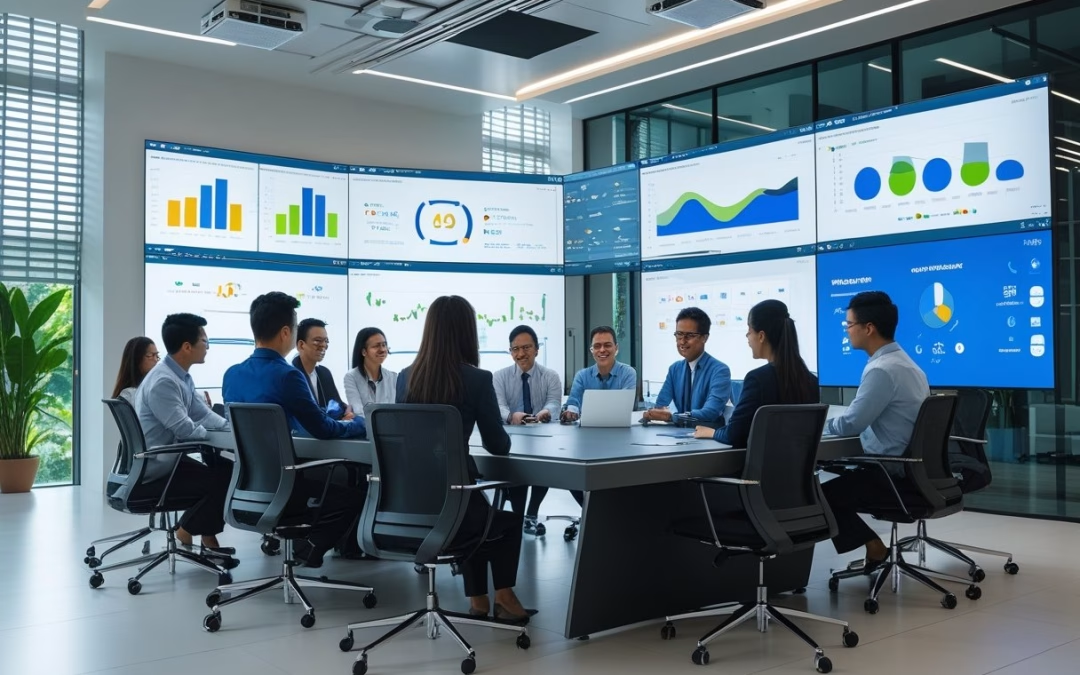
Immersive AV solutions also include large LED walls and multi-screen setups. These tools help teams review data, engineering plans, and financial dashboards in real time.
Enterprises treat digital infrastructure as a long-term asset. They align AV investments with digital transformation goals and ensure stable koneksi internet across branches and satellite offices.
Digital Signage, Wayfinding, and Interactive Displays
Digital signage now plays a direct role in workplace coordination. Companies use it to share schedules, room availability, and internal announcements.
Interactive displays allow employees to book meeting rooms, access company dashboards, and join video conferencing sessions with one touch. This reduces delays and improves user experience.
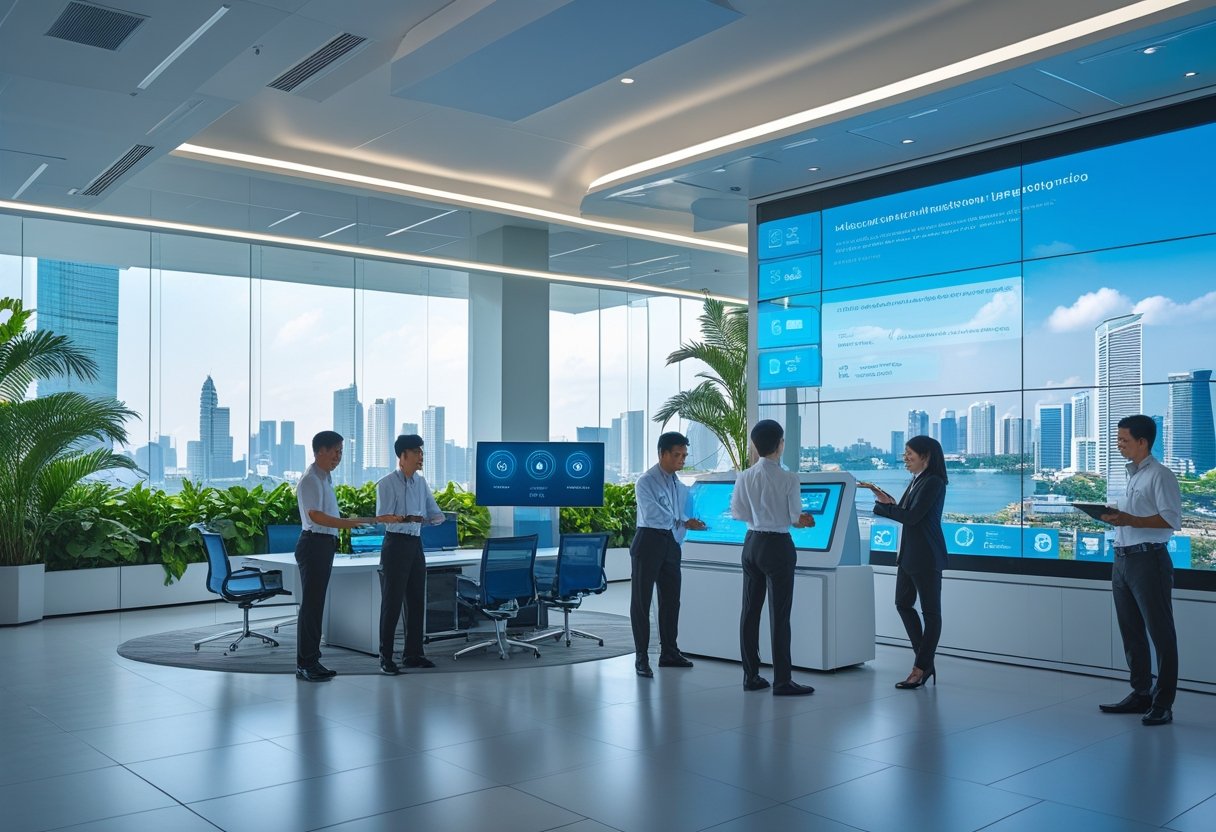
In large corporate offices, wayfinding screens guide staff and visitors to meeting rooms or event spaces. These systems support organized movement inside hybrid offices.
Many Indonesian firms view these tools as part of broader digital innovation efforts, similar to trends discussed in Indonesia’s big firms embrace hybrid work models. Clear information flow supports budaya kerja that values transparency and efficiency.
When enterprises connect digital signage with collaboration platforms, they strengthen productivity and reinforce digital adoption across the organization.
by Melvin Halpito | Mar 22, 2026 | Article
Indonesia’s offices are changing fast. Companies no longer rely on basic meeting rooms and manual systems. They invest in smart technology that connects teams, spaces, and data in real time. Audio visual (AV) technology sits at the center of Indonesia’s smart office boom because it powers communication, automation, and collaboration in one integrated system. Modern offices now depend on video conferencing, interactive displays, smart room controls, and automated scheduling to support hybrid work and daily operations.
As businesses push for higher productivity and better energy control, AV systems link lighting, sound, security, and network tools into a single platform. This shift turns traditional offices into connected environments that support flexible work, improve efficiency, and strengthen team coordination.
Key Takeaways
- Smart offices in Indonesia rely on integrated technology to modernize daily operations.
- AV systems drive communication, automation, and seamless collaboration.
- Connected workplaces improve efficiency, comfort, and operational control.
The Smart Office Revolution in Indonesia
Companies across Indonesia now invest in integrated AV systems, automation, and cloud tools to support hybrid work and tighter cost control. This shift reshapes how the modern workplace operates, from daily meetings to building management.
Market Growth and Changing Workplace Trends
Indonesia’s major business hubs, especially Jakarta, lead the shift toward the smart office model. New office towers in areas such as Sudirman and SCBD promote integrated AV and automation as core building features, not add-ons.
Industry coverage of Jakarta Smart Office Audio Visual Automation shows how companies now treat intelligent AV as a basic need for daily operations.
Hybrid work also drives demand. Teams split time between home and office, so meeting rooms must support clear video, strong audio, and simple controls. Firms no longer accept unstable calls or complex setups.
Reports on Smart Office trends in Indonesia note that many Southeast Asian companies plan to increase spending on digital workspace tools. This budget shift reflects a clear goal: improve collaboration and reduce wasted time.
Core Concepts of Smart Office Environments
A kantor pintar combines automation, AV systems, and digital access control into one connected setup. It links devices through a central platform so staff can manage rooms, lighting, and displays from one interface.
Key elements often include:
- Interactive displays and video conferencing systems
- Automated lighting and climate control
- Room booking panels with live schedules
- Cloud-based CCTV and secure entry systems
The Smart Office Audio Visual Automation di Jakarta approach shows how AV and automation work together to improve comfort and efficiency.
This konsep smart office focuses on practical gains. Motion sensors switch off unused lights. Integrated AV reduces meeting delays. Access systems log entry data in real time.
Each feature supports daily tasks, not just building appearance.
Digital Transformation in Indonesian Workspaces
Digital transformation in Indonesian offices centers on connected systems. Companies link AV, IoT devices, and software platforms to create a responsive modern workplace.
A typical setup may include:
| Function | Smart Office Application |
|---|
| Collaboration | High-quality video conferencing and screen sharing |
| Energy control | Automated lighting and temperature adjustment |
| Security | Biometric or RFID access with cloud monitoring |
| Space management | Digital room booking and occupancy tracking |
Technology providers such as those behind Smart Office Indonesia digital workspace solutions promote integrated systems that adapt to user needs.
These systems support faster decisions and clearer communication. They also give managers data on room use, energy costs, and system performance.
In Indonesia, the smart office no longer acts as a pilot project. It operates as a structured part of corporate strategy, especially in competitive urban markets.
AV Technology as a Key Driver of Smart Offices
Audio visual systems now shape how smart offices in Indonesia connect people, manage space, and control daily operations. Companies rely on integrated AV, cloud platforms, and otomatisasi to support hybrid work, improve meeting quality, and reduce manual tasks.
Integrating Audio Visual Systems With Smart Office Infrastructure
Smart offices connect audio visual systems with lighting, climate control, access systems, and network infrastructure. AV no longer stands alone. It works as part of a single digital ecosystem.
In many Jakarta projects, firms adopt integrated platforms similar to those described in Jakarta Smart Office Audio Visual Automation. These setups link displays, speakers, cameras, and control panels to centralized systems that manage meeting rooms and shared spaces.
Cloud-based dashboards allow IT teams to monitor device status, push updates, and troubleshoot problems without visiting each room. This reduces downtime and keeps systems consistent across floors or buildings.
Strong integration also improves security. Companies can align AV access with ID cards or biometric systems, so only authorized staff can use certain rooms or equipment.
Interactive Displays and Smart Meeting Rooms
Modern offices replace basic projectors with interactive displays and connected smart meeting room systems. These displays support touch input, wireless screen sharing, and real-time annotation.
Teams can write on the screen, save notes to the cloud, and send files directly to participants. This shortens meetings and reduces follow-up confusion.
A typical smart meeting room includes:
- 4K interactive display
- Video conferencing camera with auto-framing
- Ceiling or table microphones
- Integrated speakers
- Central control panel or tablet
As shown in discussions about the benefits of AV integration for offices and businesses in 2026, integrated AV improves usability and reduces technical delays. Employees start meetings faster because devices connect automatically.
This setup supports both in-person and remote participants without separate tools.
Enabling Collaboration and Hybrid Work Models
Hybrid work and remote work have become standard in many Indonesian companies. AV systems now play a direct role in keeping distributed teams aligned.
High-quality cameras and microphones capture clear audio and video. Large displays show remote participants at eye level, which supports natural conversation.
Cloud-based conferencing platforms connect offices in Jakarta with branch offices or home workers. AV integrators in Indonesia highlight how connected systems support corporate and education environments, as noted in the overview of a top AV integrator in Indonesia for corporate and events.
Reliable AV reduces common hybrid problems such as echo, poor lighting, and unstable connections. When meetings run smoothly, teams focus on decisions instead of technical issues.
This directly supports productivity and faster coordination across departments.
AV Automation for Operational Efficiency
Otomatisasi strengthens the operational side of smart offices. AV systems can trigger lighting, blinds, and air conditioning when a meeting starts.
For example:
| Trigger | Automated Action |
|---|
| Room booking confirmed | Display turns on, camera activates |
| No motion detected | System powers down |
| Scheduled presentation | Correct input auto-selects |
These functions reduce energy waste and limit manual setup. Motion sensors switch off screens and speakers in unused rooms.
Articles on Smart Office Solutions with smart AV technology describe how connected AV systems align with sustainability and long-term cost control. Companies track usage data through cloud dashboards and adjust room layouts or device counts based on real demand.
By combining AV, cloud control, and otomatisasi, smart offices operate with fewer disruptions and clearer oversight.
Core Technologies Empowering Indonesia’s Smart Offices
Indonesia’s smart offices rely on connected devices, data systems, and automated controls to run daily operations. These tools link AV, facilities, and IT into one coordinated smart building environment.
Internet of Things and Smart Devices
The Internet of Things (IoT) forms the base of many smart office systems in Indonesia. IoT connects sensors, cameras, meeting room panels, and access controls through a shared network.
In a typical smart building, smart devices track room occupancy, air quality, and device usage in real time. AV systems connect to this network so teams can book rooms, launch video calls, and adjust displays from one control panel.
Many providers define a smart office as a workspace that integrates IoT, AI, and digital tools into one adaptive system, as explained by Smart Office Indonesia solutions.
Cloud platforms store device data and allow remote monitoring. IT teams can update firmware, manage digital signage, and review system alerts without being on site.
This structure reduces manual work. It also gives facility managers clear data about how employees use space and technology.
Artificial Intelligence and Workplace Automation
Artificial intelligence (AI) adds intelligence to connected systems. It analyzes patterns and supports automated decisions in daily operations.
Indonesia views AI as a key driver of digital transformation, though adoption is still in early stages, according to the Indonesia digital transformation overview. Businesses now use AI to improve scheduling, customer service chatbots, and predictive maintenance.
In smart offices, AI supports:
- Automatic meeting room recommendations
- Voice control for AV systems
- Predictive equipment maintenance
- Smart visitor management
AI also strengthens workplace automation. For example, systems can adjust room layouts based on booking data or detect when a meeting ends and power down displays.
Some enterprise reports highlight how AI helps companies manage data silos and improve decision making, as discussed in AI transforming Indonesia’s enterprises.
When linked to cloud dashboards, AI tools give managers clear performance data across multiple office locations.
Automated Lighting, Temperature, and Energy Management
Energy control is central to any smart building strategy. Offices now use sistem pencahayaan otomatis and smart HVAC systems to lower waste.
Pencahayaan otomatis uses motion sensors and daylight sensors. Lights turn on when someone enters a room and dim when natural light increases.
Smart kontrol suhu systems adjust air conditioning based on occupancy data. If a meeting room sits empty, the system reduces cooling output.
Key features include:
| System | Function | Benefit |
|---|
| Automated lighting | Motion and daylight sensing | Lower electricity use |
| Smart thermostats | Occupancy-based cooling | Reduced energy cost |
| Energy dashboards | Real-time tracking | Clear usage reports |
Smart office platforms often link these systems with AV controls. When a meeting starts, lighting, displays, and temperature adjust together.
Guides on creating a smart workplace explain how automation simplifies daily tasks and improves efficiency.
Facility teams use cloud dashboards to monitor performance across floors and buildings.
Data Security and Building Safety Features
As offices connect more devices, keamanan data becomes critical. Smart devices collect user data, access logs, and video feeds.
Companies must protect this data with:
- Network segmentation
- Encrypted communication
- Secure cloud storage
- Access control policies
AV systems now integrate with building access cards and biometric scanners. This link supports stronger security features across the workspace.
Indonesia continues to build digital infrastructure, including data centers and cloud services, to support this growth, as noted in the report on accelerating digital transformation in Indonesia.
Modern smart offices combine cybersecurity tools with physical safety systems. Fire alarms, CCTV, and emergency alerts connect to centralized dashboards.
This approach helps managers respond faster to incidents while protecting both digital and physical assets.
Impact on Productivity, Sustainability, and Employee Well-Being
Smart office AV systems in Indonesia do more than improve meeting quality. They drive peningkatan produktivitas, support efisiensi operasional, reduce konsumsi energi, and strengthen corporate sustainability goals while improving kesejahteraan karyawan.
Operational Efficiency and Cost Savings
Integrated AV systems streamline daily operations. Teams launch meetings with one touch, share content wirelessly, and connect remote staff without delay. This reduces setup time and supports improved productivity across departments.
Companies also cut travel costs. High-quality video conferencing lowers the need for intercity flights between Jakarta, Surabaya, and other hubs. Fewer business trips reduce expenses and limit downtime.
Smart scheduling panels and occupancy sensors improve efisiensi operasional. Offices track real-time room usage and adjust space planning based on data. This prevents underused meeting rooms and supports better asset management.
Research shows that sustainable workplace practices support both employee engagement and business results, as seen in findings on the impact of sustainable practices on employee well-being and organizational success. AV systems play a direct role by aligning technology use with measurable efficiency goals.
Workforce Comfort and Engagement
Modern AV improves kenyamanan karyawan by creating consistent audio and visual quality. Clear sound and sharp displays reduce fatigue during long meetings. Employees spend less time repeating information or resolving technical issues.
Flexible work setups also support kesejahteraan karyawan. Hybrid meeting tools allow staff to join from home or satellite offices without losing visibility or voice. Studies on the impact of work-life balance on employee well-being and organizational productivity show that flexible arrangements help maintain performance while protecting well-being.
Interactive displays and digital collaboration boards increase participation. Teams brainstorm in real time, annotate documents, and save outputs instantly. This direct engagement strengthens focus and supports measurable peningkatan produktivitas.
Well-designed AV environments also reduce stress linked to poor communication. Reliable systems build trust in daily operations.
Energy Consumption and Environmental Sustainability
Smart offices in Indonesia now link AV systems to building management platforms. Devices power down automatically when rooms are empty. This lowers konsumsi energi without manual oversight.
Energy-efficient displays, LED walls, and smart lighting controls support efisiensi energi and hemat energi targets. Companies track usage data and adjust system settings to reduce waste during non-peak hours.
Sustainable HR and environmental strategies often connect employee health with green initiatives, as outlined in research on companies focusing on employee wellbeing and sustainability goals. AV contributes by reducing paper use through digital signage and enabling remote collaboration that cuts travel emissions.
By combining reduced energy demand with digital workflows, organizations align technology investment with long-term sustainability commitments.
by Melvin Halpito | Mar 22, 2026 | Article
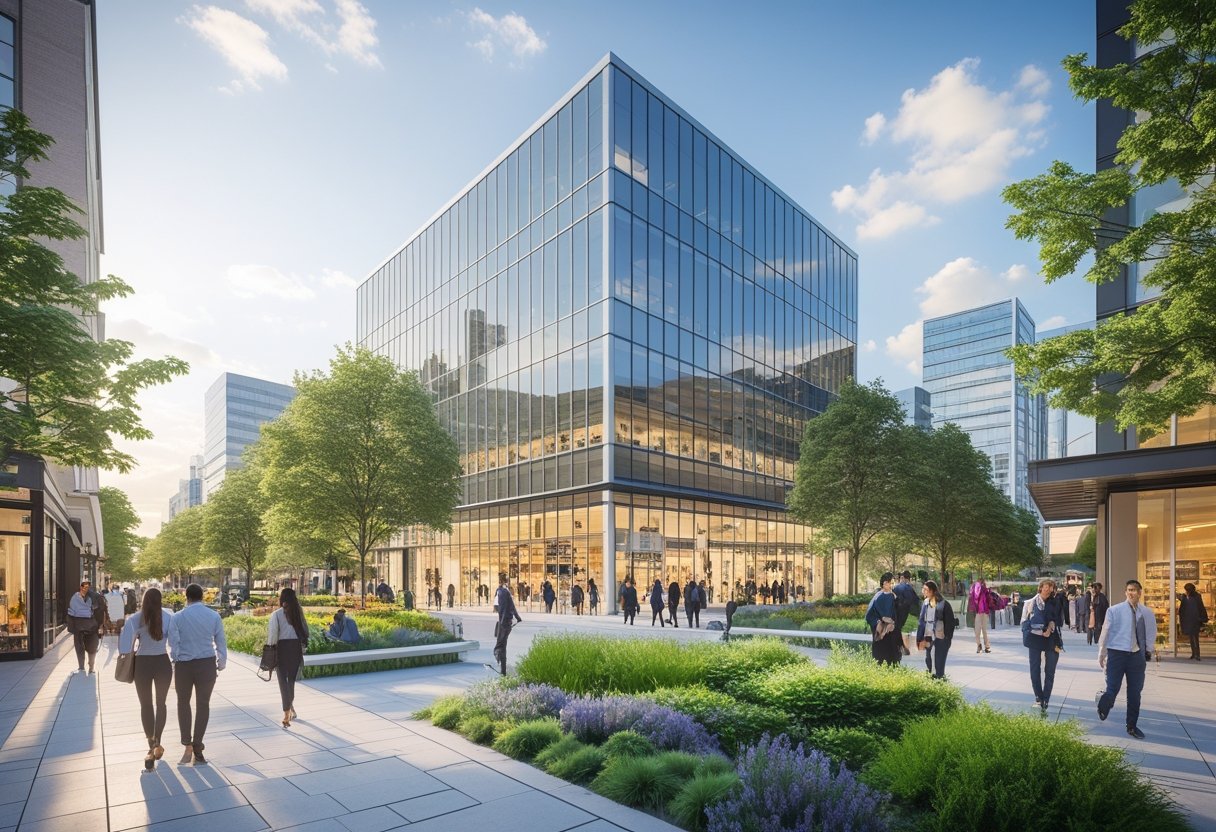
Many companies still treat office space as a fixed expense to cut or control. That view limits what the workplace can do. In a hybrid era, leaders must decide whether the office drains resources or drives value.
When a company aligns its office with its strategy, culture, and goals, it turns real estate from a cost center into a brand asset that strengthens performance and trust.
Research on workplace real estate as a competitive advantage shows that companies gain more when they connect space decisions to business outcomes.
An office now shapes how employees collaborate, how clients experience the brand, and how talent views the company.
Leaders who approach space with discipline, as outlined in the CFO’s guide to turning real estate into a strategic asset, treat it as part of growth strategy, not just overhead.
Key Takeaways
- Office space can support brand, culture, and business goals when leaders align it with strategy.
- Design, location, and experience shape how employees and clients view the company.
- Smart planning helps companies adapt to hybrid work and long-term change.
The Shift: Office as a Brand Asset, Not Just a Cost
Companies now treat office real estate as part of brand strategy, not just an expense line.
Leaders connect workspace decisions to talent retention, employee engagement, and measurable business results.
Reframing Traditional Real Estate Perspectives
For years, many firms treated commercial real estate as a fixed cost to reduce.
They focused on lease rates, square footage, and short-term savings.
That view is changing.
Executives now see the office as a strategic asset that supports collaboration, culture, and performance, as explained in Office Space Is No Longer a Cost Center — It’s a Talent Strategy.
Instead of asking, “How do we cut space?” they ask, “How does this space support our goals?”
This shift affects:
- Site selection
- Layout and design
- Technology investment
- Access to transport and housing
Office real estate decisions now connect to workforce planning and brand positioning, not just occupancy costs.
The Business Case for Office Branding
Branding the workplace goes beyond adding logos to walls.
It shapes how employees and visitors experience the company every day.
A well-designed office can reflect values through layout, materials, and shared spaces, as discussed in How to transform your office into a powerful brand asset.
Open collaboration zones can signal transparency.
Private focus rooms can show respect for deep work.
Companies also align office design with corporate identity, which strengthens brand consistency across physical and digital touchpoints.
Clear wayfinding, branded meeting rooms, and consistent visual elements help reinforce identity, a trend noted in Workplace & Office Branding Trends (2026 Update).
When done with intent, office branding supports:
- Stronger employee engagement
- Clearer cultural signals
- More memorable client visits
It moves the office from background space to active brand platform.
Economic Impact on Talent and Productivity
Office strategy now links directly to talent retention and productivity.
Location, commute time, and workplace quality influence whether employees stay or leave.
Poorly located or outdated offices can weaken recruitment efforts.
In contrast, accessible locations with strong amenities reduce commute stress and support daily performance, as noted in Office Space Is No Longer a Cost Center — It’s a Talent Strategy.
Companies also balance hybrid work with structured in-office time.
They design spaces that encourage collaboration and knowledge sharing, which can be harder to manage remotely.
Key economic effects include:
- Lower turnover costs
- Improved team coordination
- Better client perception
- Stronger employer branding
Designing Offices for Branding and Experience
Strong office design turns space into a clear statement of values.
It shapes culture, supports employee well-being, enables collaboration, and uses smart systems to improve daily work.
Office Design as Cultural Expression
Office design communicates what a company stands for.
Layout, materials, and visual elements show priorities without a single word.
A firm that values transparency often uses glass walls and open sightlines.
A company focused on focus and deep work may include quiet zones and enclosed rooms.
These choices guide behavior every day.
Color, signage, and branded graphics also reinforce identity.
Many companies use principles from branded office design to align space with values and purpose.
Leaders should define three to five core traits—such as innovation, reliability, or teamwork—and reflect them in physical space.
Furniture style, meeting room names, and shared spaces must support those traits.
When design matches culture, employees see a clear and consistent message.
Clients experience the same message the moment they enter.
Employee Experience and Well-Being
Employee experience depends on how the space feels and functions.
Poor lighting, noise, and crowding reduce focus and morale.
Good office design supports employee well-being through practical steps:
- Ergonomic furniture that adjusts to different body types
- Smart lighting that adapts to daylight and task needs
- Acoustic panels to control noise
- Access to natural light and views
Smart lighting systems adjust brightness during the day.
This helps reduce eye strain and supports healthy sleep patterns.
Break areas, quiet rooms, and wellness spaces also matter.
Employees need places to reset during long workdays.
Designers often explore how office interior design improves brand identity while also supporting comfort and daily function.
When employees feel supported, they engage more fully with their work.
Integrating Collaboration and Community
Collaboration does not happen by chance.
Space must guide people to connect.
Open tables near team zones encourage quick discussions.
Enclosed meeting rooms support private talks.
Informal lounges allow cross-team interaction.
Office layout should reflect how teams actually work.
Some groups need daily stand-up areas.
Others need project rooms with writable walls and storage.
Research on experiential office design shows that shared spaces help shape how people interact with the brand and each other.
Design can support both structured meetings and casual conversations.
Community also grows through shared amenities.
Cafés, multipurpose rooms, and event spaces bring employees together beyond tasks.
Clear wayfinding and logical floor plans reduce confusion.
When people move easily through space, collaboration increases.
Smart Technologies and Space Optimization
Modern offices use data and automation to improve space use.
Smart systems track occupancy, lighting, and temperature in real time.
Space planning should match actual demand.
If meeting rooms sit empty most of the week, companies can resize or repurpose them.
If collaboration areas fill quickly, they may need expansion.
Key smart tools include:
| Technology | Purpose | Impact |
|---|
| Occupancy sensors | Track room usage | Reduce wasted space |
| Smart lighting | Adjust brightness automatically | Improve comfort and cut energy use |
| Booking systems | Reserve desks and rooms | Prevent conflicts |
| Climate controls | Regulate air and temperature | Support employee well-being |
Companies that follow a structured branded office planning guide often integrate technology early in the design process.
Smart tools should remain simple and reliable.
Technology must support work, not distract from it.
Strategic Location, Mixed-Use Spaces, and Ecosystems
Office real estate shapes how customers, partners, and employees view a company.
The right mix of location, design, and community ties turns space into a visible brand asset rather than a fixed cost.
Mixed-Use Developments and Office Ecosystems
Mixed-use developments combine offices, housing, retail, and public space in one area.
This setup creates daily activity and steady foot traffic.
It also keeps employees close to services and transit.
Recent industry panels on reimagining mixed-use districts highlight five elements that support strong projects:
- Diversified anchors beyond office and retail
- Vibrant experiences with programmed events
- Creative partnerships with institutions
- Integrated communities
- Nature in design
When a company places its office in this type of ecosystem, it links its brand to activity and innovation.
An office near a university campus, health center, or sports venue gains built-in relevance.
Developers also track financial impact.
Research on mixed-use developments and urban revitalization shows these projects can raise rents and improve renewal rates when engagement is strong.
Location Choices for Brand Value
Location sends a clear message about a company’s priorities.
A downtown innovation district signals growth and access to talent.
A transit-linked hub shows a focus on convenience and sustainability.
Leaders now look beyond a single office tower.
They assess:
- Access to public transit
- Walkability and street activity
- Nearby cultural and civic anchors
- Quality of public space
Hybrid work has reduced daily office attendance.
This shift has pushed firms to rethink traditional office anchors, as seen in discussions about strategies for new developments in an ever-changing world.
Office real estate must offer more than desks.
It must place employees inside a district that supports meetings, events, and informal collaboration.
The address itself becomes part of the brand story.
Community Engagement through Real Estate
Community engagement now shapes project approval and brand trust.
Developers and tenants both benefit when they involve local residents early.
Strong engagement includes:
- Public meetings with real feedback
- Partnerships with local schools or nonprofits
- Open spaces that welcome the public
Urban research on the theory and praxis of mixed-use development notes the social effects of these projects.
Poor planning can raise costs for nearby communities.
Careful planning can improve access and daily life.
When a company supports public space, local hiring, or shared amenities, it shows commitment beyond profit.
That visible investment builds credibility.
Innovation, Sustainability, and Future-Proofing the Office
Companies now treat the office as a platform for innovation and measurable impact.
Leaders invest in smart technology, strong sustainability practices, and flexible layouts that support hybrid work without wasting space or energy.
Technology Integration: AI, Blockchain, and Robotics
Modern offices use AI to manage space, comfort, and safety in real time.
Smart systems track occupancy, adjust lighting, and control heating and cooling to reduce waste and improve employee comfort.
AI tools also analyze how teams use meeting rooms and shared desks.
Leaders use this data to redesign layouts and cut unused space.
Many firms apply insights from future-proof office design in 2025 to connect smart technology with daily operations.
Blockchain supports secure access control and contract management.
It creates clear records for leases, vendor payments, and sustainability reporting.
This improves trust and reduces disputes.
Robotics handles cleaning, delivery, and basic maintenance.
Robots move supplies, sanitize high-touch areas, and inspect equipment.
This frees staff to focus on higher-value work and keeps the building running with fewer disruptions.
Energy Efficiency and Sustainability Initiatives
Energy efficiency now shapes office design decisions.
Companies upgrade to LED lighting, install motion sensors, and use high-performance insulation to lower energy use.
They also adopt green materials and low-emission finishes.
Many follow guidance from sustainable office design trends in 2025 that highlight eco-friendly materials and energy-efficient systems.
Key initiatives often include:
- On-site solar panels or renewable energy contracts
- Smart meters to track real-time energy use
- Water-saving fixtures and recycling systems
- Indoor plants and natural light to support wellbeing
Some firms pursue green certifications such as LEED to improve building value and reduce operating costs.
As noted in discussions about balancing sustainability and style in office design, strong environmental performance can also strengthen brand image with clients and employees.
Adapting to Hybrid Work Models
Hybrid work requires offices that flex each day.
Leaders reduce fixed desks and increase shared spaces, quiet rooms, and collaboration zones.
They rely on booking apps and occupancy data to manage demand.
This prevents overcrowding on peak days and limits empty floors on slower days.
Effective layouts support both focus and teamwork.
Many strategies outlined in workplace strategy 2025 for future-ready offices stress the need for adaptable furniture, movable walls, and strong digital infrastructure.
Hybrid models also change lease and space planning decisions.
Companies may choose smaller central hubs supported by satellite spaces.
This approach reduces long-term costs while keeping a physical presence that reflects the brand.
by Melvin Halpito | Mar 21, 2026 | Article
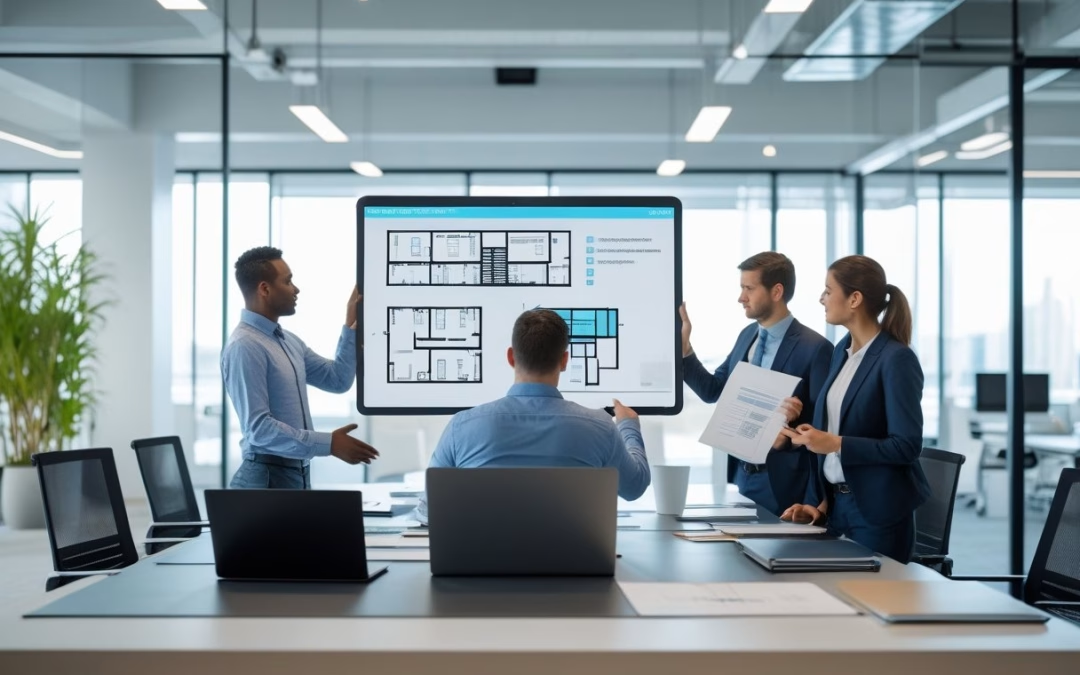
Companies keep pushing people back to the office, yet many plans fail. Leaders argue that in‑person work boosts culture and results. Employees push back and question the real purpose of strict mandates. The return‑to‑office problem is not about location; it is about whether leaders design work well or simply enforce a policy. Research on return to office practices versus policy shows that rules alone do not fix deeper issues.
Experts also question whether a required return to the office improves culture and innovation.
When companies focus only on attendance, they often ignore productivity, trust, and talent risks.
Strong organizations treat office plans as a design challenge, not just a compliance task.
Guidance on creating a return to office policy that works stresses practices, leadership behavior, and clear goals.
Firms that fail to balance business needs with employee buy‑in risk backlash, as shown in research on balancing organizational and employee needs in RTO strategy.
Key Takeaways
- Strong results depend on thoughtful work design, not strict attendance rules.
- Leaders must align productivity, collaboration, and employee experience.
- Clear communication and intentional systems shape long‑term success.
Defining the Return‑to‑Office Problem: Design vs Policy
Leaders often treat return to office as a rule to enforce rather than a system to design.
The tension between design and policy shapes how employees experience hybrid work, remote work, and in‑person work.
What Design Means in the RTO Context
In the RTO debate, design means how leaders structure work, space, and time to support clear goals.
It covers office layout, meeting norms, team schedules, and digital tools.
A design approach asks practical questions.
- What tasks require in‑person work?
- When does work from home improve focus?
- How should teams coordinate office attendance?
Research from McKinsey shows that thoughtful practices, not rigid rules, drive results in hybrid work settings, as explained in Navigating return to office (RTO) with intention.
Design treats the office as a tool.
It aligns space and schedules with specific work models instead of assuming that more in‑office work always leads to better performance.
Policy-Driven RTO: Approaches and Assumptions
Policy-driven RTO focuses on mandates.
Leaders set fixed days, minimum office attendance, or strict in‑office work quotas.
These return‑to‑office policies often rest on assumptions about culture and collaboration.
Many companies argue that office mandates restore innovation and teamwork.
Yet some analysis questions whether productivity data supports those claims, as noted in Return-To-Office Mandates Aren’t Fixing What’s Actually Broken.
Policy-first approaches also carry workforce risks.
A recent academic review found that return‑to‑office policies can push senior employees to leave, especially when flexibility disappears, according to research on return‑to‑office policies driving senior employees away.
In this model, compliance often becomes the main metric.
Leaders track badge swipes instead of output.
The Evolution of Work Models Since 2020
Since 2020, work models have shifted from emergency remote work to structured hybrid work.
Many firms now combine work from home with scheduled in‑person work.
This shift changed employee expectations.
Flexibility moved from a temporary fix to a standard feature of the future of work.
At the same time, large firms began formalizing RTO mandates.
Data shows that companies announcing return‑to‑office policies tend to be larger organizations, based on findings in Determinants and Consequences of Return to Office Policies.
The debate now centers on intent.
Some experts argue that RTO reflects deeper issues of trust and purpose, as discussed in What problem are return‑to‑office mandates meant to solve?.
As work models continue to evolve, the core question remains whether leaders design systems around real work needs or rely on policy to force change.
Balancing Productivity, Collaboration, and Employee Experience
Leaders often debate policy while ignoring how daily work actually gets done.
Clear gains in productivity and collaboration depend less on mandates and more on how organizations design work, space, and expectations.
Productivity Impacts Across Work Models
Productivity does not rise just because employees sit in the same building.
Research on return-to-office myths and realities shows that physical presence alone does not create better outcomes.
Remote work often supports focused tasks.
Employees control noise, lighting, and schedules. That control can improve concentration and protect work‑life balance.
In-office work can help with real-time problem solving and quick feedback.
New hires may learn faster when they can observe experienced peers.
However, long commutes and constant interruptions reduce output.
Productivity and collaboration improve when leaders:
- Define clear deliverables
- Track results, not desk time
- Match work location to task type
A rigid five‑day mandate, like the one described in Amazon’s five-day RTO policy, may increase attendance.
It does not guarantee higher performance.
Collaboration Barriers and Enablers
Collaboration depends on access, timing, and trust.
Open offices alone do not create strong teamwork.
Barriers often include:
- Noise and lack of privacy
- Overloaded calendars
- Poor knowledge sharing systems
Digital collaboration tools such as Slack and shared document platforms help teams work across time zones.
They also create written records that preserve institutional knowledge.
Yet digital channels can fragment attention.
Too many notifications weaken deep work and lower employee satisfaction.
In-person settings support mentoring and informal learning.
Hallway talks can speed decisions when teams share context.
Strong collaboration requires intentional design.
Leaders should schedule purpose‑driven office days for workshops, planning, or mentoring.
They should also invest in collaboration tools that support both synchronous and asynchronous work.
The Role of Autonomy and Psychological Safety
Employee autonomy shapes both productivity and engagement.
When workers choose where they complete certain tasks, they often manage energy and focus more effectively.
Autonomy supports work‑life balance. It also signals trust.
Psychological safety matters just as much.
Employees share ideas, admit mistakes, and ask for help when they feel safe from ridicule or punishment.
Rigid policies can weaken that safety if employees feel unheard.
A guide on getting return to office right stresses the need to align workplace decisions with real team needs.
Organizations strengthen employee satisfaction when they:
- Explain the reason for on‑site requirements
- Invite feedback before setting policy
- Protect flexible options where possible
Design and policy must reinforce each other.
When autonomy and psychological safety remain intact, productivity and collaboration become more sustainable.
Policy Design: Leadership, Communication, and Implementation
Strong policy design depends on clear leadership, honest communication, and steady follow‑through.
Executives must align goals, set expectations, and manage enforcement without damaging trust or performance.
The Role of Leadership and Management
Leadership sets the tone for any return‑to‑office policy.
Executives must explain why they want employees back in the office and what results they expect.
Vague claims about culture or collaboration create doubt.
Clear goals—such as faster product cycles, better onboarding, or improved client service—help employees understand the decision.
Research on creating a return to office policy that works shows that daily practices matter more than a written rule.
Management must model those practices.
If leaders work from home full time while enforcing office mandates on staff, credibility drops.
Managers also play a direct role in enforcement.
They track attendance, approve exceptions, and handle pushback.
Consistent management behavior reduces confusion and limits claims of unfair treatment.
Strong leadership does three things:
- Sets clear employee expectations
- Aligns policy with business outcomes
- Applies rules consistently across teams
Without these steps, back to the office plans stall or fail.
Best Practices for Rollout and Adaptation
A return‑to‑office mandate should not start with a memo.
It should start with planning, feedback, and a phased rollout.
Change management matters.
The role of change management in return to office programs highlights the need for structured communication and manager training.
Leaders should prepare managers to answer hard questions about flexibility, performance, and work from home options.
Effective rollout often includes:
- Clear timelines
- Defined in‑office days
- Documented exceptions
- Measurable review points
Short feedback loops help management adjust.
If attendance drops or turnover rises, executives must respond with data, not assumptions.
Adaptation means refining the approach while keeping goals steady.
Lessons from RTO Mandates and Office Attendance
Rigid office mandates can create resistance.
Many leaders now recognize that strict policies without employee buy‑in harm morale and retention.
Research such as Design a Return-to-Office Strategy That Balances Organizational and Employee Needs stresses balance.
Organizations must weigh business needs against employee expectations for flexibility.
Common lessons from recent back to the office efforts include:
- Overly strict enforcement drives attrition.
- Inconsistent rules across teams weaken trust.
- Hybrid models require clear attendance tracking.
Office attendance should tie to specific outcomes, not symbolic presence.
When leadership links in‑office work to training, collaboration, or client service, employees see purpose.
Clear standards, fair enforcement, and visible executive participation increase acceptance and stability.
Designing Workplaces and Systems for the Future
Organizations must align space, technology, and talent systems with how people actually work.
Leaders who focus on design—not just rules—create offices that support focus, teamwork, learning, and innovation.
Physical Office Design and Hot Desking
Office design now shapes whether employees choose to come in.
Companies that rethink layout see stronger engagement and better team results, as noted in The future of office design.
Hot desking plays a key role in hybrid work.
It reduces unused space, but it must include:
- Easy desk booking tools
- Secure storage lockers
- Clear team zones
- Quiet rooms for focused work
Without these basics, hot desking creates stress and confusion.
Teams also need different settings in one office.
They need small rooms for private calls, open areas for group sessions, and social spaces that support informal talks.
A well-designed office supports both planned meetings and quick problem solving.
Design should also support health and sustainability.
Natural light, clean air, and energy-efficient systems improve comfort and lower costs over time.
Technology, Tools, and Digital Infrastructure
Hybrid work fails without strong digital systems.
Employees expect the same access and speed whether they work from home or in the office.
Core tools include:
- Reliable video conferencing
- Shared digital whiteboards
- Cloud document platforms
- Secure VPN and identity systems
These tools support real-time collaboration across locations.
Virtual work depends on clear standards.
Teams must agree on how they run meetings, store files, and track tasks.
When systems lack structure, people waste time searching for information.
Leaders should also connect workplace design with technology strategy.
Deloitte notes that work design should guide the mix of physical and digital space in its discussion of future workplace trends.
Companies that treat technology as core infrastructure—not an add-on—support smoother hybrid operations.
Innovation and the Impact of Generative AI
Generative AI changes how employees create content, analyze data, and test ideas.
It supports faster drafts, code generation, research summaries, and scenario planning.
Teams can use generative AI to:
- Draft reports and presentations
- Analyze large data sets
- Simulate business outcomes
- Generate design concepts
This speeds up early-stage innovation.
However, AI tools require governance.
Companies must set rules for data privacy, review processes, and human oversight.
Without guardrails, errors and bias can spread quickly.
Physical offices should also support AI-enabled work.
Teams need collaboration rooms with screens for shared editing and rapid testing.
When employees gather to refine AI outputs together, they improve quality and reduce risk.
Generative AI does not replace teamwork.
It shifts focus toward judgment, creativity, and decision-making.
Supporting Career Growth and Mentoring
Return-to-office debates often ignore career growth.
Employees, especially early-career staff, need access to mentoring and informal learning.
In hybrid work, visibility does not happen by chance.
Leaders must design structured mentoring programs, regular check-ins, and clear promotion paths.
Casual exposure in the office alone will not ensure fairness.
Younger workers also care about values and workplace quality.
Research highlighted in creating the workplace of the future shows that organizations can rethink how they operate to meet evolving goals and expectations.
Career systems should combine:
- In-person coaching days
- Virtual mentoring sessions
- Skills tracking dashboards
- Transparent performance criteria





Recent Comments