
by Melvin Halpito | Jun 12, 2026 | Article
How People Actually Use AV Spaces
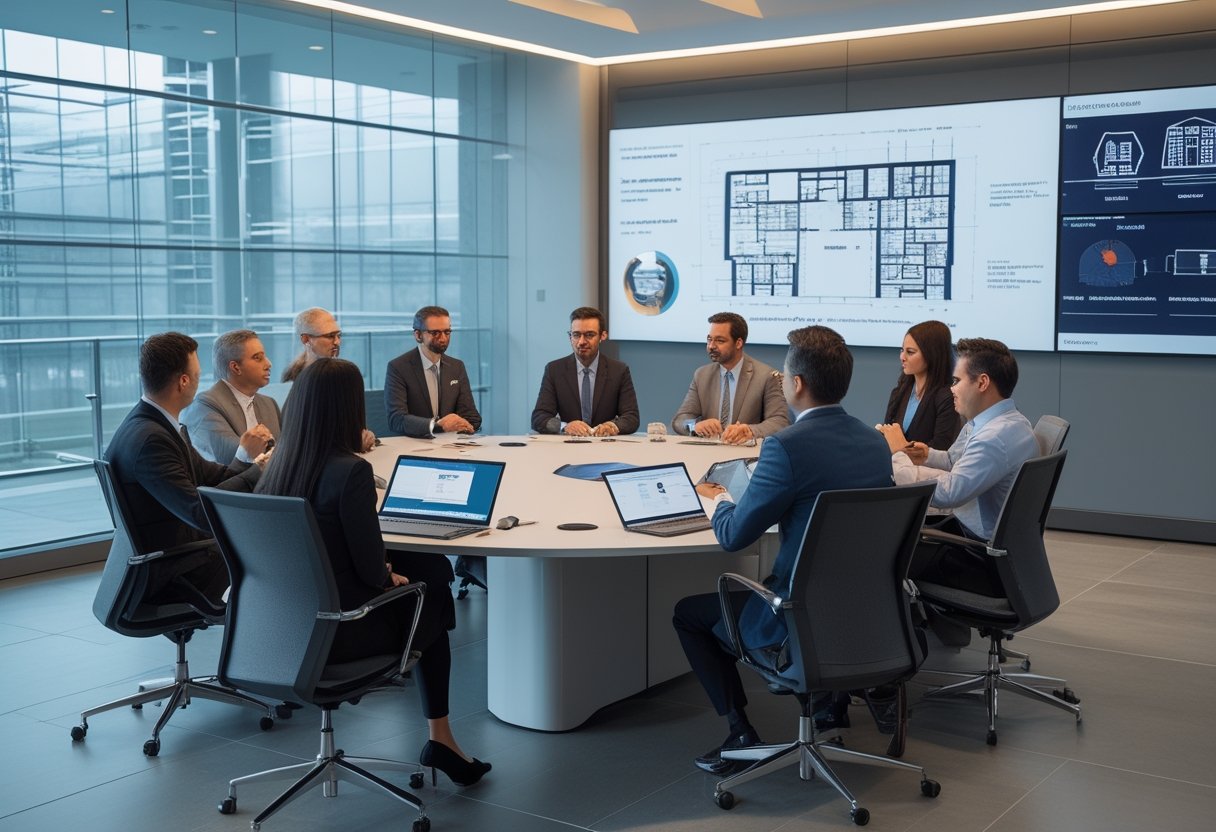
The best AV design starts with what people do in the room, not with a list of devices you want to buy. When you watch real teams in action, you notice repeated patterns: one person joins late from a laptop, another shares from a phone, someone else needs the camera to focus fast, and the meeting host wants everything to work without a long setup.
Common Behavior Patterns In Meeting Rooms
People usually want a room that is easy to enter, quick to start, and simple to leave. In active offices, meetings often begin with mixed devices, short time windows, and low patience for extra steps. That means the room must support a predictable flow, even when users change from one meeting to the next.
Why Workflows Matter More Than Device Lists
A long equipment list does not guarantee a usable room. What matters is how the system supports the way your team books rooms, joins calls, presents content, and switches between speakers. If your workflow is slow, the newest display or camera will not fix the experience.
The Cost Of Designing For Ideal Users Instead Of Real Users
Many AV plans assume everyone will use the room perfectly. Real users skip instructions, rush meetings, and avoid anything that feels complex. When design is built around ideal behavior, you get support calls, wasted time, and low adoption. In projects where MLV Teknologi supports consultation and installation, the strongest results usually come from matching the system to daily behavior, not to a neat spec sheet.
How Behavior Shapes Better System Decisions

Behavior gives you a practical filter for every AV choice. It helps you decide what the room must do, what users should never have to think about, and where a little automation can save a lot of time.
Matching Room Functions To User Needs
A boardroom, huddle room, training space, and reception area all ask for different behavior. A boardroom may need polished video calls and clean presentation sharing, while a huddle room may need fast connect-and-go use. When you match room function to actual user needs, you avoid overbuilding one room and under-serving another.
Designing For Ease Of Use And Faster Adoption
Simple controls matter more than flashy features. Users adopt AV systems faster when the interface is clear, the steps are short, and the room behaves the same way every time. That is why good design often looks invisible: the technology fades, and the meeting stays on track.
Reducing Friction During Installation And Daily Operations
Behavior-led design also helps during deployment. If your office cannot stop work, you need installation planning that limits noise, access issues, and downtime. A practical AV partner can coordinate that work carefully, which is one reason teams value responsive execution and low-disruption installation in active environments.
What A Behavior-Led AV Planning Process Looks Like
A good planning process starts with questions about people, routines, and business goals. Hardware comes later, after you know who uses the space, what they need to do, and where the current friction sits.
Questions To Ask Before Selecting Hardware
Ask who uses the room most, how meetings begin, which devices people bring, and where support issues usually happen. You should also ask what must happen in under one minute, because that is where many AV systems succeed or fail. These questions reveal whether you need simplicity, flexibility, automation, or stronger operational support.
Signals That An AV Design Is Aligned With Business Goals
You can usually see alignment when the room saves time, reduces help requests, and supports work without interrupting it. If people can start meetings quickly, share content easily, and trust the system during busy hours, the design is serving the business. That is the real test, not whether the room has the latest hardware brand.
Choosing An AV Partner That Can Translate User Needs Into Execution
The right partner listens well, asks practical questions, and can turn user needs into a working system. You want a team that can handle consulting, supply, installation, and ongoing support with the same level of care. In South Jakarta and beyond, MLV Teknologi is a useful example of this kind of partner because it combines AV consultation with hands-on meeting room delivery and responsive project execution.
by Melvin Halpito | Jun 12, 2026 | Article
You can no longer treat AV and IT as separate projects. In modern meeting rooms, collaboration spaces, and hybrid work setups, the same network that carries business data also carries audio, video, control, and security traffic. That shift changes who owns the risk, who supports the system, and what success looks like after installation.
If you are planning workplace technology in Indonesia, you need an integrator who can handle both the network side and the user experience side, because a good-looking room that drops calls or disrupts daily work is still a failed room. If you are evaluating partners in Jakarta, it is worth speaking with teams like MLV Teknologi that combine AV consultation, installation, and responsive coordination in active office environments.
How AV And IT Responsibilities Now Overlap
The old model was simple: AV handled screens, sound, and cabling, while IT handled networks, access, and security. That split no longer fits most workplaces. Today, room systems run on IP networks, connect to cloud platforms, and depend on policies that live inside your IT environment.
From Standalone Rooms To Connected Platforms
Meeting rooms now behave more like endpoints in a larger digital workplace. A room system may need authentication, remote monitoring, content sharing, firmware updates, and links to calendar and collaboration tools. That means the room is not a closed box anymore; it is part of your wider operating environment.
Why User Experience Depends On Network Performance
A polished display means little if audio lags, video freezes, or a meeting fails to connect. In practice, user experience depends on bandwidth, switch configuration, latency, and traffic priorities as much as it depends on the hardware itself. When the network is not designed with AV in mind, the room may look complete while still failing users every day.
The Rising Importance Of Security, Manageability, And Support
Every AV endpoint is now also an IP device, which creates new responsibilities for patching, passwords, segmentation, and access control. IT teams want systems they can monitor and support without special exceptions, while facilities teams want fast recovery when a room goes down. That is why the best integration work now includes lifecycle planning, not just installation.
What Organizations Should Expect From Modern Integration Partners
A modern integrator should reduce uncertainty, not add it. The right partner helps you design for the network, deploy in live environments, and support the system after handover with clear accountability.
Cross-Functional Design And Consultation Skills
You should expect your partner to speak with IT, facilities, procurement, and business leaders in one project flow. Strong AV consulting is not just about choosing devices; it is about mapping user needs to network limits, room use, support process, and budget reality. This is where a team with both AV and IT fluency creates real value.
Delivery That Minimizes Operational Disruption
In active offices, timing matters as much as technical quality. A capable integrator plans work so staff can keep using the space, which may mean phased installation, careful scheduling, and neat coordination with site teams. Customers often value this most when the project is completed cleanly without interrupting daily operations, which is the kind of delivery approach you should look for from partners like MLV Teknologi.
Long-Term Service Models For Hybrid Work Environments
Hybrid work changes support expectations. You need a partner who can help after go-live with troubleshooting, tuning, refreshes, and room standardization across sites. The strongest model is one where your integrator stays available as systems evolve, because the room that works today still needs support when workflows, apps, and user habits change.
by Melvin Halpito | Jun 11, 2026 | Article
You are seeing AV reach a point where the stack is no longer defined by endpoints alone. By 2030, the real differentiator will be how well your systems behave as part of the network, the workplace, and the broader business process. That shift changes what you buy, how you integrate, and how you prove value.
The next wave is not just about better devices, it is about AV becoming a managed, data-aware platform that supports collaboration, operations, and experience quality with less friction. In practice, that means you will need to think more like an enterprise architect and less like a room designer.
Technology Shifts Reshaping AV
The next few years will reward you if you design for software-first control, native IP transport, and richer human interaction. These shifts are reinforcing each other, which is why isolated upgrades rarely deliver the full value anymore.
AI-Driven Control And Automation
AI will not replace your control system, but it will change what you expect from it. You can already see the practical shift in auto-configured rooms, smarter support workflows, anomaly detection, and usage analytics that tell you which spaces are actually earning their keep.
The operational value is straightforward. Your teams spend less time on repetitive setup and more time on exceptions, while your clients get fewer support calls and more consistent room behavior. The real test by 2030 will be whether AI features reduce lifecycle cost, not whether they sound impressive in a demo.
IP-Native Workflows And Interoperability
AV over IP is moving from special project architecture to default design logic. If you still treat the network as an afterthought, you will keep running into avoidable friction around bandwidth, timing, segmentation, and device discovery.
For you, interoperability will matter more than raw feature count. Validated ecosystems, common control layers, and predictable network behavior will shape procurement decisions because they lower deployment risk and shorten commissioning time. The organizations that win will be the ones that can make mixed-vendor systems behave like a single platform.
Immersive Audio, Display, And Spatial Experiences
Immersive experiences are broadening beyond flagship venues. You are likely to see more spatial audio, larger LED canvases, flexible content surfaces, and light AR or holographic-style interactions in enterprise, education, and premium public spaces.
The commercial point is not spectacle for its own sake. It is engagement, retention, and clearer communication in spaces where attention is scarce. When you choose these systems well, they create measurable gains in meeting quality, training effectiveness, and audience dwell time.
Market Forces And Strategic Implications
Demand is coming from more than one vertical, and that matters for how you plan revenue and delivery. Workplace refreshes, learning environments, and hybrid collaboration are pushing AV toward services, software, and managed operations, while procurement teams are becoming stricter about energy use, security, and long-term support.
Workplace, Education, And Hybrid Environment Demand
Hybrid work is still forcing AV to prove its value room by room. You are being asked to support in-person equity, remote participation, and faster room turnover with fewer touches from IT or facilities staff.
In education, the pressure is similar, though the success metrics differ. Institutions want scalable lecture capture, flexible classrooms, and supportable systems that survive staff turnover. If your designs reduce complexity for teachers, faculty, and support teams, you will have a stronger sales story than any spec sheet can provide.
Data, Sustainability, And Lifecycle Expectations
By 2030, buyers will ask for more than picture quality and uptime. They will want usage data, carbon-conscious design choices, remote service options, and a credible upgrade path that protects capital investment.
That changes how you frame proposals. Managed services, predictive maintenance, and lifecycle planning will matter as much as hardware margin, because clients want fewer surprises after handover. In many deals, the stronger offer will be the one that shows how you will keep the system relevant, efficient, and supportable for years.
What AV Leaders Should Prioritize Before 2030
Your priorities are becoming clearer. Standardize around IP-ready architectures, validate interoperability early, and build commercial models that include recurring services rather than one-time installs.
You should also invest in network competence across your team, not just in engineering. The firms that will look strongest by 2030 will know how to tie technical design to business outcomes, including user satisfaction, operational reliability, and total cost of ownership. That is where AV is heading, and it is where your competitive edge will come from.
by Melvin Halpito | Jun 11, 2026 | Article
Corporate real estate strategy now shapes AV design as much as floor plans, furniture standards, and lease decisions do. When your portfolio shifts toward hybrid occupancy, smaller footprints, and experience-led workplaces, your audiovisual environment must become more scalable, more data-aware, and easier to standardize across sites.
The practical question is no longer which rooms need AV, but which workplace model your AV standards need to support across the entire portfolio. That shift changes everything from room typologies and platform selection to lifecycle planning, refresh timing, and governance.
Workplace Shifts Reshaping Technology Priorities
Your workplace strategy is no longer just about where people sit. It now determines how often rooms are used, what kinds of interactions they support, and how consistently technology must perform across a changing portfolio.
Hybrid Occupancy And Space Utilization
Hybrid schedules reduce predictable occupancy, which makes AV less about equipping every room equally and more about supporting variable demand. In practice, you need systems that are simple for occasional users, quick to deploy, and reliable when room usage spikes on peak in-office days.
That usually pushes you toward standardized room experiences, stronger device management, and simpler user flows. If people move between offices or rotate desks, your AV cannot depend on local workarounds or site-specific habits.
Portfolio Consolidation And Flexible Footprints
When you consolidate locations or shrink footprints, every square meter has to work harder. That places pressure on AV to support multiuse rooms, convertible collaboration spaces, and fewer dedicated meeting environments with broader functionality.
You should expect more emphasis on modular infrastructure, shared technology standards, and layouts that can change without major rework. The best designs I have seen are built for reuse across sites, so the same core logic can scale whether the office is 5,000 or 50,000 square meters.
Amenity-Led Offices And Employee Experience
As offices compete with home working and third places, the workplace experience becomes part of the real estate value proposition. AV now supports that proposition through intuitive booking, better presentation quality, cleaner room control, and smoother collaboration between in-room and remote participants.
That means you should treat employee experience as a design input, not a soft benefit. A well-designed AV environment can reduce friction, improve adoption, and make the office feel worth the commute on the days that matter most.
Strategic Implications For AV Planning And Investment
As real estate strategy changes, AV planning must move earlier in the capital conversation. The strongest outcomes come when you align standards, budgets, and data to the way your portfolio is actually being managed.
Scalable Standards Across Multiple Sites
If your portfolio spans several cities or business units, you need AV standards that reduce variation without becoming rigid. A core room template, a defined device stack, and consistent support expectations make it easier to deploy, maintain, and train at scale.
Standardization also helps you negotiate better service terms and avoid fragmented technology decisions made at project level. In my experience, the less variation you allow in common room types, the easier it is to control both user experience and long-term operating cost.
Budget Alignment With Real Estate Decision Cycles
AV spend often lands too late in the process, after the lease, design, or construction decisions are already fixed. If you want better returns, your AV budget needs to move in step with lease events, fit-out cycles, consolidation plans, and portfolio refresh timing.
That alignment helps you avoid short-life investments in spaces that may be resized or repurposed within a few years. It also makes capital planning more credible to finance teams, because technology decisions are tied to real estate strategy rather than isolated project requests.
Data-Driven Design For Long-Term Adaptability
Occupancy data, room booking patterns, and user feedback should shape your AV roadmap. You can use those inputs to decide which room types deserve premium capability, where simpler setups are enough, and which spaces need flexibility for future change.
The most durable AV strategies are designed for adaptation, not just launch-day performance. If you treat usage data as part of your design brief, you can refresh standards before problems spread across the portfolio and before underused technology becomes stranded capital.
by Melvin Halpito | Jun 10, 2026 | Article
Why Meeting Environments Shape Behavior
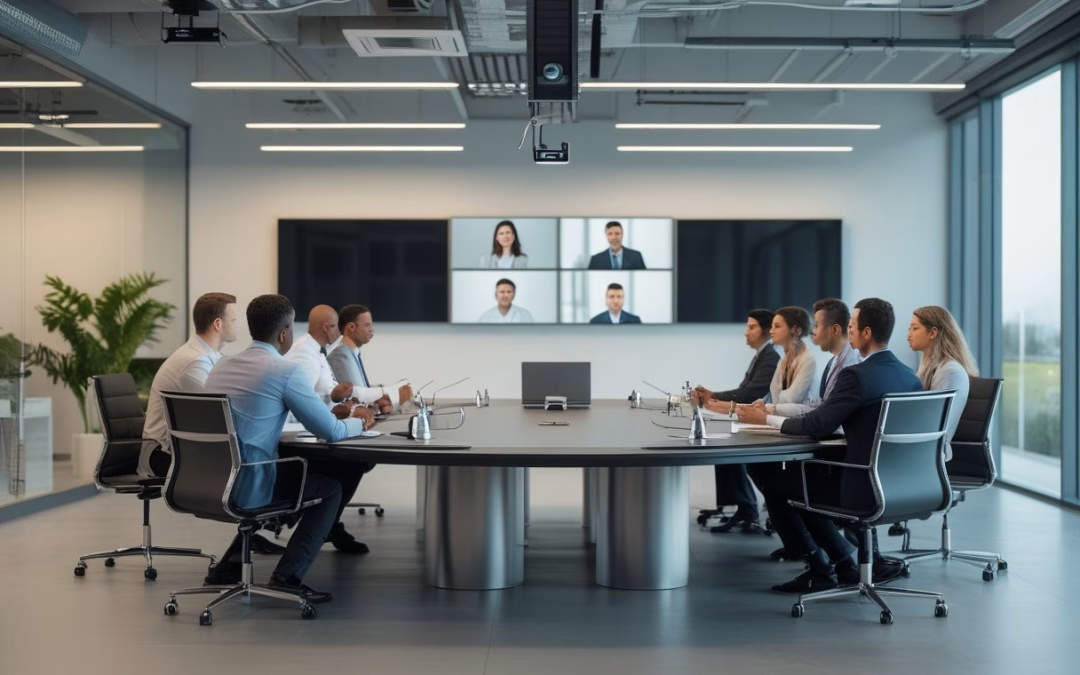
Your meeting room does more than host conversation, it shapes who speaks, who listens, how quickly people decide, and whether the group leaves aligned or drained. In hybrid settings, small AV choices change the social rules of the room, from whether remote participants feel visible to whether in-room participants dominate the pace.
Attention, Trust, And Decision Quality
When your displays, cameras, and audio are clear, people spend less energy decoding the room and more energy evaluating the actual issue. Trust rises when everyone can follow the same signals at the same time, especially in decisions that depend on nuance or disagreement.
In rooms that perform well, the technology stays quiet enough that the team notices the conversation, not the equipment. People interrupt less to fix access, ask for repeats, or compensate for missing context.
The Hidden Cost Of Interaction Friction
Each time someone says, “Can you repeat that?” or “Who is speaking now?” you add cognitive and social friction. In hybrid meetings, that friction often falls hardest on remote attendees, who already have fewer ambient cues to rely on.
Poor AV design also creates behavioral drag in the room. People speak more cautiously, leave gaps in discussion, and avoid fast back-and-forth when they do not trust the system to carry their voice cleanly.
Cognitive Load In Mixed-Presence Collaboration
Hybrid collaboration works best when the room reduces mental effort instead of multiplying it. Your AV design should make it easy to hear, easy to see, and easy to track the thread of discussion without constant reorientation.
Audio Clarity And Mental Effort
Audio quality is the fastest way to lower or raise cognitive load. When speech is compressed, uneven, or echo-prone, participants spend mental energy filling in gaps, which leaves less capacity for analysis and contribution.
Microphones, acoustics, and speaker coverage matter as much as the display. A room with clean sound lets people process content rather than spend attention on deciphering words, accents, or overlapping voices.
Visual Complexity And Split Attention
Hybrid meetings fail when your eyes have to choose between the room, the screen, shared content, and side conversations. Every extra visual layer competes for attention, especially when remote faces are small or content is arranged without a clear hierarchy.
The strongest rooms use a simple visual order, with the active content obvious and participants easy to scan. That structure lowers split attention and helps people stay with the discussion instead of constantly searching for context.
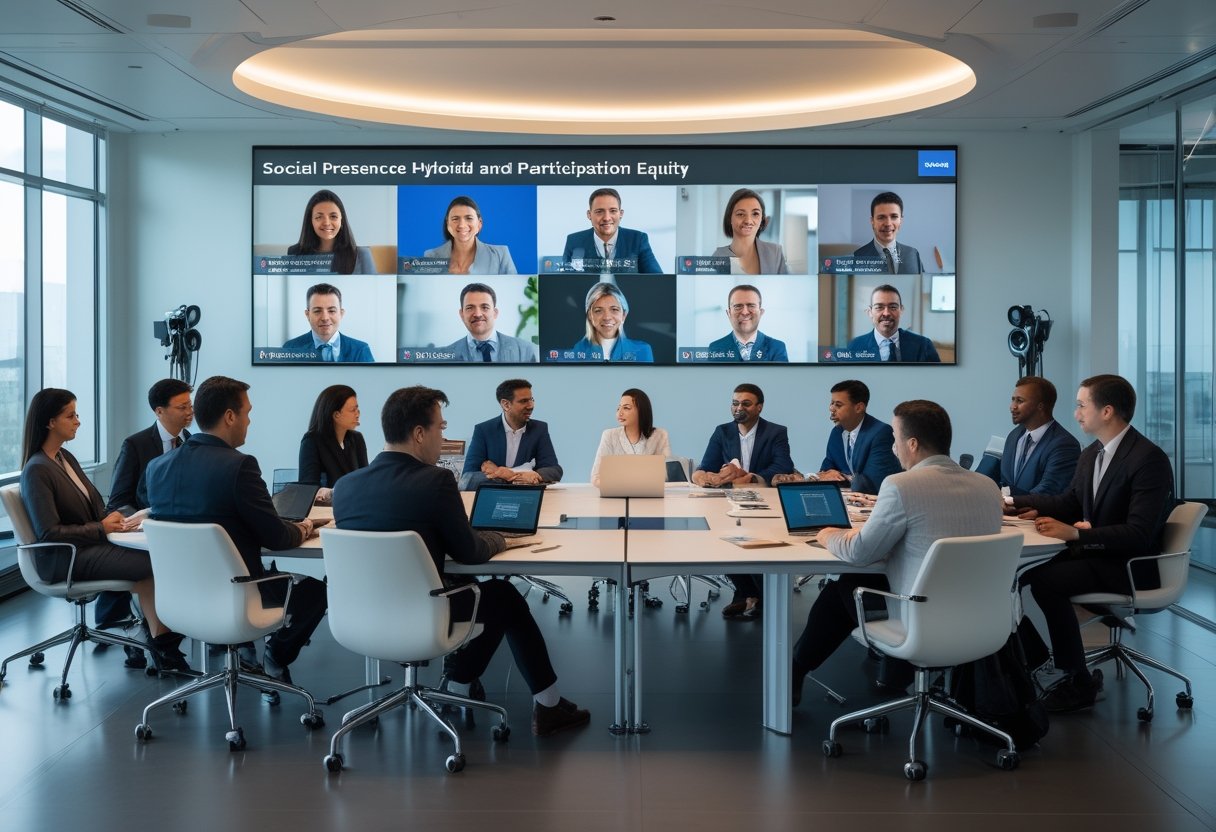
Social Presence And Participation Equity
People judge status quickly in hybrid meetings, and your camera framing can reinforce or flatten those cues. If remote participants look secondary or in-room participants visually dominate, the room sends a message about whose input matters most.
How Camera Angles Influence Perceived Status
A camera placed too low can make in-room speakers feel elevated and remote people feel outside the circle. A balanced angle, paired with consistent framing, creates a more neutral social field and reduces the sense that some participants are “in the room” while others are merely observing.
A simple camera adjustment can change the tone of a meeting almost instantly. Once remote faces are visible at a similar scale and level of prominence, turn-taking becomes more equitable and the discussion feels less hierarchical.
Why Remote Voices Get Lost
Remote voices often disappear for structural reasons, not because people are less engaged. If in-room conversation is picked up poorly, if microphones do not capture side comments, or if the room reacts faster to physical presence than to the screen, remote participants lose momentum.
That is an AV design issue as much as a facilitation issue. Equal participation needs equal audibility, clear turn-taking cues, and room behaviors that treat the remote channel as a first-class part of the meeting.
Room Design Choices That Change Outcomes
Your room layout sets the pace of interaction before anyone says a word. Sightlines, display placement, and microphone coverage determine whether people speak naturally, share focus, and move through the agenda without constant resets.
Sightlines, Displays, And Shared Focus
If people cannot see one another and the shared content at the same time, attention fragments. A strong layout keeps faces, screens, and any physical whiteboarding within one coherent field of view, so the group can move between discussion and evidence without losing orientation.
Shared focus also depends on display strategy. One well-positioned screen can outperform multiple scattered displays if it keeps everyone aligned on the same object, at the same time, with fewer visual detours.
Microphone Coverage And Conversational Flow
Conversational flow breaks when only the loudest or closest voices are captured cleanly. Proper microphone coverage supports natural interruption, quick clarification, and the subtle overlaps that make real discussion efficient.
The best rooms make speaking feel effortless. When people trust that their voice will carry, they participate earlier, more often, and with less self-consciousness.
Leadership Signals Embedded In AV Decisions
The AV choices you make communicate what leadership values, even when no one says it out loud. A room designed for inclusion tells people their time and attention matter; a room designed for convenience alone tells them to adapt to the system.
Designing For Inclusion Rather Than Convenience
Convenience often favors the people already in the room. Inclusion asks a different question: can every participant, regardless of location, contribute with equal clarity and equal social weight?
That design choice shows up in practical details, from whether remote attendees can see everyone to whether joining requires a technical workaround. When leadership funds inclusive AV, it signals that hybrid participation is part of the operating model, not a temporary exception.
What Employees Infer From Poor Meeting Experiences
Employees read poor meeting experiences as organizational intent. If people regularly struggle to hear, repeat themselves, or wait for a host to rescue the setup, they conclude that the company tolerates avoidable friction.
That inference affects morale and behavior. Teams become less willing to collaborate across locations, less likely to speak candidly, and more likely to treat meetings as a cost instead of a productive forum.
Measuring Productivity Beyond Technical Uptime
Technical uptime matters, yet it tells you very little about whether the meeting actually worked. Productivity in hybrid collaboration shows up in behavior, momentum, and business follow-through, not just in whether the camera connected.
Behavioral Metrics That Actually Matter
The most useful signals are often simple: how evenly people participate, how often decisions get revisited, how quickly the group reaches clarity, and whether action items are assigned without confusion. You can also track whether remote attendees speak early or only after the meeting is already underway.
Post-meeting behaviors matter too. If people leave with fewer follow-up clarifications, fewer duplicate threads, and less rework, the meeting experience is doing real work for the business.
Linking Meeting Experience To Business Performance
Meeting quality affects throughput. When hybrid meetings are easier to follow, teams make decisions faster, move projects with less delay, and reduce the hidden labor of correcting misunderstandings after the fact.
Sales, product, operations, and leadership all benefit when AV design lowers friction and raises alignment. Better meetings shorten the path from discussion to execution.
Building A Future-Ready Collaboration Standard
A durable hybrid strategy needs more than isolated fixes. You need design principles that can scale across room types, meeting styles, and changing work patterns without forcing every team into the same setup.
From One-Off Fixes To Design Principles
Quick repairs can help, yet they rarely solve the deeper behavioral problem. A future-ready standard starts with principles such as equal visibility, consistent audio, simple sharing, and a room layout that supports the type of meeting you actually run.
That approach also makes procurement smarter. Instead of buying technology for a single room problem, you define what productive hybrid collaboration should feel like, then specify the AV stack that supports it.
Creating Feedback Loops For Continuous Improvement
The best systems improve through routine feedback, not annual review cycles.
Ask participants where attention dropped, where voices got lost, and which room behaviors slowed the meeting.
Adjust the design before the friction becomes normal.
Small iterative changes matter.
When you treat hybrid meeting performance as a living standard, your rooms keep pace with how your teams work.








Recent Comments